Tel/WhatsAapp:+86 18011919834
E-mail: chloe.x@fybagcustom.com

Tel/WhatsAapp:+86 18011919834
E-mail: chloe.x@fybagcustom.com
Send Your Inquiry Today

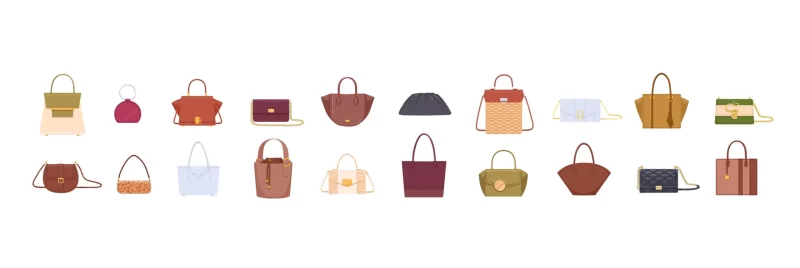
Who this guide is for: everyday-luxury brands and durable-tote programs building on the material that underpins some of the most commercially successful handbag lines ever made — coated canvas, the structured, wipeable, water-resistant, printable substrate that carries monogram programs, all-over signature prints, and the kind of quiet-luxury daily use that would destroy a more delicate material in months. Coated canvas combines a woven base cloth with a polymer coating (PVC or PU) that transforms the surface: making it water-resistant, soil-resistant, wipeable, and printable with a precision and durability that uncoated fabric cannot match. The result is a handbag material that is lighter than leather, tougher than uncoated canvas, resistant to the daily abuse of keys, coffee, and rain, and — critically — the ideal substrate for the all-over monogram and signature-print programs that define some of the world’s most recognized bags. This guide covers the coated-canvas substrate itself, the coating types and their trade-offs, the printing and monogram application that makes it a brand-identity carrier, leather and trim integration, durability engineering, and the everyday-luxury positioning that makes coated canvas a permanent-line workhorse rather than a seasonal material.
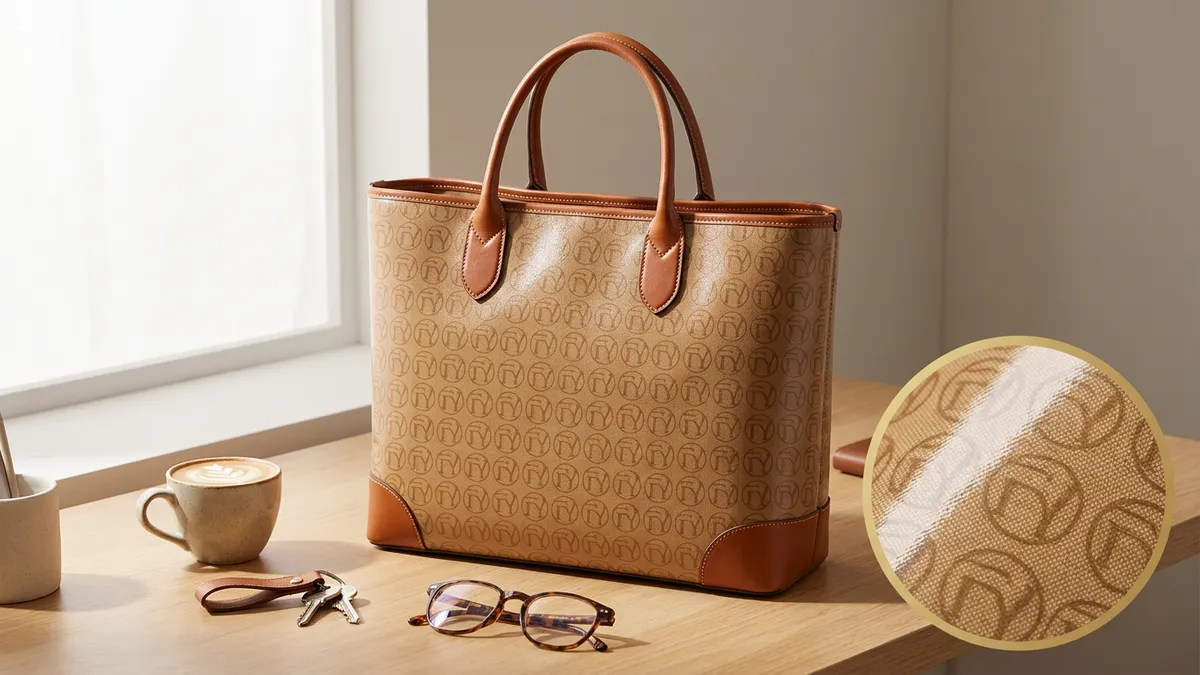
Coated canvas is the most commercially proven handbag material in the everyday-luxury category, and its dominance is not accidental — it solves a set of problems simultaneously that no other single material does. The customer wants a bag that is lighter than leather but does not feel cheap. That resists rain, spills, and daily soil without needing careful treatment. That holds its structure through years of daily use without collapsing or aging poorly. And that carries a brand’s identity — a signature print, an all-over monogram, a proprietary pattern — in a way that is immediately recognizable and virtually impossible to replicate in a counterfeit without the exact same substrate and print technology.
The combination of those properties is why the world’s most enduring luxury-bag franchises are built on coated canvas rather than leather: the material serves the customer’s daily life and the brand’s identity program at the same time, and it does both durably. For a brand building an everyday-luxury line — the tote that commutes, the crossbody that runs errands, the shoulder bag that travels — coated canvas is the material that makes “use it every day for years” a real promise rather than marketing. This guide is how to produce it right: the substrate, the coating, the print, the trim, and the durability that earns the everyday-luxury claim.
Coated canvas is a composite material — a woven base cloth (the canvas) bonded to a polymer coating that transforms its surface properties. Understanding the two layers and their relationship is the foundation.
| Layer | Detail |
|---|---|
| The base cloth | A woven fabric — typically cotton canvas, cotton-polyester blend canvas, or polyester canvas — that provides the material’s structure, body, and tear strength; the weave weight and density determine the finished material’s hand and stiffness |
| The coating | A polymer layer (PVC or PU — see below) applied to the face of the canvas, creating the wipeable, water-resistant, printable surface that defines the material; the coating transforms the canvas from a porous, absorbent, soil-prone fabric into a sealed, durable, easy-care surface |
| The composite | The finished material is both: the canvas’s structural strength and the coating’s surface performance — lighter and more flexible than solid PVC, tougher and more water-resistant than uncoated canvas, and printable in ways neither layer alone could support |
| The canvas-weave texture | On quality coated canvas, the weave texture of the base cloth is subtly visible through the coating, giving the material a textile warmth and visual depth that solid plastic surfaces lack — this is the quality signal: the material reads as coated canvas, not as plastic |
| Weight and hand | The coating weight and the canvas weight together set the finished hand — from a lighter, more flexible coated canvas (for softer silhouettes) to a heavier, stiffer one (for structured totes and structured bags); the weight is specified to the silhouette’s needs |
The coating choice — PVC (polyvinyl chloride) or PU (polyurethane) — is the most consequential material decision, and it has both performance and positioning implications.
| Property | PVC Coating | PU Coating |
|---|---|---|
| Durability | Exceptionally durable — PVC is the harder, more abrasion-resistant, more water-resistant coating; the reason the most enduring luxury coated-canvas programs use it | Durable but softer; less abrasion-resistant than PVC |
| Water resistance | Very high — PVC is effectively waterproof at the surface | Good water resistance; slightly more permeable than PVC over time |
| Wipeable / cleanable | Wipes clean easily; resists staining | Wipes clean; slightly more susceptible to staining from some substances |
| Print adhesion and quality | PVC takes print with excellent adhesion and durability — the monogram-print surface | PU also prints well; some print technologies prefer PU’s softer surface |
| Flexibility and hand | Stiffer — the structured feel that suits structured totes and framed bags; can feel plasticky if the coating is too heavy or the formulation is poor | Softer, more flexible — the hand closer to leather or uncoated canvas; suits softer silhouettes |
| Environmental and regulatory | PVC is under scrutiny: restricted in some markets and brand sustainability programs due to chlorine content, plasticizer concerns (phthalates in flexible PVC), and end-of-life recyclability challenges; some luxury houses have moved away from PVC on sustainability grounds | PU is generally considered the more environmentally acceptable alternative; water-based PU further improves the environmental profile |
| The positioning decision | PVC = maximum durability and structure, but with a sustainability consideration the brand must address | PU = the sustainability-friendlier option with slightly softer performance, and the hand some brands prefer |
| The honest summary | PVC is the historically proven workhorse for everyday-luxury coated canvas; PU is the increasingly chosen alternative where sustainability positioning or a softer hand matters — the choice is deliberate, not default |
The market direction: the industry is moving toward PU (and water-based PU) for sustainability positioning, and some major luxury houses have publicly transitioned away from PVC. A brand entering coated canvas now should evaluate the PU route seriously, understanding the slight performance trade-off against the sustainability story and the softer hand. Our development team can source both coating types for comparison sampling so the decision is made on real material, not assumption.
The coated surface’s printability is why coated canvas is the monogram-program material: the sealed, smooth coating takes ink with a precision and durability that porous, textured fabrics cannot match, and the print becomes part of the material — not a decoration on top of it, but baked into the coated surface.
| Element | Specification | Why |
|---|---|---|
| All-over print (the monogram) | The signature print — a repeating monogram, logo pattern, or proprietary design — printed across the entire coated surface before the canvas is cut into panels | The all-over print is the brand identity on the bag; it is the material, not a label, which is why it reads as integral and why a coated-canvas monogram bag is so immediately recognizable |
| Print-before-cut | The print is applied to the roll of coated canvas before cutting — so the panels are cut from printed cloth, not printed after construction | This ensures print continuity across panels and consistent registration, and means the print can wrap around the bag with considered placement |
| Print methods | Rotary screen printing (the volume standard for precise, repeating all-over patterns), digital printing (for complex, multi-color, or short-run prints), and gravure/roller printing for high-volume runs | The method matches the run size and the print complexity; screen and gravure for the repeating monogram, digital for complex or custom designs |
| Print-on-coat adhesion and durability | The ink and the coating system are matched so the print bonds to the coating and resists abrasion, flexing, and cleaning — the print’s durability is the product’s durability, because a monogram that wears off reveals a generic canvas underneath | Print durability is tested (abrasion, flex, wipe) to ensure the monogram survives the bag’s intended life |
| Color precision | The monogram’s colors matched to the brand’s standards under controlled light — the print is the brand, so color accuracy is non-negotiable | Inconsistent color across bags or runs damages the brand identity the print carries |
| Registration and placement | The print’s repeat and registration engineered so the pattern sits correctly on each panel — the monogram centered, the pattern aligned across panels, the repeat concealed at the seams | Misregistered or badly-placed monograms look wrong even if the viewer can’t name the problem; placement is engineered |
| The print-as-IP | The proprietary all-over print on a proprietary coated substrate is itself brand IP — virtually impossible to replicate without the exact coating, print technology, and color formulation, which makes it a natural counterfeit deterrent; brief our team on the monogram design and we develop the print-on-coat system to match | The coated-canvas monogram is a hard-to-copy brand asset, not just a decoration |
Coated canvas almost always appears with leather or high-quality trim — handles, edges, corners, straps, and detail — that frames the coated surface and carries the premium feel.
| Element | Specification | Why |
|---|---|---|
| Leather trim | Handles, base corners, binding, edging, strap connectors, and zipper pulls in leather — typically vachetta (the natural-tan that develops a patina) or finished leather matched to the bag’s colorway | The leather trim is what makes the bag read as a premium leather-goods product rather than a coated-fabric bag; it is the luxury frame around the durable surface |
| The patina story | On natural/vachetta leather trim, the trim develops a honey patina over time — an aging story that the everyday-luxury buyer knows and values; the patina is the bag’s personal history | The patina is a feature, not a flaw, for the informed buyer — and it requires honest communication on the product page |
| Edge finishing on trim | Leather trim edges finished to a premium standard — edge-painted, burnished, or turned — per our edge-finishing and premium-leather guidance | The trim edges are examined closely; the edge finish signals the bag’s quality tier |
| Reinforcement at stress points | Leather or reinforced-material patches at corners, handles, and high-wear points where the coated canvas meets stress | The stress points are where the bag’s life is decided; leather reinforcement extends it |
| Metal hardware coordination | Hardware (zips, clasps, studs, feet) in finishes that coordinate with the leather trim and the monogram print’s tone | The hardware, the trim, and the print are a coordinated system — mismatched tones cheapen the look |
The everyday-luxury claim is only real if the bag survives everyday use — and coated canvas’s durability advantage only holds if the construction supports it.
| Element | Specification | Why |
|---|---|---|
| Coating adhesion | The coating tested for adhesion to the base canvas under flex, abrasion, and over time — the coating must not peel, crack, or delaminate | Coating that peels away from the canvas is the substrate’s failure; adhesion is verified |
| Print durability | The print tested for abrasion, flex, and wipe-clean resistance — the monogram must not wear off | Print that fades or rubs off reveals generic canvas; the monogram’s durability is tested |
| Flex cracking | The coated surface tested for cracking at flex points (where the bag bends in use — around closures, at fold lines) — a stiff coating that cracks when flexed is a common quality failure | Flex cracking is the visible sign of a poor coating formulation or an over-stiff coating; the coating and the flex points are tested together |
| Water resistance | The coated surface tested for water resistance — the wipeable, rain-resistant claim verified | The everyday-luxury buyer expects rain resistance; it’s confirmed |
| Structural retention | The bag’s shape tested for retention over loaded use — the coated canvas should hold form without collapsing | The structured, shape-holding quality is part of the everyday-luxury promise |
| Leather-trim aging | Leather trim tested for its expected aging behavior — vachetta for patina-aging, finished leather for stability | The trim ages as promised; the brand communicates how |
| Hardware and anchor durability | Zips, clasps, handles, and all anchors tested for cycle life and load | The bag’s function lasts as long as its surface |
| The colorfastness under use | Coated surface checked for dye transfer to clothing and hands — especially dark or saturated coatings | Dye transfer stains the customer’s clothes and is a return; colorfastness is verified |
| SKU | Format | Spec Summary |
|---|---|---|
| Monogram tote | Tote | The everyday-luxury hero — all-over monogram coated canvas, leather handles and base corners |
| Structured shoulder bag | Shoulder bag | Monogram coated canvas with leather trim and structured form — the day-to-evening crossover |
| Crossbody messenger | Crossbody | Compact coated-canvas crossbody — the errand and travel SKU |
| Clutch / pouch | Clutch | Monogram-print pouch — the entry and gift piece |
| Backpack | Backpack | Coated-canvas commuter backpack — the hands-free daily-carry |
| Travel duffel / weekender | Duffel | The durable travel piece — coated canvas’s durability at its most useful |
| Wallet / SLG (small leather goods) | Accessories | Monogram wallets, purses, and card cases — the coordinated-program add-on |
The application fit: coated-canvas programs sit in daily commuting and work (the everyday tote and crossbody), travel and adventure (the duffel, the weekender, the travel crossbody), gift and promotional (the monogram clutch as gift, the corporate-custom program), and fitness and active-life for the wipeable, durable gym and errand bag — the broadest application range in the material portfolio, because coated canvas’s durability serves every use case.
| Material | Application |
|---|---|
| Coated canvas (PVC or PU on cotton/poly base) | The body substrate — the wipeable, printable, structured surface |
| Leather trim | Handles, edges, corners, straps — the premium frame |
| Nylon and polyester linings | Interior linings — durable, smooth |
| Structured interlinings | Shape-holding structure under the coated surface |
| Metal hardware | Zips, clasps, feet, rings — coordinated with the trim and print tone |
Construction non-negotiables: print-before-cut with precision registration, coating-adhesion and flex-crack verification, leather-trim edge finishing to premium standard, reinforced stress points, and the full durability battery. Branding lives in the all-over print itself (the monogram is the branding), with embossed leather trim, restrained hardware branding, and embroidery or heat-transfer on interior elements. The substrate supports waterproof and multi-function design-feature integration.
| Check | Method | Standard |
|---|---|---|
| Coating adhesion | Peel and flex testing of the coating-to-canvas bond | No peeling, cracking, or delamination |
| Print durability | Abrasion, flex, and wipe testing of the printed surface | Monogram survives rated life; no fading or wear |
| Flex cracking | The coated surface flexed at bend points and inspected | No cracking at flex zones |
| Water resistance | The coated surface tested for water bead-and-shed | Sheds water; no penetration |
| Print registration and color | Print alignment across panels and color accuracy checked under controlled light | Consistent, accurate, aligned |
| Leather-trim edge finish | Trim edges inspected and tested to premium standard | Clean, durable edge finishing |
| Structural retention | The bag loaded and checked for shape retention | Holds form under daily-use load |
| Dye transfer | The coated surface rubbed against light fabric, dry and wet | No dye transfer to clothing |
| Hardware and anchors | Zips, clasps, and anchors cycle- and load-tested | Full durability |
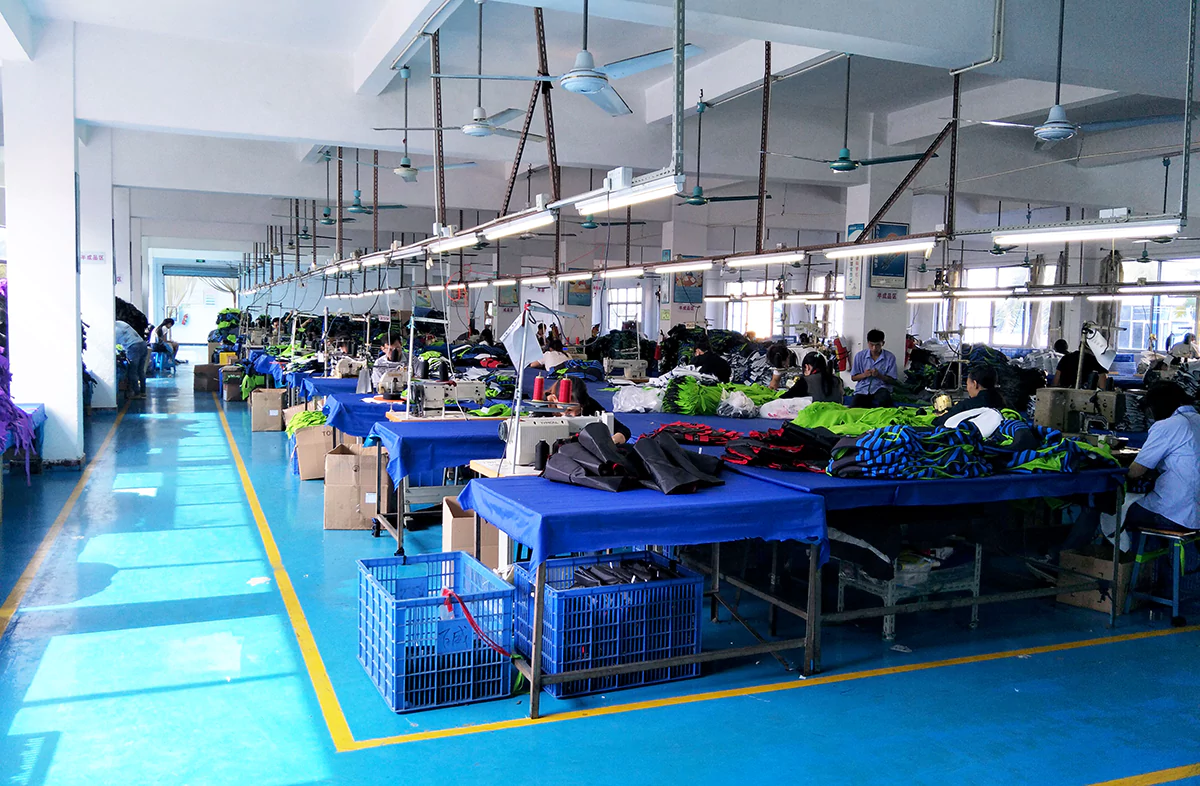
FYBagCustom is Your Trusted Custom Bag Manufacturer in China, with 15+ years of manufacturing experience and the print-on-coat and leather-trim integration the everyday-luxury substrate demands. For brands building coated-canvas programs, our capabilities include:
Coated canvas is the everyday-luxury workhorse — and it rewards the manufacturer who treats the coating, the print, and the trim as an integrated system. For brands building coated-canvas programs, three core takeaways:
If you are building a coated-canvas or monogram-substrate program — totes, travel bags, SLGs, or a full coordinated line — contact FYBagCustom to brief your program, and receive a print-and-trim-built, durability-tested sample in 7–10 days.
FYBagCustom produces coated-canvas monogram programs — precision all-over print on PVC or PU substrate, leather-trim integration with premium edge finishing, and durability testing that proves the “every day for years” promise. Print-and-trim samples in 7–10 days.
Start Your Custom Bag Project →