Tel/WhatsAapp:+86 18011919834
E-mail: chloe.x@fybagcustom.com

Tel/WhatsAapp:+86 18011919834
E-mail: chloe.x@fybagcustom.com
Send Your Inquiry Today

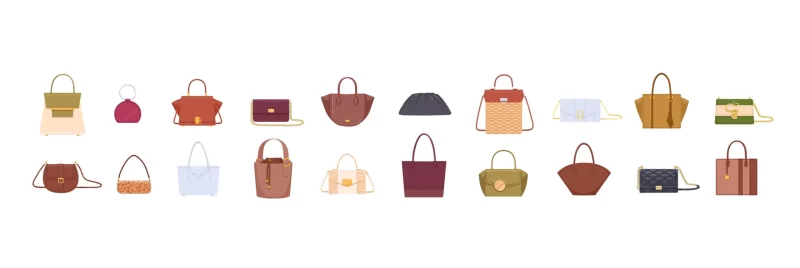
Who this guide is for: brand owners, merchandisers, and product developers building occasion-wear assortments for the fall wedding and holiday-party season. Evening and wedding clutch search peaks in September as the Q4 event calendar ramps — fall weddings through October, then the holiday-party and gala season through New Year’s Eve — making the occasion clutch one of the most reliably seasonal programs in the handbag category. It is also a category with two documented, dominant quality complaints: per Accio’s marketplace complaint analysis, “weak chain” accounts for 66.7% of negative feedback and “mild smell” for 33.3% — and both are fully addressable at the production stage. This guide covers occasion-clutch production timed to the September peak, with the two complaint categories treated as engineering problems with specific, testable solutions: chain and anchor specification, odor-source elimination, embellishment security, and the minaudière construction that carries the formal end of the program.
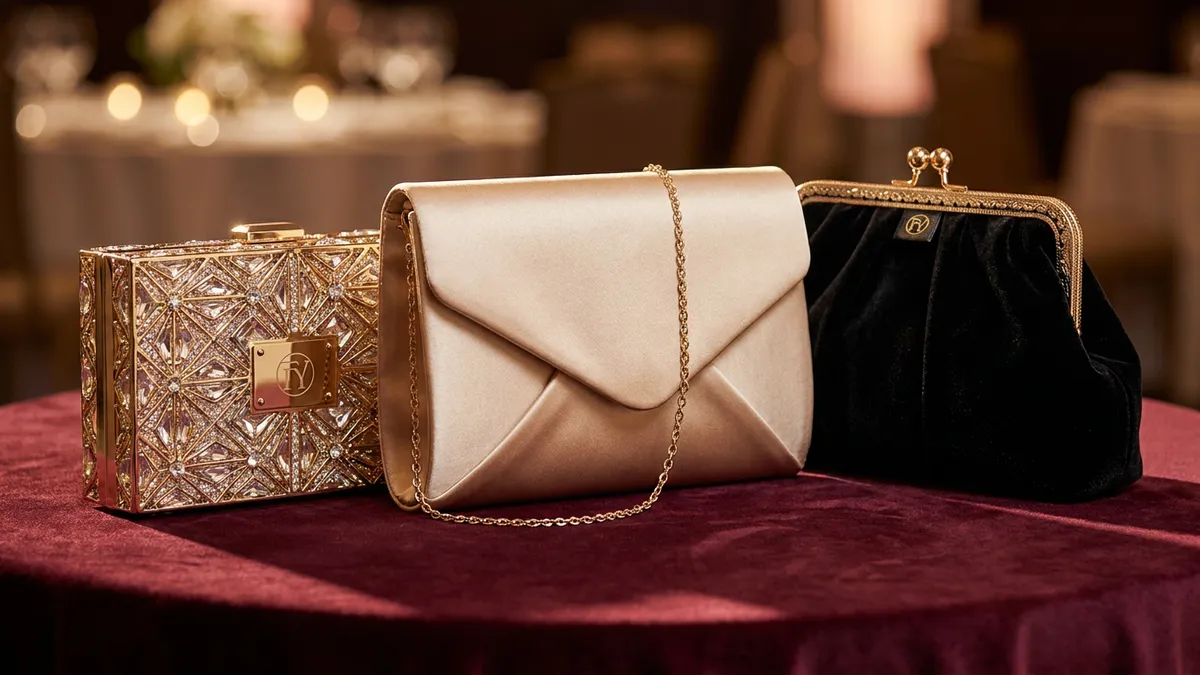
The occasion clutch is the most seasonal product in the handbag assortment, and its season is precise. Search interest builds through late summer, peaks in September, and holds through December — the shape of the Q4 event calendar itself: September and October weddings, November galas and corporate events, December holiday parties, and the New Year’s Eve finale. A brand that wants shelf presence and search visibility for that window must have inventory in warehouse by late August, which means production in June–July and sampling in spring. The occasion clutch is bought against a date on the calendar; a program that misses the window by three weeks misses the season.
The category’s quality profile is equally precise. Marketplace complaint data for evening and party clutches concentrates on two failures to a degree rare in any product category: the weak chain — the drop-in shoulder chain that kinks, sheds plating, pulls out of its anchors, or snaps at a soldered link — and the chemical smell that greets the buyer when the bag comes out of its box. Two-thirds of negative feedback names the chain; a third names the odor. Neither complaint is inherent to the category. Both are the residue of specific production shortcuts, and both are eliminated by specific production decisions. A manufacturer who solves these two problems has, by the category’s own complaint data, addressed the overwhelming majority of what goes wrong with occasion clutches.
This guide is organized around that fact: first the seasonal program architecture, then the two complaints as engineering chapters, then the construction systems — embellishment, frame, and minaudière — that carry the category’s formal registers.
The occasion clutch splits into four production families, each serving a different segment of the event calendar and a different price position.
| Family | Construction Character | Event Register | Program Role |
|---|---|---|---|
| The satin/soft envelope | Soft-structured fold-over or zip envelope in satin, velvet, or fine PU; drop chain | Wedding guest, cocktail, holiday party | The volume core — the accessible price entry, produced in the widest color range |
| The frame kisslock evening clutch | Structured body on a metal channel frame with a kisslock or twist clasp; chain or chainless | Formal weddings, dinners, galas | The heritage register — the frame gives the formal read; shares construction DNA with the FW26 everyday frame clutch but in evening materials and scaled smaller |
| The embellished statement clutch | Beaded, sequined, or crystal-set surface over a structured base | Holiday parties, NYE, black tie | The photograph-driver — highest visual impact, highest embellishment QC demand |
| The box minaudière | A rigid molded or board-built shell, covered and lined, with a hinged clasp opening | Black tie, bridal, gala | The price ceiling and the bridal hero — the hardest construction in the program and the most defensible |
The assortment math: a first-season occasion program runs efficiently at 5–8 SKUs — two envelope colorways beyond the core black (champagne/ivory for bridal-adjacent, one jewel tone for holiday), one frame clutch in two colors, one embellished statement piece, and one minaudière. The envelope family carries the units; the minaudière carries the margin and the campaign imagery.
The evening clutch is sized to a different kit than the everyday clutch — phone, card case, lipstick, key — and to the proportions of formalwear.
| Format | Dimensions | The Fit Test |
|---|---|---|
| Envelope | 24–28 × 12–16 cm | The current largest mainstream phone, a slim card case, one lipstick, one key — all closing without strain; specify the fit test with the actual phone model generation, because phone growth has quietly obsoleted older evening patterns |
| Frame evening clutch | 20–26 × 12–15 cm | Same kit; the frame’s fixed opening must admit the phone at a natural angle |
| Minaudière | 16–22 × 10–13 cm | The reduced kit (phone, lipstick, card); the minaudière trades capacity for sculpture, and the listing must say so honestly — “fits phones up to X cm” prevents the capacity complaint |
The drop chain is the occasion clutch’s only moving structural system and its dominant failure point. The complaint pattern decomposes into four distinct failure modes, each with its own production cause and its own fix.
| Failure Mode | Production Cause | The Fix |
|---|---|---|
| Link separation (the chain snaps at a link) | Unwelded, stamped, or open-bent links — decorative chain sold by the meter for costume jewelry, pressed into structural service | Welded-link chain only. Every link closed by weld, not by bending; specify “welded curb/rollo chain” in the hardware schedule and verify at incoming inspection with a pull test on a cut sample length |
| Anchor pull-out (the chain tears away from the bag) | The chain terminates in a small jump ring through a thin fabric loop or a glued tab — the entire carried load concentrated on an unreinforced point | Reinforced anchor tabs: the chain terminates on a D-ring or eyelet mounted through a leather/PU tab with an interior webbing patch, bartacked through all layers — the same anchor discipline as a handbag strap, scaled down; on frame clutches, the chain anchors to the frame’s cast lugs, never to the covering material |
| Plating loss (the chain sheds its gold within weeks) | Thin decorative flash plating on raw brass or zinc chain | Plating specified by test, not by look: the chain passes the same salt-spray standard as the body hardware (48-hour minimum for the occasion tier), because the chain contacts skin, sweat, and hairspray at every wearing — a harsher environment than any other hardware on the bag |
| Kinking and twist-lock (the chain knots itself in the bag) | Long chain stored loose inside the clutch between wearings, with no management system | The chain management detail: an interior chain pocket or a tuck-in channel that stows the chain flat when the clutch is hand-carried; a small detail that eliminates the tangle complaint and reads as considered design |
| The drop-in failure (the chain detaches mid-event) | Lobster clasps at the chain ends undersized for the load, or single open jump rings at the clasp junction | Cast swivel lobster clasps, gauge-matched, on soldered rings — and the assembled system load-tested |
CHAIN SPECIFICATION — OCCASION CLUTCH

Chain type:        Welded-link curb chain (or specified style),
                   all links welded closed
Gauge:             Matched to bag weight class; minimum 2.5 mm
                   wire for a loaded clutch of up to 1 kg
Length:            120 cm (shoulder/crossbody drop) or 60 cm
                   (shoulder drop) per design
Finish:            Plated to program hardware standard;
                   salt spray 48 h minimum, no base-metal
                   exposure
End hardware:      Cast swivel lobster clasps, soldered
                   junction rings — no open jump rings
                   anywhere in the assembly
Anchors:           D-rings on reinforced tabs (webbing patch
                   + bartack through all layers) or frame
                   lugs on frame builds
Chain management:  Interior chain pocket or tuck channel
Load test:         5 kg sustained, 60 seconds, on the full
                   assembled system (chain + clasps + rings
                   + anchors) — no deformation, separation,
                   or anchor movement
Wear test:         500-cycle swing simulation; inspect
                   plating and link integrity
The 5 kg standard deserves explanation: a loaded evening clutch weighs under 1 kg, but the chain’s real loads are dynamic — the bag swung onto a shoulder, caught on a chair back, grabbed mid-fall. Five kilograms static is the proxy for those shock loads, and it is the threshold at which costume-grade chain fails and structural chain does not. Two-thirds of the category’s complaints trace to factories that never ran this test.
The “mild smell” complaint is the chemistry of the bag’s own production arriving in the buyer’s hands. An occasion clutch is often a gift, often opened in front of others, and often unboxed the day of an event — the odor complaint is therefore disproportionately damaging to the category, because the product’s first impression is its most important one. The odor has four sources, each with a production fix.
| Source | Mechanism | The Fix |
|---|---|---|
| Solvent-based adhesives | The largest source: toluene/MEK adhesive residue off-gassing from laminated panels, covered frames, and bonded linings for weeks after production | Water-based or solvent-free adhesives throughout — the same upgrade specified in our sustainability program, here doing double duty as odor elimination; the solvent-free build has no adhesive odor to off-gas |
| PU off-gassing | DMF and co-solvent residue in conventionally produced PU | Water-based, DMF-free PU for PU-bodied programs — the low-VOC material carries no chemical-smell signature |
| Lining and textile sizing | Finishing chemicals on satin, velvet, and polyester linings, sealed into the bag at assembly | Aired materials: lining and shell textiles rested unrolled in ventilated storage 48–72 hours before cutting; a specification line, not a hope |
| Sealed-box packaging | Whatever residual odor exists is concentrated by weeks in a sealed poly bag inside a sealed carton crossing the ocean | Breathable packing: the clutch packed in its cotton dust bag with acid-free tissue — never sealed in poly directly against the product; a desiccant-plus-activated-carbon sachet in the gift box for premium programs; and a final-stage airing rack in the finishing department, where completed units rest 24–48 hours before packing |
Add one line to the final-inspection checklist: the smell check. The inspector opens the packed unit’s dust bag and smells the interior of the bag at 10 cm. Pass: neutral, or the natural scent of leather. Fail: any solvent, plastic, or chemical note — the unit returns to the airing rack, and a fail rate above 5% of the AQL sample triggers an adhesive and material audit. It is the cheapest test in the entire QC sequence and it addresses a third of the category’s documented complaints.
| Material | Character | Production Notes |
|---|---|---|
| Duchess satin / satin-face polyester | The wedding-guest standard; luminous, drapes over structure | Satin shows every needle hole and pull — specify fine needles (Nm 70–80), new per run, and handling gloves at the sewing station; snags are unrepairable |
| Velvet | The holiday register; deep, light-absorbing | Nap direction discipline exactly as suede: all panels cut nap-down; velvet crushes under clamp pressure, so specify padded clamps and no-iron handling |
| Metallic and patent PU | The NYE register; maximum shine | Patent shows fingerprints on the line — final assembly in cotton gloves, and a polish-and-inspect station before packing |
| Fine pebbled or smooth leather | The quiet-formal register; the bridal neutral in ivory | Ivory and champagne leathers demand the denim-transfer and handling-soil disciplines of any light program — white gloves at every station after cutting |
| Embellished surfaces (beading, sequins, crystal) | The statement register | The next section |
The embellished clutch imports a failure mode the rest of the program does not have: embellishment loss. A beaded bag that sheds beads onto a dance floor, a sequin panel with a bald patch, a crystal that departs before the event does — these are the statement clutch’s versions of the weak chain. The fixes are construction methods.
| Embellishment | The Insecure Method (Reject) | The Secure Method (Specify) |
|---|---|---|
| Beading | Strung beading — one continuous thread through dozens of beads; one break sheds a whole row | Lock-stitched beading: each bead (or each 2–3 bead group) individually knotted, so a thread break loses at most one cluster; on machine-beaded panels, specify the lock-stitch program, and on hand-beaded embroidery work, knot-per-cluster is the standard to write into the PO |
| Sequins | Glued sequins; or machine runs with long floating threads between sequins | Sewn sequins, lock-stitched rows, direction-consistent (sequins have a lie direction — brushed against it, a mis-laid panel looks damaged); floating threads trimmed and secured |
| Crystals / rhinestones | Hot-fix glue alone on flexible panels — flexing pops crystals off | Prong-set or cup-set stones on flexing surfaces; hot-fix acceptable only on rigid minaudière shells where the substrate never flexes |
| All-over embellished panels | Embellishment running into seam allowances — crushed beads under the presser foot, broken needles, lumpy seams | Clear allowances: a 8–10 mm embellishment-free margin at every seam line, filled in by hand after assembly where the design demands edge-to-edge coverage |
| Test | Method | Pass |
|---|---|---|
| Rub test | 20 firm passes over the embellished surface with a cotton cloth | No loss; no more than trace thread fuzz |
| Snag test | A fine-knit swatch pressed and dragged across the surface | No snagging that lifts beads or pulls floats — the bag will spend its life against knitwear and tulle |
| Shake count | The finished unit shaken over dark paper, 15 seconds | Zero beads or sequins; loose crystals = reject |
| Flex check (soft builds) | The panel flexed through its natural range 50 times | No stone loss, no thread exposure |
The box minaudière is the occasion program’s most demanding build — closer to case-making than to bag-making — and its hero product.
| Element | Specification | The Failure It Prevents |
|---|---|---|
| The shell | Molded resin, formed metal, or laminated board (2–3 mm) built as a two-half box; halves symmetric within ± 0.5 mm | Asymmetric halves that close with a visible lip misalignment — the defect the eye finds first on a box build |
| The covering | Satin, PU, leather, or embellished panel wrapped and edge-turned into the shell interior; corners mitred or gathered per material | Bubbling, corner bunching, and visible glue strike-through on satin (solvent-free adhesives again — they also strike through less) |
| The hinge | A continuous piano hinge or two cast hinges, riveted or screwed to the shell — never glued | The sagging lid: a glued hinge creeps within months; the hinge carries every opening for the bag’s life |
| The clasp | A cast kisslock or push-button clasp with a positive, audible close; engagement tested 500 cycles | The minaudière that pops open in a lap — a formal-event catastrophe the cycle test prevents |
| The lining | Fitted, padded lining in satin or microsuede, edge-finished into the shell | Raw interior edges visible every time the box opens — and the box opens facing other people |
| The base feet (optional) | Four micro-dome feet on the base half | The tabletop scratch — the minaudière lives on tables at events |
The occasion buyer increasingly expects carry flexibility — hand-carry for the ceremony, shoulder for the reception, crossbody for the dance floor. The specification is one chain, three modes:
| Mode | How | Note |
|---|---|---|
| Hand-carry | Chain fully stowed in the interior chain pocket | The clutch proper |
| Shoulder | 120 cm chain doubled through both anchors | The doubled chain must sit flat — specify anchor spacing wide enough that the doubled chain doesn’t bunch |
| Crossbody | 120 cm chain at full length | The chain gauge and anchor spec above make this mode safe; a costume chain in crossbody mode is where the 66.7% complaint is born |
For programs adjacent to the shoulder bag register, a second detachable leather strap (sold in the box) converts the evening clutch into a day-capable piece — the two-strap box is the occasion category’s version of the everyday clutch’s escape hatch, and it measurably lifts perceived value at gifting.
| Milestone | Timing | Note |
|---|---|---|
| Line planning + material selection | February–March | Satin, velvet, and embellishment components have their own supplier lead times; embellished panels are the long pole |
| Sampling | March–April | The PP sample carries the full test battery: 5 kg chain load, 500-cycle clasp, embellishment rub/snag/shake, and the smell check |
| Bulk production | May–July | Embellished SKUs start first (hand-work throughput is the constraint); envelopes last |
| Airing + packing | July | The 24–48 hour airing rack stage is scheduled, not squeezed |
| Ocean freight | July–August | In warehouse late August |
| The selling window | September–December | Wedding season → gala season → holiday → NYE; a mid-season restock is air-freight only, so size the initial buy to the full window |
| Bridal carryover | January–June | Ivory and champagne SKUs sell into the following bridal season — the occasion program’s only evergreen tail; plan those colorways deeper |
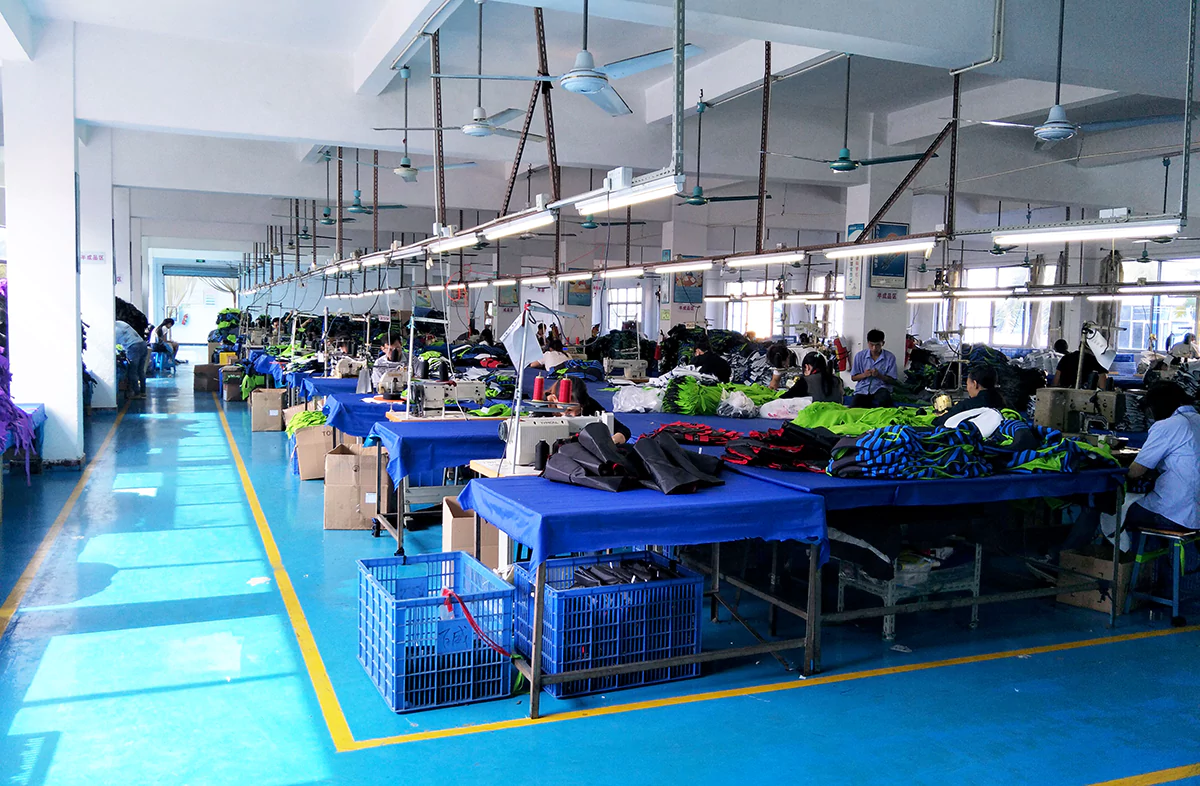
FYBagCustom is Your Trusted Custom Bag Manufacturer in China, with 15+ years of manufacturing experience across daily and occasion programs — and a production system built around the two failures that define the evening category. For brands building Q4 occasion assortments, our capabilities include:
Contact our development team to brief your occasion program — the envelope core, the frame clutch, the statement piece, or the minaudière hero.
The occasion clutch’s marketplace complaint data reads like a factory audit finding: two-thirds weak chains, one-third chemical smell — both preventable, both testable, both cheap to fix relative to the reviews they generate. For B2B buyers building Q4 event assortments, three core takeaways:
If you are building a wedding and holiday occasion program and need a factory that load-tests every chain, airs every unit, and locks every bead, contact FYBagCustom to brief your Q4 line — and receive fully tested samples in 7–10 days.
FYBagCustom builds evening and wedding clutches with load-tested welded chains, odor-eliminated construction, lock-stitched embellishment, and Q4-locked scheduling — solving the two complaints that define the category before a single unit ships. Tested samples in 7–10 days.
Start Your Custom Bag Project →