Tel/WhatsAapp:+86 18011919834
E-mail: chloe.x@fybagcustom.com

Tel/WhatsAapp:+86 18011919834
E-mail: chloe.x@fybagcustom.com
Send Your Inquiry Today

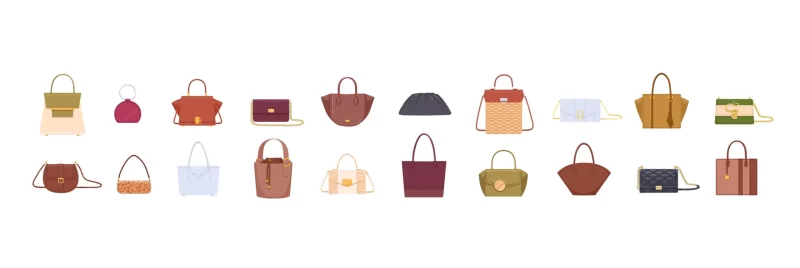
Who this guide is for: beauty brand marketing teams, retail promotions managers, and promotional-products buyers running gift-with-purchase campaigns — the “free gift over the threshold” programs that dominate beauty counters, holiday sets, and retail loyalty pushes every Q4. The GWP bag is one of the highest-volume products in the entire bag industry: cosmetic pouches, boxy makeup bags, wash bags, and mini totes produced in runs of tens to hundreds of thousands of units, on campaign deadlines, at per-unit costs set by a marketing budget rather than a retail price. It is also the vertical with the strangest brief in bag manufacturing: the item is free to the customer, but it carries the full weight of the brand’s name — a luxury beauty house’s logo on a pouch that must cost a fraction of anything else the brand sells, yet must not feel like it does. This guide covers GWP-specific production: the product family and its perceived-value economics, cost engineering that protects what the customer touches, brand-precision standards at campaign volume, the compliance layer beauty adjacency demands, and the calendar that gets a hundred thousand pouches to the counter before the holiday sets launch.
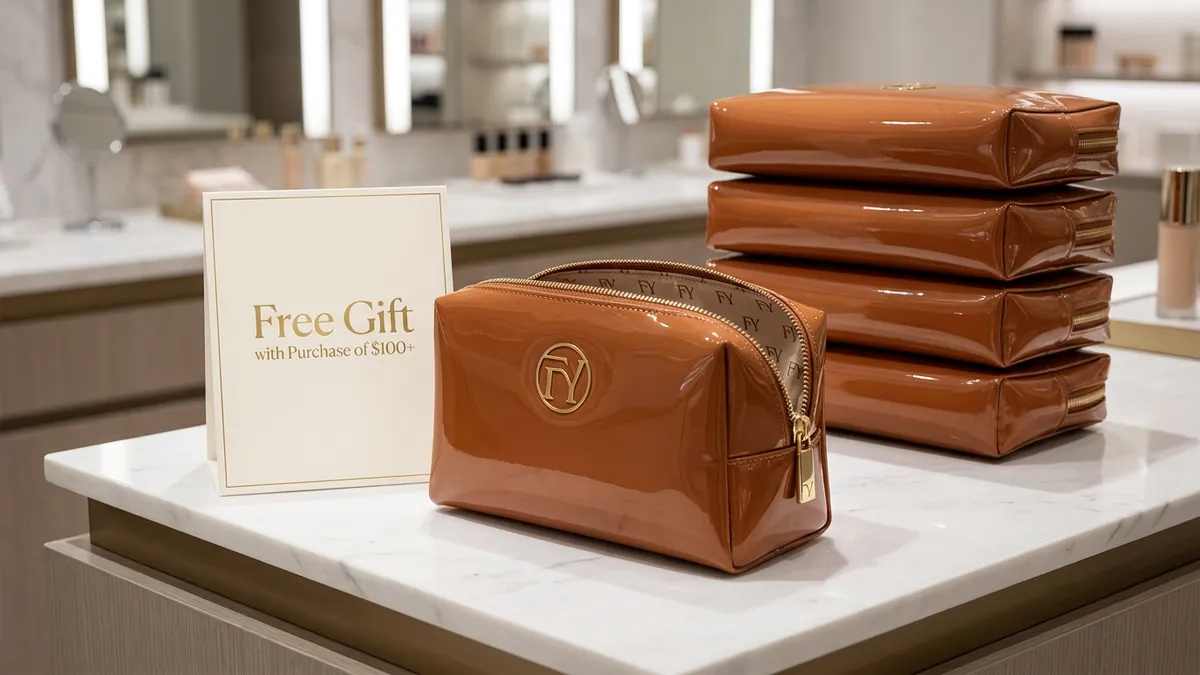
Every holiday season, the beauty industry gives away bags by the million. The gift-with-purchase — spend past the threshold, receive the branded pouch filled with minis — is one of the most reliable conversion mechanics in retail: it raises average transaction value, moves the customer past the spending threshold she was hovering under, creates the holiday-set gifting unit, and puts the brand’s name on an object that lives in handbags, gym bags, and bathroom counters for years afterward. The bag is almost always the vessel: high perceived value relative to production cost, universally useful, flat-packable at volume, and a printable canvas for the brand’s identity.
The GWP brief is unlike any other in bag manufacturing, because its two governing constraints pull in opposite directions. The cost constraint is absolute: the GWP is a marketing expense, budgeted per unit against the campaign’s economics, and the per-unit number is tight in a way no retail product’s is. The brand constraint is equally absolute: the pouch wears a beauty brand’s logo — often a prestige brand whose customers pay premium prices for everything else that logo touches — and a GWP that feels cheap does not read as a generous free gift; it reads as evidence about the brand. The customer never knows the pouch’s cost. She only knows how the zipper pulls, how the material feels, and whether the brand’s signature color is exactly right.
Resolving that tension is a production discipline: knowing precisely where the customer’s hands and eyes will land, spending the tight budget there, and saving everywhere else. That discipline is this guide.
The GWP vertical runs on a small family of proven formats, each with a distinct ratio of perceived value to production cost.
| Format | Construction | Perceived Value | Cost Profile | Campaign Role |
|---|---|---|---|---|
| Flat zip pouch | Two panels, one zip, lined or unlined | Moderate — useful, familiar | The lowest cost in the family; minimal material, minimal labor, flat-packs at maximum density | The volume workhorse — the threshold-tier gift and the multi-piece set component |
| Boxy cosmetic bag | Flat pouch + boxed corners or gusset for standing volume | High — “a real makeup bag”; stands open on a counter | Modest step up (the corner boxing adds minutes, the volume adds material) | The hero GWP — the format most holiday campaigns center on; the best perceived-value-per-cost in the family |
| Wash bag / train case | Structured rectangular body, wide U-zip opening, sometimes a handle | Very high — reads as a purchasable product | The family’s cost ceiling: structure, more material, more labor | The top-threshold gift and the “spend more, get the deluxe gift” upgrade tier |
| Mini tote | Small open or zip-top tote in canvas or cotton | High in the current tote-culture moment — visibly carried, socially shared | Efficient: simple construction, though more material area than a pouch | The campaign with content ambitions — the GWP that gets photographed in the wild |
| Drawstring pouch | One or two panels, channel, cord | Low-moderate — reads as packaging more than product | The absolute cost floor | The set-component and inner-wrap role, not the headline gift |
The format decision rule: match the format’s perceived value to the purchase threshold it rewards. A flat pouch against a high spending threshold feels stingy and suppresses the mechanic; a train case against a low threshold spends the campaign budget generating no incremental behavior. Most strong campaigns ladder two tiers — the boxy cosmetic bag at the main threshold, the wash bag or a filled version at the deluxe tier.
The GWP budget cannot fund quality everywhere, and it does not need to. The customer’s experience of the pouch concentrates in a handful of touchpoints — and the production spec should concentrate the budget on exactly those, stripping cost everywhere the customer will never look.
| Touchpoint | Why It Carries the Experience | The Spec |
|---|---|---|
| The zipper pull | The single most-handled component; the customer opens the pouch hundreds of times, and a gritty zip is the fastest “cheap” signal in the format | A smooth-running coil zip with a substantial pull — an oversized molded pull, a webbing loop, or a small PU tab; the pull upgrade costs almost nothing and transforms the daily interaction |
| The exterior hand-feel | The first three seconds — the material’s touch decides the “nice free gift” verdict before the logo is even read | The material’s surface quality matters more than its specification: a well-finished polyester with a soft coating, a matte-touch PU, or a substantial cotton canvas at honest weight — chosen by swatch hand-feel, not by datasheet |
| The print/brand execution | The logo is the point of the entire program; a fuzzy print or off-shade brand color fails the campaign at the counter | The brand-precision section below — this is the least negotiable budget line |
| The lining (one grade above expected) | The inside of a cosmetic pouch is seen every day and wiped monthly; an unlined or raw-seamed interior undercuts the gift | A wipeable coated lining or clean bound seams; on beauty GWPs specifically, a wipe-clean interior is a functional requirement, not a luxury — makeup happens |
| The structural corners (boxy formats) | The boxed corner is what makes the pouch “a real makeup bag”; collapsed or asymmetric corners break the illusion | Clean, symmetric corner boxing with adequate seam allowances — a construction-discipline item, not a material cost |
| Economy | Mechanics |
|---|---|
| Single-material construction | One shell material, self-fabric or minimal trim — every additional material is an additional procurement line, incoming inspection, and cutting operation at campaign volume |
| Construction simplification | No interior pockets, no hardware beyond the zip, no edge paint (turned or bound edges), no base feet — each deletion is trivial per unit and enormous across a six-figure run |
| Print over label | A printed logo replaces woven labels, metal badges, and embossed patches at a fraction of the applied cost — and executed well (below), it reads cleaner |
| Flat-pack density | The flat pouch’s freight superpower: hundreds per carton; even the boxy format ships flat-folded with the corners assembled by the final user’s first use — freight per unit at campaign volume is a budget line worth engineering |
| Honest volume leverage | The GWP’s one great advantage: quantity. Six-figure runs amortize setup, print screens, and lab dips to near-zero per unit and command the material pricing that retail programs never see — the volume IS the cost engineering |
The GWP’s client is usually a brand with the strictest identity standards in consumer goods. Beauty brand guidelines specify logo clearspace, minimum sizes, approved lockups, and Pantone values to the decimal — and the pouch must hit them at unit fifty thousand exactly as it did on the strike-off.
| Standard | Production Practice |
|---|---|
| Color matching on coated substrates | The brand’s Pantone is matched as a lab dip on the actual shell material — coated polyester, PU, and cotton each render the same Pantone differently; approve the dip on the production substrate under D65 and store light, with the ΔE tolerance in the PO (≤ 1.5 for the brand’s signature color is the working standard) |
| Print fidelity | Screen print for bold single- and two-color marks (the volume standard: durable, opaque, cost-efficient at scale); heat transfer for fine detail and gradients; sublimation for all-over prints on polyester; embossing/debossing on PU for the logo-restrained prestige register — the method chosen by the artwork, proofed as a physical strike-off on the production material, and approved before screens are burned for the full run |
| Placement tolerance | Logo position specified from fixed reference edges with a ± 2 mm tolerance — at campaign volume, placement drift across print batches is the most common brand-compliance failure, and it is caught by a placement jig and an hourly pull, not by hope |
| Print durability | The pouch lives among cosmetics, oils, and alcohol-based products: specify crock testing (dry and wet) and a cosmetic-contact rub test (the printed surface rubbed against a swatch carrying common product residues) — a logo that smears onto a customer’s hands is a campaign-ending defect |
| The counter test | The approval standard that matters: the strike-off viewed at counter distance under retail lighting next to the brand’s printed materials — the pouch will live beside the brand’s packaging at the point of sale, and the color match is judged there, not in the factory |
A GWP pouch is not regulated as a cosmetic — but it travels with cosmetics, is distributed by companies with rigorous vendor standards, and enters markets with chemical regulations that apply to the bag itself.
| Requirement | What It Means for the Program |
|---|---|
| Restricted substances | Phthalates in PVC-coated materials and prints, heavy metals in pigments, and formaldehyde in finishes are the standing concerns: specify REACH-compliant materials for EU-bound campaigns and California Proposition 65 awareness for U.S. programs, with test reports from accredited labs on the shell material, lining, zip, and inks |
| The PVC question | Many beauty conglomerates and retailers have PVC restrictions or phase-out commitments — confirm the client’s policy before specifying any PVC-coated material, and default to PU-coated or TPU alternatives when in doubt |
| Retailer vendor standards | Campaigns distributed through major beauty retail carry the retailer’s own compliance stack — testing protocols, social-compliance audits of the factory, and packaging rules — which the manufacturer must be prepared to evidence; ask for the vendor manual at briefing, not at shipment |
| Social compliance | Prestige beauty clients routinely require current factory audits (BSCI, Sedex/SMETA, or client-specific) as a precondition — a manufacturer without current audit documentation is not actually in this vertical |
Beauty is among the most ESG-committed consumer categories, and the GWP — produced in the campaign’s largest unit volumes — is increasingly where those commitments are audited. The good news: the GWP formats adapt to certified sustainable materials with almost no cost or process penalty at volume.
| Upgrade | Application |
|---|---|
| GRS-certified RPET shell and lining | Recycled polyester renders print and color identically to virgin; the “made from recycled bottles” line joins the campaign’s own messaging, and the GRS Transaction Certificate satisfies the client’s reporting |
| Organic or recycled cotton (GOTS/GRS) | The mini-tote and natural-canvas register |
| Solvent-free adhesives and water-based inks | The odor-free unboxing (a pouch that smells chemical inside a luxury holiday set is a documented complaint pattern) and the VOC line in the client’s ESG report |
| FSC packing materials | The polybag-free, paper-banded packout that beauty retailers increasingly mandate |
GWP campaigns run on the beauty industry’s holiday-set calendar, which locks earlier than most buyers expect — holiday sets are planned in spring and committed by summer.
| Milestone | Timing | Note |
|---|---|---|
| Campaign brief + format/budget lock | March–May | The holiday set’s components, thresholds, and GWP tiers are decided here |
| Strike-offs + lab dips + pre-production sample | May–June | The brand’s approval cycle has its own internal timeline — build two weeks of client-side review into the plan |
| Compliance testing | June (parallel) | Accredited-lab reports on the approved materials and inks |
| Bulk production | June–August | A six-figure run occupies real line-weeks; the volume that makes the economics work is the same volume that makes the calendar unforgiving |
| Freight | August–September | Campaign volume ships by ocean or not at all — the freight budget assumes it, and the calendar must protect it |
| Distribution to counters/DCs | September–October | The retailer’s DC receiving windows are fixed; holiday sets build in October |
| The campaign | November–December | The pouch on the counter, filled and free |
| Wave 2 (spring) | Reorder in December–January | The strongest campaigns re-run the tooling: same pouch, spring colorway, Mother’s Day threshold — the second wave on amortized setup is the program’s best margin |
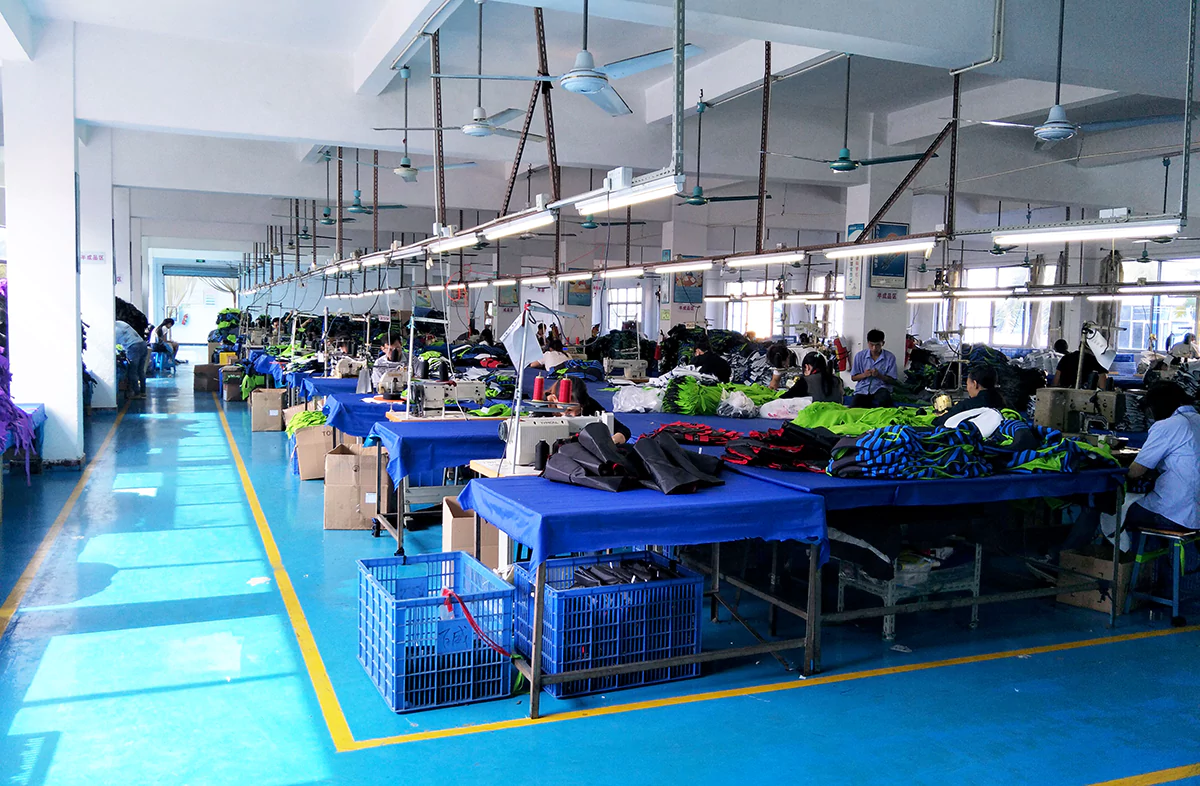
FYBagCustom is Your Trusted Custom Bag Manufacturer in China, with 15+ years of manufacturing experience, 500+ staff, and a 5000 m² facility built for exactly this vertical’s demand: campaign volume, campaign deadlines, and brand-guide precision. For beauty brands, retail marketers, and promotional buyers running GWP programs, our capabilities include:
Contact our development team to brief your GWP campaign — the format tiers, the brand standards, the compliance stack, and the volume calendar.
The GWP bag is the strangest brief in the industry — a marketing expense wearing a prestige logo — and it is won by spending a tight budget with perfect aim. For beauty brands and promotional buyers running Q4 campaigns, three core takeaways:
If you are running a Q4 gift-with-purchase campaign and need volume, precision, and a calendar that holds, contact FYBagCustom to brief the program — and receive strike-offs on your brand’s exact color in 5–7 days.
FYBagCustom produces GWP campaigns at six-figure volume with brand-guide precision — ΔE-toleranced signature colors, touchpoint-engineered pouches, full compliance stacks, and calendars locked to your counter date. Strike-offs in 5–7 days.
Start Your Custom Bag Project →