Tel/WhatsAapp:+86 18011919834
E-mail: chloe.x@fybagcustom.com

Tel/WhatsAapp:+86 18011919834
E-mail: chloe.x@fybagcustom.com
Send Your Inquiry Today

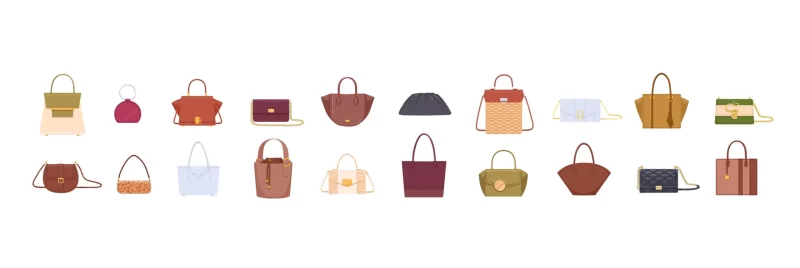
Who this guide is for: brand owners and product developers adding FW26 animal-print SKUs — and specifically the season’s freshest expression of them. Animal prints ran across the Spring/Summer and Fall/Winter 2026 runways, most frequently on handbags, with Givenchy’s fierce-and-refined statement leading the story — but the season’s defining detail is which prints: per the trend reporting, leopard is not the most popular choice this cycle. Zebra, tiger, snakeskin, and cowhide dominated the collections instead, and the editors’ consensus arrived in a phrase repeated across outlets — most animal prints are basically neutrals — with tiger crowned the next fashion-girl neutral and zebra flagged as a pattern set to take over the year. That consensus is a merchandising instruction as much as a styling one: the animal print moves from the statement corner of the line into the neutral rotation, which changes the buy depth, the palette, and the production brief. This guide is the FW26 update to our animal-print fundamentals: the four non-leopard prints translated print-by-print into production specs, the print-versus-emboss decision that determines cost and realism for each, and the placement engineering that separates a considered animal-print bag from yardage with handles.
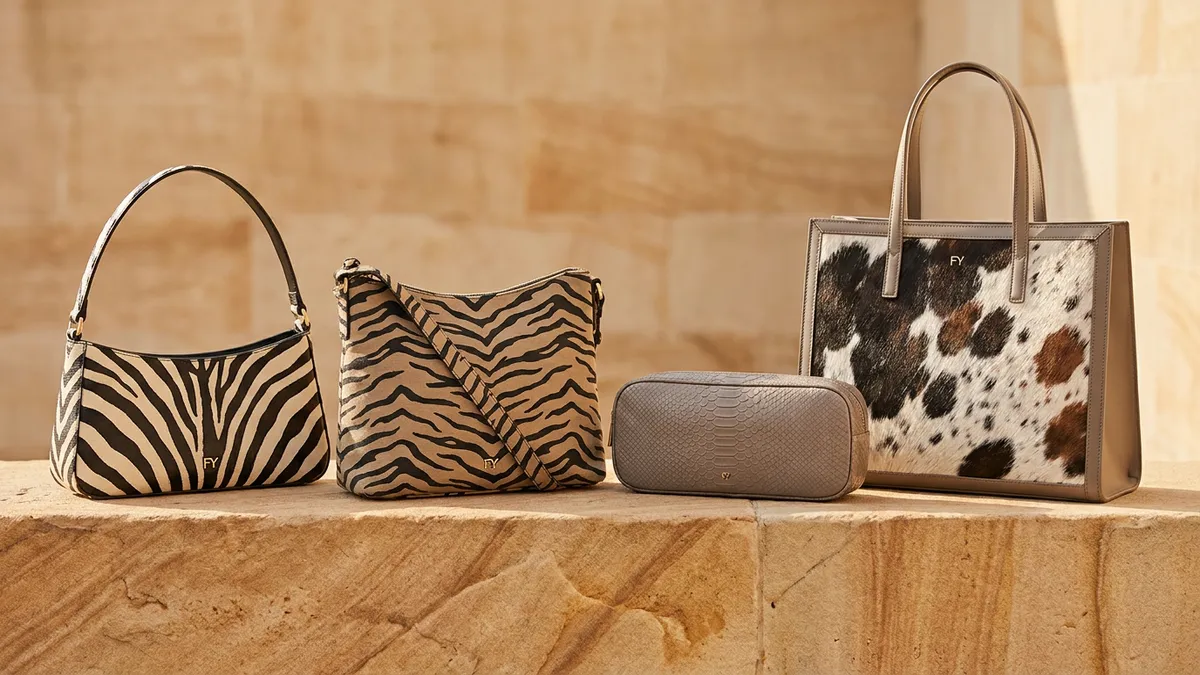
The animal print’s FW26 promotion is a category reclassification. For years the leopard bag was merchandised as the wardrobe’s one wild card — a single statement SKU, bought shallow, styled as the outfit’s exclamation point. The 2026 season overturned both halves of that logic. First, the print mix rotated: buyers and editors across the season noted zebra, tiger, and snakeskin dominating over the more ubiquitous leopard, with cowhide rounding out the story — leopard’s decade of ubiquity finally making the other prints the fresh ones. Second, and more commercially consequential, the styling consensus reclassified the whole family: animal prints as neutrals, endlessly versatile, pairable with almost anything — tiger and zebra grounding all-black outfits, snakeskin against camel, the prints doing the job beige used to do.
For a brand, “basically neutrals” translates into numbers: a neutral is bought at rotation depth, not statement depth; it earns a place across multiple silhouettes rather than one; and it must be produced to daily-carry standards, because a neutral is carried daily. For a factory, the four prints are four different technical assignments — two of them (zebra, tiger) are high-contrast directional prints where placement and crispness carry everything; one (snakeskin) sits exactly on the print-versus-emboss decision line; and one (cowhide) is a placement print whose entire read depends on where its patches land on the panel. This guide takes them in turn, then builds the decision framework and the placement system that serve all four.
| Old Logic (Statement Print) | New Logic (Print as Neutral) | Production Consequence |
|---|---|---|
| One animal SKU per season | The print family runs across 2–4 silhouettes | Print programs share materials and placement systems across SKUs — a coordinated print buy, not a one-off |
| Shallow buy, trend-risk pricing | Rotation depth on the proven prints | The print material commitment rises; per-meter print economics and repeat planning start to matter |
| Styled as the outfit’s exclamation | Styled as the grounding element against black, camel, cream | The palettes stay natural (black/white, tan/black, grey-brown, brown/white) — saturated fashion-color animal prints exit the brief; the print IS the color story |
| Occasional carry | Daily carry | Daily-bag durability standards apply: print crocking and lightfastness specs, abrasion behavior at grip zones, the full construction package underneath |
The leopard note, honestly: leopard still sells — a decade of ubiquity built a permanent customer — but it is this season’s base, not its story. The freshness premium, the content, and the editorial oxygen belong to the four prints below; a balanced program carries leopard at replenishment depth and spends its newness budget on the non-leopard four.
| Dimension | Production Profile |
|---|---|
| The pattern | High-contrast black (or near-black) on white/cream — organic, irregular stripes with no true repeat rhythm visible at bag scale |
| The crispness spec | Zebra lives or dies on edge definition: the stripe boundary must print sharp, because bleed or soft registration turns zebra into smudge. Specify edge sharpness on the approved strike-off and inspect per print lot — a 10× loupe at the stripe boundary is a ten-second check |
| The ground color decision | True white grounds read graphic and modern (and carry light-color soil exposure at the grip zones — the light-program handling disciplines apply); cream/ecru grounds read vintage-safari and forgive daily contact — the commercial default |
| Direction | Zebra stripes have a flow — on the animal they run vertically down the body; on the bag, vertical stripe orientation on the main panels is the convention that reads “right,” with deliberate horizontal treatments as a design choice, never an accident. Direction is specified per panel in the cutting documentation, exactly as nap direction is |
| Scale | Stripe width scaled to the bag: 15–25 mm stripes on midi bags; oversized 30–40 mm stripes are the fashion-forward variant that needs the placement engineering below to avoid a two-stripe front panel |
| Best expression | Printed smooth PU or leather for the graphic read; calf-hair-effect plush for the luxe textural one |
| Dimension | Production Profile |
|---|---|
| The pattern | Elongated, irregular, tapering stripes — denser and more directional than zebra, with a distinctive broken rhythm |
| The two palettes | The classic orange/black (the statement version — the Gucci-coat reference) and the neutralized tan/black or taupe/brown (the version the “fashion-girl neutral” consensus is actually about — the volume palette). Run both: orange as the accent SKU, neutralized as the depth buy |
| Direction, doubled | Tiger’s stripes taper — they have not just an axis but a flow direction, and panels cut with opposing flow read as wrong even to eyes that can’t name why. Direction-mark every panel; mirror-pair the gussets |
| The repeat risk | Tiger patterns repeat more visibly than zebra at bag scale (the distinctive stripe clusters recur); the repeat-concealment rule below applies at full strength |
| Best expression | Printed smooth or fine-pebbled surfaces; tiger’s fine stripe tapering does not survive coarse textures |
| Dimension | Production Profile |
|---|---|
| The pattern | Fine tessellated scales in grey, taupe, brown, and bone gradients — the most “texture-native” of the four prints, because real snakeskin’s pattern IS its texture |
| The decision | Snakeskin is the print where the production route determines the entire read: flat-printed snake on smooth material reads distant-credible and budget up close; embossed snake (scale relief pressed into the material) reads premium at touch; and print-plus-registered-emboss — the pattern printed and the scale texture embossed in registration with it — is the category’s convincing standard (the full framework below) |
| The exotic-adjacency rules | Everything from our croc program applies: glaze options (matte snake for the quiet register, glossed for the exotic drama), the emboss-depth swatch approval under raking light, and the labeling rule — “snake-print” or “snake-embossed,” never implying genuine exotic; zero CITES exposure by construction |
| Best expression | Print+emboss on PU or leather for the body program; flat print acceptable on small formats (the clutch and SLG tier) where the surface is small enough that texture matters less |
| Dimension | Production Profile |
|---|---|
| The pattern | Large, irregular organic patches — black/white, brown/white, or tricolor — at a scale where a single patch can exceed an entire panel |
| The placement problem | Cowhide’s patch scale means the panel IS the composition: a front panel that catches one patch edge in a corner reads accidental; a panel with a patch composed at its center reads designed. Cowhide is produced as an engineered-placement print — panels positioned on the printed material against a placement template, exactly as croc belly-zones are placed — and the yield cost of that placement (10–15%) is the print’s real price |
| The hair-on question | The cowhide reference is hair-on hide; the vegan/volume expression is calf-hair-effect plush (a very low-pile printed pile fabric). The plush route imports the fur program’s disciplines whole: pile direction marking, shedding QC (tape test, stroke test), and trim-system construction with hardware on smooth zones |
| Best expression | Calf-hair-effect plush for the trend-forward statement; printed smooth for the graphic budget version; genuine hair-on hide at the premium tier with its own sourcing lane |
The brief’s core production question — print it or emboss it? — resolves differently per print, and the framework is worth stating as a system:
| Route | What It Is | Cost Position | Realism | Which Prints |
|---|---|---|---|---|
| Flat surface print | The pattern printed (transfer, rotary, or digital) on smooth PU, leather, or coated fabric | The floor — print cost only, any pattern, any run size with digital | Reads correct at distance; visibly flat at touch | Zebra and tiger (their real-animal reference is hair pattern, not surface relief — flat print is honest to the reference); cowhide smooth versions |
| Emboss only | The pattern pressed as texture, colored by the base material | Mid — plate/roller cost amortized over the run | Texture-true; pattern limited to what relief can express | Snake and croc territory — patterns that ARE textures; not applicable to stripe prints |
| Print + registered emboss | The pattern printed AND the matching texture embossed in registration | The premium route — two processes, registration control | The convincing standard for scale patterns: color depth from the print, touch from the emboss | Snakeskin’s best expression; premium cowhide (patch print + subtle hair-grain emboss) |
| Pile print (calf-hair effect) | The pattern printed on a micro-pile fabric | Mid-premium — pile material plus print | The tactile luxe read; the season’s texture crossover | Cowhide’s trend expression; zebra’s luxe variant |
The registration spec for print+emboss: the printed pattern and the embossed relief must align within ± 1 mm — a scale printed here and embossed there reads as exactly the manufacturing error it is. Registration is verified on the strike-off under raking light (which reveals the relief) and inspected per roll at incoming.
The route-to-tier logic: most programs run two routes in one line — flat print on the volume and small-format SKUs, print+emboss or pile on the hero — in the same pattern and palette, so the line reads as one story at two touch levels.
| Spec | Standard | Why |
|---|---|---|
| Method by run size | Digital print for sampling, small runs, and placement prints (no plate cost, per-panel composition possible); transfer and rotary for volume (per-meter economics at scale) | Cowhide’s engineered placement is digital’s natural territory; zebra/tiger volume runs are rotary’s |
| Repeat vs panel size | The pattern repeat must exceed the largest panel dimension, or panels must be cut so no repeat lands twice within one visible panel — the croc rule, applied to prints | The eye finds a repeated stripe cluster or patch with unsettling speed; the visible repeat is the budget tell |
| Crock and light fastness on prints | Printed surfaces carry their color in a surface layer: dry crocking 4 / wet 3 minimum per lot, and lightfastness 4+ verified on the actual print system — with the wet-crock test doubled in importance on dark-on-light prints (zebra’s black on cream), where transfer shows on the bag itself as smudge | The daily-neutral positioning means daily contact; a zebra that greys its own ground has failed in a way no styling survives |
| The strike-off gate | Every print approved as a physical strike-off on the production substrate — pattern scale, edge crispness, ground color, and (for print+emboss) registration — under both booth illuminants | Screen previews lie about scale and crispness; the strike-off is the print’s lab dip |
| Rule | Application |
|---|---|
| Direction discipline | Zebra and tiger carry a specified stripe axis and flow per panel; cowhide carries a patch-composition template; snake scale patterns carry a head-to-tail direction. Every panel direction-marked; QC verifies at panel pairing — the identical system to nap and croc discipline, because it is the same discipline |
| Mirror-pairing | Gussets and symmetric panel pairs cut as mirrored placements — an asymmetric stripe layout on a symmetric silhouette reads as error |
| Focal composition | The pattern’s most characterful zone (zebra’s boldest stripe cluster, the cowhide patch, tiger’s densest striping) composed at the front panel and flap centers; quieter pattern zones to gussets and base |
| The yield honesty | Directional cutting, mirroring, and focal placement cost 8–15% in material yield across the four prints — the same “cheapest luxury signal” economics as every pattern discipline in the program: no extra material grade, no extra process, only cutting-room care |
| SKU | Print + Route | Role |
|---|---|---|
| Zebra East-West shoulder bag | Cream-ground zebra, flat print on smooth PU/leather | The graphic hero — the all-black outfit’s grounding piece |
| Tiger crossbody | Neutralized tan/black, flat print | The volume neutral — the depth buy the consensus is pointing at |
| Snake clutch + SLG set | Grey-taupe, print+registered emboss on the clutch; flat print on the small goods | The exotic-adjacent evening-to-day crossover |
| Cowhide statement tote | Engineered-placement patch, calf-hair-effect plush or smooth | The content SKU — the composed patch is the photograph |
| Leopard replenishment | Per the existing program | The base, bought at replenishment depth — present, not promoted |
| Tiger orange accent mini | Classic orange/black on a mini handbag format | The statement note — small format, small run, full flavor |
Trim and hardware: all six run smooth black or chocolate leather/PU trim (handles, straps, base) and one hardware finish — gold against the warm prints, gunmetal for the graphic zebra program — so the print family reads as a coordinated story across the full fabric range.
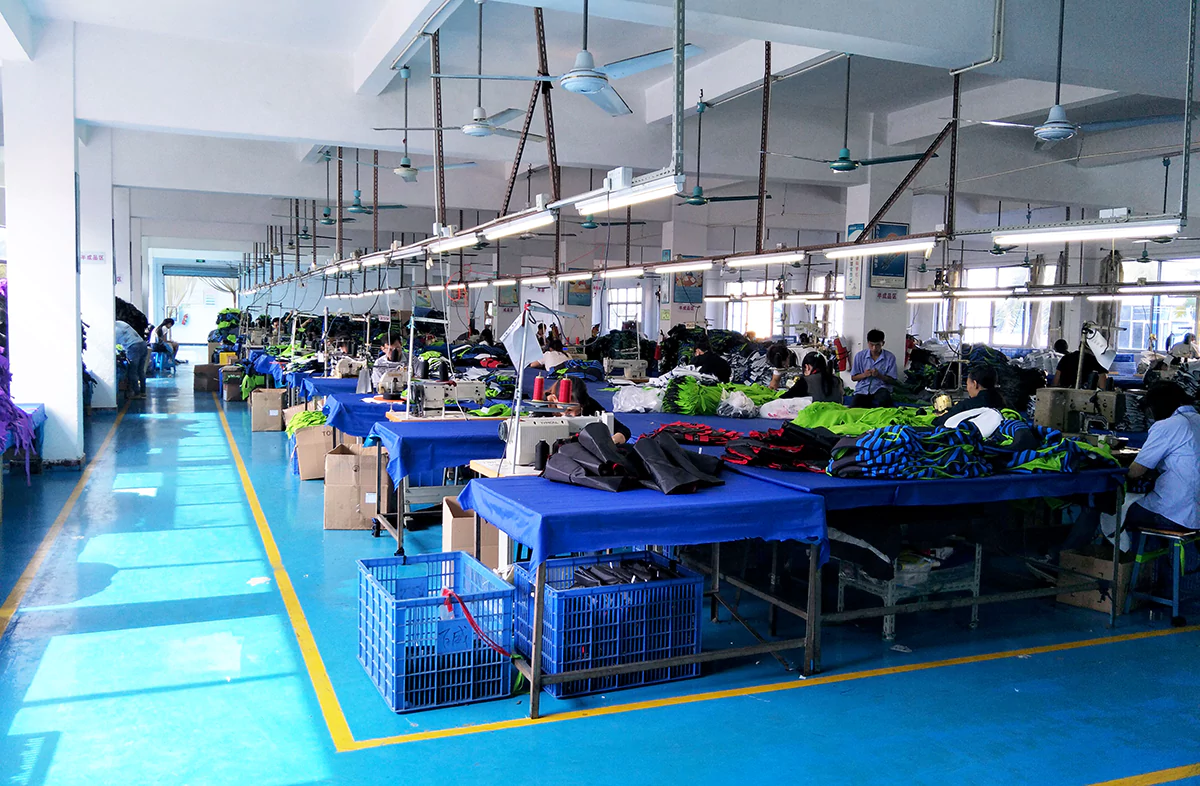
FYBagCustom is Your Trusted Custom Bag Manufacturer in China, with 15+ years of manufacturing experience across printed, embossed, and pile animal programs. For brands producing the FW26 non-leopard story, our capabilities include:
Contact our development team to brief your animal program — the prints, the routes, the placements, and the depth.
The FW26 animal story is a rotation (leopard to the base, the fresh four to the front) and a reclassification (statement to neutral) — and both are production instructions. For B2B buyers adding the season’s animal SKUs, three core takeaways:
If you are producing the FW26 non-leopard story and need the routes, the placements, and the fastness specs engineered from the strike-off forward, contact FYBagCustom to brief your program — and receive placement-cut samples in 7–10 days.
FYBagCustom runs zebra, tiger, snakeskin, and cowhide across all four production routes — crisp-edged prints, ± 1 mm registered embossing, engineered patch placement, and pile programs with full shedding QC — at the rotation depth the season’s consensus demands. Placement-cut samples in 7–10 days.
Start Your Custom Bag Project →