Tel/WhatsAapp:+86 18011919834
E-mail: chloe.x@fybagcustom.com

Tel/WhatsAapp:+86 18011919834
E-mail: chloe.x@fybagcustom.com
Send Your Inquiry Today


Who this guide is for: brand owners, inventory planners, and sourcing managers scheduling holiday handbag production. The single biggest Q4 mistake in this category is not a bad product, a wrong colorway, or a missed trend — it is ordering too late. Handbag sales surge in October, accelerate through Black Friday, and peak through December gifting, which means the production that serves that demand has to start in summer. Every year, brands discover this in September and spend the margin of their entire holiday season on air freight, expedite fees, and partial shipments. This guide works backward from the holiday peak through every stage — warehouse receiving, ocean freight, final inspection, bulk production, materials, sampling, and the brief itself — with the dates, the buffers, the channel-specific cutoffs, and the decision tree for brands that are already late. If you are reading this in July, you are standing at the last comfortable window. If you are reading it in September, skip to the late-start decision tree.

The Q4 handbag season is not one peak but a sequence of them. Gifting research and early shopping begin in October. Black Friday and Cyber Monday concentrate the year’s single largest demand spike in late November. December carries the gifting wave through the final shipping cutoffs, and the week after Christmas adds a self-purchase and gift-card surge that most planners forget to stock for. A holiday program that arrives in warehouse in mid-November has already missed a third of its season; one that arrives in December has missed the season entirely, and its inventory becomes January markdown stock.
The arithmetic that produces this failure is simple and unforgiving. A custom handbag program requires sampling, material procurement, bulk production, final inspection, ocean freight, and channel receiving — stages that sum, with honest buffers, to roughly 18–22 weeks from brief to sellable inventory. Count backward 20 weeks from a late-October in-stock date and you land in early June. Count backward from Black Friday and you land in mid-July. The brands that hit the season are not faster than the brands that miss it; they simply started when the calendar said to start, in the quarter when holiday feels impossibly far away.
This guide lays out that calendar stage by stage, then covers the three risk events that compress it (Golden Week, peak-season freight, and channel receiving cutoffs), the product types that need extra runway, and the honest options for brands starting late.
The calendar below plans for the full season — inventory in warehouse and sellable by mid-to-late October, ahead of the demand curve rather than chasing it. Dates assume the 2026 season (Black Friday: November 27) and ocean freight from South China to the U.S.; adjust proportionally for other lanes.
| Stage | Duration | Calendar Window (2026) | What Happens |
|---|---|---|---|
| 1. Brief + line planning | 1–2 weeks | Early–mid June | Final SKU list, quantities per colorway, tech packs completed, target retail and margin locked |
| 2. Sampling | 2–3 weeks | Mid June – early July | First samples in 5–10 days; one revision round (plan for it — two-round convergence is a skill, not a default); PP approval |
| 3. Material procurement | 2–3 weeks | Early–mid July | Bulk materials ordered against the approved PP: main material, lining, hardware, packaging; lab-dip confirmations for custom colors |
| 4. Bulk production | 4–6 weeks | Mid July – late August | Cutting through assembly through finishing; duration scales with quantity and construction complexity |
| 5. Final inspection + packing | 1 week | Late August – early September | AQL final inspection, packing, carton marking; third-party inspection scheduled here if required |
| 6. Ocean freight | 4–5 weeks door-to-door | Early September – early October | Port drayage, sailing (14–20 days trans-Pacific), destination customs, inland transit |
| 7. Channel receiving | 1–3 weeks | Early–mid October | Warehouse inbound, or Amazon FBA check-in (the slowest and least controllable stage in Q4 — see below) |
| 8. Sellable | — | Mid–late October | Live for the October surge, five-plus weeks ahead of Black Friday |
Total: roughly 18–22 weeks. The window for starting a full-scale 2026 holiday program at ocean-freight economics is, as of mid-July, days — not weeks — from closing.
Every stage above carries a buffer, and every buffer exists because a specific, recurring failure consumes it:
| Buffer | The Failure It Absorbs |
|---|---|
| The second sampling round | The first sample is almost never approved as-is; a program that plans zero revision rounds is planning to approve a flawed PP under deadline pressure — and the PP’s flaws replicate across every bulk unit |
| Material procurement as its own stage | Custom lab-dip colors, specialty hardware, and embellishment components have supplier lead times of their own; “the factory has the material” is true only for stock articles in stock colors |
| The full week for inspection | A failed AQL inspection needs rework time; an inspection squeezed against the vessel cutoff creates the worst decision in sourcing — ship the failed lot or miss the boat |
| Five weeks door-to-door, not “14 days on the water” | The sailing is 14–20 days; the drayage, customs, rail or truck inland leg, and appointment scheduling at the destination add the rest — quoting the sailing time as the freight time is the most common timeline self-deception |
| Receiving as a stage, not an instant | Q4 warehouses are at capacity; FBA check-in that takes 3 days in March takes 2–3 weeks in October |
China’s National Day holiday closes factories for roughly a week at the start of October, and its effects radiate wider than the closure itself: the two weeks before Golden Week are the year’s most congested production and booking window as every shipper races the holiday, and the week after brings port backlogs and equipment shortages.
| Rule | Implication |
|---|---|
| Production must finish before late September | Any bulk run still open when Golden Week arrives loses the holiday week plus the restart friction on both sides of it |
| Do not plan a sailing in the pre-Golden-Week crush | Late-September bookings face rolled cargo and peak congestion; the master calendar above sails in early September precisely to clear this window |
| Reorders cannot thread Golden Week | A restock decision made in late September cannot produce until mid-October — which is why the initial buy must be sized for the full season (see the restock trap below) |
Trans-Pacific freight enters its annual peak in late summer as every consumer category ships for the holidays. Three effects hit the calendar: rates rise (budget the landed-cost model on peak rates, not spring rates), transit reliability drops (rolled bookings and port congestion add days to weeks), and space tightens (bookings need 2–3 weeks of advance notice rather than days). The master calendar’s early-September sailing sits at the front edge of peak season; every week of delay after that ships into progressively worse conditions.
The warehouse date is not the sellable date, and each channel has its own Q4 gate:
| Channel | The Cutoff Reality | Planning Rule |
|---|---|---|
| Amazon FBA | Amazon publishes annual holiday inbound deadlines — historically in the second week of October for Black Friday availability and mid-November for Christmas — and Q4 check-in runs weeks slower than off-season; inventory arriving at the deadline is not sellable at the deadline | Target FBA delivery two-plus weeks before the published cutoff; treat the cutoff as the fail date, not the plan date |
| DTC / 3PL | More forgiving than FBA, but Q4 3PL receiving queues stretch, and your launch assets (photography, listings, ads) need product in hand earlier still | Warehouse by mid-October; photography samples pulled from the bulk shipment air-freighted ahead in September |
| Wholesale / retail | The earliest gate of all: retail partners set holiday floor-sets in October and issue delivery windows in August–September; missing the window is a cancelled PO, not a late one | A wholesale holiday program runs the entire calendar 4–6 weeks earlier — production in June–July, delivery in late August |
The master calendar assumes standard construction. Several holiday-relevant categories need added runway:
| Product Type | Added Time | Why |
|---|---|---|
| Faux fur and shearling-look bags | +1–2 weeks production | Pile handling, sheared seams, and per-unit finishing (vacuum and air-clean) run slower than smooth goods; fur is also bulkier per carton, so freight volume rises |
| Embellished evening and occasion pieces | +2–3 weeks production | Hand beading and stone-setting throughput is the constraint; embellished SKUs start first in the production sequence |
| Distressed and washed-leather programs | +1–2 weeks material and finishing | Tumbled and washed leather arrives from the tannery on its own schedule, and garment-wash stages add post-assembly time |
| New-silhouette launches (bowlers, barrels, frame bags) | +2–3 weeks development | Dedicated pattern sets, dies, and a pattern-correction sample round that cannot be skipped; a holiday launch of a new complex silhouette should sample in May, not June |
| Standard totes, crossbodies, pouches | Baseline | Established patterns on stock-adjacent materials run the master calendar as written — which is why the holiday volume core should lean on proven constructions like the tote and crossbody, with the complex pieces as planned-early accents |
| Gift packaging programs | Runs parallel, but order with the bags | Gift boxes, ribbon, and holiday inserts have their own print lead times; a program that orders packaging in September receives bags in October and boxes in November |
The most expensive lesson of a first holiday season: there is no mid-season ocean restock. A SKU that sells out in early November cannot be replenished by sea before the season ends — the math (production restart + freight + receiving) lands the goods in January. The options at that point are air freight (which consumes most or all of the incremental margin), or watching the listing go dark through the highest-demand weeks of the year.
| Principle | Practice |
|---|---|
| Size the initial buy to the full window | Forecast October through December demand per SKU and buy it all up front; the cost of overbuying a proven SKU is January markdown margin — the cost of underbuying is the season |
| Hold an air contingency, deliberately | Reserve budget (not hope) for one air-freight top-up of the single best-selling SKU, decided by November 1 sales data; one planned air shipment is a strategy — five panicked ones are a margin funeral |
| Pre-book a December production slot | If the brand sells year-round, reserve a factory slot in early December for the post-holiday and spring replenishment — that production must also clear the other end-of-calendar risk, Chinese New Year, which closes factories for two-plus weeks in late January or February |
| Let the factory hold material buffers | For hero SKUs, pre-booked material at the factory converts a restock from a 10–12 week cycle to a 3–4 week one — the difference between a January restock and a mid-December air-freight arrival for the gift-card surge |
| If You Are Starting In… | Ocean-Freight Full Program | The Honest Options |
|---|---|---|
| June | Comfortable — the master calendar with room to spare | Run the full line, including complex silhouettes and embellished pieces |
| Early–mid July | Possible — the calendar with zero slack | Standard constructions only; existing patterns or fast-developing silhouettes; one sampling revision round maximum; book freight now |
| August | Ocean reaches warehouse in November — Black Friday is gone by sea | Split strategy: a reduced core by expedited production + ocean for December gifting, and the hero SKU by air for Black Friday; OR pivot the program to proven simple constructions (pouches, clutches, small accessories) with the shortest production cycles |
| September | No — ocean lands in the January markdown bin | Air-freight-only math: viable solely for high-margin, lightweight SKUs (small leather goods, charms, mini bags) where air cost per unit stays tolerable; otherwise redirect the budget to a strong spring program and pre-book next year’s holiday slot in April |
| October | — | The 2026 season is closed for new production; the correct move is the one late brands rarely make — plan the 2027 season now, in the quarter when the lesson is vivid |
The air-sea middle path: for August starters, sea-air combination services (ocean to a transshipment hub, air for the final leg) split the difference — faster than pure ocean, cheaper than pure air — and suit mid-value goods. They are a compression tool, not a substitute for starting on time.
For a program on the master calendar, the operational rhythm looks like this:
| Weeks Before Black Friday | Calendar | The Program’s State |
|---|---|---|
| 20 | Early July | PP approved; bulk materials ordered; production slot confirmed in writing |
| 16 | Early August | Bulk production mid-run; packaging in print; freight booking placed |
| 12 | Early September | Final inspection passed; containers loaded; photography samples air-freighted ahead |
| 8 | Early October | Vessel arrived; customs cleared; FBA inbound created / 3PL appointment set — Golden Week passing harmlessly because production finished weeks ago |
| 6 | Mid October | Inventory checked in and sellable; listings live; October demand already converting |
| 4 | Late October / early November | First real sales data; the November 1 air-top-up decision made on evidence, not panic |
| 1 | Late November | Black Friday at full stock depth — the entire point of the calendar |
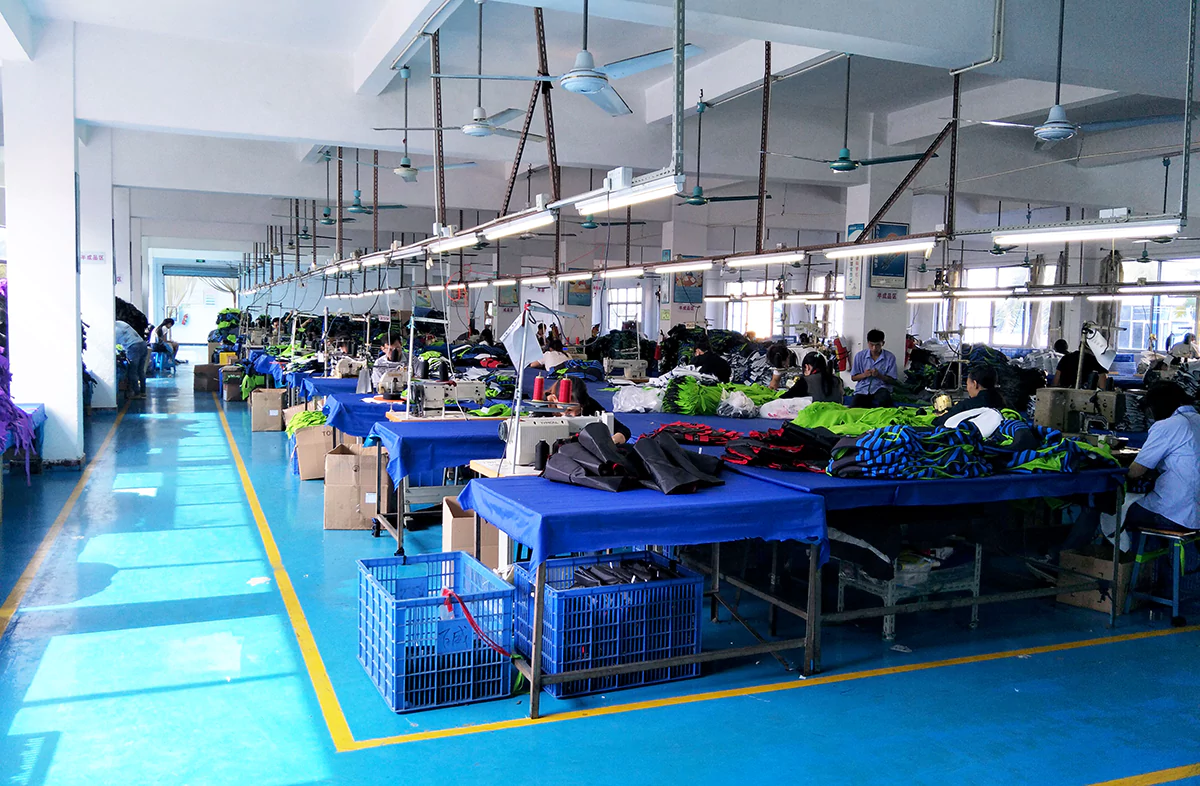
FYBagCustom is Your Trusted Custom Bag Manufacturer in China, with 15+ years of manufacturing experience and a Q4 planning discipline built around one principle: the holiday season is won in June. For brands scheduling holiday production, our capabilities include:
Explore our full custom bag range or contact our development team to lock your holiday calendar — the earlier the conversation, the more of the season you own.
Holiday handbag success is a scheduling achievement before it is a merchandising one. For B2B buyers planning Q4 inventory, three core takeaways:
If you are scheduling holiday production and want the calendar locked before the window closes, contact FYBagCustom to brief your Q4 program — and receive samples in 5–7 days, with the whole season planned backward from your sellable date.
FYBagCustom plans every holiday program backward from your sellable date — Golden Week blocked, peak freight cleared, FBA cutoffs beaten, and restock buffers held — so Black Friday arrives at full stock depth instead of full panic. Samples in 5–7 days.
Start Your Custom Bag Project →