Tel/WhatsAapp:+86 18011919834
E-mail: chloe.x@fybagcustom.com

Tel/WhatsAapp:+86 18011919834
E-mail: chloe.x@fybagcustom.com
Send Your Inquiry Today

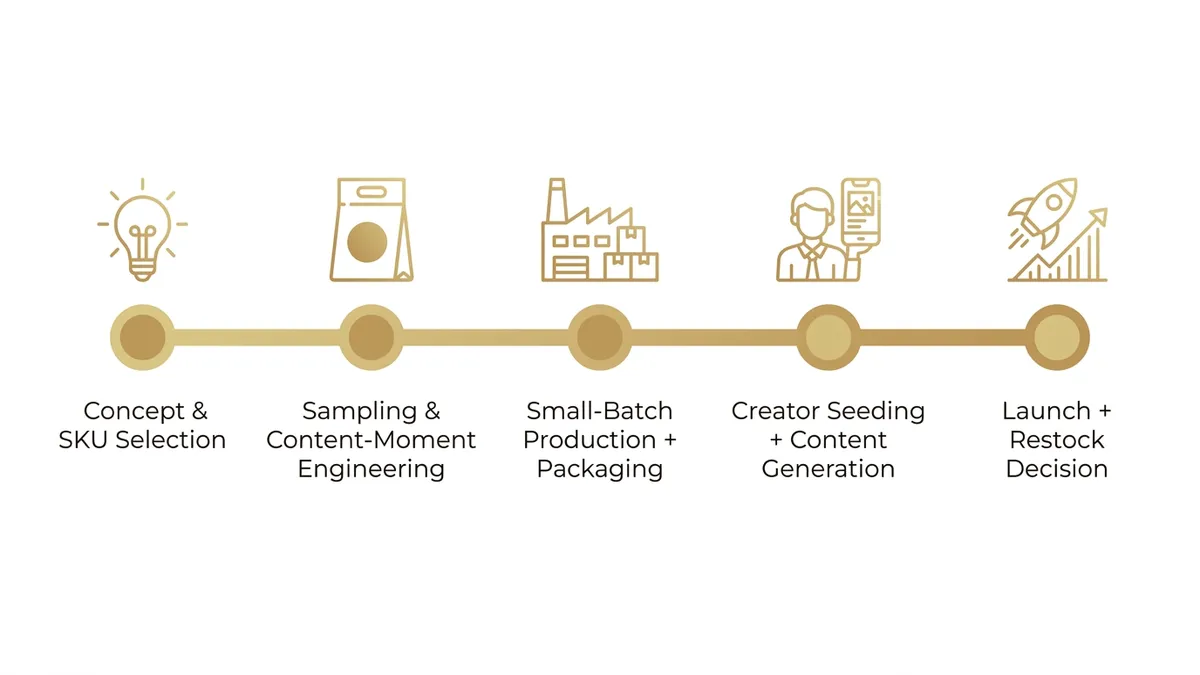
Who this guide is for: DTC brand owners and product developers who understand that TikTok Shop is the fastest-growing commerce channel for personal accessories — 46% of TikTok Shop buyers purchase personal accessories, the #1 category on the platform (PartnerCentric) — and who need a production-side engineering guide for the drop model that the platform rewards. Not “what is TikTok Shop.” Rather: how to engineer a handbag drop from concept through factory through creator seeding through launch through the restock decision, treating the entire cycle as a single production project with a 10–12 week timeline.
The numbers that justify what follows: TikTok Shop is projected to generate roughly 23.4 billion in U.S. ecommerce sales in 2026, a 48% year-over-year increase per eMarketer’s forecast. In Q1 2026 alone, the platform generated an estimated 4.9 billion in U.S. sales — nearly double the prior year’s first quarter. Approximately 50% of U.S. social shoppers are projected to make purchases on TikTok in 2026, and the platform’s buyer base skews 70–75% female. The average buyer under 60 spends approximately 59 per transaction across roughly 12 annual purchases, with an 81.3% repeat-purchase rate. Nearly one in four purchases is impulsive.
Those numbers matter to a factory because they define a production model that is fundamentally different from wholesale or Amazon FBA: small initial quantities, fast restocking, rolling new colorways, and packaging that serves as content infrastructure. The factory that serves a TikTok-native brand must operate at a cadence that traditional wholesale manufacturing was never designed for.
This guide walks through that cadence — a single drop cycle, from SKU concept to sold-out restock — as one continuous engineering project.
TikTok Shop is not a search marketplace. Consumers do not arrive looking for a handbag. They arrive to watch videos — and discover a handbag inside a piece of content. The purchase decision happens inside the video’s attention window, typically 15–30 seconds. This means the product must generate content moments — discrete visual, tactile, or functional beats that sustain viewer attention and delay the scroll.
Before selecting a SKU for a TikTok drop, audit every candidate product against a simple framework: how many camera-ready moments does it produce?
| Content Moment | What the Viewer Sees | Design Feature That Creates It |
|---|---|---|
| The reveal | The creator opens the bag; the interior color contrasts with the exterior — unexpected, delightful | A signature-color lining (orange, dusty rose, electric blue) inside a neutral exterior; the contrast IS the content |
| The everything-fits | The creator loads the bag item by item: phone, wallet, keys, sunglasses, water bottle, laptop — each into its own pocket | 4–6 organized pockets with distinct purposes; a padded laptop sleeve; the interior must be ORGANIZED, not merely spacious |
| The conversion | The creator demonstrates a carry-mode switch: hand carry to crossbody, or shoulder to backpack, in one motion | A detachable, adjustable strap system with a visible, one-handed conversion mechanism |
| The ASMR | The magnetic snap closes with a clean click; the zipper glides; the suede surface is stroked | Quality closures (magnetic snaps with felt damping, lubricated zippers); tactile materials (suede, pebbled PU, soft leather) |
| The color lineup | The creator shows 3–5 colors side by side; the audience comments their preference; the engagement drives algorithmic reach | The hero SKU produced in 3–5 colors (2 neutrals + 1–2 trends); all colors shipped to the creator for one video |
| The unboxing | The creator opens the mailer, peels the branded sticker, reveals the dust bag, unwraps the tissue — each step is a content beat | Branded packaging: custom mailer or box, logo sticker seal, cotton dust bag, acid-free tissue, branded insert card |
The minimum for a TikTok-viable SKU: 3+ content moments. A product with only one (e.g., a plain single-pocket clutch with no organizational features, no contrast lining, no convertible strap) gives the creator nothing to demonstrate — the video becomes a static display, and static displays do not convert on TikTok.
| SKU | Why It Works | Content Moments |
|---|---|---|
| Medium crossbody with organized interior + adjustable strap + contrast lining | The most versatile TikTok handbag format — demonstrates function, capacity, conversion, and color in one video | Reveal (lining), everything-fits (pockets), conversion (strap adjust), ASMR (closure), color lineup |
| Structured midi tote with laptop sleeve + removable pouch | The “day in my life” / “work bag” video — the creator packs it for her commute | Everything-fits (laptop + water bottle), reveal (pouch removal), ASMR (zip glide), color lineup |
| Mini shoulder bag or clutch with chain strap + vibrant color | The “GRWM” (get ready with me) / “date night” video — the creator pairs it with an outfit; the bold color stops the scroll | Color impact (the scroll-stopper), ASMR (chain strap sound + magnetic snap), reveal (interior), styling versatility |
The first-drop recommendation: one hero SKU (the crossbody) in 4–5 colors. A single silhouette in multiple colors is the most production-efficient and content-efficient launch — one pattern, one BOM, one factory setup, five distinct videos.
The sample is not just a production validation — it is a content prototype. Every sample review must include a “camera test” alongside the standard dimensional, material, and construction checks.
| Test | Method | Pass / Fail |
|---|---|---|
| The lining reveal test | Open the bag under ring-light or natural-light video conditions; record on a phone | Pass: the contrast lining is immediately visible and impactful on the small screen. Fail: the lining is too similar to the exterior, or the bag opening is too narrow for the camera to capture the interior |
| The pocket-loading test | Record a real-time video of loading 6–8 items into the bag | Pass: each item has a clear destination (pocket); the process is visually satisfying and takes 20–30 seconds (the ideal content length). Fail: items pile into a single cavity; the “demonstration” is just stuffing |
| The strap-conversion test | Record a one-handed strap conversion | Pass: the conversion is smooth, visible, and takes under 5 seconds. Fail: the conversion requires two hands, fumbling, or is visually confusing on camera |
| The closure sound test | Record the closure with phone audio (no background music) | Pass: a clean click (magnetic snap) or smooth glide (zipper). Fail: a grinding zipper, a weak snap, or a rattling chain — TikTok viewers hear these defects because they are scrolling with sound on |
| The color-on-screen test | Photograph and video each colorway under TikTok-standard lighting (ring light, natural daylight, fluorescent); review how the colors render on a phone screen | Pass: the trend color (butter yellow, sage green) reads as vibrant and distinct on screen. Fail: the color appears muted, muddy, or indistinguishable from a neutral on the small screen |
Action from the camera test: any failure becomes a revision item on the sample revision brief using the same “Current → Required → Action” format from our sample convergence guide. “Lining color: current ivory reads too similar to exterior cream on camera. Required: upgrade to Pantone 17-1463 (burnt orange) for visible contrast under ring-light conditions.”
The unboxing is a content beat. Packaging components are specified in the tech pack alongside the bag — they are production items, not afterthoughts.
| Packaging Component | Specification | Content Function |
|---|---|---|
| Outer mailer or box | Branded kraft mailer with logo print or custom rigid box with magnetic closure | The first on-camera moment: the creator holds the package, shows the exterior branding |
| Seal sticker | Custom logo sticker sealing the tissue or dust bag opening; large enough to be visible on camera (50–60 mm diameter) | The “peel” moment — the creator breaks the seal; a satisfying, slow reveal |
| Dust bag | Cotton drawstring dust bag, brand logo centered (screen-printed or embroidered) | The “pull out” moment — the bag emerges from the dust bag; the logo is briefly visible |
| Tissue wrap | Acid-free tissue in a brand color (or white with a subtle brand pattern) | The “unwrap” moment — layers of tissue peel back; the texture and sound add ASMR quality |
| Insert card | A branded card with care instructions and a “share your unboxing” prompt (optionally with a hashtag or a TikTok handle) | Encourages user-generated content from organic buyers — every customer becomes a potential content creator |
The production model for a TikTok drop is test small, assess, restock winners. The initial order is deliberately small — large enough to seed creators and stock a launch, small enough that a non-performing SKU does not create a warehousing problem.
| Component | Quantity | Purpose |
|---|---|---|
| Hero SKU, Color 1 (hero neutral) | 80–100 units | Creator seeding (20–25 units) + initial TikTok Shop inventory (55–75 units) |
| Hero SKU, Color 2 (second neutral) | 60–80 units | Creator seeding (15–20 units) + initial inventory (45–60 units) |
| Hero SKU, Color 3 (trend color) | 60–80 units | Creator seeding (15–20 units) + initial inventory (45–60 units); the trend color is the scroll-stopper |
| Hero SKU, Colors 4–5 (optional) | 40–60 units each | Smaller test quantities; validate demand for these colors before restocking |
| Total initial production | ~300–400 units | Across all colors; blended MOQ with the factory |
| Requirement | What It Means for the Factory | Why It Matters |
|---|---|---|
| Low MOQ per colorway (40–100 units) | The factory must run small batches per color without penalizing per-unit pricing to the point of unviability | TikTok drops are color-variety programs, not depth programs; 5 colors × 80 units ≠ 1 color × 400 units in factory economics, but the brand needs both to be manageable |
| Material buffers pre-stocked | The factory maintains a rolling inventory of the hero SKU’s PU, hardware, and lining so that restock orders do not restart the material-sourcing timeline | Restocking must happen in 3–4 weeks, not 8–12; this is only possible if materials are already on site |
| Individual unit packaging at the factory | Every unit leaves the factory in its complete content-ready packaging (dust bag, tissue, sticker, insert card) — not bulk-packed for later repackaging | Each unit may be shipped directly to a creator, to FBT, or to a 3PL; re-packaging at a warehouse adds cost and time |
| Creator-seeding labels | Units designated for creators are labeled individually (creator name, address, color) at the factory for direct shipping | Eliminates an entire logistics step; the factory ships seeding units directly to the fulfillment partner or to the brand for redistribution |
The seeding phase converts production inventory into content. Approximately 50–65% of the test run’s purpose is not consumer sales — it is content generation that drives the consumer sales.
| Creator Tier | Followers | Units Per Creator | Creators Per Drop | Total Units | Expected Content |
|---|---|---|---|---|---|
| Nano | 1K–10K | 1 bag (their color choice) | 25–30 | 25–30 | 1–2 organic videos each; high engagement rate per view |
| Micro | 10K–100K | 2 bags (hero + trend color) | 10–15 | 20–30 | 1–3 videos including unboxing and styling; moderate reach |
| Mid-tier | 100K–500K | 3–5 bags (full color range) | 3–5 | 9–25 | 2–5 videos including comparison content and tagged shopping links |
| Total seeding | — | — | ~40–50 creators | ~65–85 units | 60–150+ pieces of content across the creator network |
Do not leave the content to chance. Provide each creator with a content brief — not a script (TikTok audiences penalize scripted content) but a set of suggested moments:
CONTENT BRIEF — [Brand Name] × [Creator Name]

Product: [Style name, color]
Key content moments (choose 2–3 for your video):
  □ The unboxing (show the packaging, peel the sticker,
    reveal the bag from the dust bag)
  □ The interior reveal (open the bag to show the
    contrast lining color)
  □ The everything-fits (load your daily items — phone,
    wallet, keys, sunglasses, lip gloss — showing
    each pocket)
  □ The strap conversion (demonstrate the crossbody-to-
    shoulder switch, or the removable strap)
  □ The styling (hold the bag against 2–3 outfits;
    which looks best?)
  □ The color comparison (if you received multiple
    colors — lay them out; ask your audience which
    they'd choose)

Hashtags: #[brandhashtag] #tiktokmademebuyit
          #handbag #newdrop
Shopping tag: [TikTok Shop product link]
Posting window: [Date range — coordinate with
                 inventory availability]
| Day | Action |
|---|---|
| Day 1–3 | Seeding units arrive at creators’ addresses |
| Day 3–7 | Creators film and edit content; no posting yet |
| Day 7 (launch day) | First wave of creator content posts (10–15 nano + 3–5 micro); TikTok Shop listing goes live simultaneously |
| Day 8–14 | Second wave of creator content (remaining nano + micro); mid-tier creators post 1–2 videos |
| Day 14–21 | Organic content begins (consumers who bought during week 1 post their own reviews/unboxings); mid-tier creators post comparison and follow-up content |
The staggered posting schedule is critical: it prevents all content from publishing on one day (which exhausts the algorithm’s novelty window) and creates a sustained content wave that keeps the product in the “For You” feed across multiple days.
| Metric | Where to Find It | What It Tells You |
|---|---|---|
| Units sold (daily) | TikTok Shop seller dashboard | Raw demand velocity; is the product moving? |
| Sell-through rate by color | Units sold ÷ units available, per color | Which colors are the winners; which are the losers |
| Content views and engagement | TikTok creator analytics (request from creators) | Which content format drove the most views and clicks; the “everything-fits” video vs. the “unboxing” video |
| Add-to-cart rate | TikTok Shop analytics | The percentage of product-page visitors who add the product; below 5% = the listing needs optimization; above 10% = strong |
| Return rate | Seller dashboard (after 15–30 days) | Quality signal; above 10% indicates a product-expectation mismatch |
| Reviews (star rating + text) | TikTok Shop listing | The most important long-term metric; 4.5+ stars sustains algorithmic visibility; below 4.0 suppresses the listing |
After 2–4 weeks of sales data, the drop reaches its decision point:
| Data Signal | Action |
|---|---|
| Hero color sells out in under 2 weeks | Restock immediately (200–500 units); the demand is validated; speed of restock is the competitive advantage — a sell-out that takes 6 weeks to restock loses momentum |
| 2–3 colors sell well; 1–2 colors lag | Restock the winners (200–300 units each); do NOT restock the laggards; redirect those units to the next drop’s trend-color test |
| All colors sell slowly | Do NOT restock. Analyze: was the content weak (low views)? Was the pricing wrong (high add-to-cart but low conversion)? Was the product misaligned with the audience (high views but low add-to-cart)? Diagnose before producing more units |
| Strong initial sales but high return rate (>10%) | Pause restocking. Investigate the returns: “not as described” = listing photos/video need correction; “quality issue” = production quality needs improvement; “wrong size” = dimensions need clearer listing communication |
| Element | Specification |
|---|---|
| Quantity | 200–500 units per winning color (based on the sell-through velocity × 6–8 weeks of projected demand) |
| Timeline | 3–4 weeks from order to delivery — possible only if the factory pre-stocked the material buffer during Phase 3 |
| What changes | Nothing — the pattern, the BOM, the packaging are identical to the test run; the factory has the PP sample and the golden standard; this is a repeat order, not a new development |
| Content opportunity | “RESTOCKED” is itself a TikTok content moment — the video announcing the restock of a sold-out item generates urgency and social proof; coordinate the restock landing with a new creator content wave |
A single drop is a project. A rolling drop calendar is a production system — a continuous cycle of test → assess → restock → new drop that keeps the brand in the algorithm’s “freshness” window year-round.
| Month | Drop Action | Production Action |
|---|---|---|
| Month 1 | Launch Drop 1 (hero crossbody, 5 colors) | Test-run production (300–400 units); creator seeding |
| Month 2 | Assess Drop 1; launch Drop 2 (new trend colorway of hero crossbody — the “just dropped” video) | Restock Drop 1 winners (200–500 units); produce Drop 2 trend color (50–80 units) |
| Month 3 | Assess Drop 2; launch Drop 3 (new SKU — the structured tote) | Restock Drop 2 if winning; test-run production for Drop 3 (200–300 units) |
| Month 4 | Assess Drop 3; launch Drop 4 (new colorway or limited collaboration) | Restock Drop 3 winners; produce Drop 4 (50–100 units) |
| Months 5–12 | Repeat the cycle — alternating between new-color drops (low production complexity) and new-SKU drops (higher development complexity) | The factory runs a rolling program: small test batches (50–100), targeted restocks (200–500), and material buffers for proven heroes |
The production implication: the factory relationship shifts from “one large order twice a year” to “many small orders every 3–4 weeks.” This requires a factory partner who embraces rolling production, maintains material buffers, and treats 50-unit orders with the same quality discipline as 5,000-unit orders.
TikTok Shop has a specific cost structure that must be modeled before production.
| Cost Layer | Approximate Share of Retail Price |
|---|---|
| Landed product cost (FOB + duty + freight) | 20–35% |
| TikTok Shop platform fees | ~5–8% |
| Creator affiliate commissions | 10–20% |
| Fulfillment (FBT, 3PL, or self-fulfilled) | 8–15% |
| Returns + customer service | 3–5% |
| Total cost | ~50–80% |
| Brand margin | ~20–50% |
The production lever: landed cost is the largest variable and the most controllable. A 5-percentage-point reduction in landed cost (through FOB optimization, material selection, or tariff-aware HTS classification) produces 5 additional margin points — which can fund higher creator commissions (generating more content, driving more sales) or lower retail pricing (improving conversion rate on the impulse-driven platform).
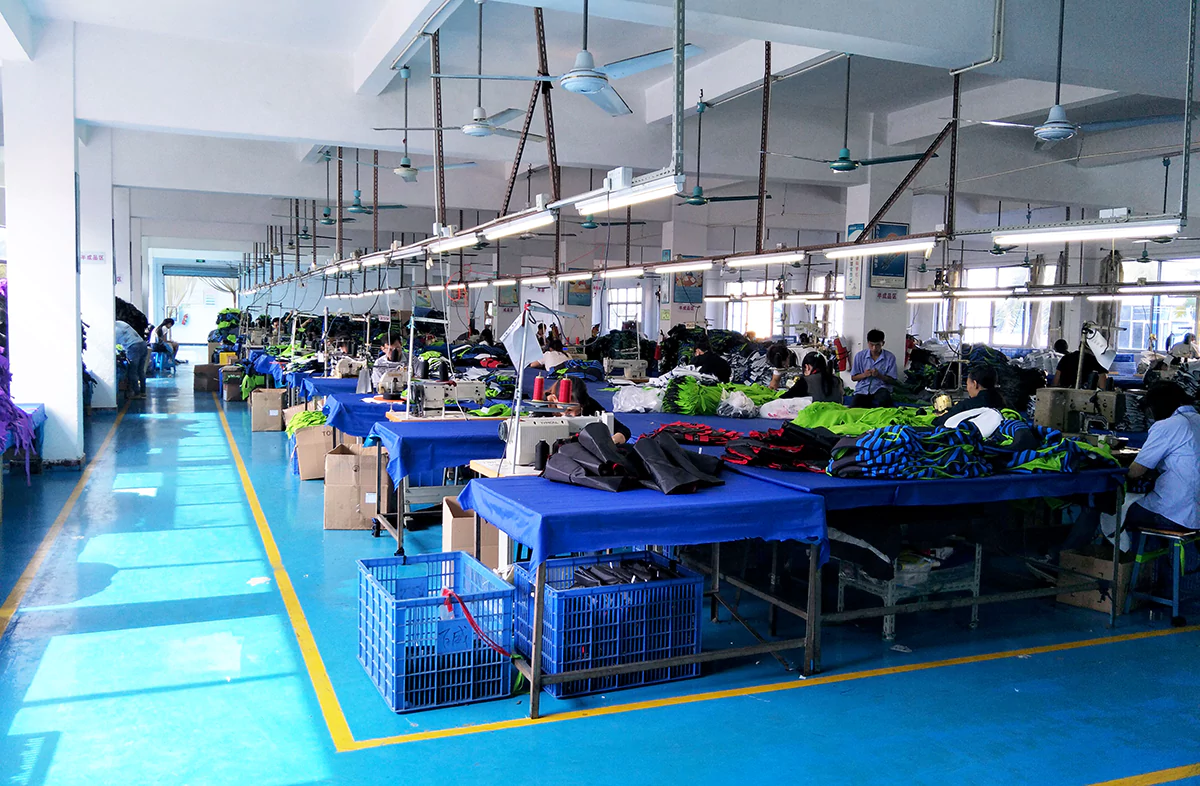
FYBagCustom is Your Trusted Custom Bag Manufacturer in China, with 15+ years of manufacturing experience and a production system built for the rolling-drop cadence that TikTok Shop demands. For brands selling on TikTok Shop, our capabilities include:
Contact our development team to discuss TikTok drop engineering, rolling-production cadence, and content-ready packaging for your next launch.
A TikTok drop that sells is not a social media campaign attached to a product. It is a production project — engineered from SKU selection (content-moment audit) through sampling (camera test) through small-batch production (test-run quantities with content-ready packaging) through creator seeding (60–85 units to 40–50 creators) through launch (staggered content posting) through the restock decision (data-driven, within 2–4 weeks). For B2B buyers building TikTok Shop handbag programs, three core takeaways:
If you are launching or scaling a handbag brand on TikTok Shop and need a factory that produces test-run quantities, restocks winners in 3–4 weeks, and delivers every unit in content-ready packaging, contact FYBagCustom to engineer your next drop.
FYBagCustom produces TikTok-optimized handbags at test-run MOQs (50–100 units per color), restocks winners in 3–4 weeks, and delivers every unit in content-ready packaging — because the drop is a production project, and production is what we do. Samples in 5–7 days.
Start Your Custom Bag Project →