Tel/WhatsAapp:+86 18011919834
E-mail: chloe.x@fybagcustom.com

Tel/WhatsAapp:+86 18011919834
E-mail: chloe.x@fybagcustom.com
Send Your Inquiry Today

Who this guide is for: pre-launch founders who have a handbag design concept — a silhouette, a material idea, a target consumer, a brand name — and are tempted to send it to a factory for sampling immediately. Stop. The sampling process costs weeks and money. The production order costs months and significantly more money. The worst outcome is not a bad sample — it is a beautiful sample that becomes a beautiful finished product that nobody buys. This guide is the work that happens before the first sample is ordered: the structured validation process that tells you whether your concept has demand before you invest in making it real.
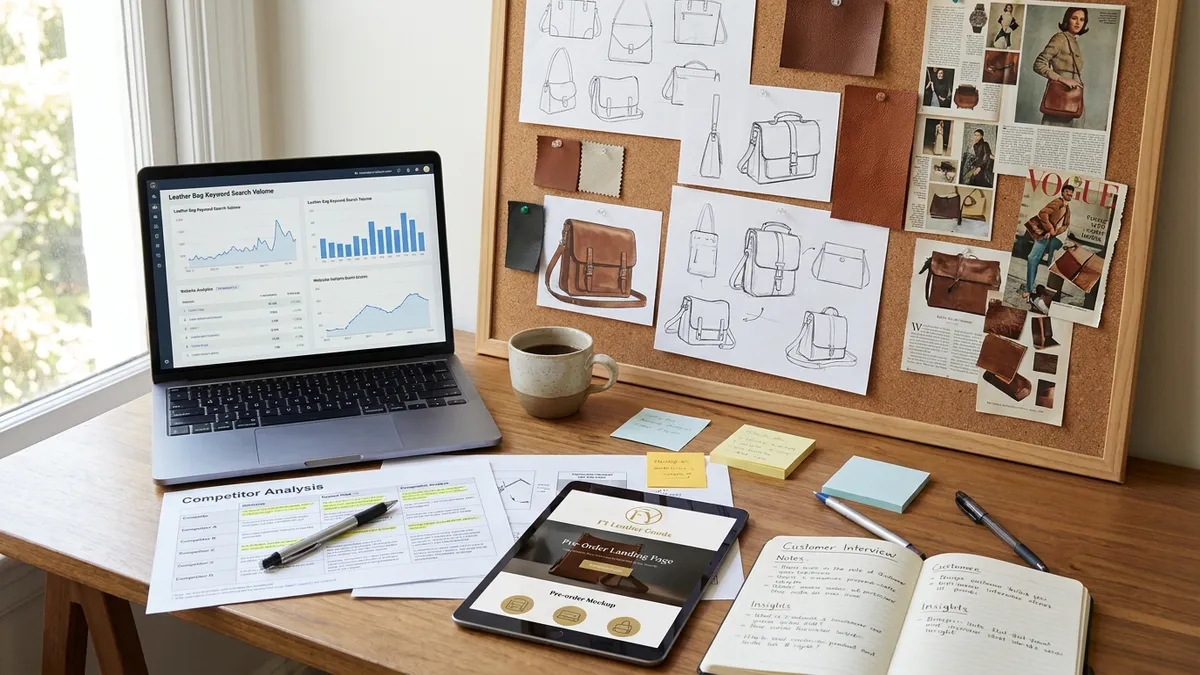
Most failed handbag brands did not fail because of bad design. They failed because the founder fell in love with the product before confirming that enough consumers shared that love — and by the time the market’s silence delivered the verdict, the founder had already spent months and significant capital on sampling, production, packaging, and inventory.
The validation process described in this guide exists to deliver the market’s verdict before the sampling begins — when the cost of learning is measured in hours and advertising spend, not in warehouse shelves of unsold inventory.
Validation does not guarantee success. It reduces the probability of the most expensive kind of failure: the kind where the product is excellent, the branding is beautiful, and the demand is absent.
| Validated Means | Validated Does NOT Mean |
|---|---|
| Real people (not friends, not family) have demonstrated interest in the specific product concept through a measurable action (email signup, waitlist join, pre-order deposit, ad click) | Your friends said “I would totally buy that” (they will not; they are being polite) |
| The interest level exceeds a predefined threshold that justifies the sampling investment | A single viral social media post generated excitement (virality ≠ purchase intent) |
| You have data on WHO is interested (demographics, location, price sensitivity) and WHY (which feature, which use case, which aesthetic) | You have a general sense that “the market is big” and “people like bags” |
| The competitive landscape has been mapped — you know what exists, at what price, and where the whitespace is | You have not searched for your concept on Amazon, Etsy, or Instagram and assume it is original |
Before anything else, understand what already exists. Your concept may be genuinely novel — or it may already have dozens of competitors you have not found yet.
| Source | What to Search | What You Are Looking For |
|---|---|---|
| Amazon | Your concept keywords (“structured leather tote,” “minimalist crossbody,” “convertible backpack purse”) | How many products already exist at your target price; their review counts (a proxy for sales volume); their star ratings (a proxy for quality satisfaction); the specific complaints in 1–3 star reviews (these are the unmet needs you can solve) |
| Etsy | Same keywords | The handmade and small-brand landscape; pricing; differentiation strategies; customer review themes |
| Hashtags related to your concept (#minimalistbag, #leathertote, #workbag); competitor brand accounts | Which brands are gaining followers; what content generates engagement; what aesthetic resonates; the price-to-engagement relationship | |
| TikTok | Your concept keywords in search; trending bag-related hashtags | What bag content goes viral and why; the language consumers use to describe what they want (this language becomes your ad copy) |
| Google Trends | Your primary keyword and close variants | Whether interest is growing, stable, or declining over the past 12–24 months; seasonal patterns |
| Your concept keywords | What consumers are pinning and saving — Pinterest is forward-looking (users save things they intend to buy); pin volume is a demand proxy |
For every direct competitor you find (a product that serves the same consumer, same use case, same price tier):
| Data Point | Why You Need It |
|---|---|
| Product name and brand | Know your competitors by name |
| Price point | Understand the price landscape your concept enters |
| Review count | A rough proxy for unit sales (on Amazon, ~1 review per 20–50 sales depending on category) |
| Average star rating | A quality benchmark — if the market average is 4.5 stars, you need to be at 4.5 or above |
| Top complaints (1–2 star reviews) | The most valuable data in this entire step. The complaints reveal what consumers want but are not getting. Each complaint is a product opportunity: “the strap is too thin” → design wider straps. “The bag doesn’t hold a laptop” → add a laptop sleeve. “The edges are peeling” → specify premium edge finishing. Your differentiation strategy lives in your competitors’ worst reviews. |
| Top praises (5 star reviews) | What consumers love — these are the table-stakes features you must match |
| Finding | What It Means | Action |
|---|---|---|
| Zero competitors at your concept | Either you have found genuine whitespace (rare) or you have not searched thoroughly enough | Search more broadly; if truly no competitors, validate demand extra carefully — the absence of competitors may indicate absence of demand, not a missed opportunity |
| 5–20 competitors with moderate reviews (50–500 each) | A healthy, validated market with room for a differentiated new entrant | Proceed — but your differentiation must be specific and defensible |
| 50+ competitors with strong reviews (500+) | A saturated market where differentiation is difficult and marketing costs are high | Proceed only if your differentiation is dramatic (not incremental) — a slightly better version of an over-served product will not break through |
| Competitors with poor reviews (below 4.0 average) | A market where consumer needs are not being met — the strongest validation signal | Proceed with high confidence — design specifically to address the top complaints |
Competitive research tells you what exists. Consumer discovery tells you what people actually want — which is not always the same thing.
Talk to 10–15 people who match your target consumer profile. Not your friends. Not your family. Real strangers from your target demographic.
| Where to Find Them | How to Approach |
|---|---|
| Instagram DMs (followers of competitor brands) | “Hi — I’m developing a new [bag type] and I’m looking for honest feedback. Would you be open to a 15-minute call about what you love and hate about your current [bag type]? No sales pitch — just research.” |
| Reddit (r/handbags, r/femalefashionadvice, r/Entrepreneur) | Post asking for input on your concept category — “What do you wish existed in [category]?” |
| Facebook groups (bag enthusiast groups, mom groups, professional women groups) | Similar approach to Instagram — request conversations, not opinions on your specific design (avoid leading the witness) |
| In person (coffee shops, co-working spaces, retail environments) | Offer to buy someone a coffee in exchange for 15 minutes of honest input |
| Ask This | Why | Do NOT Ask This | Why Not |
|---|---|---|---|
| “Tell me about the last bag you bought. What made you choose it?” | Opens the conversation around real purchase behavior, not hypothetical opinions | “Would you buy a bag that [describes your exact concept]?” | Hypothetical purchase questions always get “yes” — the respondent is being agreeable, not honest |
| “What frustrates you most about your current everyday bag?” | Reveals unmet needs — the opportunities your concept could address | “Do you like [feature X] on a bag?” | Leading question — the respondent will agree with whatever you suggest |
| “If you could change one thing about your current bag, what would it be?” | Forces specificity — the #1 change reveals the #1 opportunity | “How much would you pay for a bag that [long list of features]?” | Price questions in interviews are unreliable — people say one number and behave differently when their credit card is in hand |
| “Walk me through a typical day — when do you pick up your bag, what do you carry, where does the bag go?” | Reveals use cases and functional requirements that design must address | “What do you think of my design?” (showing your sketch) | Asking for validation of YOUR design before you have validated demand biases the conversation toward your concept rather than the consumer’s needs |
After 10–15 conversations, look for patterns — statements that multiple consumers repeat independently:
| Pattern Type | Example | What It Means for Your Concept |
|---|---|---|
| Shared frustration | 8 of 12 respondents mention “my bag is too heavy” | Weight is a core design constraint — target under 900 g empty; specify lightweight materials |
| Shared desire | 7 of 12 respondents mention “I want one bag for work and weekend” | Versatility is the value proposition — design a bag that converts between professional and casual contexts |
| Shared behavior | 10 of 12 respondents carry their bag crossbody most of the time | The crossbody strap is not optional — it is the primary carry mode; design the strap experience first |
| Price sensitivity signal | 6 of 12 respondents say their last bag was from [specific brand at specific tier] | The price tier your consumers already shop reveals the price range your bag must compete in |
You now have competitive data and consumer insights. Before ordering a physical sample, test the concept visually — using renderings, mockups, or reference images — to see if the specific design direction resonates with a broader audience.
| Method | How It Works | What It Measures | Minimum Sample Size |
|---|---|---|---|
| Instagram Stories poll | Post a story with 2–3 design options (mockups, sketches, or reference images) and a “Which would you buy?” poll | Preference between options — not absolute demand, but relative preference | 100+ votes (organic reach or boosted) |
| Social media ad test | Run a small-budget ad (Facebook/Instagram) with a mockup image of your concept, a headline (“Coming soon: [one-sentence concept]”), and a “Learn More” CTA leading to a landing page | Click-through rate (CTR) — the percentage of people who see the ad and click; this measures initial visual interest | 1,000+ impressions per variant; run 2–3 visual variants |
| Landing page with email capture | Create a simple landing page (Carrd, Shopify, Squarespace) with a mockup of the concept, a brief description, and an email signup: “Be the first to know when this launches — enter your email” | Email conversion rate — the percentage of landing page visitors who give you their email address | 200+ unique visitors (driven by the ad test) |
| Metric | Below This = Rework | Above This = Proceed | Way Above This = Strong Signal |
|---|---|---|---|
| Ad CTR (click-through rate) | Below 1.0% — the visual or the concept is not stopping the scroll | 1.5–3.0% — healthy interest; the concept resonates visually | Above 3.0% — strong demand signal; the concept is genuinely compelling |
| Email conversion rate (landing page) | Below 5% — visitors see the page but do not care enough to give their email | 10–20% — solid interest; one in five to ten visitors wants to hear more | Above 20% — exceptional; the concept is generating excitement |
| Cost per email signup | Relative to your market — but if you are spending more per signup than your bag’s retail contribution margin, the economics do not work | A reasonable ratio that suggests scaling the ads will produce a viable customer acquisition cost | Very low cost per signup suggests strong organic potential |
If the numbers are below the “Rework” threshold: do not order samples. Go back to Step 2, refine the concept based on what you learned from the ad data (which images performed best? which headlines? which audiences?), and test again.
If the numbers are above the “Proceed” threshold: move to Step 4.
Email signups measure interest. Pre-orders measure purchase intent — the willingness to actually commit money (or commit their name to a specific product at a specific anticipated price).
| Model | How It Works | What It Measures | Risk Level |
|---|---|---|---|
| Full pre-order (payment collected) | The customer pays the full retail price in advance; you use the funds to place the production order; the product ships when it is manufactured | Maximum commitment — the customer has paid; this is real demand | Highest — you must deliver; failure to deliver requires refunds and damages trust |
| Deposit pre-order (partial payment) | The customer pays a deposit (typically 20–30% of retail); the balance is collected when the product ships | Strong commitment — the customer has invested money; the deposit filters casual interest from genuine purchase intent | Medium — the deposit funds partially cover your sampling/production costs; refunds are required if you cancel |
| Waitlist (no payment) | The customer adds their name and email to a “waitlist” with no payment; they commit to nothing but demonstrate interest | Moderate commitment — no financial risk for the customer; the waitlist size and conversion rate (when you eventually launch) are the data points | Lowest — no money changes hands; but waitlist-to-purchase conversion is typically 5–15%, so a waitlist of 100 may produce only 5–15 actual orders |
| Your Situation | Recommended Model |
|---|---|
| You have enough capital to fund sampling and a small production run without pre-order revenue | Waitlist — the lowest risk; validate demand without financial obligation to the customer |
| You need pre-order revenue to fund the production run | Deposit pre-order — collects partial funding while managing customer expectations; clearly communicate the expected delivery timeline |
| You are highly confident in the concept (Steps 1–3 all exceeded thresholds) and want to maximize initial revenue | Full pre-order — the strongest signal and the most capital-efficient launch; requires excellent communication and reliable delivery |
| Element | What to Include |
|---|---|
| Product mockup (high-quality rendering or reference image) | The visual must represent the product accurately — the consumer is making a decision based on this image |
| Product description (specific, not fluffy) | “A structured leather tote with a padded laptop sleeve (fits 15″), removable crossbody strap, and 4 interior pockets. Vegetable-tanned cowhide in warm cognac.” NOT: “A luxury bag for the modern woman.” |
| Price (or anticipated price range) | The consumer needs to know what they are committing to; a price range (“retail price: between X and Y”) is acceptable if the final price is not yet set |
| Expected delivery timeline | Be honest and add a buffer: if you expect 12 weeks, state 14–16 weeks. Under-promise, over-deliver. |
| What happens if the product is cancelled | “If we do not reach our production minimum, all deposits will be refunded in full within 14 days.” This builds trust and manages the risk transparently. |
You now have data from all four steps. The decision framework:
| Data Point | Go Signal | No-Go Signal |
|---|---|---|
| Competitive landscape | Whitespace exists (an unmet need or an underserved price tier) | The market is saturated with strong competitors; no clear differentiation |
| Consumer interviews | A consistent pattern of unmet needs that your concept addresses | Scattered, contradictory feedback; no clear pattern; the consumer shrugs |
| Ad test (CTR + email conversion) | Above the “Proceed” benchmarks; the concept generates measurable interest from strangers | Below the “Rework” benchmarks; the concept does not stop the scroll |
| Pre-order / waitlist | Pre-orders or waitlist signups exceed the threshold that justifies a production order | Signups are below the minimum viable production quantity; the demand is insufficient to fund or justify a bulk order |
| Outcome | What the Data Says | What to Do |
|---|---|---|
| GO | All four data points are at or above the proceed threshold; there is a clear consumer need, a viable competitive position, and measurable demand | Order samples. Build the tech pack. Move to production. The concept is validated. |
| ITERATE | Some data points are strong (the consumer need is real) but others are weak (the visual execution did not resonate, or the price tier is wrong, or the target consumer was not reached by the ads) | Do NOT order samples yet. Rework the weak dimension — redesign the mockup, adjust the positioning, test a different price tier or audience — and re-run Steps 3–4 with the revised concept |
| STOP | All or most data points are below threshold; the competitive landscape is saturated; the consumer interviews reveal no consistent unmet need; the ads generate negligible interest; the waitlist is empty | Do NOT order samples. The concept does not have validated demand. This is not a failure — this is the validation process working correctly. It has saved you the cost of samples, production, and inventory that would not sell. Develop a different concept and restart at Step 1. |
| Without Validation | With Validation |
|---|---|
| You design based on your own taste → order samples → order production → launch → discover there is no demand → sit on inventory | You discover demand (or lack of it) before spending on samples or production |
| Timeline to the “no demand” discovery: 4–6 months + full production investment | Timeline to the “no demand” discovery: 3–5 weeks + small ad budget |
| Cost of discovery: the full sampling + production + packaging investment | Cost of discovery: your time + a modest testing budget |
| Recovery: difficult — inventory is produced; capital is committed; the options are discount, donate, or write off | Recovery: easy — no inventory exists; no capital is committed beyond the ad test; you pivot to a new concept immediately |
Once the concept is validated and the GO decision is made, the transition to sampling is specific:
| Validation Output | How It Feeds the Tech Pack |
|---|---|
| Consumer interviews revealed “the bag must hold a 15-inch laptop” → | The flat sketch includes a padded laptop sleeve dimensioned for 15″ (38 × 28 cm minimum); the construction details specify 10 mm foam padding |
| Competitor review analysis revealed “edges peel after 3 months” → | The construction section specifies 4-coat edge paint system with PU-based paint and adhesion testing (ISO 2409, rating 0–1) |
| Ad test data showed the cognac colorway outperformed black by 2:1 in CTR → | The color specification leads with cognac (the hero launch color); black is the second colorway; the launch palette is data-informed, not assumption-driven |
| Pre-order data showed 70% of signups were in the tier suggesting a premium price → | Material selection targets premium (not budget); the BOM specifies quality leather or premium PU; the construction tier targets the craftsmanship level that supports the validated price |
| The waitlist reached 250 names → | The initial production order is sized at 15% of the waitlist (the typical waitlist-to-purchase conversion) = ~38 units; this informs the MOQ discussion with the factory |
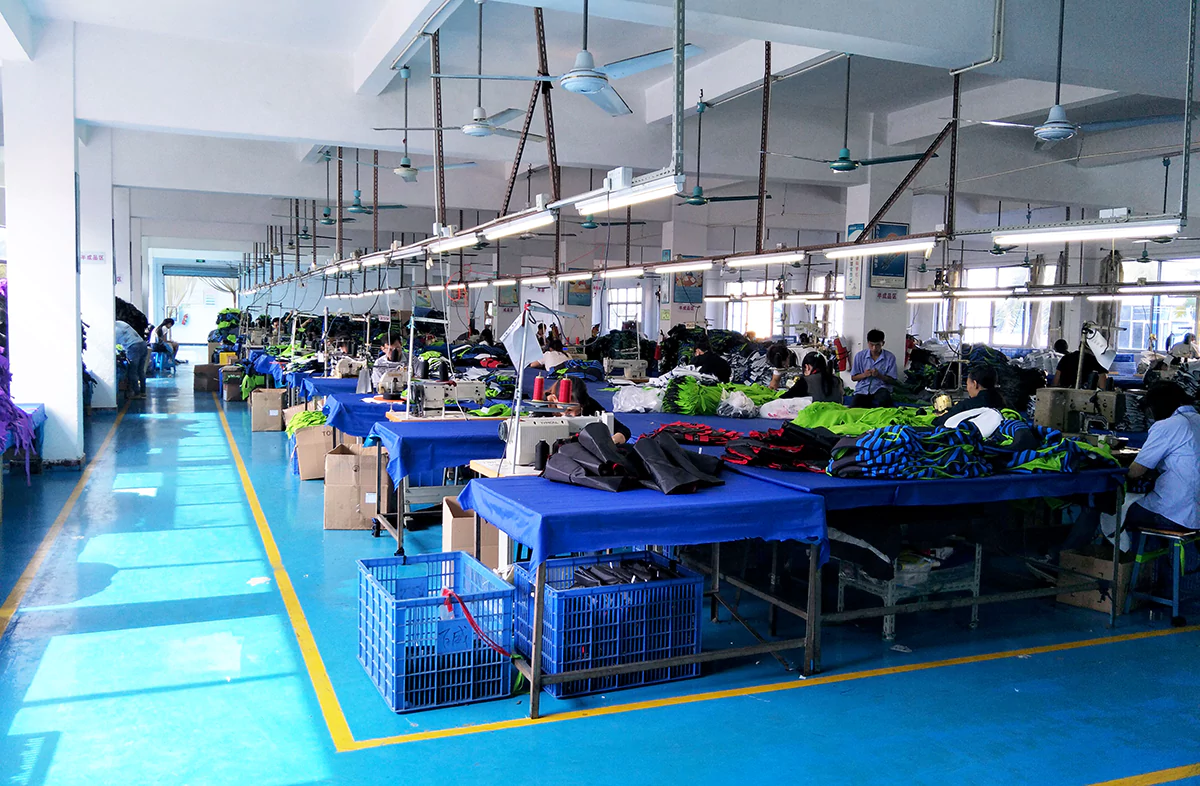
FYBagCustom is Your Trusted Custom Bag Manufacturer in China, and we see the difference between brands that validated and brands that did not. The brands that arrive with consumer data, competitive analysis, and pre-order numbers make faster, more confident decisions — and their products sell. For brands transitioning from validation to production, our capabilities include:
Contact our development team when your validation data says GO — and receive a first sample within 5–7 days.
The most expensive sentence in handbag entrepreneurship is “I know people will love this.” You do not know. You believe. Belief is not data. Data comes from the five-step validation process: competitive research, consumer interviews, concept testing, pre-orders, and the go/no-go decision. For pre-launch founders, three core takeaways:
If your validation data says GO and you are ready to move from concept to factory, contact FYBagCustom to start the sampling process with a manufacturer who understands that validated concepts become successful products.
FYBagCustom works with validated brands — from 50-unit launch orders to 50,000-unit scale-ups. Bring your consumer data, your pre-order numbers, and your concept, and receive a first sample in 5–7 days.
Start Your Custom Bag Project →