Tel/WhatsAapp:+86 18011919834
E-mail: chloe.x@fybagcustom.com

Tel/WhatsAapp:+86 18011919834
E-mail: chloe.x@fybagcustom.com
Send Your Inquiry Today

Years Manufacturing
Factory Area
Professional Staff
Inspection Rate
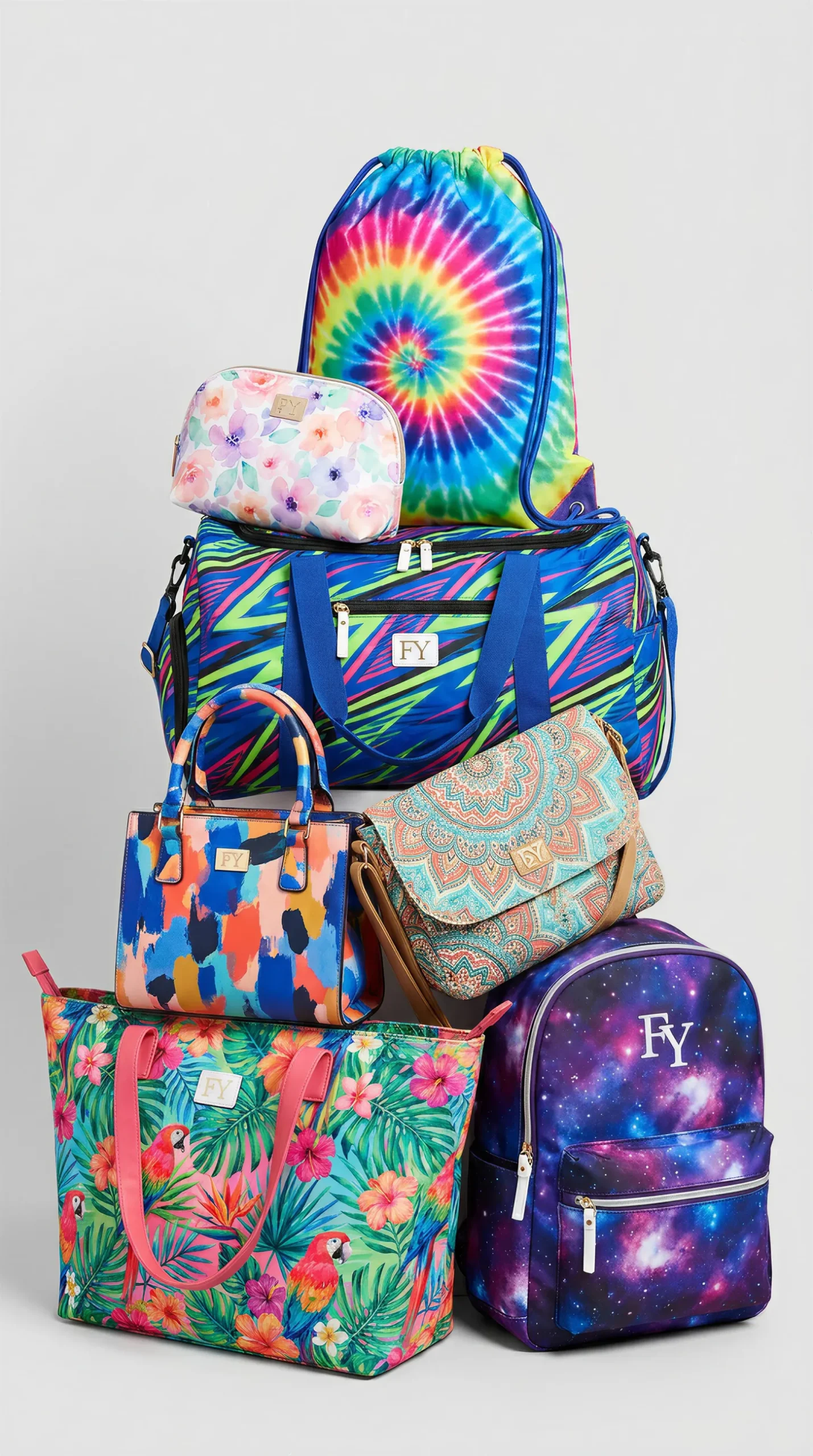
All-over-print bags serve brands and sellers who want maximum visual impact — fashion labels, graphic-design brands, Amazon FBA sellers targeting visual differentiation, and promotional companies creating statement-level branded products.



A plain bag with a small logo is 90% blank surface. A panel-printed bag is mostly plain with a printed area. An all-over-print bag is 100% artwork — every square centimeter carries your design. Five advantages make all-over the maximum-impact coverage strategy.

On a standard printed bag, the print is a decoration on a surface. On an all-over-print bag, the print IS the product. There is no “bag” separate from the “print.” The entire product identity comes from the continuous graphic. The bag doesn’t carry the design — the bag IS the design. This changes how consumers perceive, photograph, and share the product.

In Amazon search, Instagram feeds, and e-commerce grids, all-over-print bags fill the entire thumbnail with visual information. A plain tote with a small logo looks identical to 10,000 other plain totes. An all-over-print tote is visually unique at every scale. Consistently higher click-through rates than panel-printed and plain bags in e-commerce environments.

Panel-printed bags create a visual tension between printed and unprinted areas — the blank space needs to “work” with the design. All-over eliminates this challenge entirely. The entire surface is the canvas. For complex artwork, photographic imagery, and detailed illustrations, all-over removes all spatial constraints.

All-over is a coverage format, not a pattern type. All-over geometric. All-over floral. All-over photographic. All-over abstract. All-over camo. All-over stripe. Any pattern from the catalog becomes its most impactful version at all-over coverage. The coverage amplifies whatever the pattern communicates.

All-over-print bags are inherently more photographed, more Instagrammed, and more shared than plain or panel-printed bags. The entire bag IS visual content. For brands building on social media, user-generated content, and viral-product strategies, all-over-print creates products that market themselves every time someone carries them.
All-over print works on any bag type where the fabric surface is large enough to carry continuous artwork. Here are the eight most-ordered all-over-print formats.
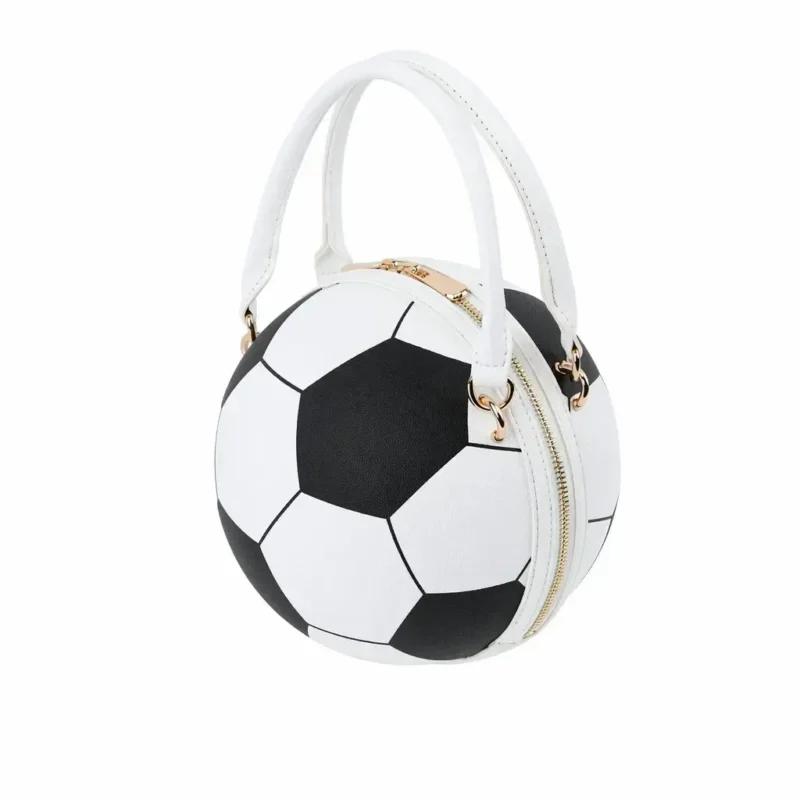
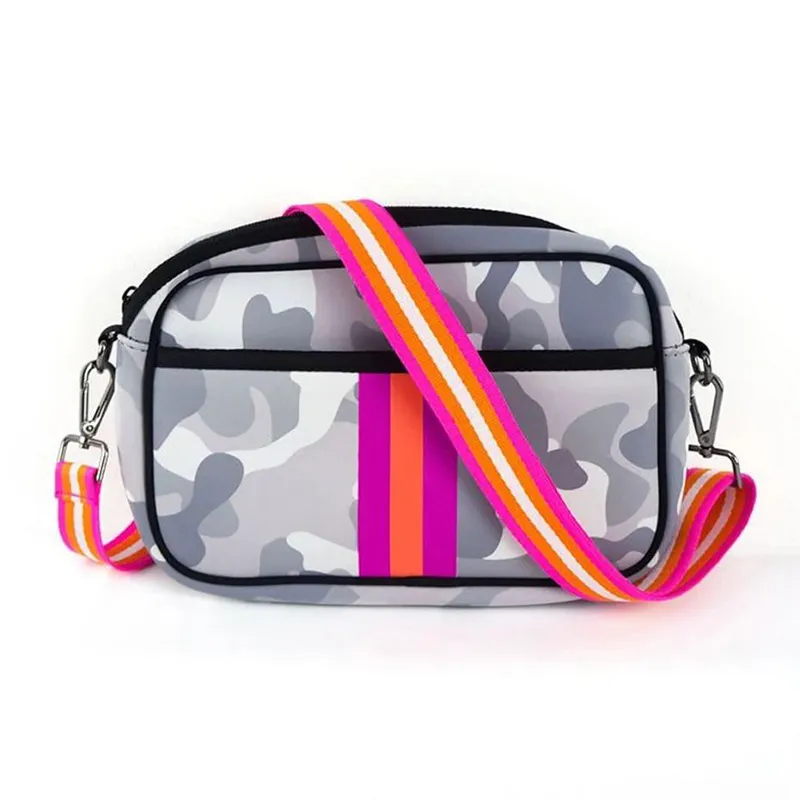
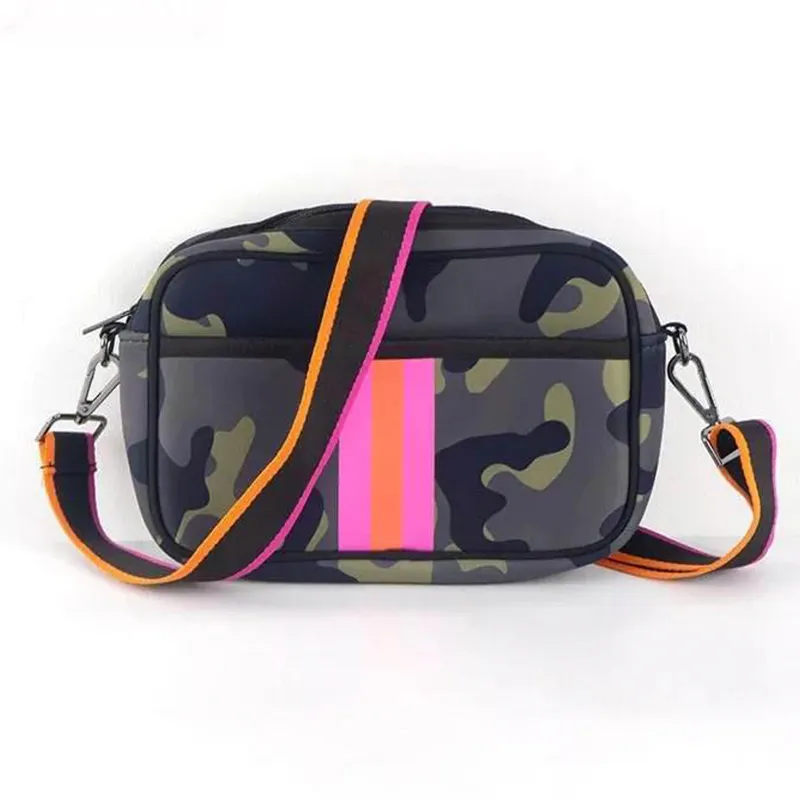
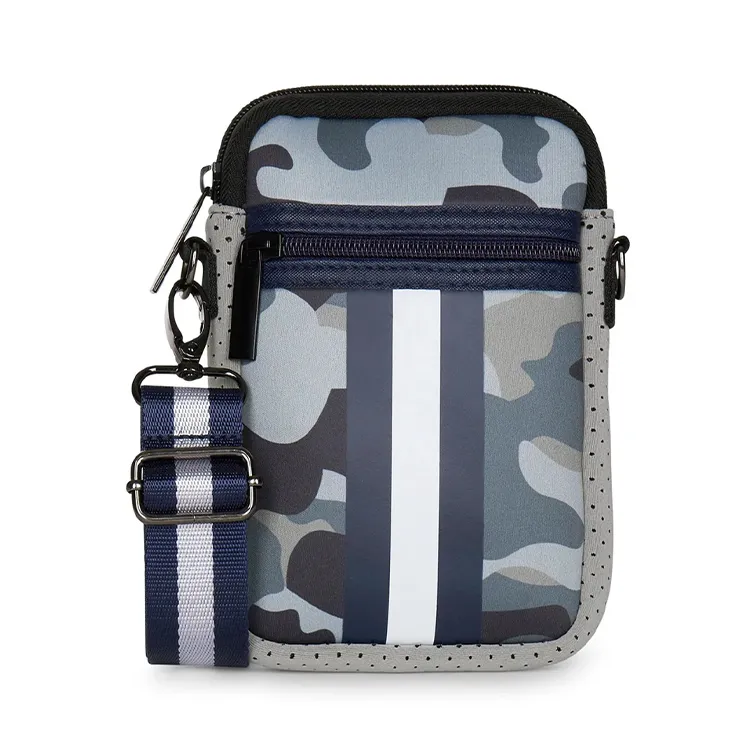
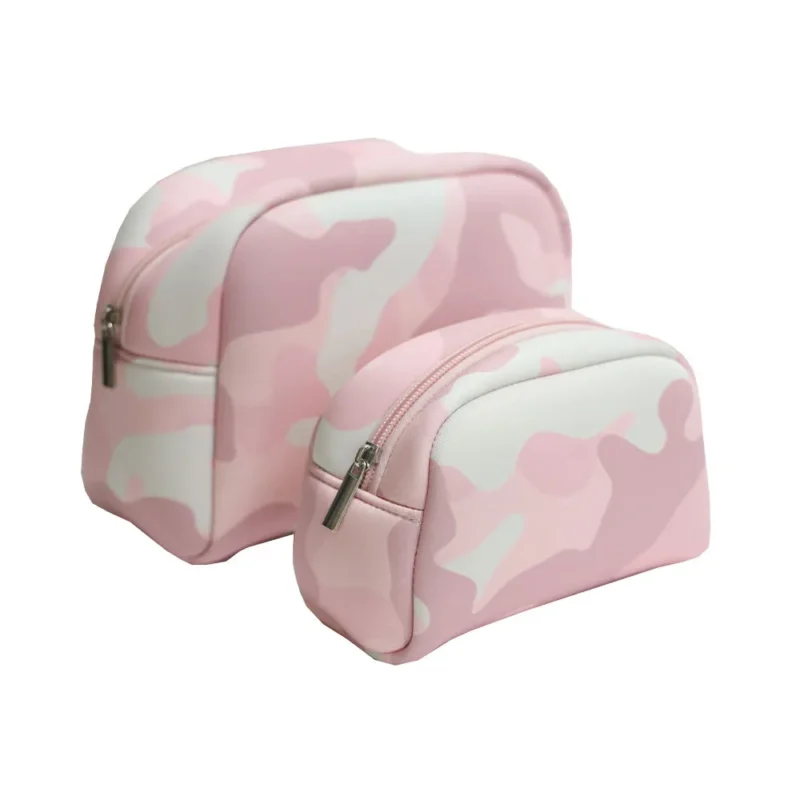
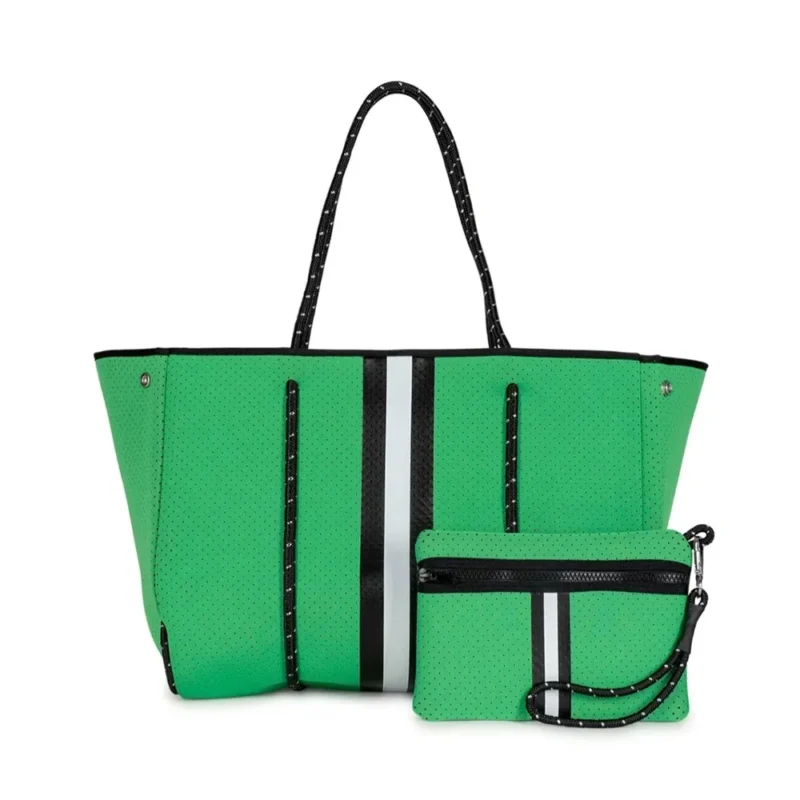
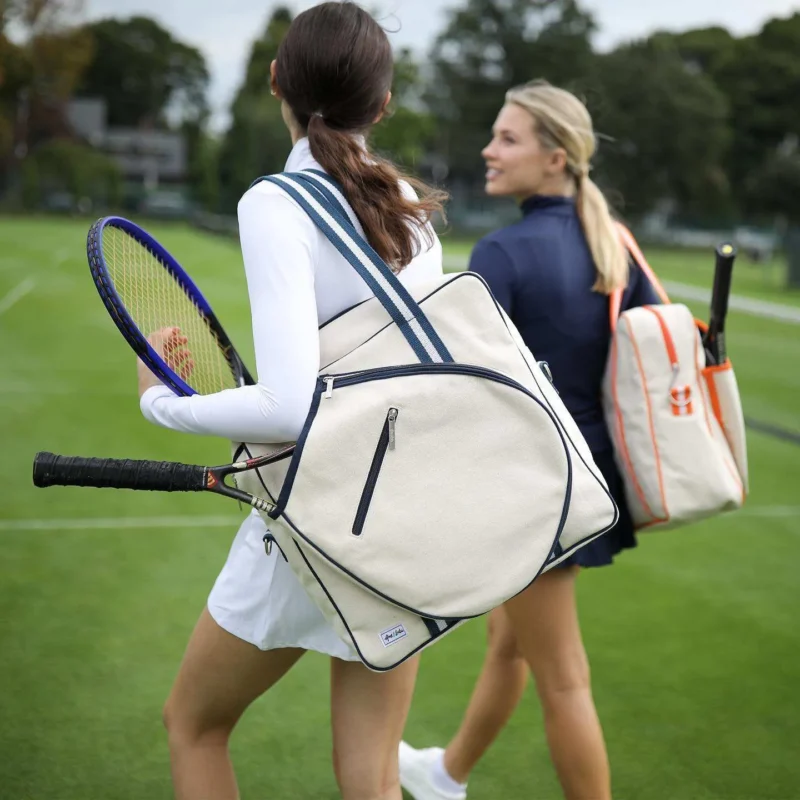
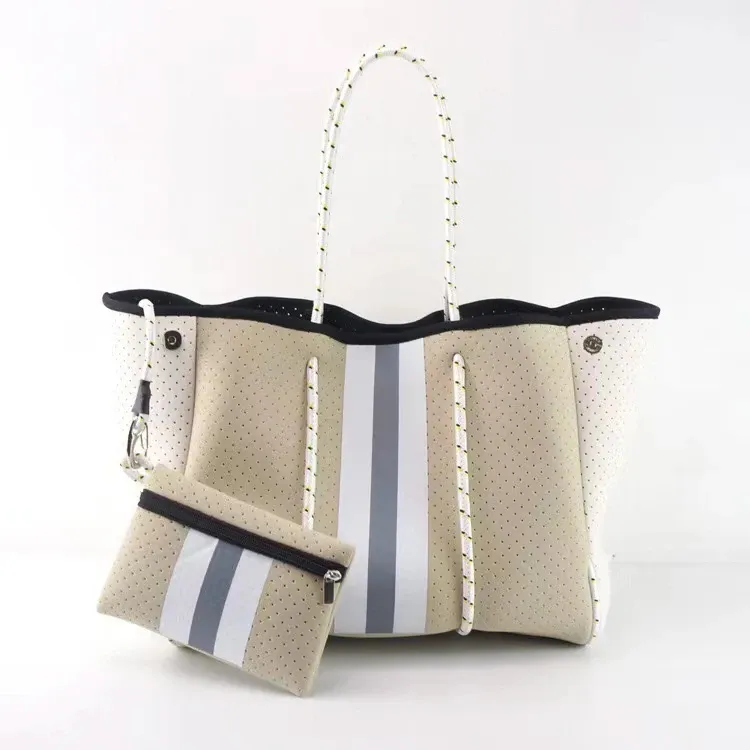
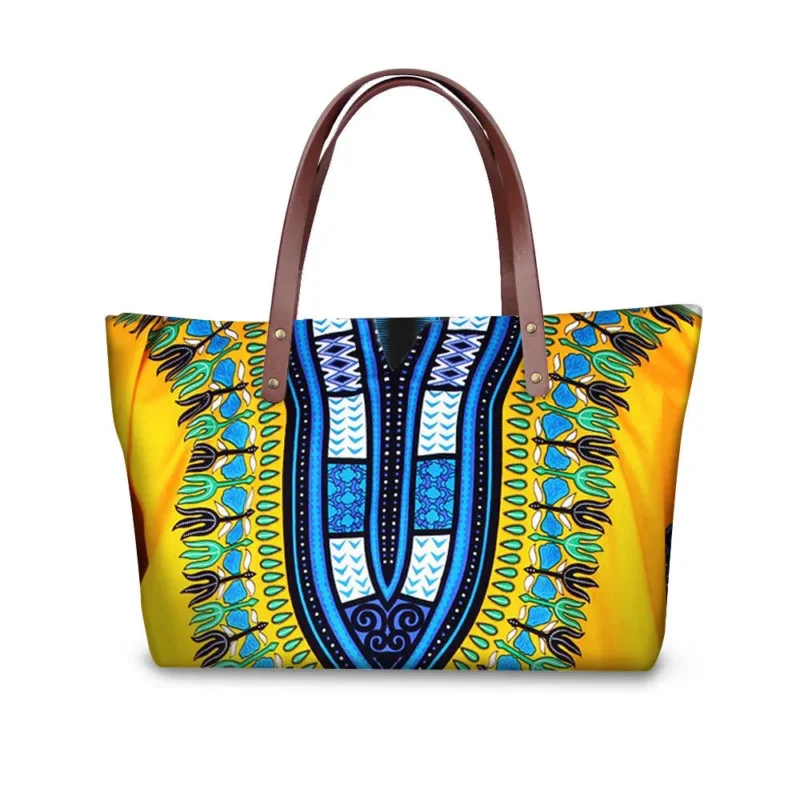
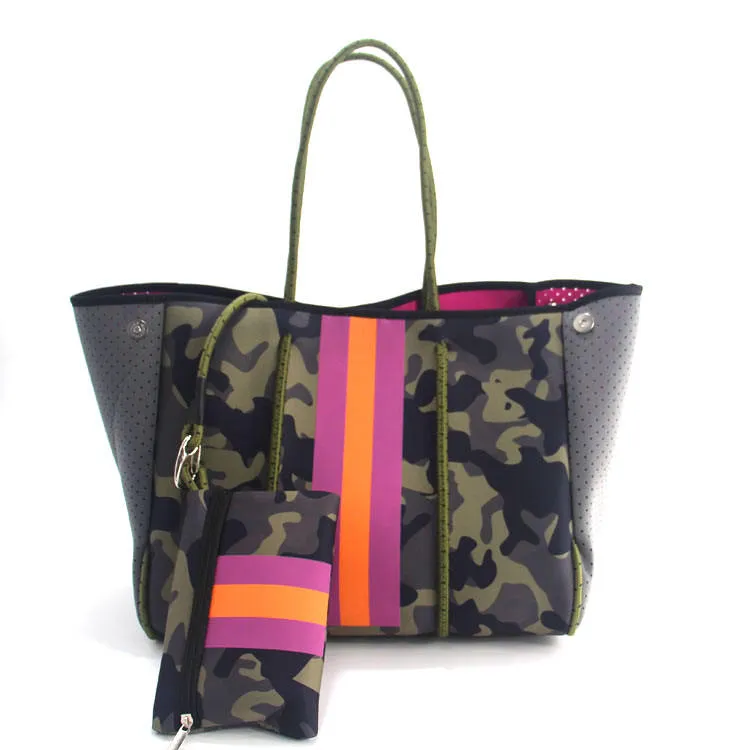

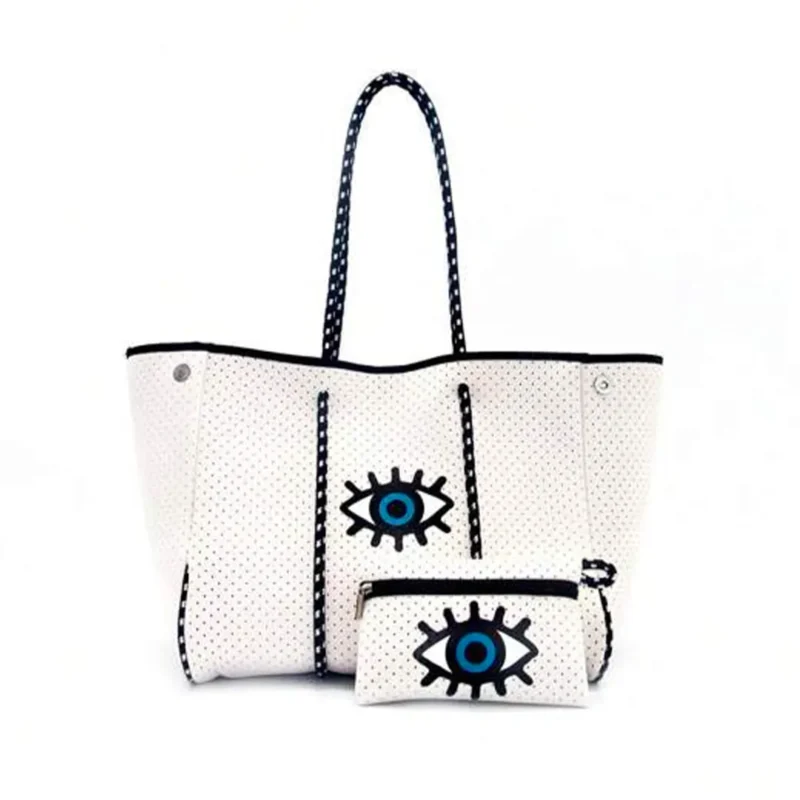
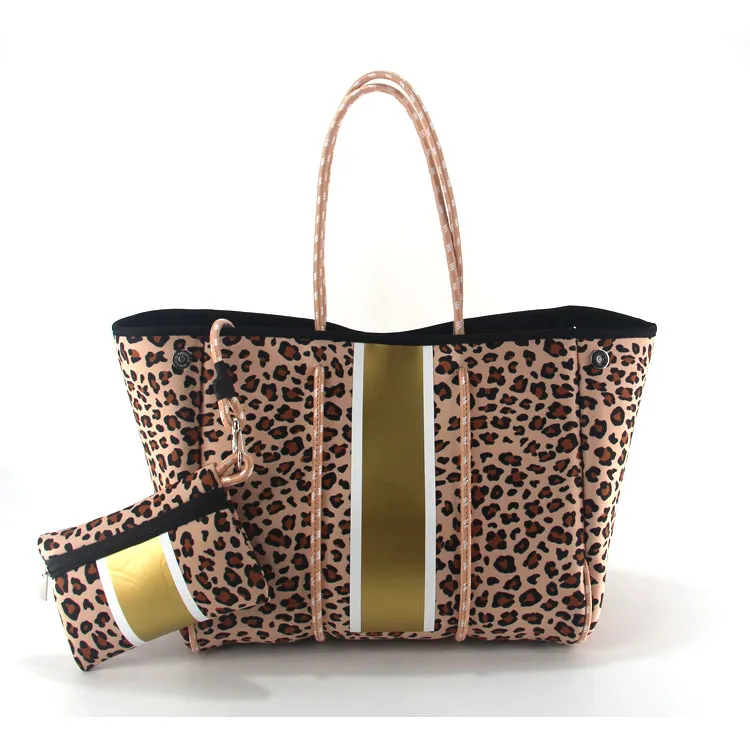
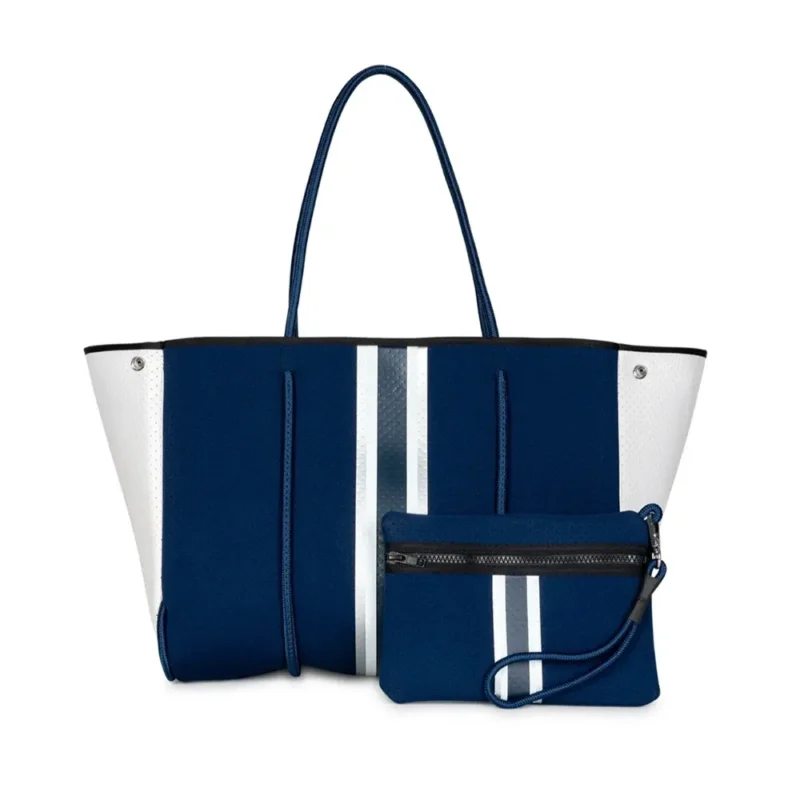
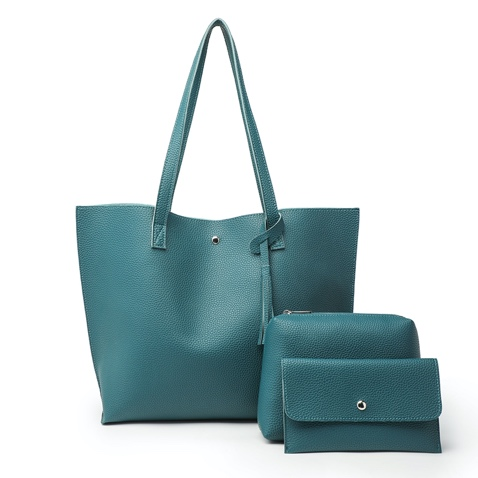
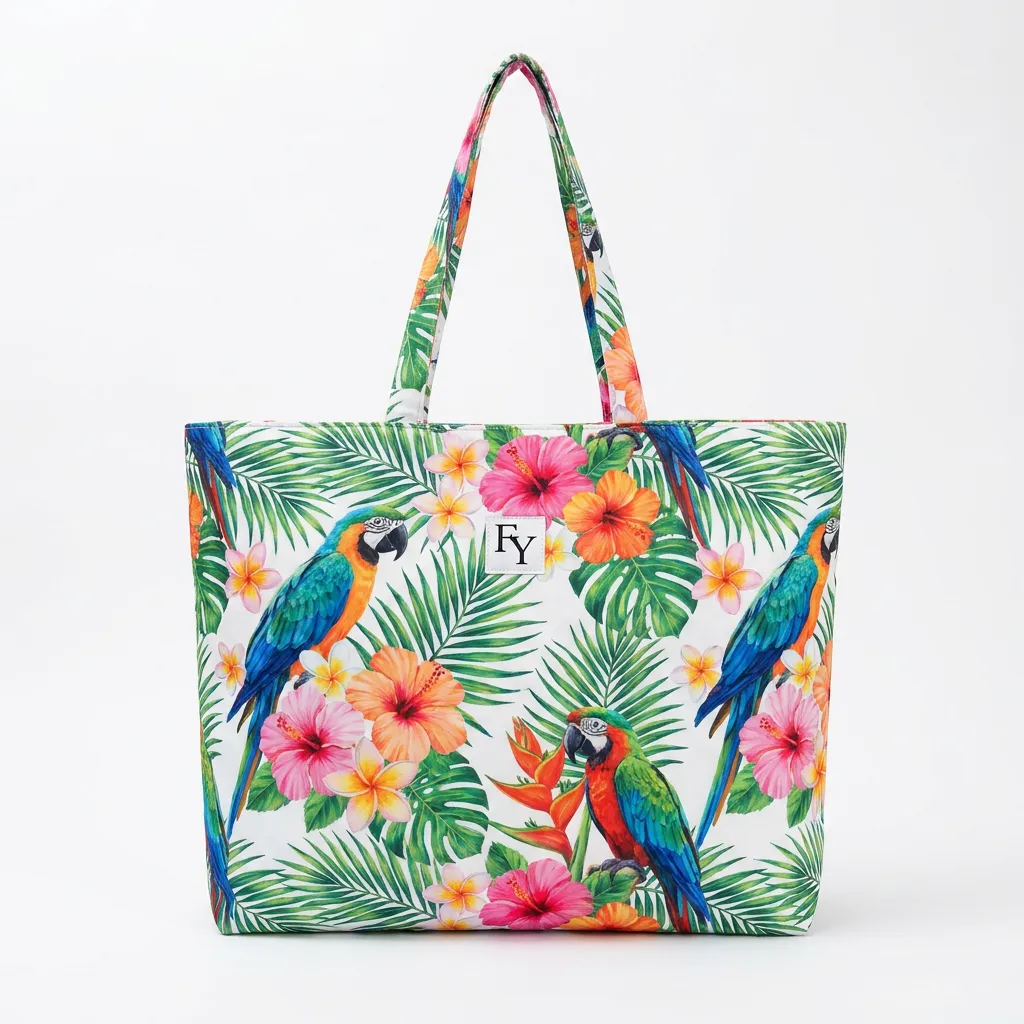
Edge-to-edge sublimation on polyester tote. The #1 all-over-print bag format. Dye-in-fiber, zero hand feel, permanent. Photo-quality artwork covers every surface. Fashion, retail, and Amazon.
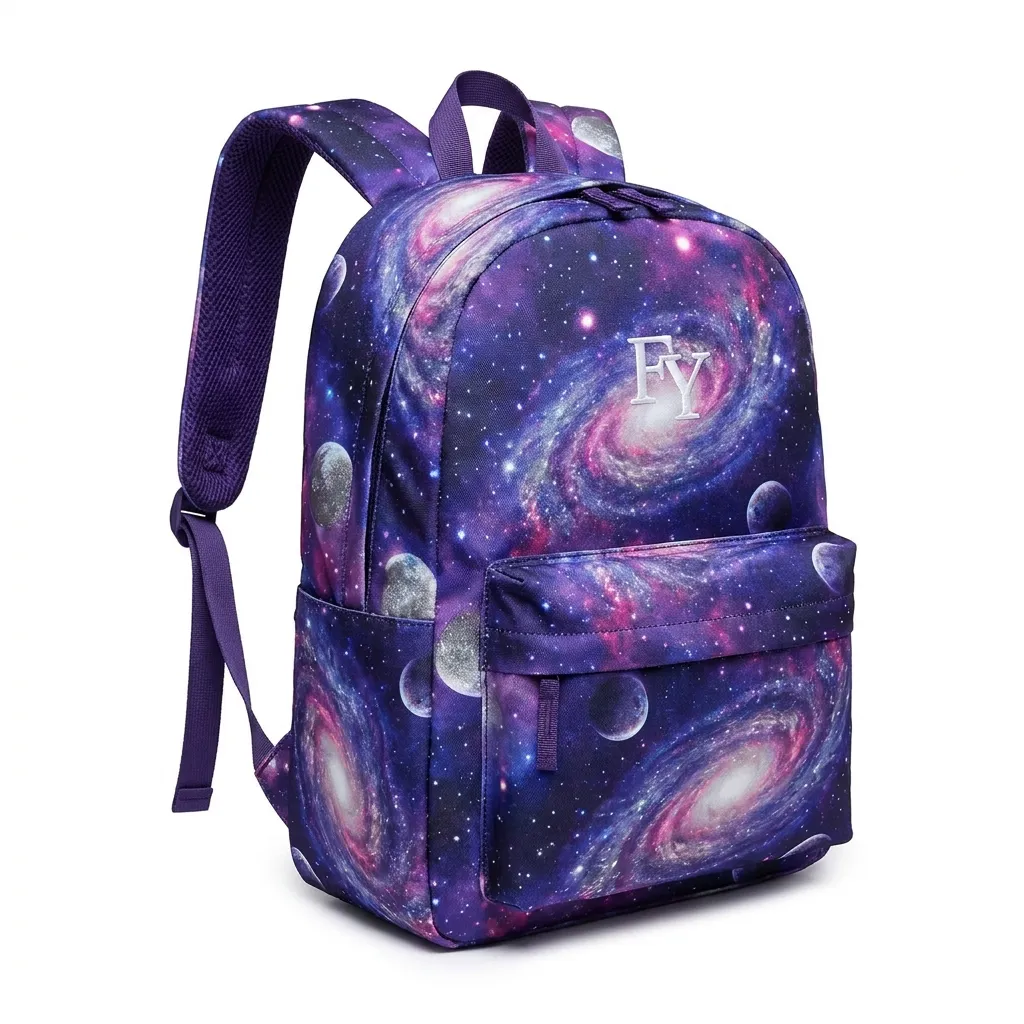
Full-surface graphic on backpack body panels. Sublimation on polyester or heat transfer on nylon/Oxford. The most visually striking backpack format. Fashion, youth, and streetwear.
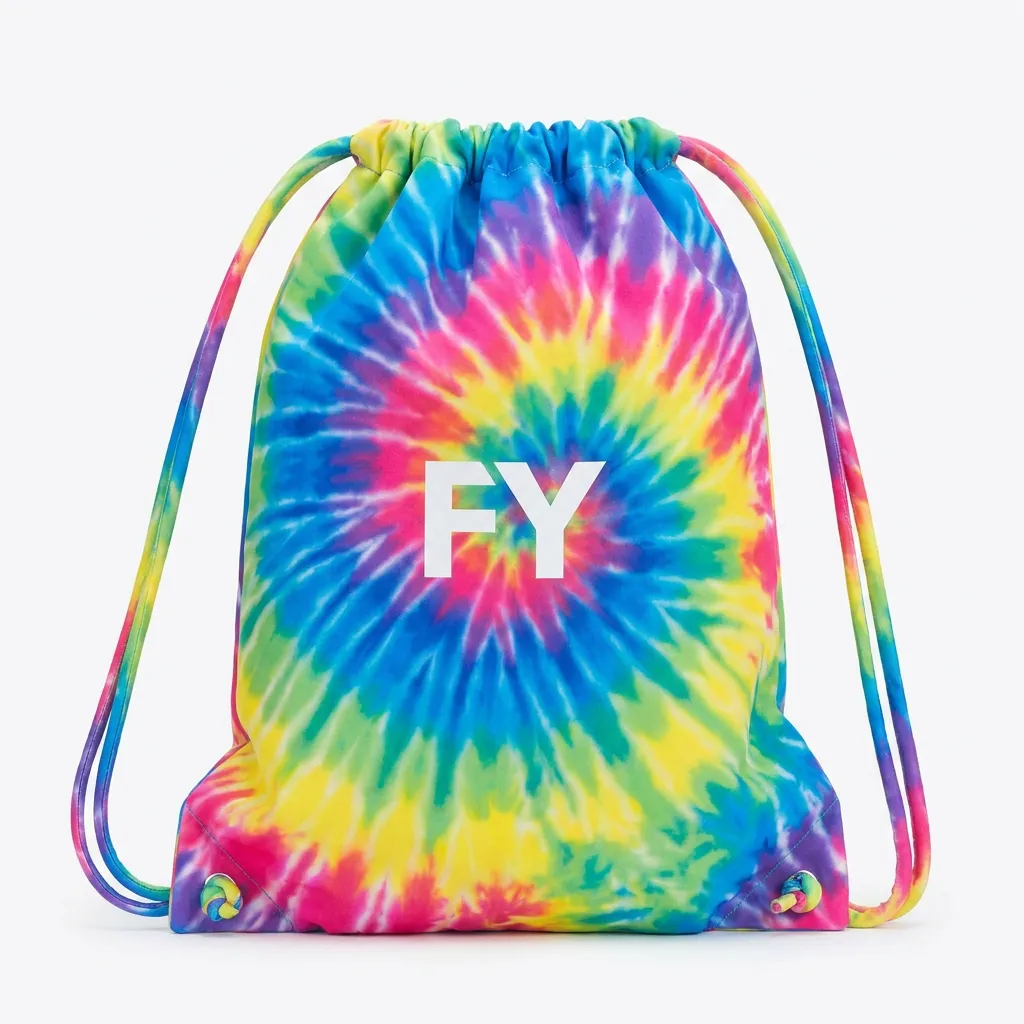
Edge-to-edge sublimation on polyester drawstring bag. Budget-friendly all-over format. Events, team merchandise, promotional. The highest visual impact at the lowest per-unit cost in the all-over category.
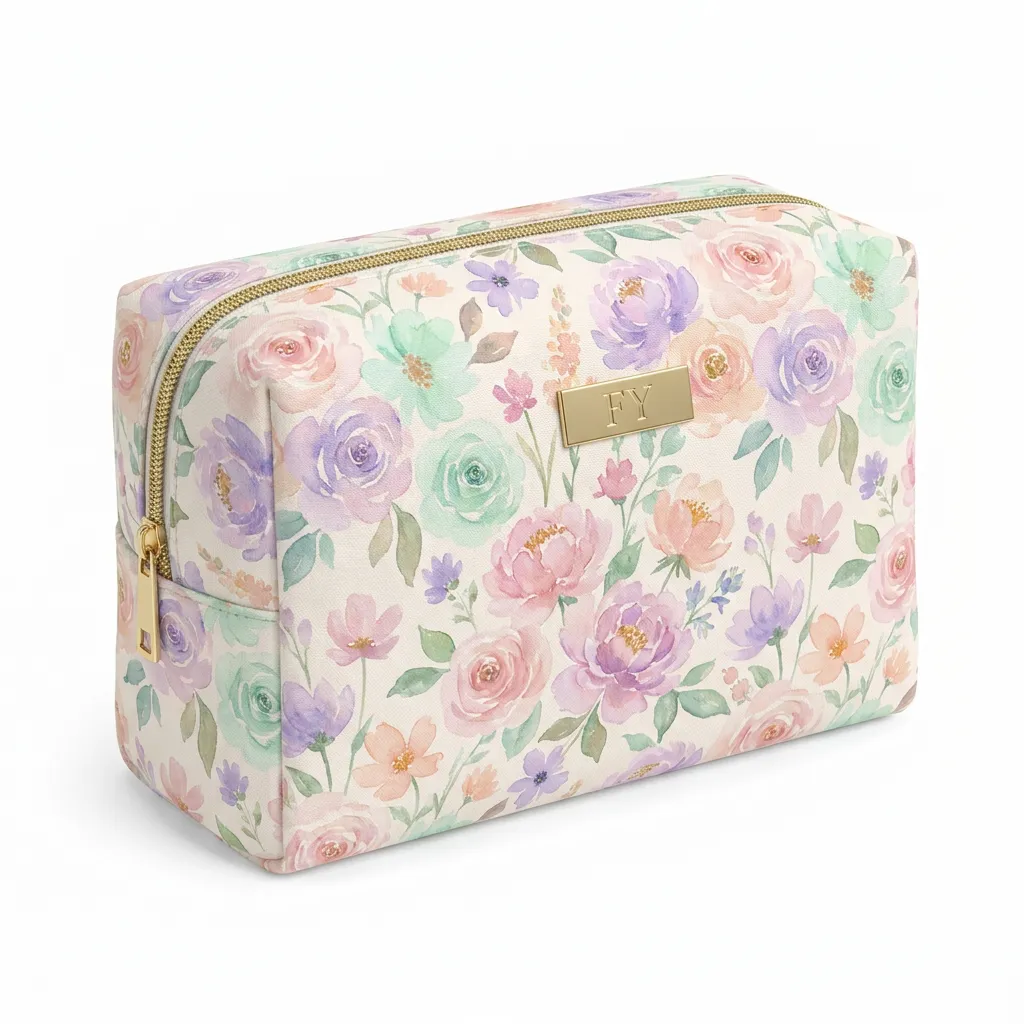
Continuous artwork on cosmetic pouches — polyester (sublimation) or canvas (heat transfer). S/M/L sets with coordinated all-over patterns. Gift sets, beauty brands, and Amazon multi-packs.
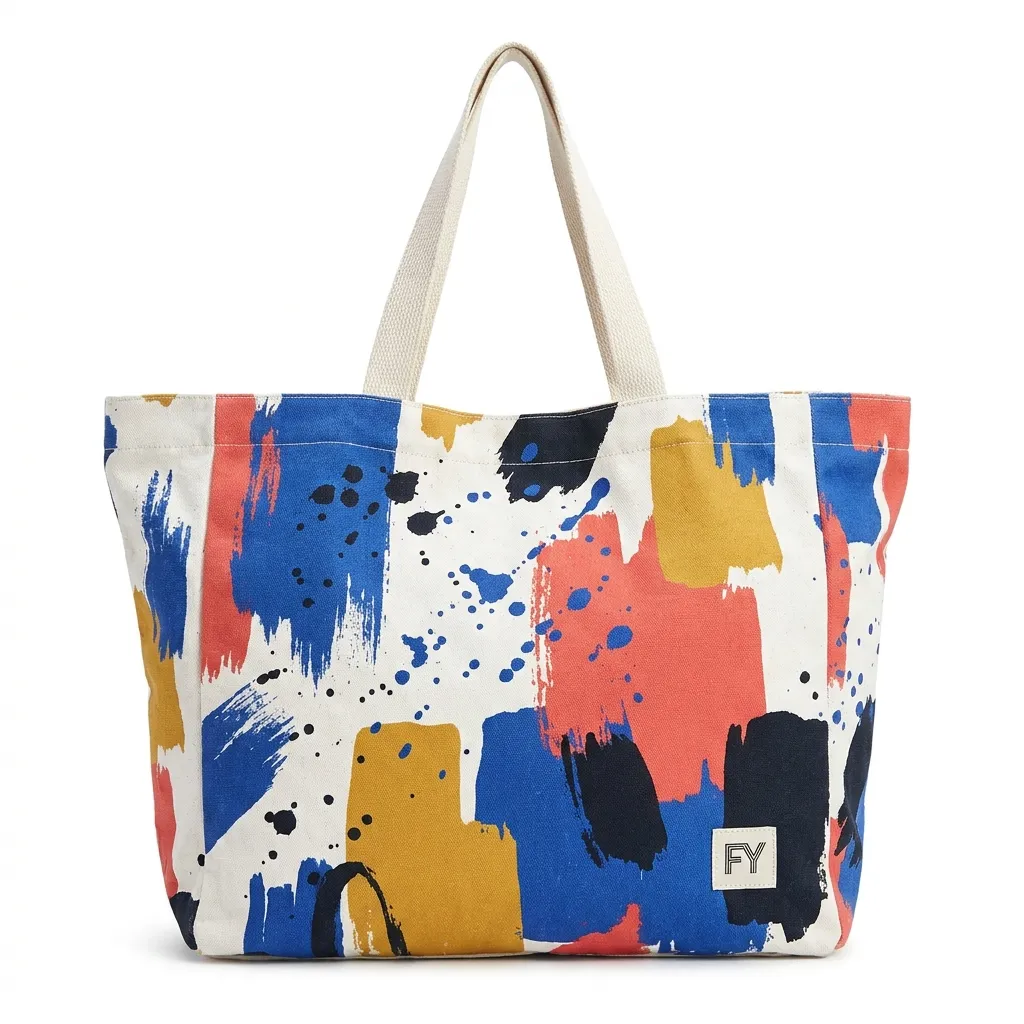
Full-surface artwork on canvas or cotton tote via heat transfer (DTF). All-over on natural fiber — for buyers who want all-over coverage but not polyester fabric. Art reproduction and fashion.
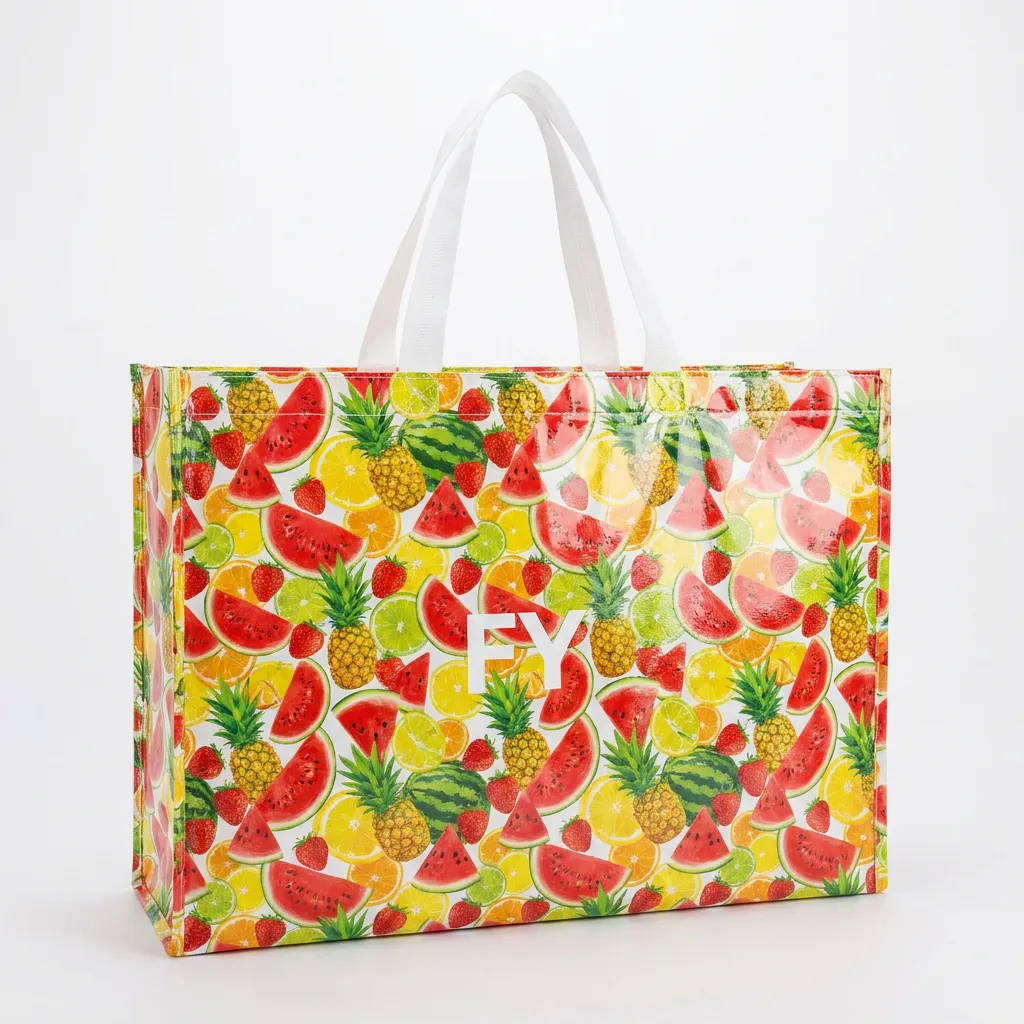
Full-color BOPP lamination on non-woven tote — edge-to-edge artwork + glossy/matte finish. The highest-volume all-over-print format by unit count. Grocery, retail, promotional.
All-over print is a coverage concept — the production method depends on your fabric choice. Each path delivers edge-to-edge coverage with different quality characteristics, cost structures, and fabric requirements. Your fabric determines your method.
Sublimation on Polyester
The All-Over Standard
The dominant method for all-over-print bags. Artwork printed on transfer paper, heat-pressed onto white polyester — dye sublimates INTO the fiber. Printed on yardage before cutting for true seam-to-seam coverage. Zero hand feel (dye is the fiber). Permanent (100+ washes). The best all-over quality on polyester. Limitation: polyester only, white/light fabric only (no white ink).
Heat Transfer on Any Fabric
The Universal Path
For all-over on non-polyester fabrics — canvas, cotton, nylon, Oxford. Full-color DTF film heat-pressed onto panels before cutting. Large-format DTF enables near-edge coverage per panel, but true seam-to-seam requires careful panel engineering. Slight film hand feel. White underbase on dark fabrics. The only path for all-over on natural fibers.
Lamination on Non-Woven
The Volume Path
For all-over on non-woven PP. Full-color artwork printed on BOPP film via gravure, then laminated onto non-woven base. Edge-to-edge coverage + glossy/matte/soft-touch finish. The highest-volume all-over method — grocery bags, retail shopping bags, promotional totes at 10,000–500,000+ pcs. Water-resistant finish included.
Screen Print for Simple Repeats
The Budget Path
When artwork covers the entire bag surface, every sewn seam becomes a potential design-break point. The artwork must flow continuously from one panel to the next — any visible break, offset, or mismatch at a seam reads as a production error. Seam continuity is THE quality differentiator between factory-grade and amateur all-over-print bags.
Yardage-First
The highest-quality all-over approach: print on continuous fabric yardage BEFORE cutting into panels. The artwork is a single continuous graphic across the roll. Panels are then cut from the printed yardage with precise registration to the artwork. When sewn together, the design flows seamlessly across seams because it was printed as one continuous image. This is how sublimation and lamination achieve true seam-to-seam coverage.
Panel-First
The alternative approach: print on individual pre-cut panels, then assemble. Each panel is printed separately (via heat transfer or screen print). This creates edge-to-edge coverage on each PANEL, but seam-to-seam continuity requires carefully matched panel artwork. Repeat-based patterns (tiles, dots, grids) match easily. Non-repeating artwork requires precision panel engineering to align at seam lines.
Repeat Matching
Seamless-repeat all-over patterns are the easiest to produce across seams. A tiling repeat means every edge matches every other edge — panels cut from anywhere on the roll will align at seams. For repeat-based patterns (geometric tiles, stripes, polka dots, florals), seamless repeat IS the seam-continuity solution. We set up seamless repeat from your artwork file.
Placement Art
Non-repeating, placement-specific all-over artwork requires engineered panel templates. If the design has a specific element on the front panel, a different element on the back, and a transition across the side gusset, each panel must be artwork-engineered to align at the specific seam positions of the bag construction. This requires pattern-mapping before printing — more complex, but achievable. We create panel templates at the sampling stage.
Seam Allowance
Sewn seams consume 5–10mm of artwork on each side. The seam allowance is folded inside and invisible. The artwork at the seam must account for this — the visible design picks up on the other side of the seam minus the consumed allowance. On repeat patterns this is automatic; on placement art this must be calculated per seam. We factor seam allowance into the panel engineering.
QC Standard
Our all-over QC verifies design continuity at every seam on every bag. For repeat patterns: pattern alignment verified across front-to-side, front-to-back, and body-to-pocket seams. For placement art: specific design elements verified at their intended positions. Seam continuity is the #1 QC checkpoint on every all-over-print order — and the reason all-over bags require more production attention than panel prints.
Any artwork, any fabric, edge-to-edge. We handle print-method selection, repeat setup or panel engineering, seam-continuity planning, and production QC. Sample turnaround in 5–7 days.
Free Add-on: Professional Product Photography Included
Free white-background product photos for your online shop, Amazon listings, and wholesale catalogs — no additional charge on production orders.
All-over print is method-dependent — your fabric choice determines the production path. Here’s the fabric-to-method mapping and all-over-specific construction requirements.
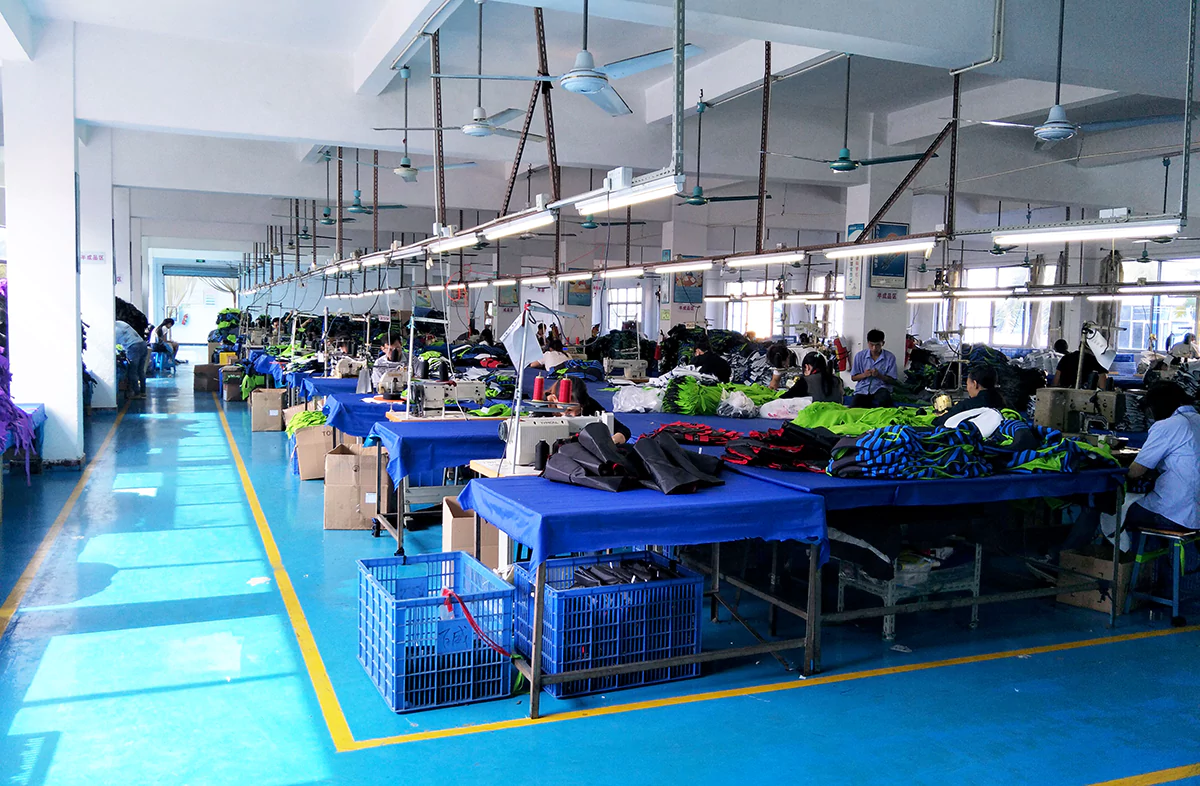
FY Bag Custom operates its own vertically integrated factory in Guangzhou, Guangdong — all four all-over production paths under one roof: sublimation, heat transfer, lamination (via printing partner), and screen print.
Having all methods in-house means we can recommend the optimal all-over path for your fabric and artwork, produce a seam-verified prototype, and manufacture at scale — all from a single factory. No outsourcing, no coordination between multiple suppliers, no quality drift between print partner and bag maker.
Years in Manufacturing
Factory Floor Area
Professional Staff
Production Lines
Monthly Capacity
Pre-Shipment Inspection
All-over-print bags face the most demanding pattern-continuity QC in our catalog — the design must flow across every seam on every bag without visible breaks, offsets, or mismatches. Our 6-stage QC adds seam-continuity verification that panel-printed bags don’t require.
Artwork file verified for seamless repeat tiling (or panel-engineered for placement art). Print proof on actual fabric — seam-continuity verified on a prototype BAG, not just a flat panel. Prototype approved in writing.
Color accuracy, resolution sharpness, and repeat precision verified on first production run. For sublimation: yardage inspected before cutting. For heat transfer: each panel inspected before assembly. For lamination: film-to-base registration verified across the roll.
Panels cut on-repeat with registration markers. Cutting alignment is the single most critical step in all-over production — a 3mm offset at cutting creates a visible design break at the seam. Cutting accuracy verified per batch before assembly.
Design flow verified at every sewn seam — front-to-side, front-to-back, body-to-pocket, body-to-gusset. This is the QC step that doesn’t exist on panel-printed bags. Every seam junction checked for pattern alignment, color continuity, and design flow.
Every finished all-over-print bag inspected one by one — seam continuity across all junctions, color accuracy, print coverage completeness (no unprinted gaps), construction quality, hardware, and overall appearance.

All-over-print bags packed with care to prevent surface abrasion on printed areas. Tissue interleaving on sublimated and laminated bags. Container loading photos and videos within 24 hours.
Timeline depends on print method — sublimation and lamination (yardage-first) may add 3–5 days for pre-cutting print. Heat transfer and screen print follow standard timelines. Sample in 5–7 days, bulk in 20–35 days.
Day 1–2
Send artwork + bag spec; we recommend method and quote.
Day 3–12
Repeat/panel engineering → print proof → prototype bag in 5–7 days.
Day 13–15
30% T/T deposit; balance before shipment.
Day 16–42
Print → cut (on-repeat) → sew (seam-matched) → QC. Daily WIP.
Day 43–48
100% seam-continuity + final inspection.
Day 46–55
Sea, air, express, or direct-to-FBA.
Sample Lead Time
5–7 Days
Mass Production
25–35 Days
Payment Terms
30% T/T · 70% Before Shipment
Shipping Terms
FOB · CIF · DDP · Amazon FBA
All-over print serves buyers who want the most visually distinctive bags in their market — products where the entire surface IS the design statement.
Edge-to-edge photographic botanical illustrations on white polyester totes via sublimation — 8 botanical designs printed on yardage for true seam-to-seam coverage. Zero hand feel. Permanent. The entire bag IS the artwork — no blank areas, no logos competing with the botanical composition. FOB to US and EU. Retail $14–22. Seasonal botanical refresh every quarter.
ODM partnership on sublimated all-over-print polyester drawstring bags — 15 designs (galaxy, tropical, geometric, marble, tie-dye). Each design is a separate ASIN. All-over thumbnails dominate search results vs. plain competitors. FNSKU labeling, Amazon packaging. Ranked across multiple keywords. Rapid design testing — new all-over patterns added monthly.
Full-color BOPP-laminated non-woven totes with edge-to-edge event artwork — band photos, festival graphics, sponsor logos covering the entire surface. 50,000-piece concert merchandise order. Glossy lamination. The bag IS the event souvenir and the sponsor billboard simultaneously. Sea freight CIF. Under $0.80/pc at volume.
Global Shipping Options
•Sea Freight
•Air Freight
•Express (DHL, FedEx, UPS)
•Rail Freight
•Door-to-Door
•Direct-to-Amazon FBA
Straight answers to the questions buyers ask about edge-to-edge, full-surface bag printing.
Depends on fabric. Polyester: sublimation (best quality, permanent, zero hand feel, yardage-first for true seam-to-seam). Canvas/cotton/nylon: heat transfer DTF (full-color on any fabric, panel-first). Non-woven: BOPP lamination (highest volume, glossy/matte finish). Simple 1–3 color repeat: screen print (cheapest at volume). We recommend the optimal path when you send your artwork and fabric preference.
On properly produced bags, yes. For repeat-based patterns (tiles, dots, geometric grids), seamless-repeat tiling ensures automatic seam matching. For placement artwork, we engineer panel templates that account for seam allowance and alignment. Seam continuity is verified on the prototype before production and checked at every seam on every finished bag during QC.
Yes — via heat transfer (DTF film pressed onto canvas panels). The print covers the entire panel surface. True seam-to-seam continuity requires careful panel engineering because heat transfer is applied per-panel, not on yardage. The result is near-full coverage with careful seam management. For absolute seam-to-seam with zero engineering, sublimation on polyester is the easier path.
High-resolution CMYK (300 DPI+ at actual print size). Seamless-repeat tile file preferred for repeat patterns; we can create the repeat from a single motif. For placement art, supply the full composition and we’ll engineer the panel breakdown. Vector for clean repeat patterns; raster for photographic/painterly. Include 10mm+ bleed beyond panel edges.
Slightly — because all-over uses more ink/dye per bag and requires more production attention (seam continuity, cutting precision). Sublimation all-over on polyester costs about the same as sublimation panel print (yardage printing is the same speed regardless of coverage). Heat-transfer all-over costs more because larger transfer films are needed. Lamination all-over is the same cost as partial lamination (the BOPP film covers the entire surface either way).
Yes — but consider that all-over designs already carry heavy visual load. A large logo on top of all-over artwork creates visual competition. Best approaches: small logo in a quiet area of the design, logo integrated into the pattern composition, logo on a solid-color contrast element (handle, trim, tag), or interior label only.
Yes. FNSKU labeling, Amazon-compliant packaging, and carton labeling handled at our Guangzhou factory. Free product photography highlighting edge-to-edge all-over coverage included — critical for Amazon thumbnails where the all-over design IS the click driver.
Yes. European Industrial Park, Shiling Town, Huadu District, Guangzhou. Monday–Saturday. Video tours available for remote buyers.
Send us your artwork file, bag type, and fabric preference — we’ll recommend the optimal all-over production path and come back within 24 hours with a detailed FOB quotation. Seam-verified prototype on actual fabric in 5–7 days. No templates, no copy-paste pricing.

