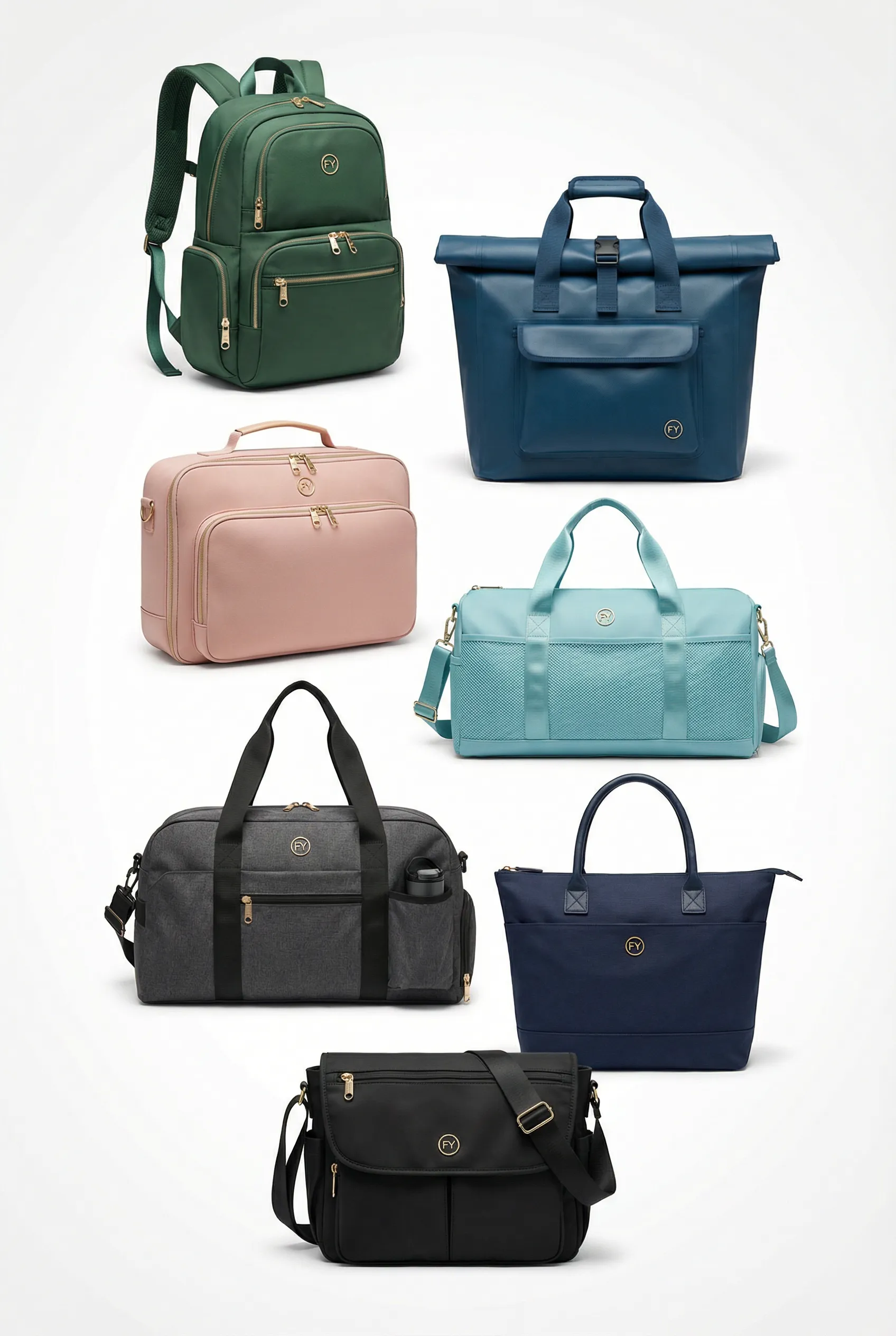
You Trust Custom Bag Design Features Manufacturer in China – Functional & Special Bags for B2B OEM/ODM
Turn Special Requirements into Manufacturable Solutions
At FY Bag Factory, a “feature” isn’t an add-on; it’s a design decision that shapes user experience, performance, and identity.A bag is not just “a shape with a logo”.It’s a system of structure, materials and performance:
Can the bag keep food cold, electronics safe, or documents dry?Can one bag convert between work, travel and family modes?Can a clear or antistatic bag meet site compliance and testing standards?
The Custom Bag Design Features program at FYBagCustom is built exactly around this idea:we combine structural innovation + functional performance + material engineering to turn special requirements into manufacturable, repeatable products.Each design feature can be applied across handbags, tote bags, crossbody bags, backpacks, diaper bags, lunch bags, makeup bags, wallets, travel bags and storage bags for global B2B OEM/ODM projects.
Why Design Features Matter for Your Brands
At FYBagCustom, we treat custom bag design features as core engineering parameters—not afterthoughts.
- Value & Differentiation
- Clear bags for stadium events and security-check lanes
- Insulated and waterproof bags for food delivery, outdoor and family segments
- Convertible and multi function bags that justify higher price points
- Compliance & Function
- Transparent materials and sizes tuned for stadium or workplace rules
- Antistatic fabrics for tech, lab or industrial environments
- Waterproof structures for rainy climates, marine use or outdoor sports
- Line Architecture & Storytelling
- Multi function and convertible bags as “hero” problem-solving SKUs
- Embellished, textured and woven bags as visual anchors for marketing campaigns
Our Custom Bag Design Feature Map
Below we introduce the design philosophy, use scenarios, material/structural logic and process standards for each feature family.
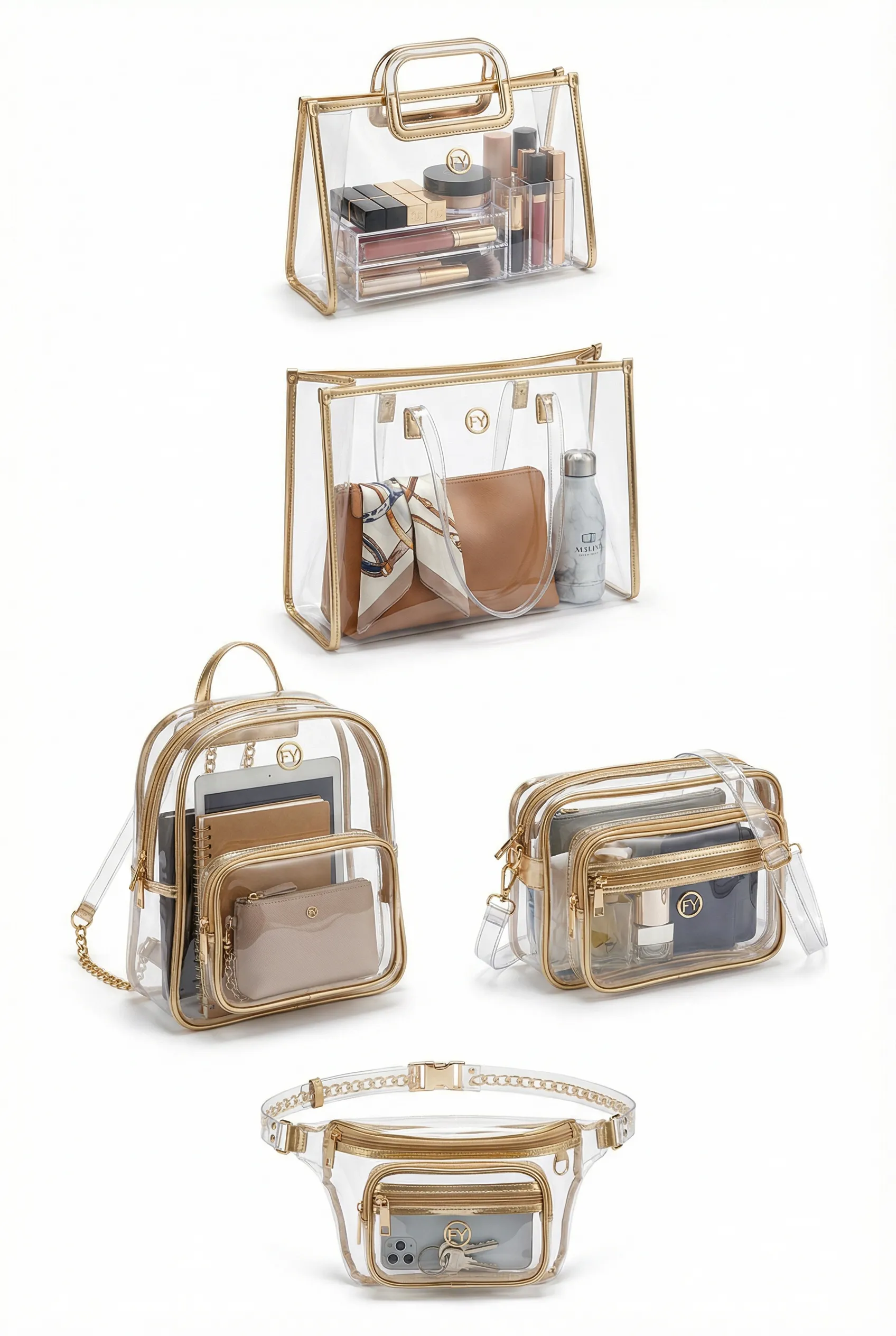
Stadium-approved totes, minimalist beauty cases, modern retail shoppers—where policy, display, and design meet.
- Panel architecture:
larger single panels reduce seam count and visual clutter.100% legible for security staff
- Rigidity vs. flexibility:
PVC/TPU thickness (0.3–0.6 mm) calibrated for collapse control and cold-crack resistance.Structurally stable enough to carry real load.
- Edge control: folded binding or welded seams prevent whitening and corner stress.visually clean enough to represent your brand.
- Stadium-approved clear tote bags and clear crossbody bags
- Workplace and event security bags
- Clear makeup bags and clear toiletry bags for travel and airports
- Clear PVC, TPU or other transparent materials in controlled thickness ranges
- Reinforced textiles or webbing for handles and straps
FY Bag Factory Processing & Quality Standards:
- HF (high-frequency) welding for waterproof seams on TPU/PVC.
- Heat welding + stitching combinations optimized for clarity and durability.
- UV print for crisp logos on non-porous surfaces; screen print for bold solids.
- Reinforced handle tabs with webbing backers to distribute load.
- Visual QC: clarity, bubble-free welds, minimal visual distortion
- Load tests and usage tests for handles, seams and closures
Convertible equals scenario agility:
Backpack ↔️ tote ↔️ crossbody
Hand-carry ↔️ shoulder ↔️ stroller-attach
Work ↔️ gym ↔️ travel mode
- Kinematic strap paths:
hidden D-rings and pivot points engineered so the center of gravity doesn’t shift when modes change (crossbody ↔️ tote ↔️ backpack).
- Load mapping:
- bar-tacks at transition nodes;
- Padding and reinforcement in points that bear weight in all configurations;
- HDPE or EVA bases maintain form across modes.
- Closure neutrality:
- Tested strap length ranges for different carry positions and body types
- zips and flaps function upright and sideways.
- Multi-pass sampling for strap geometry, ladder-locks, and quick-release hooks.
- Pattern pairs for mode-specific tension (e.g., top-carry vs. dual-shoulder).
FY Bag Factory Processing & Quality Standards:
- Strap pull tests in each configuration (tensile and cycle)
- Hardware fatigue tests for hooks, sliders and adjusters
- Conversion workflow tests: time to switch modes, intuitiveness, risk of mis-use
- Documentation of clear user diagrams for your packaging or online manual
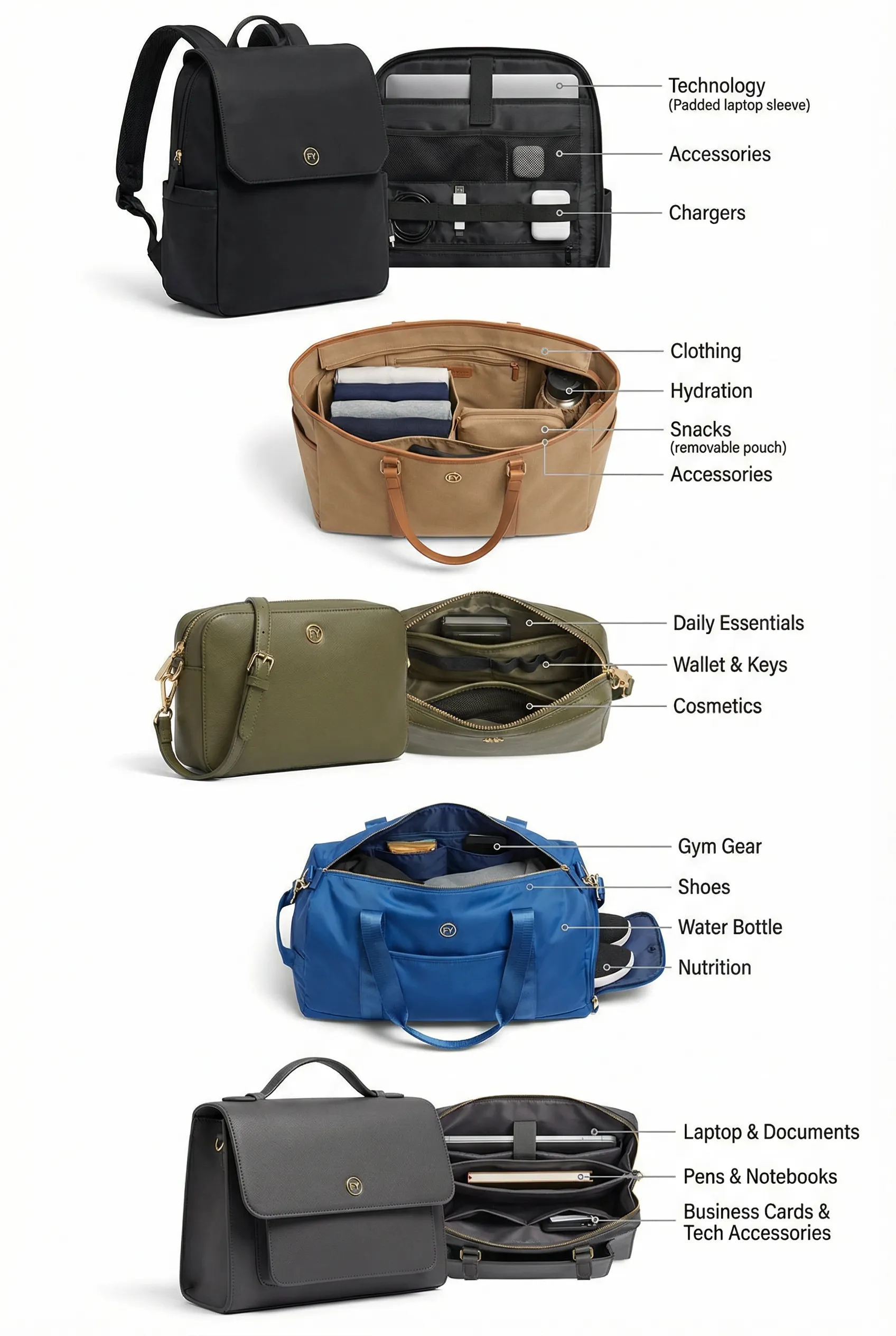
Multi-function isn’t “more pockets”—it’s task mapping: what enters/leaves the bag, in what order, and how fast.
- Module zoning:
tech bay, hygiene bay, quick-grab bay; color-coded or material-coded linings.
- Access choreography:
L-shaped and U-shaped zips for flat-open packing; key-leash and dock loops.
- Weight discipline:
foam only where touch matters; structural layers stay lean to avoid fatigue.
- Work + gym + overnight in one structure
- Baby items + parent’s essentials in one diaper bag
- Travel documents + tech gadgets + personal items in one organizer
- Pre-assembled organizers (mesh, elastic, zip pouches) inserted post shell-stitch for cleaner QC.
- Cycle tests on zippers/snaps; pull tests at anchor points.
FY Bag Factory Processing & Quality Standards:
- Internal seam finishing (binding, overlock, bar-tacks) for long-term use
- Real-world packing tests: fill bags with representative loads, check access and ergonomics
- Zipper and hardware cycle tests under full load
- Clear labelling or icon-based layout guides if needed
Evening clutches, runway capsules, festive drops—glamour that survives the night and the returns window.
Sequins, beads, studs, appliqués used as structural accents;
Visual impact for evening, party, fashion, social media.
- Substrate readiness:
- stabilize soft shells with interlining before bead/stone application.
- stable weaves or coated materials supporting embellishment weight
- Load diffusion:
- backer fabrics and distributed stitch maps keep embellishments from tearing through.
- Reinforcement under embellishment zones to prevent sagging and tearing
- Edge integrity:
- protect high-touch zones (corners/flaps) from snagging.
- Layout grids for sequins, studs or appliqués to keep spacing and alignment controlled
- Fashion collections and limited editions
- Occasion bags: evening clutch, party shoulder bag
- Brand collabs and statement drops
- Beads/sequins set via prong, stitch, or hot-fix depending on substrate.
- QC includes rub/snag tests and 24-hour adhesive cure checks for hot-fix elements.
FY Bag Factory Processing & Quality Standards:
- Attachment methods: stitching, riveting, heat-bonding or combination
- Pull tests on embellishment zones to reduce risk of loss or injury
- Abrasion tests to check snags on clothing and comfort in hand
- Edge cleaning and coverage checks to avoid loose threads and rough bits
Texture directs light and touch. From micro-emboss to crinkle nylon, tactility creates perceived value and “shelf-stop.”
Quilting, embossing, pleating, crinkle effects, 3D emboss foams.Tactile interest and “premium handfeel” even on simple shapes.
- Grain selection:
- deeper grains hide wear; fine grains broadcast precision.
- Multi-layer construction: outer shell + foam or batting + lining for quilting
- Pattern placement:
- large textured panels avoid micro-distortion at curves.
- Embossing plates and heat/pressure recipes for consistent patterns
- Finish balance:
- matte textures pair well with low-gloss hardware for coherent language.
- Panel engineering to keep texture where visible, and flat zones where needed for seams and hardware
- Premium or designer-inspired handbags
- Fashion backpacks and crossbody bags
- Collections where material story is central
- Emboss/deboss with ±0.2 mm plate accuracy; heat-set crinkle on nylon; quilting with controlled stitch density.
FY Bag Factory Processing & Quality Standards:
- Texture depth and pattern crispness checks per batch
- Recovery tests for quilted or padded zones after compression
- Delamination checks for multi-layer textiles
- Color/texture alignment when combining with plain panels or trims
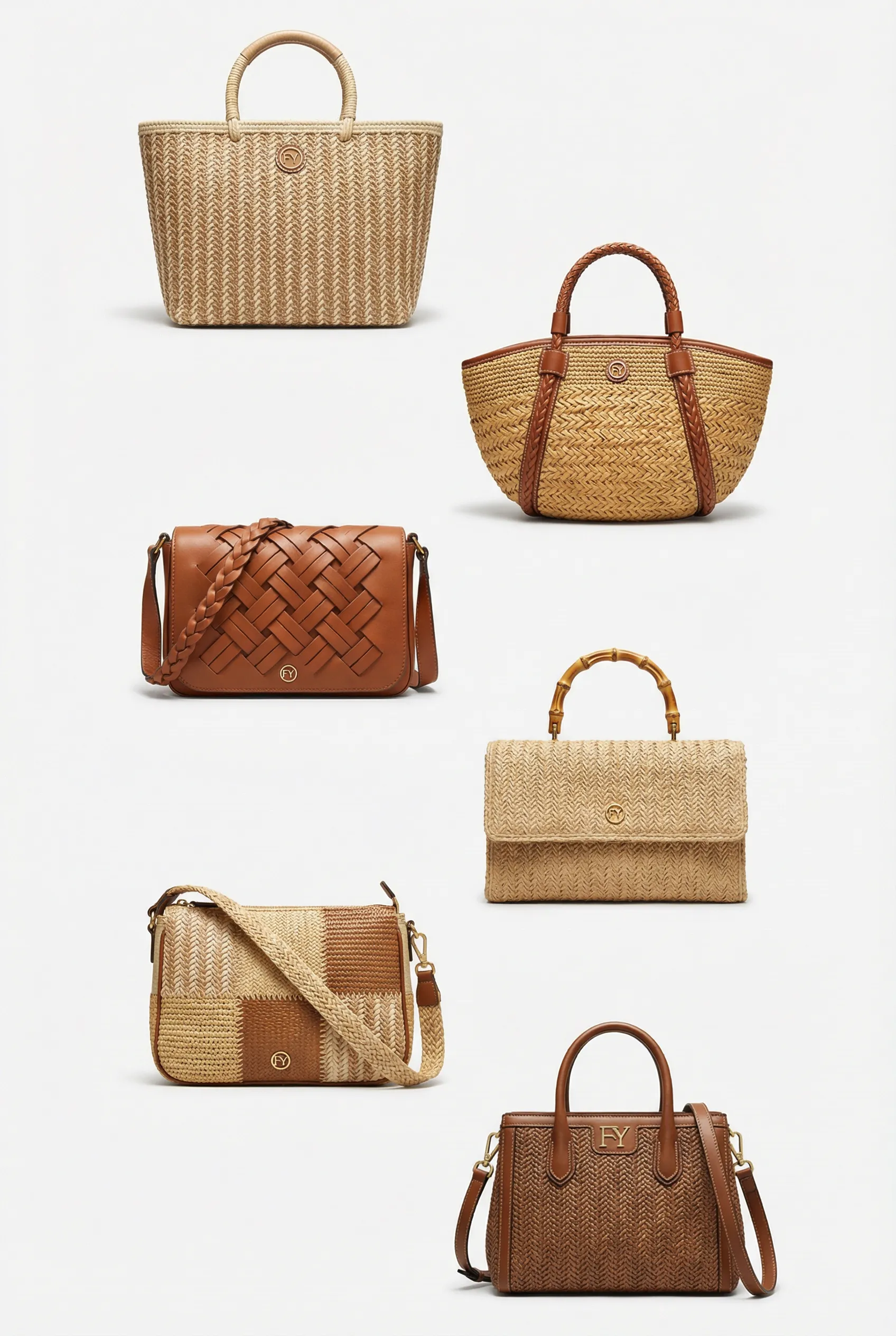
Woven bags use interlaced materials as both structure and aesthetic:
Leather/PU strips, webbing, raffia, textile tapes, straw, paper yarns
The weave defines the body, not just the surface print
- Strap calculus:
- strip width/thickness tuned to bend without fracture; skive leather for corner turns.
- Strip width, thickness and tensile strength defined per bag size and load
- Frame & float:
- hidden rims or interfacings keep openings square; bottom plates prevent sag.
- Frame or underlay structures to keep shape in larger shoppers and totes
- Joinery:
- overlapped weaves at stress points; discreet rivets where wear concentrates.
- Weave density and pattern (plain, basket, herringbone, etc.) chosen for balance of flexibility and support
- Summer and resort woven totes
- Woven leather/PU handbags and buckets
- Lifestyle & artisan-inspired collections
- Hand-weave (raffia/straw/leather) or machine braid; edge burnish and wax for longevity.
FY Bag Factory Processing & Quality Standards:
- Tension control during weaving to avoid warping and deformation
- Edge finishing: binding, trimming, skiving to prevent fraying or sharp edges
- Weight and sag tests under typical loads
- Moisture and temperature checks for natural fibres (straw, raffia) where applicable
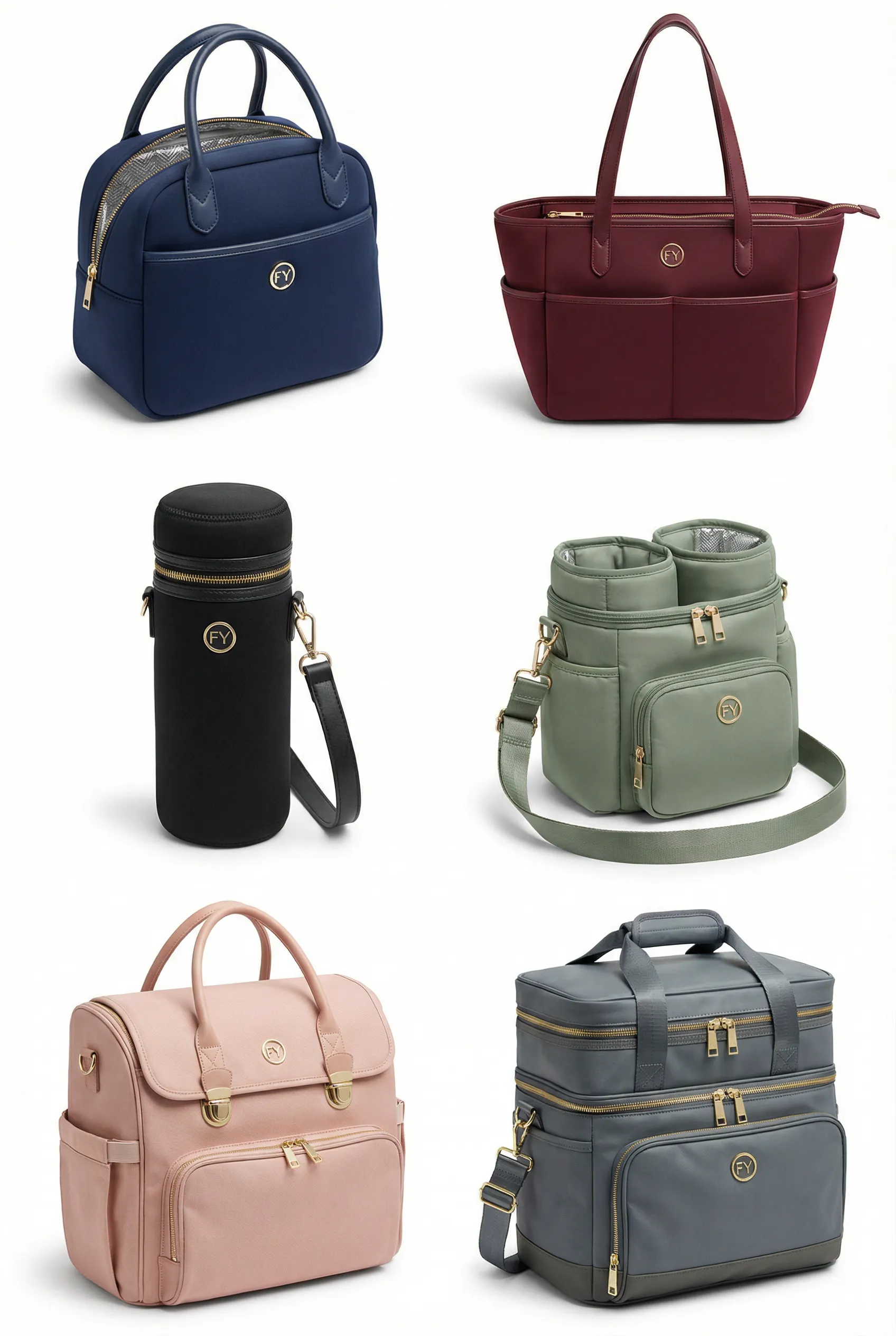
Insulation bags are portable thermal systems:
They must keep contents hot or cold within target time frames;
They must be easy to clean, safe for food contact and pleasant to carry.
- Multi-layer structure:
- Outer shell (polyester, nylon, canvas, etc.)
- Insulation layer (foam, foil, or technical insulators)
- Inner lining (food-safe, wipe-clean, leak-resistant)
- Leak discipline:
- seam binding or RF welds; liner patterns avoid needle holes.
- Minimizing cold or heat bridges at seams and zippers
- Optional reflective foil layers for radiant heat control
- Access & purge:
- wide-open lids, wipe-clean corners, odor-resistant coatings.
- Insulated lunch bags and cooler totes
- Bottle bags and baby bottle carriers
- Picnic and outdoor food bags
- Heat-welded liners, insulated zippers, stress-tested handles; cold-retention validation (ice-slurry tests).
FY Bag Factory Processing & Quality Standards:
- Thermal performance tests over defined intervals (e.g. 2h, 4h) with standard loads
- Leak and condensation checks for linings and seams
- Odor-control checks and cleaning tests
- Strength and comfort tests for handles and straps when fully loaded
True waterproofing is systems thinking: fabric, seam, closure, and geometry acting together.Outdoor, marine, commute-in-weather—proof that form and function can both stay dry.
- Shell:
- Waterproof shell fabrics (coated, laminated, or waterproof-rated textiles)
- TPU-laminated nylon/poly (hydrostatic head 10 000 mm+ where required).
- Seams:
- Waterproof constructions (taped seams, welded seams, critical seam sealing)
- RF-welded or taped; seam allowances designed for weld area.
- Closures:
- Closure systems (roll-top, waterproof zippers, gusseted flaps)
- roll-top, YKK Aquaguard®, or tooth-zip + internal storm flaps.
- Geometry:
- water-shedding panels; bottom radii reduce puddling and abrasion.
- Outdoor and hiking backpacks
- Marine or fishing bags
- Wet/dry bags for swim gear, gym, baby items
- Rain-ready commuter totes and messenger bags
- Die-cut panels for weld consistency; peel-strength and water-column tests; salt-fog for hardware.
FY Bag Factory Processing & Quality Standards:
- Hydrostatic and spray tests on fabrics (as requested)
- Seam sealing QC: visual checks and random water tests
- Immersion or shower tests on finished bags to match your category expectations
- Documentation of waterproof level (e.g. “rain-resistant commuter level” vs “outdoor level” vs “waterproof compartment only”)
How We Integrate Design Features, Materials & Performance
Beyond individual features, FY Bag Factory’s strength lies in integration:
- Design – CAD patterns and 3D thinking to place features where they add real value
- Materials – matching textiles, foams, films, coatings, hardware and trims to each feature
- Industrialization – process flows, sewing sequences, welding/lamination steps designed for repeatability
- Testing & QC – feature-specific tests (water, load, thermal, static, abrasion) built into our quality plan
This is how we turn special structure design + industrial performance into a scalable B2B solution.
Build Your Feature-Coherent Line
Whether your next collection needs the clarity of clear builds, the agility of convertibles, or the assurance of waterproof/ESD systems, FYBagCustom engineers features as brand language—beautiful, testable, repeatable.
Our B2B Development Process for Your Projects
Step 1 – Feature & Scenario Brief
- Target markets and use scenarios (stadium, travel, outdoor, mom & baby, food, industrial, tech…)
- Which custom bag design features you are interested in (clear, convertible, multi function, insulation, waterproof, etc.)
- Any standards or benchmarks you need to meet (internal guidelines, market norms, retailer requirements)
We will develop different solutions based on your requirements.
Step 2 – Feature Mix & Engineering Proposal
- Recommended feature combinations per bag type and size
- Material and structural options for each feature
- Cost, weight and complexity implications
You get a clear trade-off picture for each path.
Step 3 – Sampling, Testing & Iteration
- Build engineering samples with the selected features
- Perform internal feature tests (leak, load, thermal, wear, static)
- Adjust patterns, materials or construction until performance is acceptable
You can use these samples for internal approval, buyer presentations or lab testing if needed.
Step 4 – Mass Production & Feature-Specific QC
- We formalize feature specs in tech packs
- Integrate feature checks into inline and final QC
- Maintain documentation for future reorders and derivative styles
Your feature-driven designs become industrialized products you can reorder and scale.
FAQ
I’m new to bags. How do I choose which design features to start with?
Start from use scenarios, not from features themselves. For example:
- Stadium & events → clear bags + basic weather protection
- Commuters & travelers → convertible + multi function structures
- Food & family → insulation + waterproof + easy-clean linings
- Tech & industrial → antistatic + protective layout
- Fashion & social media → embellished, textured and woven statements
Share your target customer and price range, and we’ll propose a feature mix that makes sense for your first collection.
Can I combine multiple design features in one bag?
Yes. Many successful B2B products are hybrids:
- Clear + waterproof day bag
- Convertible + multi function + insulated diaper bag
- Woven + waterproof bottom + multi function interior
- Waterproof + antistatic tool or equipment bags
Our role is to engineer the combination so features don’t fight each other (for example, making sure waterproofing doesn’t block ventilation where it’s needed).
How do these design features affect cost and MOQ?
Features add materials, processes and testing steps, so cost and MOQ usually increase with complexity:
- Clear, insulated, antistatic and waterproof features typically have higher material cost and more process steps.
- Convertible and multi function structures add pattern and hardware complexity.
- Embellished and woven bags add labor time and sometimes more scrap loss.
We’ll break down the cost impact per feature so you can decide where to invest in hero SKUs and where to keep designs simpler for volume.
What information do you need to start a feature-focused project?
- Who will use the bag, in what environment, carrying what weight?
- Which performance expectations you have (e.g. “should stay cold for 2 hours”, “must not leak in rain”, “needs to pass stadium rules”, “should reduce static risk”).
- Any reference samples or competitor products you like.
You do not need complete technical drawings—our team can translate business and user requirements into engineering specs.
Can you help us test and document performance (waterproof, insulation, etc.)?
Yes. For many projects we:
- Run internal tests (water, load, thermal, abrasion, seam strength)
- Document methods and results
- Assist you in preparing for third-party lab tests if your channel requires them
Level and type of testing depends on your category and target markets; we’ll recommend a reasonable approach instead of over-engineering.
How do you keep feature quality consistent in mass production?
We treat design features as QC checkpoints, not as marketing slogans:
- Feature-specific parameters are locked in tech packs (fabric spec, seam types, weld lengths, insulation thickness, etc.)
- Incoming materials are checked against feature requirements
- Inline QC includes functional checks (seam leaks, strap pull, zipper operation under load)
- Final QC samples are tested again for critical features
This is how a “custom bag design feature” becomes a repeatable industrial performance, not just a one-time prototype.
Start Your Custom Bag Design Features Project with FYBagCustom
Whether you need clear stadium bags, convertible & multi function travel bags, insulated and waterproof bags, or embellished, textured and woven fashion bags, FYBagCustom combines:
- Structural innovation
- Functional performance engineering
- Material science and industrial process control
Tell us your use scenarios, target customers and required design features.
Our team will translate them into engineered bag concepts, validated samples and scalable OEM/ODM production tailored to your brand.