Tel/WhatsAapp:+86 18011919834
E-mail: chloe.x@fybagcustom.com

Tel/WhatsAapp:+86 18011919834
E-mail: chloe.x@fybagcustom.com
Send Your Inquiry Today

Who this guide is for: brand owners, merchandising managers, and product developers calibrating production briefs to the 250-to-500-dollar retail tier — the single largest and fastest-growing price bracket in handbags. If you are launching or repositioning a handbag line and want to understand what production specifications actually serve this tier — which material grades, which hardware finishes, which construction methods, which packaging standards deliver the “feels like it should cost more” perception that defines the bracket — this guide translates the market data into factory-floor decisions.
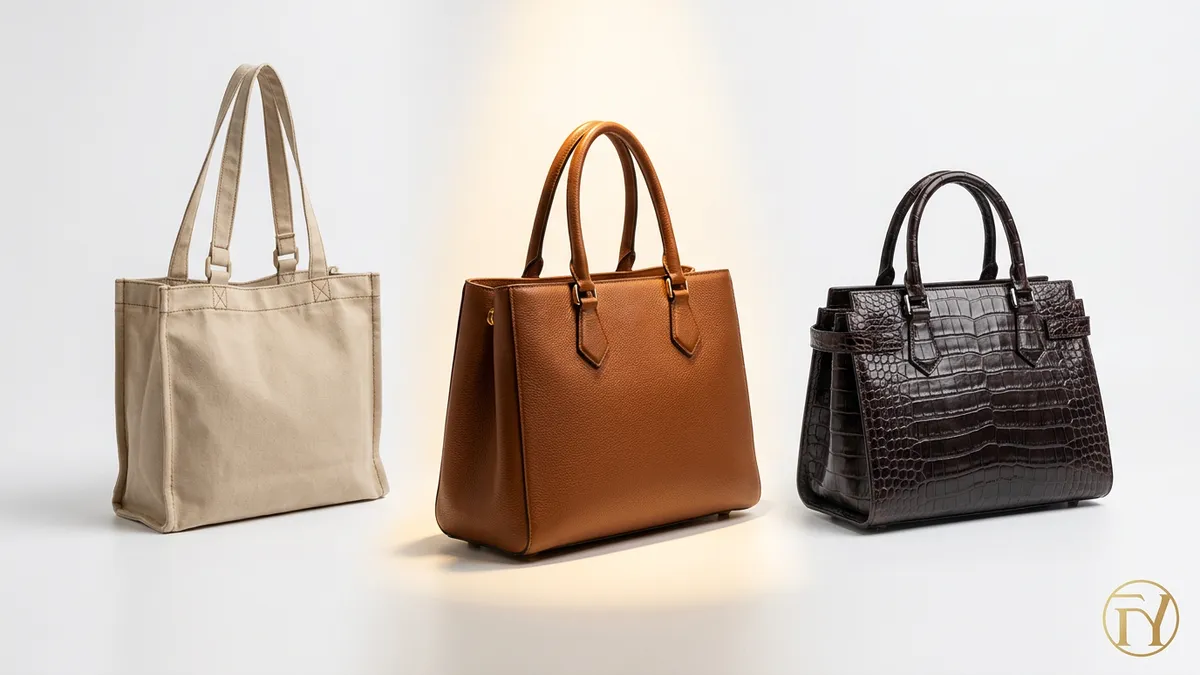
The data is unambiguous. According to JOOR’s transaction analysis across 14,000+ brands and 650,000+ wholesale buyers, the 250-to-500-dollar retail bracket grew from 63% to 70% of all handbag units purchased between 2021 and 2024 — making it the dominant price segment in the global handbag market by a commanding margin. In North America specifically, the concentration is even steeper: 84% of all handbag units sold through wholesale sit in this bracket. Meanwhile, every bracket above 500 USD has declined, and the 1,000+ tier has more than halved — falling from 7% to just 3% of total units.
The forces behind this shift are structural, not cyclical: the democratization of luxury fashion, the entry of Gen Z into the market (with aspirational tastes but accessible budgets), inflation-era value consciousness, and the rise of DTC brands like Polène, JW Pei, and Telfar that have redefined what “premium” looks and feels like without the legacy overhead that inflates luxury pricing.
For B2B buyers, this data carries a specific production implication: the sweet-spot tier has its own construction specification — a set of material, hardware, finishing, and packaging standards that deliver the “accessible luxury” perception at a landed cost that leaves margin for the brand. Building below this specification produces a bag that looks and feels budget despite the retail price (the “over-priced entry-tier” failure). Building above it produces a bag that costs more to make than the retail price can support (the “no-margin luxury” failure). The guide that follows maps the specification that sits between the two.
| What Happens | The brand produces a bag at entry-tier specifications (thin PU, generic hardware, single-coat edges, taffeta lining) and prices it in the sweet-spot bracket based on brand positioning, marketing spend, or aspiration |
| The consumer’s experience | She picks up the bag. It feels hollow — the panels have no body. The hardware is light and the zipper catches. The lining is slippery and thin. She has held bags at this price before (Coach, Michael Kors, Marc Jacobs) and this one does not feel like them. She puts it back. |
| The review | “Cute design but the quality doesn’t match the price. Feels cheap.” |
| The root cause | The production brief specified materials and construction appropriate for a sub-150-USD retail bag. The marketing positioned it at 300+ USD. The consumer’s hands do not read the marketing. |
| What Happens | The brand, aware that quality matters, specifies full-grain leather, folded edges, jacquard lining, custom-cast hardware, and French-bound interior seams — then discovers the landed cost leaves less than 20% margin at the sweet-spot retail price |
| The brand’s experience | The product is beautiful. Consumers love it. The reviews are 4.8 stars. And every sale loses money — or barely breaks even after marketing and fulfillment. The brand cannot scale because margin does not fund growth. |
| The root cause | The production brief specified materials and construction appropriate for a 700+ USD retail bag. The retail price was set at 300–400 USD. The production cost does not read the retail price. |
The sweet-spot specification lives in the gap between these two failures — production choices that are premium enough to pass the consumer’s hands-on quality test (the squeeze, the handle grip, the edge touch, the zipper pull) while controlled enough to deliver a landed cost that leaves healthy margin at the target retail.
| Tier | Material | Consumer Feel | Sweet-Spot Verdict |
|---|---|---|---|
| Entry tier (below the bracket) | Standard PU, 0.6–0.8 mm, smooth or heavily embossed | Thin, plasticky, no “body” — fails the squeeze test | ✗ Under-specification |
| Sweet spot | Premium PU (1.0–1.2 mm, pebbled or lightly textured) OR top-grain pigmented leather (corrected grain, 0.9–1.1 mm) | Substantial, soft, with surface character — passes the squeeze test; the consumer feels “real material” | ✓ The specification |
| Luxury tier (above the bracket) | Full-grain aniline or semi-aniline leather (1.0–1.2 mm) | Exceptional — natural grain visible, warm hand-feel, patina potential | ✗ Over-specification (the landed cost exceeds the bracket’s margin model) |
The sweet-spot material decision: premium PU at 1.0–1.2 mm delivers 80–90% of the tactile quality of corrected-grain leather at roughly half the material cost. For brands targeting the lower half of the bracket (250–350 retail), premium PU is the correct call. For brands targeting the upper half (350–500 retail), corrected-grain leather becomes viable and adds the “genuine leather” label that the consumer in this bracket values.
The material the consumer touches most: the handle. Even if the body panels are premium PU, consider real leather or premium microfiber on the handles and strap — the consumer grips the handle hundreds of times before she touches the body. A leather handle on a PU body is the highest-leverage material upgrade in the sweet-spot tier.
| Tier | Interlining | Consumer Feel |
|---|---|---|
| Entry | No interlining, or strip-fused non-woven (30–50 g/m²) | The panels feel “empty” — two thin sheets of material with air between them |
| Sweet spot | Woven fusible (80–100 g/m²) full-panel + 1–2 mm EVA foam on front and back panels | The panels feel substantial — there is resistance and recovery when squeezed; the bag holds its shape when set down empty |
| Luxury | Woven fusible (100+ g/m²) + 2–3 mm foam + microfiber backing | Maximum body; architectural rigidity; the “upholstered” feel |
The sweet-spot interlining decision: the combination of woven fusible plus thin foam on the front and back panels creates the “expensive squeeze” — the cushioned, springy panel feel that consumers associate with bags in the 300+ range — at a modest cost increment over the entry-tier approach. This is the single highest-impact-per-cost construction upgrade in the sweet-spot tier. Per our construction anatomy guide, specify “full-panel coverage, not strip fusing” — the squeeze test will expose strip fusing instantly.
| Tier | Edge Treatment | Consumer Read |
|---|---|---|
| Entry | Single-coat paint, no bevel; or raw/glued edges | The edge is rough, visibly unfinished, or has visible drips — the #1 “cheap” signal |
| Sweet spot | 3–4 coat painted edge with beveling and inter-coat sanding; satin or matte clear coat; tonal-matched to body material | Smooth, rounded, intentional — the edge reads as “finished” and “considered”; the consumer’s thumb runs along it without catching |
| Luxury | Folded (turned) edges on all visible edges; or 5+ coat painted with hand burnishing | The luxury-house standard; the labor cost is 3–5× the sweet-spot approach |
The sweet-spot edge decision: a 3–4 coat beveled, sanded, clear-coated edge delivers the visual and tactile standard the bracket requires. The key is the bevel — shaving the edge corners before painting so the finished bead is rounded, not boxy. Beveling adds one quick pass per edge and is the difference between an edge that reads “mid-market” and one that reads “premium.” Per our edge finishing guide, specify the edge paint tonal-matched to the body (ΔE ≤ 2.0) and the sheen (satin is the sweet-spot standard — matte for quiet luxury, gloss for fashion-forward).
| Tier | Hardware Quality | Consumer Read |
|---|---|---|
| Entry | Lightweight zinc alloy; thin plating (tarnishes in 2–3 months); rough action (grinding zippers, weak snaps) | The hardware “announces” its cheapness — it is light in the hand, it tarnishes, it does not operate smoothly |
| Sweet spot | Medium-weight zinc alloy; standard-to-premium plating thickness (12+ months before visible wear); smooth action (lubricated zippers, positive-click magnetic snaps); brushed or satin finish | The hardware operates smoothly and has satisfying weight — not heavy (which reads as costume), but substantial enough to feel “real” |
| Luxury | Heavy zinc alloy or brass; premium plating (PVD or heavy electroplate; 24+ months); hand-polished; silent (felt-damped closures) | The hardware is jewelry-grade; silent; warm to the touch (brass); the weight is part of the design |
The sweet-spot hardware decision: the consumer in this bracket expects hardware that works smoothly and does not tarnish for the first year. She does not expect jewelry-grade finish or felt-damped silence. Specify:
| Tier | Lining | Consumer Read |
|---|---|---|
| Entry | Polyester taffeta (40–60 g/m²); often a single color with no brand identification | Thin, slippery, “swishy” — the consumer reaches inside and the interior disappoints |
| Sweet spot | Polyester twill or satin (80–120 g/m²); a tonal or signature color; woven brand label inside; serged seams | Substantial enough that the hand registers “quality” when reaching inside; the interior feels considered, not an afterthought |
| Luxury | Cotton twill, microfiber suede, or jacquard (100+ g/m²); branded jacquard pattern; French-bound seams | The interior matches the exterior’s quality commitment — the consumer opens the bag and the inside reinforces the outside |
The sweet-spot lining decision: upgrading from taffeta to twill at 100 g/m² is the interior equivalent of the interlining upgrade — a modest cost increment that transforms the consumer’s reach-in experience. The signature-color option (a distinctive lining color — burnt orange, dusty rose, deep teal — visible when the bag is open) creates a brand-identity moment at zero additional construction cost (the lining is dyed a color; it might as well be a memorable one).
The sweet-spot consumer expects a purposeful interior — not a single cavity, but not the over-engineered 12-pocket utility bag.
| Feature | Sweet-Spot Standard | Why |
|---|---|---|
| Slip pocket (phone) | 1, back wall, sized for current smartphone dimensions (18 × 10 cm minimum) | The consumer reaches for her phone 30–50 times per day; a dedicated phone pocket is a functional essential, not a luxury |
| Zip pocket (secure items) | 1, back wall or front wall, 20 × 15 cm, YKK or equivalent nylon coil zipper | Keys, cards, valuables — the consumer needs one secure zone |
| Padded laptop/tablet sleeve (if tote or work bag) | 1, back wall, padded (5–10 mm foam), sized for 13″ or 15″ depending on silhouette | The defining functional feature of the work tote — per the JOOR data, totes are 41% of the market; the laptop sleeve is what makes a tote a “work tote” |
| Key leash | 1, retractable cord or webbing strap on interior D-ring | The “I can find my keys without digging” feature — a near-zero cost addition that generates “love this detail” reviews |
The over-engineering warning: more than 4–5 interior features begins to stiffen the bag (each pocket adds a layer of material to the lining wall), increase production time, and complicate the consumer’s experience (too many pockets = she cannot remember which pocket holds what). The sweet-spot interior is organized, not exhaustive.
| Feature | Sweet-Spot Specification | Why |
|---|---|---|
| Handle construction | Double-layer (sandwich) with cotton-rope or leather-cord core (8 mm); 25 mm width; painted edges with bevel | The handle is the most-gripped component on the bag; the core gives it a rounded, comfortable grip profile; the double layer prevents stretching |
| Handle drop | 22–26 cm (shoulder carry capable) for totes; 10–15 cm (hand carry) for structured bags | The consumer in this bracket carries the bag on her shoulder most of the time — the drop must accommodate this without the handles slipping off |
| Crossbody/shoulder strap | Adjustable, detachable, 25 mm width, slide-buckle adjuster | The crossbody option is expected at this tier — a bag in the sweet-spot bracket without a removable strap is missing a carry mode the consumer considers standard |
| Reinforcement | Webbing or canvas patch (40 × 60 mm minimum) at every handle and strap attachment point; box-X bartack through all layers | Non-negotiable at every tier — but especially critical at the sweet-spot tier, where the consumer carries 3–5 kg daily and the bag must survive 2+ years without handle tear-out |
The sweet-spot consumer expects packaging that confirms her purchase decision — the moment she opens the shipping box, the presentation should say “you chose well.”
| Component | Sweet-Spot Standard | Why |
|---|---|---|
| Dust bag | Cotton or non-woven fabric; drawstring closure; brand logo (screen-printed or embossed); sized with 5 cm excess | The dust bag is the first thing the consumer sees after the shipping material; it sets the tone; a plastic bag sets the wrong tone |
| Tissue and stuffing | Acid-free tissue paper inside the bag (shape retention); foam rod at fold lines if flat-packed | Protects the bag during transit; prevents crease marks that generate “arrived damaged” returns |
| Box (optional) | A rigid or collapsible gift box with magnetic closure, for DTC and gift programs; not required for wholesale/B2B shipment | The box upgrade is the highest-ROI packaging investment for DTC brands — it creates an unboxing moment for social content and it positions the purchase as a “gift to myself” event |
| Care card + dust bag card | A branded card with material description, care instructions, and (for TikTok/DTC) a social media handle or hashtag | Consumer education prevents care-related returns (“the leather changed color” = patina, not defect); the social prompt generates user-generated content |
SWEET-SPOT TIER SPECIFICATION SUMMARY
(250–500 USD retail bracket)

EXTERIOR:
  Material:     Premium PU (1.0–1.2 mm, pebbled) OR
                corrected-grain leather (0.9–1.1 mm)
  Handles:      Consider leather or premium microfiber
                even on PU-body bags

INTERLINING:
  Body panels:  Woven fusible, 80–100 g/m², full-panel
  Front + back: + 1–2 mm EVA foam
  Gussets:      Woven fusible only (no foam)

EDGE FINISHING:
  Treatment:    3–4 coat painted (sealer + 2 color +
                satin clear coat) with beveling and
                inter-coat sanding
  Color:        Tonal-matched, ΔE ≤ 2.0
  Sheen:        Satin

HARDWARE:
  Material:     Zinc alloy, medium weight
  Plating:      Standard-to-premium thickness
                (12+ months without tarnish)
  Finish:       ONE consistent finish across all
                hardware (brushed gold, satin silver,
                matte black — per brand)
  Zippers:      YKK or equivalent, metal teeth,
                lubricated
  Closures:     Magnetic snap, 18 mm, positive click

LINING:
  Material:     Polyester twill or satin, 80–120 g/m²
  Color:        Tonal or signature color (brand-
                specific)
  Seams:        All serged (overlocked); no raw edges
  Label:        Woven, 3 × 5 cm, interior

INTERIOR:
  Slip pocket (phone):  1 — 18 × 10 cm minimum
  Zip pocket (secure):  1 — 20 × 15 cm, YKK or equiv.
  Laptop sleeve (totes): Padded, 5–10 mm foam,
                         sized per silhouette
  Key leash:            1 — retractable or webbing

STRAP / HANDLES:
  Handles:      Double-layer sandwich, rope core,
                25 mm width, painted beveled edges
  Strap:        Adjustable, detachable, 25 mm width,
                slide-buckle adjuster
  Reinforcement: 40 × 60 mm webbing patch + box-X
                 bartack at every attachment point

PACKAGING:
  Dust bag:     Cotton, drawstring, brand logo
  Stuffing:     Acid-free tissue
  Box (DTC):    Collapsible magnetic closure
                (optional for wholesale)
  Care card:    Branded, with material + care info

QUALITY:
  Stitch SPI:   8 minimum (topstitching)
  Edge:         Smooth, no rough spots or thin areas
  Hardware:     All pieces same finish; no tarnish
                visible after 12-month salt spray
  Handle pull:  15 kg sustained 60 seconds, no failure
  AQL:          Level II, per ISO 2859-1
The JOOR data also reveals which silhouettes dominate in this bracket:
| Silhouette | Share of Handbag Category (2024) | Sweet-Spot Fit | Production Notes |
|---|---|---|---|
| Tote | 41% (the dominant silhouette — up from 12% pre-pandemic) | The hero of the sweet-spot tier — the “work + weekend” bag; the laptop sleeve is the functional differentiator | Semi-structured; removable base insert; padded laptop sleeve; dual handles + detachable crossbody strap |
| Crossbody | 21% | The second-most-popular silhouette; the everyday carry; the versatility play | Organized interior (3–5 pockets); adjustable strap; the compact-but-functional brief |
| Shoulder bag | 17% (growing from 13%) | The fashion-forward option; the trend silhouette; the “this season’s shape” | Semi-structured; trend-responsive (East-West, hobo, bowling — per our silhouette guide) |
| Top handle | 8% (growing from 5%) | The heritage/ladylike option; the premium end of the sweet-spot tier | Fully structured; frame or turn-lock closure; the “investment” positioning within the bracket |
| Hobo / bucket | 5% | The soft, effortless option; the alternative to structured | Minimal structure; soft materials; drawstring or open-top |
| Backpack | 5% (growing from 3%) | The commuter/travel option; the functional play | Convertible (backpack-to-crossbody); anti-theft back zip; water bottle pocket |
The sweet-spot collection plan: a 3–5 SKU core collection for the tier might include one hero tote (41% of the market), one crossbody (21%), one trend-responsive shoulder bag (17%), and optionally a top-handle or backpack depending on brand positioning.
The sweet-spot tier’s margin model is tighter than luxury (where 5–8× markups are common) and more demanding than entry tier (where material costs are minimal). The typical sweet-spot markup from landed cost to retail is 3.5–5× for DTC brands and 2.0–2.5× from wholesale to retail for wholesale-distributed brands.
The margin-protection principle: every specification decision in this guide has been calibrated to deliver the consumer’s quality expectation while leaving room in the landed cost for a viable margin. The foam-backed interfacing upgrade, the 3–4 coat edge system, and the twill lining upgrade collectively add a modest percentage to the FOB cost — but they prevent the “quality doesn’t match the price” review that kills sell-through and forces markdowns (which destroy margin far more than the production upgrade costs).
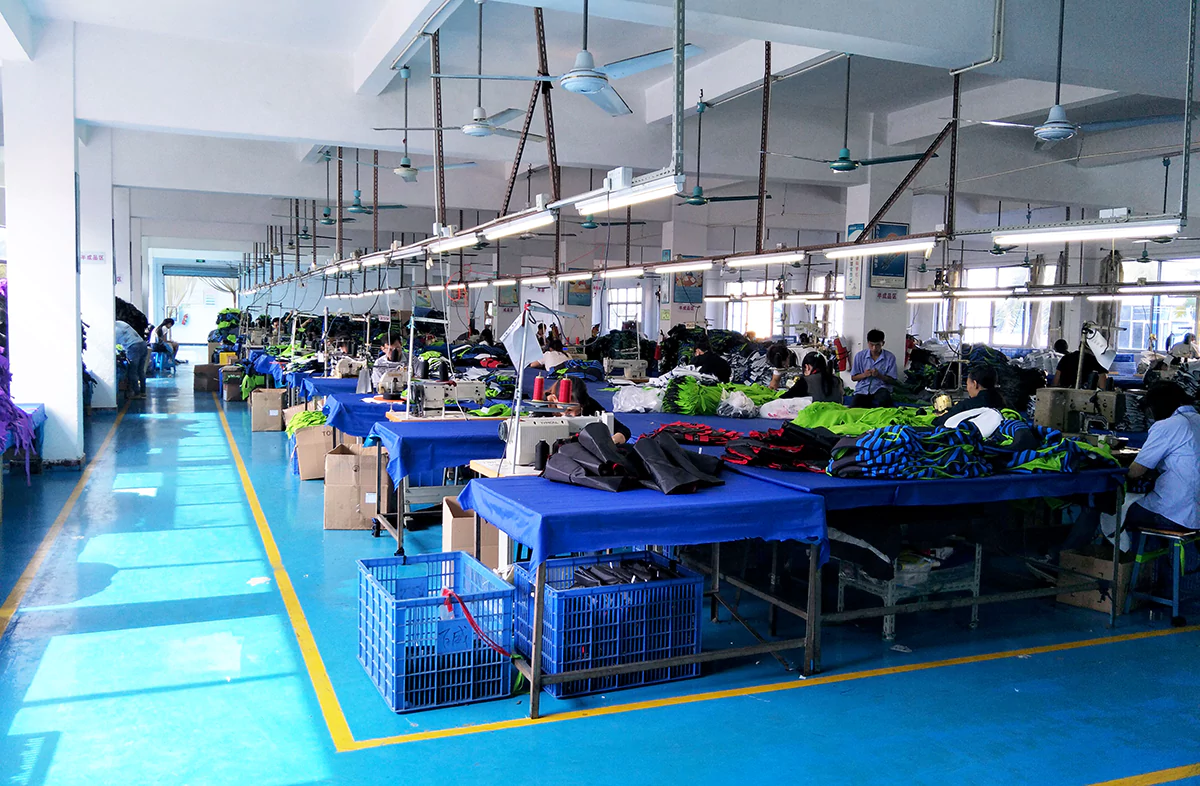
FYBagCustom is Your Trusted Custom Bag Manufacturer in China, with 15+ years of manufacturing experience across every tier — and a particular depth in the sweet-spot bracket where the majority of our clients’ programs sit. For brands targeting the 250-to-500-dollar retail tier, our capabilities include:
Contact our development team to discuss your sweet-spot tier program and receive a sample built to the specification in this guide.
The 250-to-500-dollar bracket is not just a pricing decision — it is a construction specification that must deliver the consumer’s quality expectation at a landed cost that sustains the brand’s margin. For B2B buyers targeting the fastest-growing segment in handbags, three core takeaways:
If you are developing a handbag line for the sweet-spot tier and want every specification calibrated to the bracket’s quality expectation and margin model, contact FYBagCustom to discuss material selection, construction specification, and sampling — and receive a sweet-spot-tier sample in 5–7 days.
FYBagCustom produces for the accessible-luxury bracket — premium PU and corrected leather, foam-backed interlining, beveled multi-coat edges, matched hardware, and twill lining — calibrated to deliver the quality the consumer expects at the margin the brand requires. Sweet-spot samples in 5–7 days.
Start Your Custom Bag Project →