Tel/WhatsAapp:+86 18011919834
E-mail: chloe.x@fybagcustom.com

Tel/WhatsAapp:+86 18011919834
E-mail: chloe.x@fybagcustom.com
Send Your Inquiry Today

Who this guide is for: niche brand owners, small-batch DTC founders, Etsy sellers scaling to wholesale, boutique retailers developing private label, Amazon FBA sellers testing new categories, and any small business operator who has been told “our MOQ is 500 per color” and wondered whether there is another way. If you want to understand how low-MOQ manufacturing actually works at the factory level — what makes it possible, what it costs, and how to negotiate it — this guide explains the supply chain mechanics that most manufacturers never share.
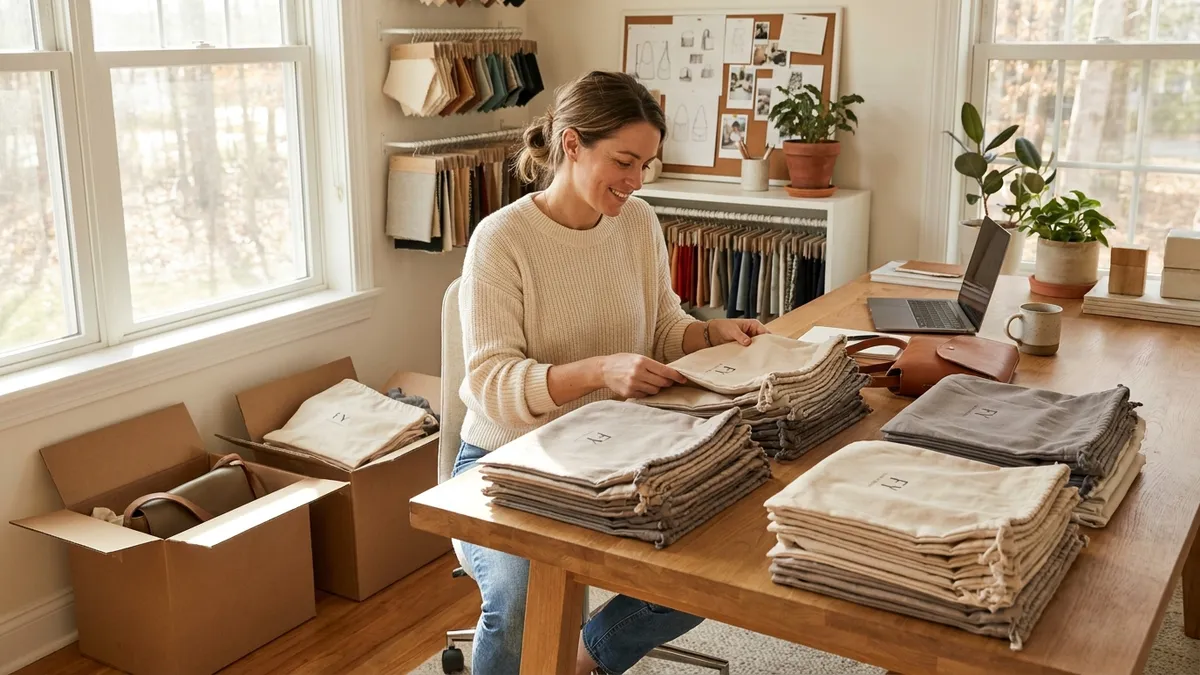
The minimum order quantity conversation is where most small brand dreams stall. You have a product idea, a tech pack, a target customer — and then a factory replies: “MOQ: 500 pieces per color per style.” You do the math. Five hundred units at 10,000 in a single colorway of a single style. Three colorways = 60,000. Before shipping, before duties, before marketing, before a single unit has been sold to a single customer, you are $60,000 deep in inventory for a product that has zero market validation.
This is the inventory crisis that kills niche brands before they launch. And it is entirely avoidable — if you understand how MOQ works at the factory level and know how to find and negotiate with manufacturers whose supply chains are structured for small-batch production.
This guide pulls back the curtain on MOQ mechanics. It explains why factories set minimums where they do, what the real cost drivers are (they are not what most founders think), how flexible factories structure their operations to serve 50–100 unit orders profitably, and how to negotiate MOQ terms that protect your cash flow without compromising product quality. No vague promises. No “just ask and they’ll lower it.” Concrete supply chain mechanics and real numbers.
MOQ is not an arbitrary number designed to exclude small buyers. It is the minimum quantity at which a factory can produce your order without losing money given its cost structure, material sourcing constraints, and production line efficiency. Understanding the three components of MOQ helps you negotiate intelligently rather than just asking for a lower number.
| Component | What It Means | Why It Creates a Minimum | How to Reduce It |
|---|---|---|---|
| Material MOQ | The minimum quantity of fabric, leather, or PU that the factory’s material supplier will sell | A PU leather supplier may require a minimum roll order of 100 meters — enough for 200–300 bags. If you only need 50 bags, the factory still pays for 100 meters | Use in-stock materials (colors/textures the factory already has); combine your order with other brands using the same material |
| Production line efficiency | The time required to set up cutting dies, configure sewing machines, brief workers, and QC-calibrate for your specific bag | Setup takes 2–4 hours regardless of whether you produce 50 or 500 bags. At 50 units, the setup cost per bag is 4–10× higher than at 500 | Accept slightly higher per-unit pricing to cover setup; combine multiple styles in one production run |
| Hardware MOQ | The minimum quantity of zippers, clasps, buckles, or custom hardware that the hardware supplier will sell | A custom-engraved zipper pull may require a 500-piece minimum from the hardware supplier | Use standard (non-custom) hardware for first runs; custom hardware on reorders when volume justifies it |
| Factory Size | Typical MOQ (per style per color) | Why This Range | Flexibility |
|---|---|---|---|
| Large (500+ workers) | 300–1,000+ pcs | Optimized for volume; production lines run in long shifts; material bought in bulk | Low — small orders disrupt their rhythm |
| Mid-size (100–500 workers) | 100–300 pcs | Balanced — can handle moderate batches efficiently | Medium — will consider lower MOQ with per-unit price adjustment |
| Small-to-mid (50–200 workers) | 50–150 pcs | Structured for variety; multiple styles per day; flexible material sourcing | High — this is where small brands should focus |
| Small workshop (10–50 workers) | 10–50 pcs | Artisanal production; higher labor cost per unit but maximum flexibility | Very high — but quality consistency may vary |
The sweet spot for niche brands: small-to-mid factories (50–200 workers) with MOQ of 50–150 units. These factories have deliberately built their operations to serve the small-brand market. They maintain broader material inventories (in-stock PU leathers in common colors), run shorter production shifts per style, and have QC processes calibrated for variety rather than volume.
A factory that profitably serves 50-unit orders is not simply a large factory accepting a loss on small orders. It is a differently structured operation optimized for variety and flexibility. Understanding these structural differences helps you identify genuinely low-MOQ-capable factories versus factories that reluctantly accept small orders and deliver poor results.
| Strategy | How It Works | Benefit to Small Brands |
|---|---|---|
| 1. In-stock material library | The factory maintains a curated inventory of 50–100 PU leather colors/textures, nylon variants, and canvas weights in stock — purchased in bulk and stored for use across multiple client orders | You can choose from available materials without triggering a custom-order material MOQ; delivery is faster because material is already on-hand |
| 2. Shared production runs | The factory batches multiple small orders from different clients onto the same production line on the same day, sharing the setup cost across several brands | Your per-unit setup cost decreases because the setup is amortized across multiple clients, not just your 50 units |
| 3. Standardized hardware library | The factory stocks standard zippers, magnetic snaps, D-rings, and buckles in common finishes (gold, silver, matte black) in bulk | You avoid the hardware-supplier MOQ trap; standard hardware is available at any quantity |
| 4. Multi-skill workforce | Workers are cross-trained to handle multiple styles and material types in a single shift, rather than specializing in one product type for weeks | The factory can switch between your 50-unit order and another client’s 80-unit order without productivity loss |
| 5. Modular QC | QC processes are designed to handle short runs — inspecting 50 bags with the same rigor as 500, using per-unit inspection rather than statistical sampling | Your small order gets 100% inspection, not the AQL sampling used for large orders — often resulting in better QC than high-volume production |
The in-stock material library is the single most impactful enabler of low MOQ. Here is why:
When you specify a custom PU leather color (e.g., a specific shade of sage green matched to a Pantone reference), the PU supplier must produce that color in a minimum batch — typically 300–500 meters of material. At 0.4–0.6 meters per bag, that is 500–1,250 bags’ worth of material. If you only need 50 bags (20–30 meters of material), the factory either eats the cost of 470+ meters of unused material, or it passes the full material cost to you — making your per-unit price absurdly high.
When you choose from the factory’s in-stock library, the material is already paid for, already on the shelf, and already shared across multiple clients. Your 50-bag order uses 20–30 meters from a 500-meter roll that is also serving 10 other brands. No material waste. No material MOQ surcharge. The per-unit material cost is the same as if you ordered 500 bags.
The trade-off: your color and texture options are limited to what is in stock. For most niche brands on their first or second production run, this trade-off is worth it. You get the color that is closest to your vision (most factories stock 50–100 options, including all major trend colors), you avoid the 5,000 custom-material commitment, and you launch months faster.
| Material Category | Typical In-Stock Options | Coverage |
|---|---|---|
| Smooth PU leather | 30–50 colors including black, navy, cognac, cream, blush, sage, butter yellow, burgundy, taupe | Covers 90%+ of niche brand color requests |
| Pebbled PU leather | 20–40 colors, same popular shades | Covers most fashion bag needs |
| Nylon (various deniers) | 15–25 colors, common fashion and sport tones | Covers sport and lifestyle bags |
| Canvas (various weights) | 8–15 colors including natural, black, navy, olive | Covers tote and casual bag needs |
| Microfiber leather | 15–25 colors | Covers premium positioning |
| Standard hardware (zippers, snaps, D-rings) | Gold, silver, matte black, antique brass, rose gold | Covers all mainstream hardware needs |
Low MOQ is not free. Producing 50 bags costs more per unit than producing 500 of the same bag. The question for niche brands is: how much more? And is the premium worth it?
| Cost Component | 500 Units (standard MOQ) | 200 Units | 100 Units | 50 Units |
|---|---|---|---|---|
| Material per unit | $4.00 | $4.00 | $4.20 | $4.50 |
| Labor per unit | $5.00 | $5.50 | $6.50 | $8.00 |
| Setup cost (amortized) | $0.30 | $0.75 | $1.50 | $3.00 |
| Hardware per unit | $1.50 | $1.50 | $1.60 | $1.80 |
| QC per unit | $0.40 | $0.50 | $0.70 | $1.00 |
| Packing per unit | $0.50 | $0.50 | $0.55 | $0.60 |
| Total FOB per unit | $11.70 | $12.75 | $15.05 | $18.90 |
| Premium vs. 500 units | Baseline | +9% | +29% | +62% |
The premium at 50 units versus 500 units is approximately 62% — which sounds dramatic until you examine where it comes from:
The total per-unit premium at 50 units (11.70) is approximately 95, this premium reduces gross margin from 87.7% (at the 500-unit cost) to 80.1% (at the 50-unit cost). An 80.1% gross margin is still exceptionally healthy — far above the 50–60% margins that most retail businesses consider good.
The correct framing: low MOQ does not destroy your margins. It trades a 7–8 percentage point margin reduction for a massive reduction in inventory risk. Instead of investing 945 in 50 units. If they sell out, you reorder 100. If they do not sell, you have lost under 6,000.
Negotiating lower MOQ is not about asking “can you do less?” — it is about structuring your order to minimize the factory’s cost disadvantage and maximize your flexibility.
As detailed above, selecting from the factory’s existing material library eliminates the material-MOQ bottleneck entirely. This single decision can reduce MOQ from 300+ to 50–100 units.
How to execute: ask the factory for their in-stock material swatch card before designing. Choose your colors and textures from the available options rather than specifying custom Pantone references.
Custom-engraved zipper pulls, custom-molded logo plates, and proprietary closure hardware often have their own MOQ (300–500 pieces). For your first run, specify standard hardware in a matching finish:
| Hardware Need | Custom Version (high MOQ) | Standard Alternative (no MOQ) |
|---|---|---|
| Logo zipper pull | Custom-engraved pull (MOQ: 500 pcs) | Standard teardrop pull in matching finish + branded woven label inside |
| Logo turn-lock | Custom-molded lock face (MOQ: 300 pcs) | Standard turn-lock + debossed logo on leather body instead |
| Branded rivets | Custom-stamped rivet heads (MOQ: 1,000 pcs) | Standard dome-head rivets + brand identity carried by other elements |
Reserve custom hardware for your second or third order when volume justifies the tooling investment. Your first run should prove the product and build revenue — not optimize every hardware detail.
Many factories set MOQ per style per color. If the MOQ is 100 per color and you want three colors, that is 300 total. But if you can negotiate the MOQ as 100 total across all colors (e.g., 40 black + 35 cognac + 25 sage), the total investment is one-third of what the color-by-color minimum would require.
How to execute: ask explicitly: “Can I combine three colorways to meet the 100-unit minimum?” Many flexible factories accept this because the production setup is identical across colorways — only the material color changes.
Rather than asking for a lower MOQ at the same price (which the factory will resist because it loses money), offer to accept a higher per-unit price that compensates for the efficiency loss.
How to frame it: “I understand the per-unit cost is higher at 50 units. Can you quote me pricing at 50, 100, and 200 units so I can see the scale? I’d like to start at 50 and increase to 200 on my second order.”
This framing signals:
The most powerful negotiation lever: a multi-order commitment. Instead of asking for 50 units at a low MOQ, offer: “I’d like to order 50 units now, then 100 units in three months, then 200 units six months after that. Can we structure a pricing tier based on this three-order commitment?”
Factories value predictability. A committed three-order sequence — even starting at 50 units — is more attractive than a single 200-unit order with no follow-up. The factory sees a growth relationship, and it is more willing to absorb the first-order inefficiency.
Niche brands fail from overstock, not from per-unit cost. The most dangerous moment in a small brand’s life is sitting on 400 unsold units of a product that the market did not validate. The cash is locked. The storage costs mount. The pressure to discount destroys the brand positioning.
| Scenario | Units Ordered | FOB Cost | Total Inventory Investment | If 60% Sells at Full Price | Cash Trapped in Unsold Inventory |
|---|---|---|---|---|---|
| High MOQ (500 units) | 500 | $11.70 | $5,850 | $3,510 recovered | $2,340 trapped in 200 unsold units |
| Low MOQ (100 units) | 100 | $15.05 | $1,505 | $903 recovered | $602 trapped in 40 unsold units |
| Ultra-low MOQ (50 units) | 50 | $18.90 | $945 | $567 recovered | $378 trapped in 20 unsold units |
At 500 units, a 40% unsold rate traps 378 — a loss most niche founders can absorb without existential risk. The per-unit cost is higher, but the total risk exposure is 84% lower.
For a niche brand testing a new style, a new material, or a new market segment, the low-MOQ order is not a compromise — it is the correct financial decision. It preserves cash for marketing, iteration, and the second order that comes after market validation.
The most successful low-MOQ clients do not stay at 50 units forever. They use the small first order to validate, then scale rapidly once the product proves itself.
| Order | Quantity | Per-Unit FOB | Total Cost | Purpose |
|---|---|---|---|---|
| Order 1 (Test) | 50–100 units | 19 | 1,900 | Validate product-market fit; generate first reviews; prove demand |
| Order 2 (Scale) | 150–250 units | 14 | 3,500 | Expand color range; increase inventory to meet demand; improve per-unit cost |
| Order 3 (Optimize) | 300–500 units | 12 | 6,000 | Introduce custom hardware; negotiate best pricing; build safety stock |
By the third order, per-unit cost has decreased 35–40% from the test order — achieved naturally through volume increase, not through aggressive negotiation. The factory rewards growth with better pricing because its production efficiency improves with larger runs.
The critical insight: the brands that reach Order 3 at 500 units started at Order 1 with 50 units. The brands that started at Order 1 with 500 units — many of them never made it to Order 2 because they were buried under unsold inventory from a product that needed iteration.
A factory advertising “no minimum order quantity” or “MOQ: 1 piece” is almost always one of three things:
| Claim | Reality | Risk |
|---|---|---|
| “No MOQ” | Trading company that brokers to multiple workshops; no production control | Quality varies wildly between orders; no consistency; limited recourse for defects |
| “MOQ: 1 piece” | Sample house that charges sample prices for production orders | You pay 100 per bag regardless of quantity — unsustainable for retail pricing |
| “Any quantity accepted” | Factory that accepts your order but produces it last, with lowest priority, using leftover materials | Longest lead times; inconsistent quality; your order is deprioritized whenever a larger client needs capacity |
A realistic, trustworthy low-MOQ manufacturer will quote you 50–100 units minimum with a transparent per-unit price premium and clear lead time. She will explain what drives the minimum (material MOQ, setup cost) and offer concrete solutions (in-stock materials, combined colorways). The transparency itself is the trust signal.
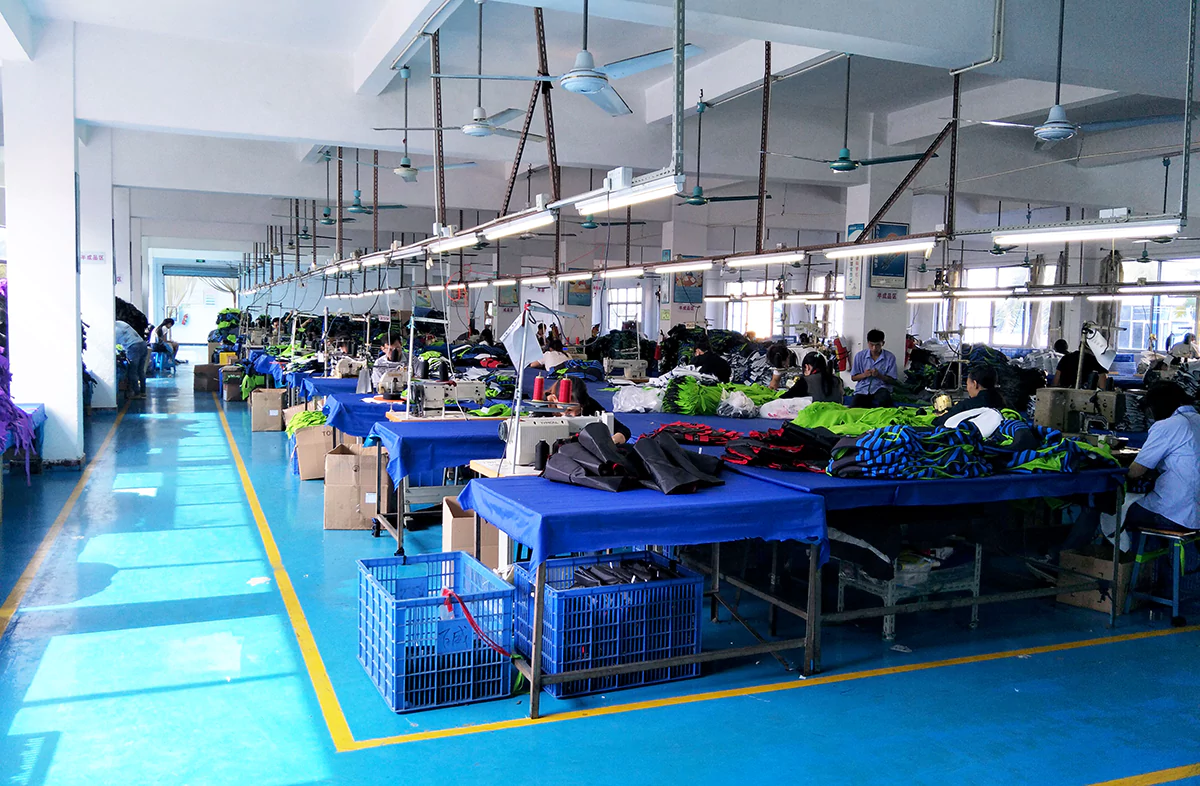
FYBagCustom is Your Trusted Custom Bag Manufacturer in China, with 15+ years of manufacturing experience and a production system deliberately structured for flexible, low-MOQ programs. For niche brands, startup founders, and small businesses, our low-MOQ capabilities include:
Our 50,000 m² factory in Guangzhou with 10+ production lines and 500+ professional staff serves small-batch niche brands alongside larger-volume programs — and we treat a 50-unit first order with the same quality standards, communication responsiveness, and sample precision as a 5,000-unit reorder.
Low-MOQ manufacturing is not about convincing a factory to accept less than it wants. It is about finding a factory whose operations are designed for variety and flexibility, understanding the real cost drivers behind minimums, and structuring your orders to minimize the premium while maximizing your cash flow protection. For niche brands entering or growing in 2026, three core takeaways:
If you are a niche brand ready to produce your first — or next — small-batch order, contact FYBagCustom. Tell us your target quantity, your material preferences, and your budget range — and we will respond with transparent per-unit pricing across multiple quantity tiers, typically within 48 hours. The right factory partner does not force you to order more than you need. It helps you order exactly what makes sense for your business today — and grows with you tomorrow.
FYBagCustom’s low-MOQ production system is built for niche brands, startup founders, and small businesses — with in-stock materials, standard hardware, flexible batch scheduling, 100% QC, and transparent tiered pricing from 50 units up. Send us your idea and we’ll quote you at the quantity that makes sense for your business.
Start Your Custom Bag Project →