Send Your Inquiry Today

How MOQ Influences Custom Bag Production Cost and Lead Time

Introduction

Minimum Order Quantity (MOQ) is defined as the smallest production quantity a factory or upstream supplier is willing to accept for a specific custom bag specification (style, material set, colorway, logo method, and packaging configuration). In custom bag manufacturing, MOQ functions as a risk-and-efficiency threshold: it determines how fixed costs are distributed across units, whether materials and components can be procured at standard tiers, and how production planning is scheduled. As a result, MOQ has direct and indirect effects on both unit cost and calendar lead time.
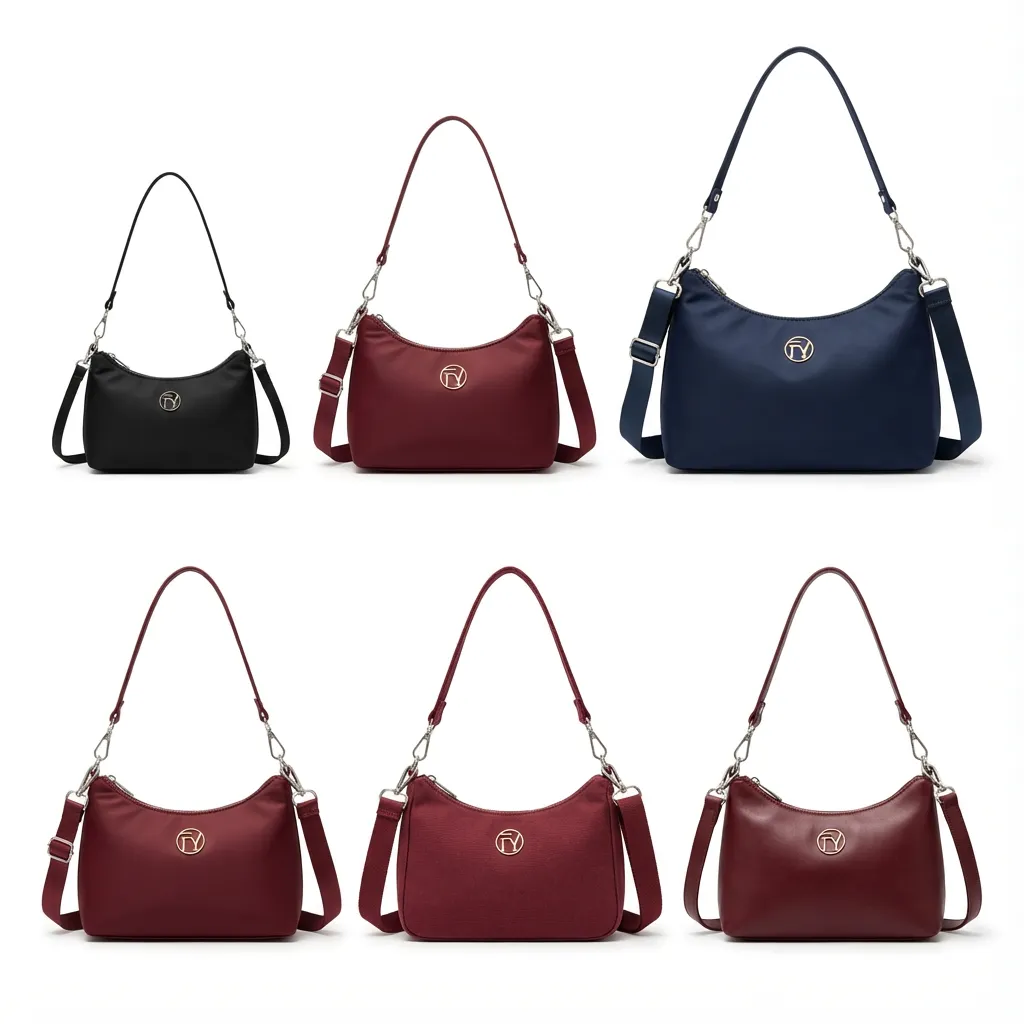
 - How MOQ Influences Custom Bag Production Cost and Lead Time-FY Custom Bag Manufacturer

MOQ as a Cost-Allocation Mechanism in Bag Manufacturing

MOQ is primarily an allocation rule for fixed and semi-fixed costs. In bag production, total cost typically consists of:

  • Fixed costs: pattern engineering, sample development, tech pack interpretation, tooling (where applicable), machine setup, production line changeover, QA setup, and administrative overhead tied to initiating a production order.
  • Semi-fixed costs: test runs, first-article inspection, small-lot inefficiencies, special handling, and supplier surcharges for sub-MOQ purchasing.
  • Variable costs: fabric and trim consumption, labor minutes, packaging, and unit-level QC.

A common manufacturing cost model is:

Unit Cost = (Fixed + Semi-fixed) / Quantity + Variable Cost per Unit + Margin / Risk Allowance

Because fixed and semi-fixed costs do not scale linearly with quantity, unit cost generally decreases as MOQ increases, until it reaches a plateau where variable costs dominate.

Price Breaks Are Often Step Functions, Not Smooth Curves

In custom bags, price reductions with higher MOQ often appear as “steps” rather than gradual declines because key inputs have their own thresholds:

  • Fabric mills have minimums per color and construction.
  • Webbing/zipper/hardware suppliers have minimum runs per type, plating, or dye lot.
  • Printing/embroidery vendors have setup charges that amortize better at volume.
  • Production lines optimize around batch sizes that reduce changeovers.

These thresholds create discrete cost tiers (e.g., 200 units vs 500 vs 1,000+) rather than continuous scaling.

MOQ Effects on Material and Component Procurement Costs

MOQ determines whether a project can use stock materials/components or requires custom production upstream. In bag manufacturing, upstream MOQ constraints are often more decisive than the sewing factory’s internal MOQ.

Key procurement cost drivers influenced by MOQ include:

  • Fabric: custom weaving/knitting, coating/lamination, and dyeing frequently require minimum yardage per color.
  • Trims: custom zippers (tape color + puller), molded buckles, proprietary metal hardware, and custom label sets often have minimum order thresholds.
  • Branding processes: screen printing, heat transfer, debossing plates, and embroidery digitizing impose setup or tooling charges that amortize with volume.

At low order quantities, factories may quote higher unit prices due to:

  • purchasing at retail/near-retail channels,
  • paying supplier “small lot” surcharges,
  • substituting with available stock equivalents (if permitted by the specification).

MOQ Effects on Production Efficiency and Labor Cost

MOQ influences how efficiently labor and equipment are utilized. Bag factories typically run multiple operations (cutting, skiving where needed, printing/embroidery, stitching, binding, assembly, finishing, packing). Low MOQs can raise labor cost per unit due to:

  • line balancing losses: short runs reduce the ability to stabilize workflow and takt time,
  • setup time dominance: thread changes, guide changes, folder/binder changes, and machine tuning become a larger share of total time,
  • higher defect sensitivity: early-run learning effects are less diluted when total output is small.

Higher MOQs can reduce unit labor cost when they enable:

  • longer continuous runs,
  • reduced changeovers,
  • steadier operator specialization.

However, very high MOQs can also introduce labor cost risk if the design is complex (multiple materials, layered construction, heavy binding), because sustaining consistent quality at scale may require slower cycle times or additional inspection labor.

MOQ Effects on Lead Time Through Supply Chain Constraints

Lead time in custom bag production is typically defined as the elapsed time from specification confirmation (or pre-production sample approval) to shipment readiness. MOQ influences lead time via two competing forces:

  1. Procurement lead time (often longer at low MOQ if custom inputs are still required but do not meet supplier minimums efficiently).
  2. Production duration and scheduling lead time (often longer at high MOQ because more units must be produced and capacity must be reserved).

Typical Lead Time Segments in Custom Bag Production

Lead time commonly includes:

  • Material and trim procurement: fabric, webbing, zippers, hardware, labels, packaging.
  • Pre-production: final pattern confirmation, cutting dies/templates (if needed), color approvals, pilot run.
  • Bulk production: cutting, assembly, in-line QC, finishing.
  • Final QC and packing: AQL-based inspections (if required), carton packing, marking.
  • Outbound logistics: consolidation, export documentation, and freight transit (mode-dependent).

MOQ affects which segment dominates.

Comparison Table: MOQ vs Unit Cost Drivers

MOQ Level (Relative)Dominant Cost DriversTypical Cost BehaviorCommon Quoting Outcomes
Low MOQFixed + semi-fixed allocation, small-lot procurement surcharges, setup timeHigh unit cost; price sensitive to setup/toolingHigher unit price, fewer customization options, more stock substitutions
Medium MOQBetter amortization; partial access to supplier tiersNoticeable unit cost drop vs low MOQMultiple price breaks; broader trim/material options
High MOQVariable costs dominate; efficiency improves; capacity and QC load increaseUnit cost plateaus; incremental savings smallerBest unit pricing; longer production windows; stricter process control

A practical manufacturing interpretation is that ​low MOQ projects are costed like engineering-heavy prototypes​, while ​high MOQ projects are costed like stable batch manufacturing​, with procurement and line efficiency optimized.

Comparison Table: MOQ vs Lead Time Mechanisms

MOQ Level (Relative)Procurement Lead Time RiskProduction Scheduling RiskNet Lead Time Pattern
Low MOQHigh if custom materials are required but upstream minimums are hard to meetModerate; factories may fit small runs into gaps, but not guaranteedCan be short with stock materials; can be long if custom sourcing stalls
Medium MOQModerate; more access to standard supplier tiersModerate; requires defined slot but manageableOften the most predictable lead time tier
High MOQLower per-unit procurement friction if fully custom runs are justifiedHigh; requires longer reserved capacity and more QC throughputUsually longer calendar time due to volume and capacity planning

The central lead-time tradeoff is that ​low MOQ can reduce sewing time but increase sourcing uncertainty​, while ​high MOQ can stabilize sourcing but extend production windows​.

MOQ Interactions With Customization Type

MOQ sensitivity depends on what is being customized. In bag manufacturing, customization types can be grouped by how they trigger upstream constraints:

  • Low MOQ-friendly customizations (often setup-based)
    Logo printing on stock fabric, embroidery on stock panels, woven labels (if stock or pre-existing), hangtags, standard packaging variations.
  • MOQ-sensitive customizations (often minimum-run-based)
    Custom fabric colors, custom coated/laminated fabrics, custom zipper tape + puller sets, custom molded hardware, proprietary metal fittings, custom-dyed webbing, and new material constructions.

When MOQ is below upstream thresholds, manufacturers may propose:

  • color matching on existing fabric shades,
  • standard hardware families instead of new molds,
  • shared zipper/platform components,
  • consolidated colorways to reach minimum yardage per color.

Tooling, Development, and the “Hidden MOQ” in Custom Bags

MOQ does not only apply to bulk production; it also applies to tooling economics.

Common tooling and development items include:

  • emboss/deboss plates,
  • screen printing frames,
  • heat-transfer engraving cylinders (vendor-dependent),
  • cutting dies/templates for certain components,
  • custom metal molds for hardware.

When quantities are low, tooling is typically handled as:

  • a one-time charge paid separately, or
  • an amortized cost embedded into unit price (raising unit cost).

As MOQ increases, amortization reduces the unit-level burden, which is why higher MOQs often unlock more complex branding or hardware options without extreme unit price inflation.

Manufacturing Perspective

From a manufacturing perspective, MOQ is evaluated as a combined constraint across procurement feasibility, production efficiency, and risk exposure.

  • MOQ and unit cost: Factories prioritize coverage of setup time, engineering overhead, and supplier minimum-related surcharges. Low MOQs tend to produce higher unit costs because these costs remain relatively constant regardless of quantity.
  • MOQ and lead time: Factories assess whether materials are stock or made-to-order, whether trims require custom runs, and whether the order can be scheduled into existing capacity. High MOQs commonly increase the bulk production window and require earlier capacity reservation.
  • MOQ and production complexity: Complex constructions (multiple layers, foam lamination, binding-heavy seams, rigid panels, heavy hardware) increase setup and defect risk; low MOQ amplifies this effect because learning-curve losses are spread across fewer units.
  • MOQ and durability implications: MOQ can indirectly affect durability when low quantities force substitutions in fabric, coating, or hardware families. For example, switching from a specified custom-coated fabric to an available stock alternative can change abrasion resistance, tear strength, hydrolysis risk (for certain PU systems), or long-term colorfastness, depending on the substitute’s specification and test performance.
  • MOQ and lead-time predictability: Medium-to-high MOQs often yield more predictable procurement and standardized production control, while very low MOQs can be either fast (if entirely stock-based) or slow (if upstream vendors delay small lots).

Industry Use Cases

In B2B sourcing, MOQ-related decisions commonly appear in the following scenarios:

  • New product launches: Brands may accept higher unit costs at low MOQ to validate market fit, then redesign for higher MOQ efficiency (fewer colorways, standardized trims) after early validation.
  • SKU rationalization: Wholesalers often consolidate colors or materials to meet upstream minimums, improving both cost and supply stability.
  • Regional programs and replenishment: Retailers may set different MOQ tiers for core styles (high MOQ, optimized cost) versus seasonal capsules (lower MOQ, higher unit cost, simplified materials).
  • OEM vs ODM selection: ODM programs using existing patterns, proven bill-of-materials, and stock platforms typically support lower functional MOQs with more stable lead times. OEM programs with new patterns, custom materials, or proprietary hardware are more MOQ-sensitive because development and sourcing thresholds are higher.
  • Vendor management and quoting strategy: Sourcing teams often request tiered quotations (e.g., 200/500/1000 units) to map price breaks, then align internal demand forecasts to the most cost-efficient tier that still fits inventory risk limits.

FYBagCustom is a B2B custom bag manufacturer specializing in private-label and OEM/ODM bag production for international brands, wholesalers, and retailers, with experience across a wide range of materials, product categories, and manufacturing standards.

Conclusion

MOQ is defined as a minimum production threshold that reshapes the economics and scheduling of custom bag manufacturing. Higher MOQs generally reduce unit cost by amortizing fixed and semi-fixed costs, unlocking standard supplier pricing tiers, and improving production efficiency. MOQ also influences lead time through procurement feasibility and production scheduling: low MOQs can be fast when built on stock platforms but can become slow when they still require custom upstream inputs; high MOQs can stabilize sourcing but extend production windows due to capacity planning and volume throughput. In manufacturing practice, MOQ decisions are most accurate when evaluated across the full supply chain—materials, trims, branding processes, tooling, line efficiency, and quality control—rather than sewing capacity alone.