Tel/WhatsAapp:+86 18011919834
E-mail: chloe.x@fybagcustom.com

Tel/WhatsAapp:+86 18011919834
E-mail: chloe.x@fybagcustom.com
Send Your Inquiry Today

Years Manufacturing
Factory Area
Professional Staff
Inspection Rate
UV printing serves the fashion-bag and accessories segment — brands and sellers working with PU leather, genuine leather, PVC/TPU, and coated materials where traditional print methods fall short.



DTG needs absorbent natural fiber. Screen print has limited adhesion on slick surfaces. Heat transfer works but leaves a film layer and risks heat damage. UV-curable ink is engineered for exactly the surfaces these methods struggle with. Five properties make UV printing the premium method for fashion-bag materials.

UV LED lamps cure the ink in milliseconds as the print head passes — no heat press, no oven, no waiting. Zero heat damage to PVC, thin PU leather, or TPU. No ink migration. Panels can be handled immediately after printing. The only full-color method that’s safe for heat-sensitive bag materials.

UV ink can be applied in multiple layers to build tactile, raised surfaces — embossed-feel logos, textured patterns, and dimensional text without physical embossing tools. No other print method creates touchable 3D texture from a digital file. The 3D capability alone justifies UV for premium and luxury-adjacent bag brands.

Clear UV ink applied as a selective gloss layer over matte surfaces — logo in glossy raised varnish on matte-textured PU leather creates a high-end finish that rivals hot stamping at a fraction of the cost and tooling time. Spot varnish is a UV-exclusive capability.

UV printers include opaque white ink — enabling vivid CMYK graphics on black, dark, colored, metallic, and even transparent surfaces. White logo on black PU leather. Full-color artwork on transparent PVC. No other direct-print method matches this capability on non-absorbent surfaces.
UV printing is most commercially valuable on PU leather, genuine leather, PVC/TPU, and coated surfaces — the non-absorbent materials that define the fashion-bag category. Here are the eight most-ordered UV-printed formats.
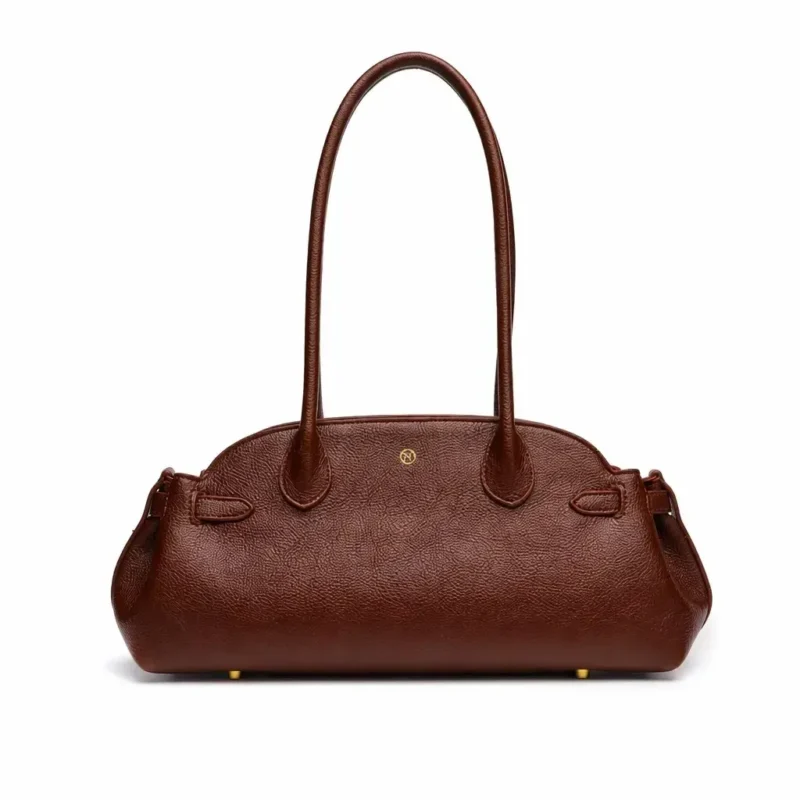
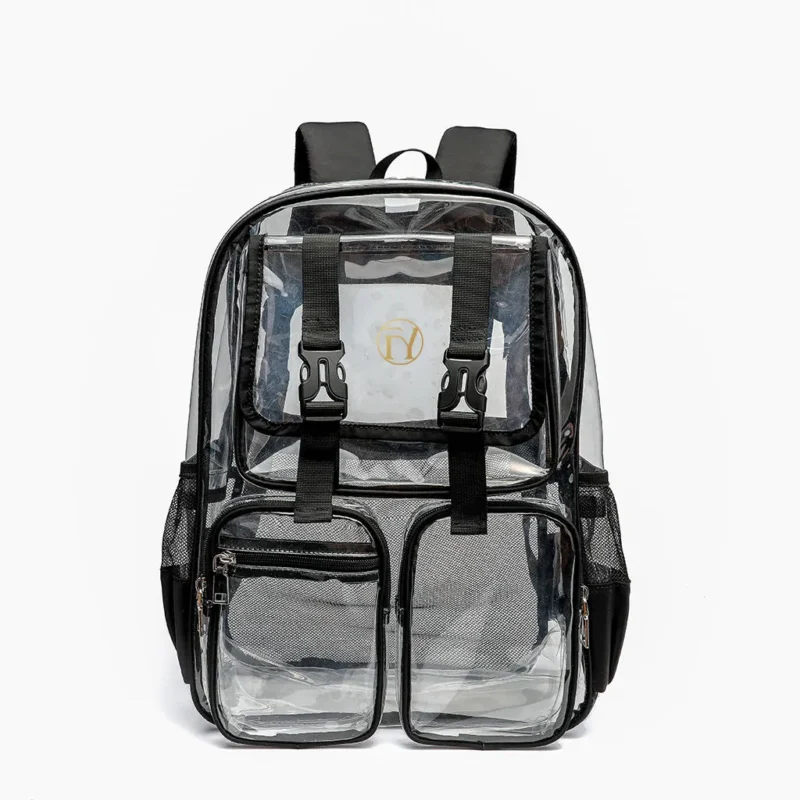
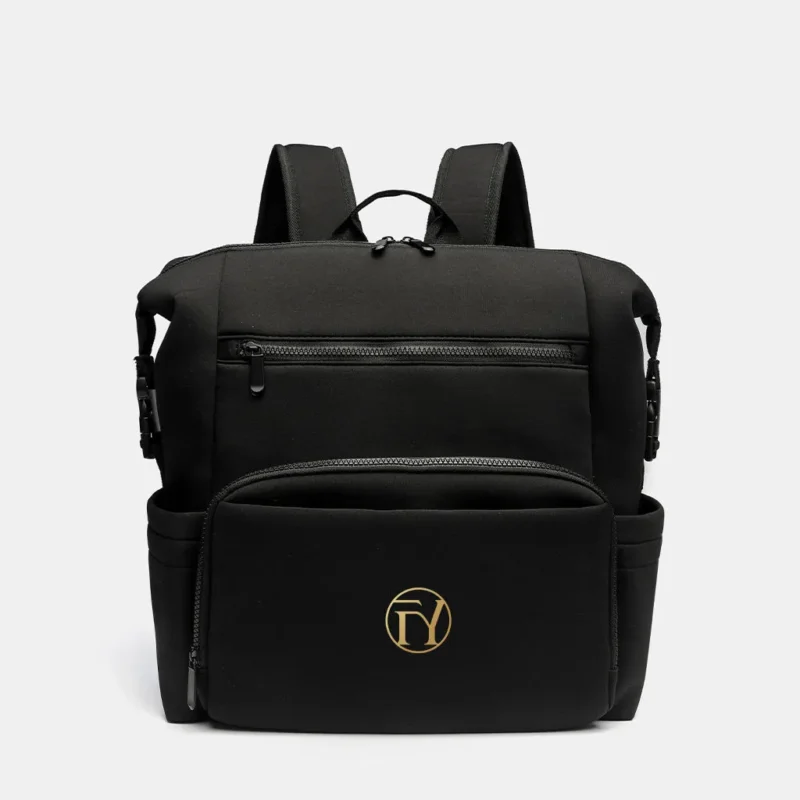
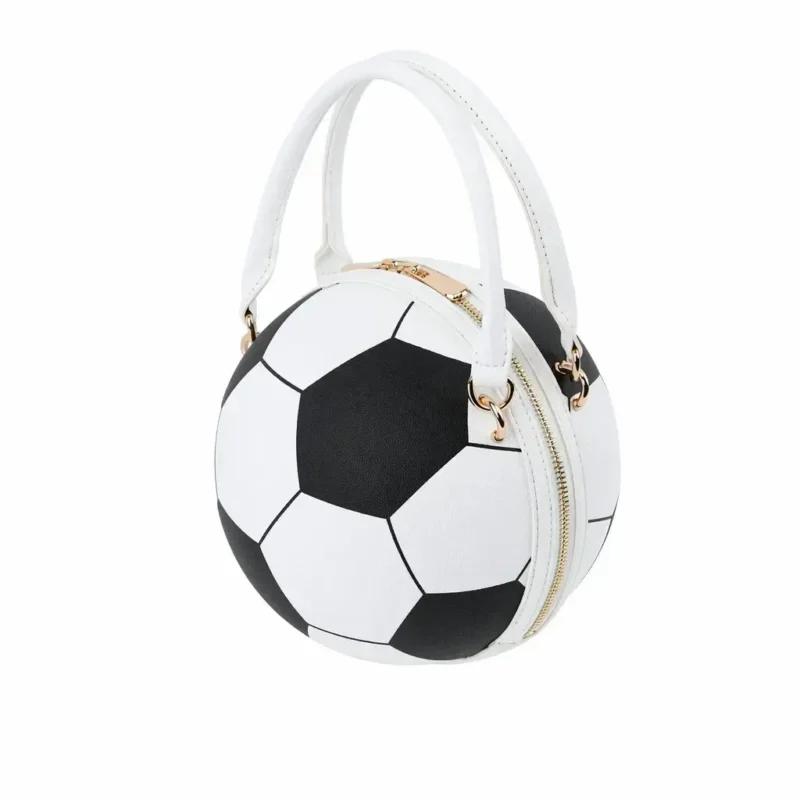
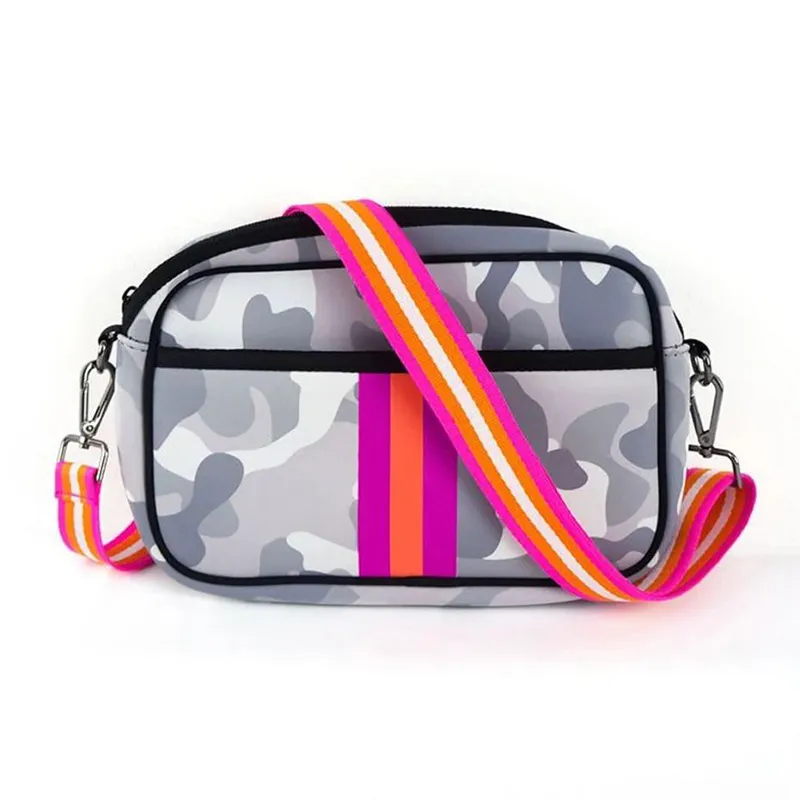
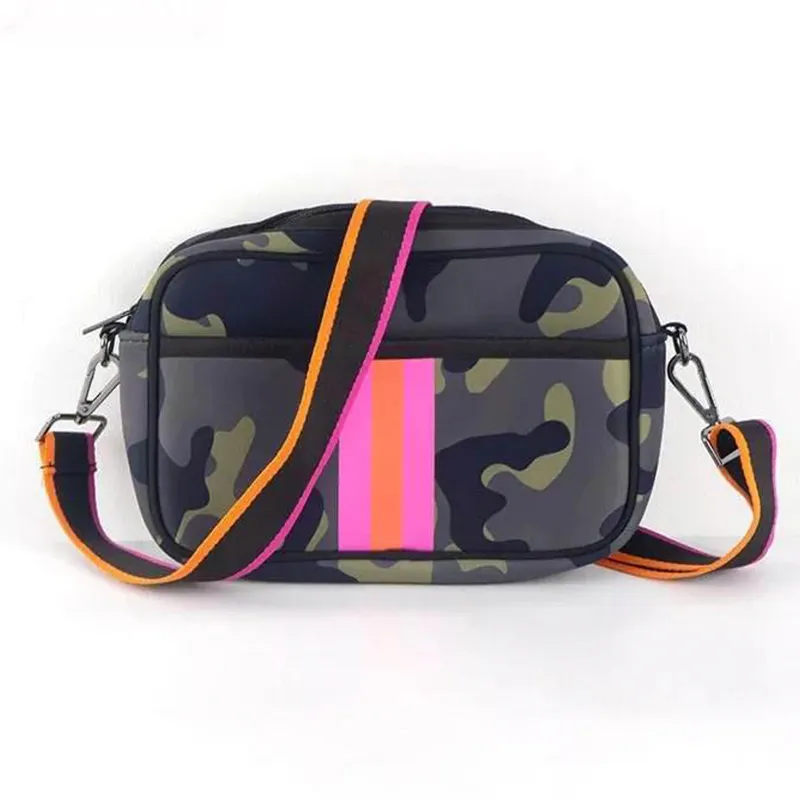
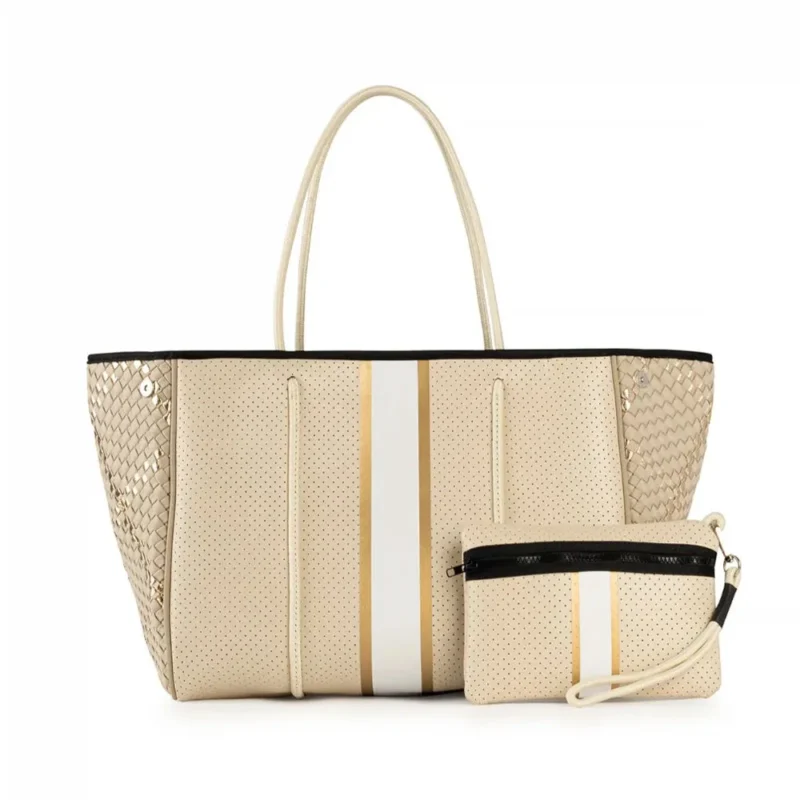
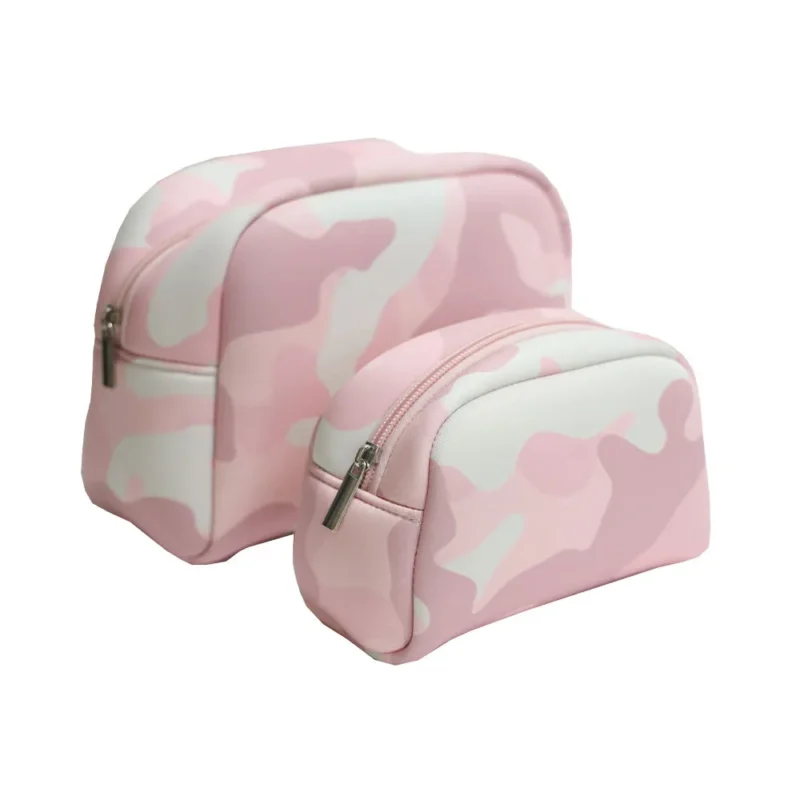
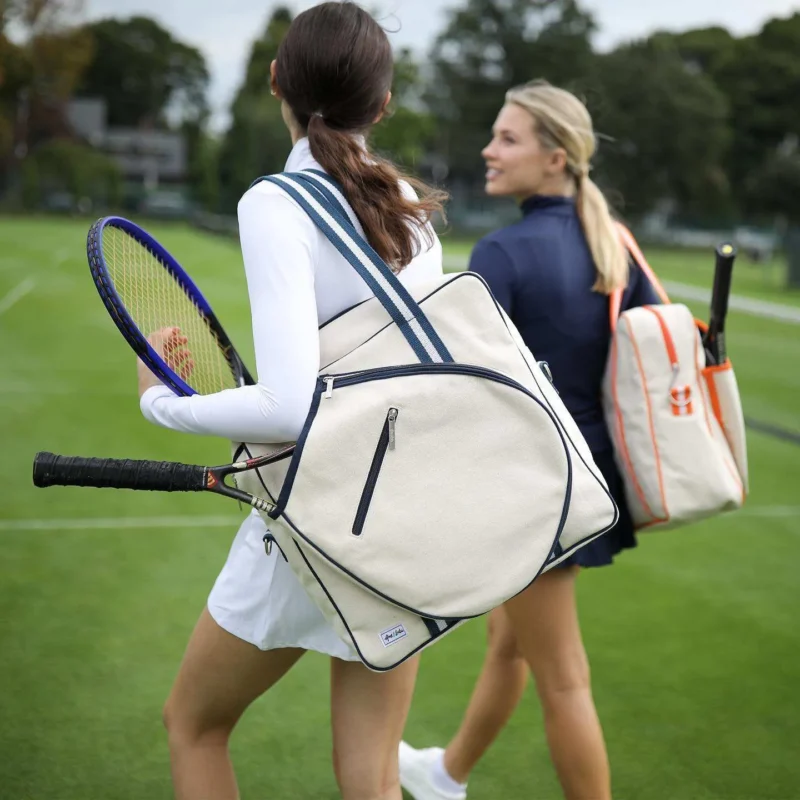
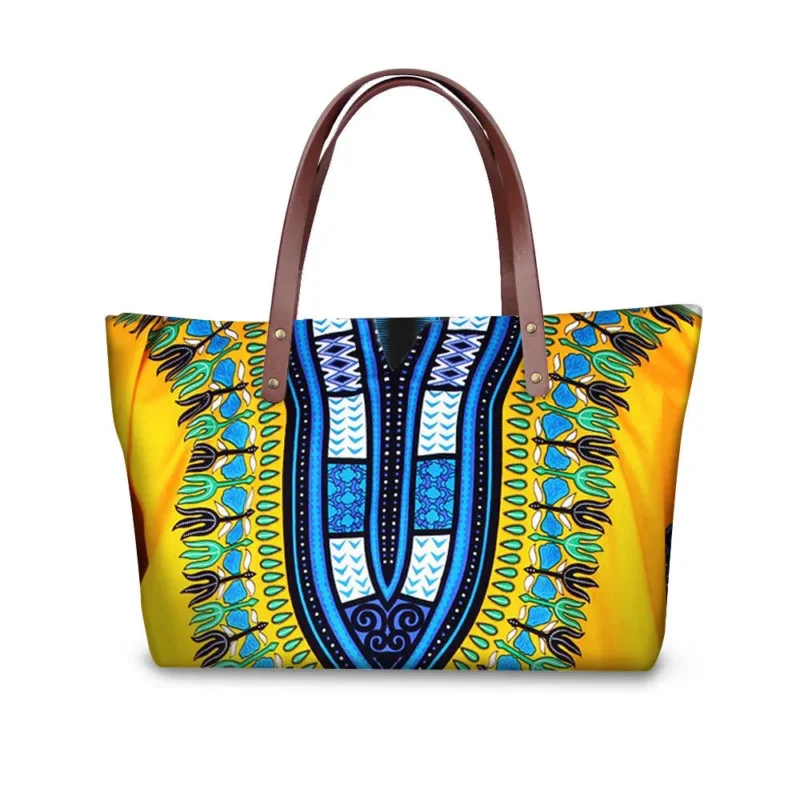
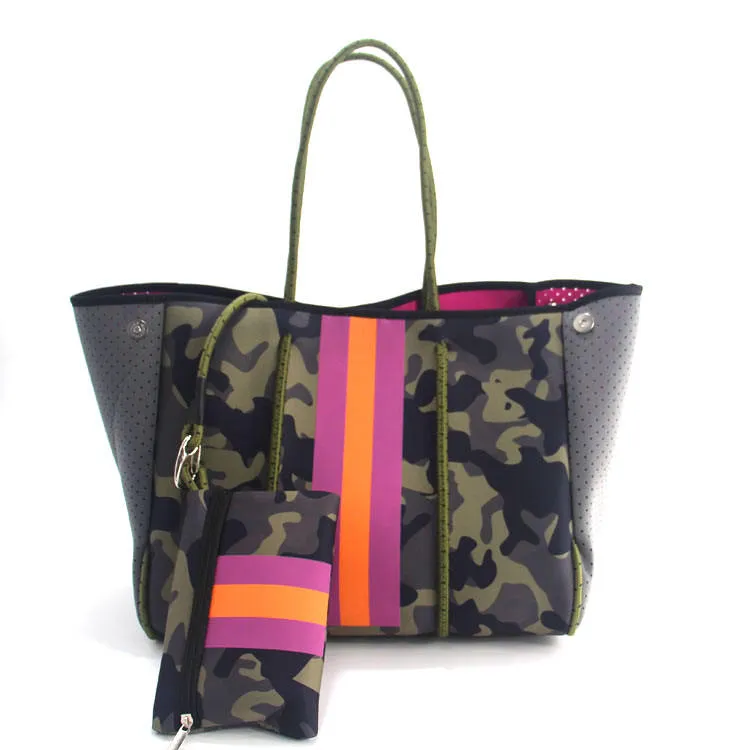
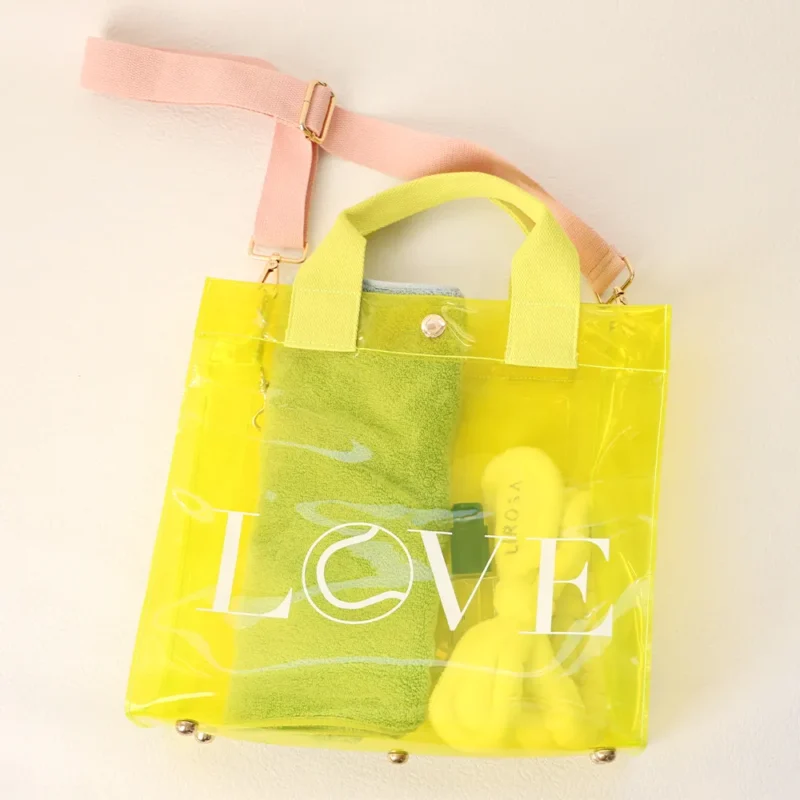
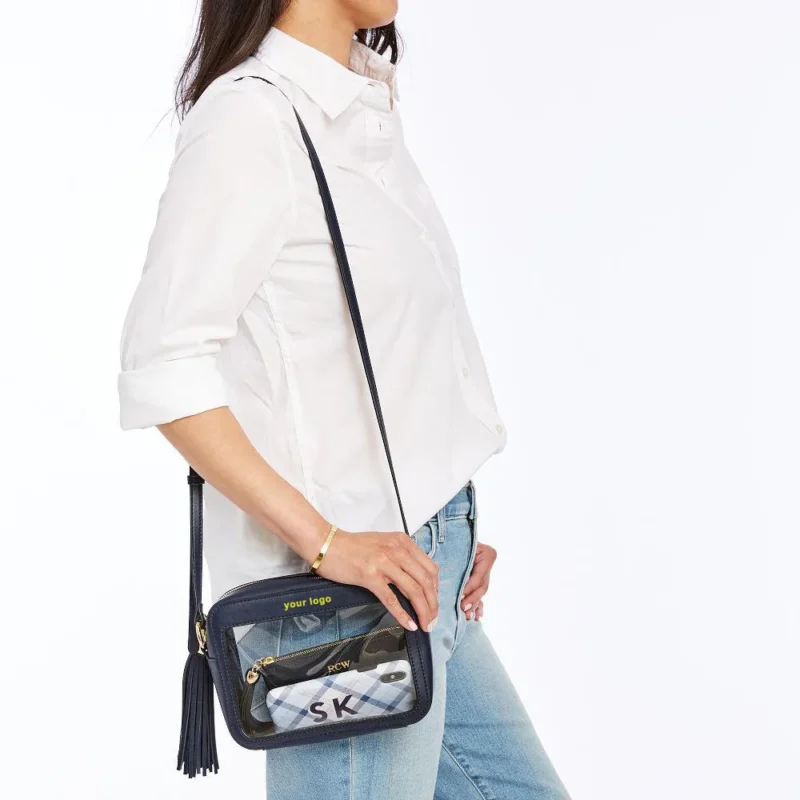
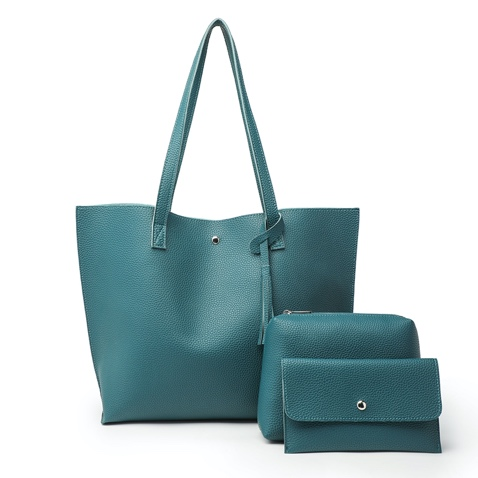
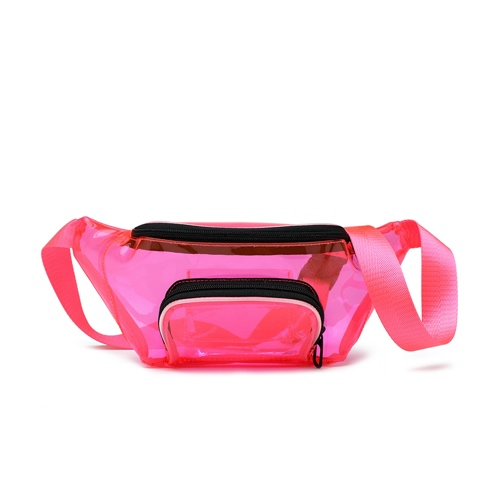
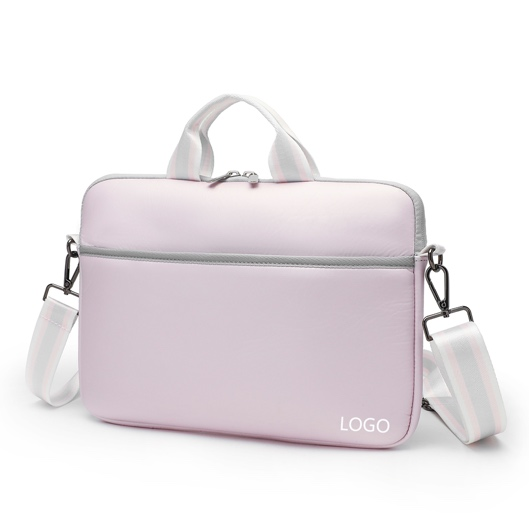
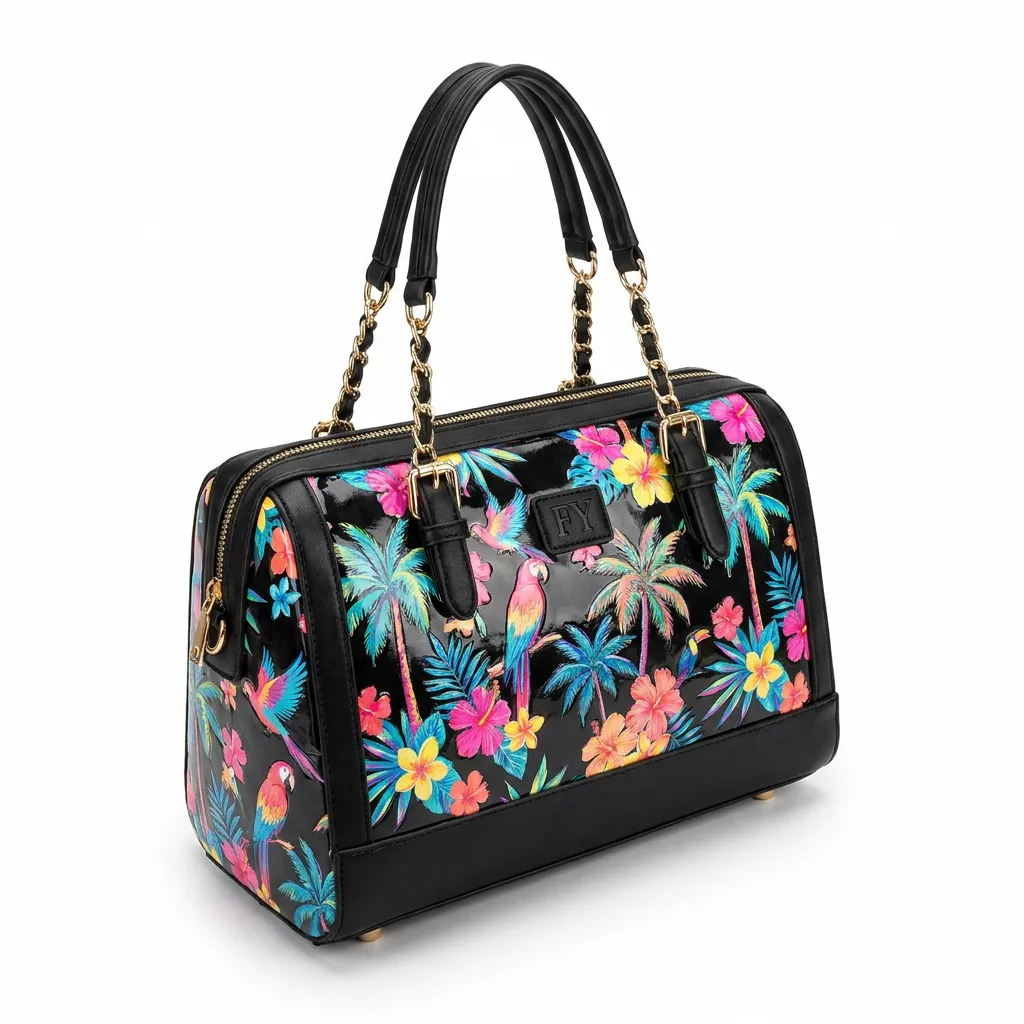
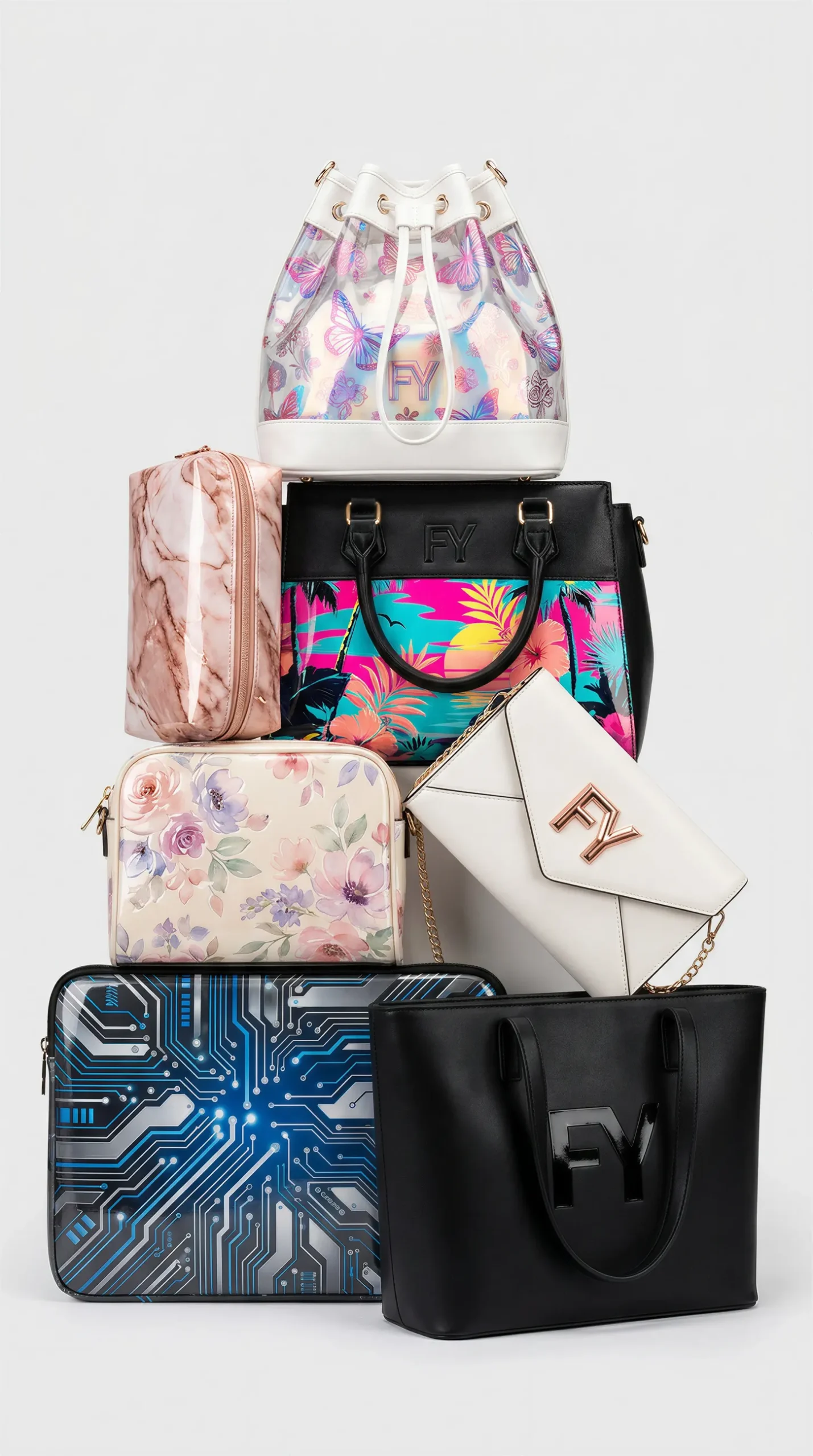
Full-color CMYK or spot-varnish logo on PU leather handbag — smooth, pebbled, saffiano, or croc-embossed. The #1 UV bag format. 3D raised logo option. Fashion and brand-level positioning.
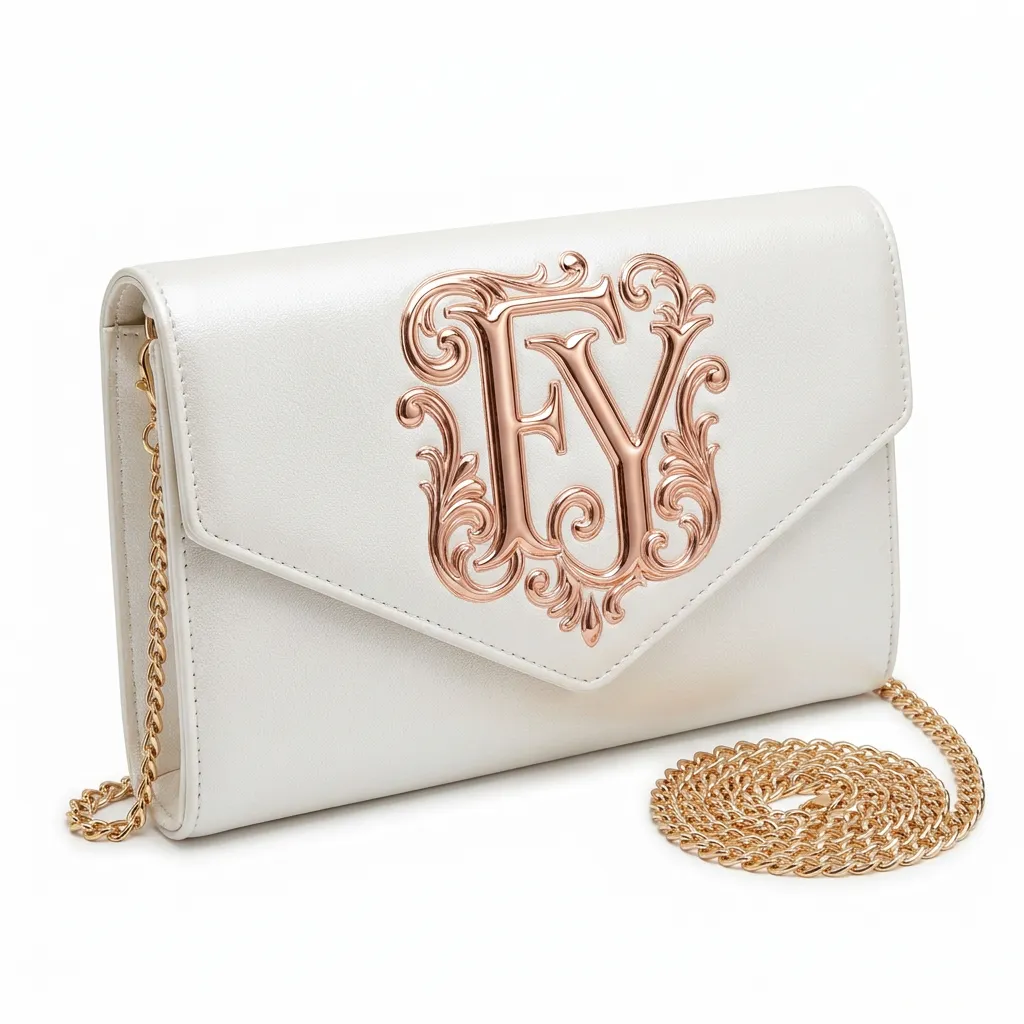
Multi-layer UV print creating tactile raised logo or pattern on clutch or evening bag. PU leather or satin. Replaces physical embossing at lower tooling cost. For fashion brands, bridal, and premium gift sets.
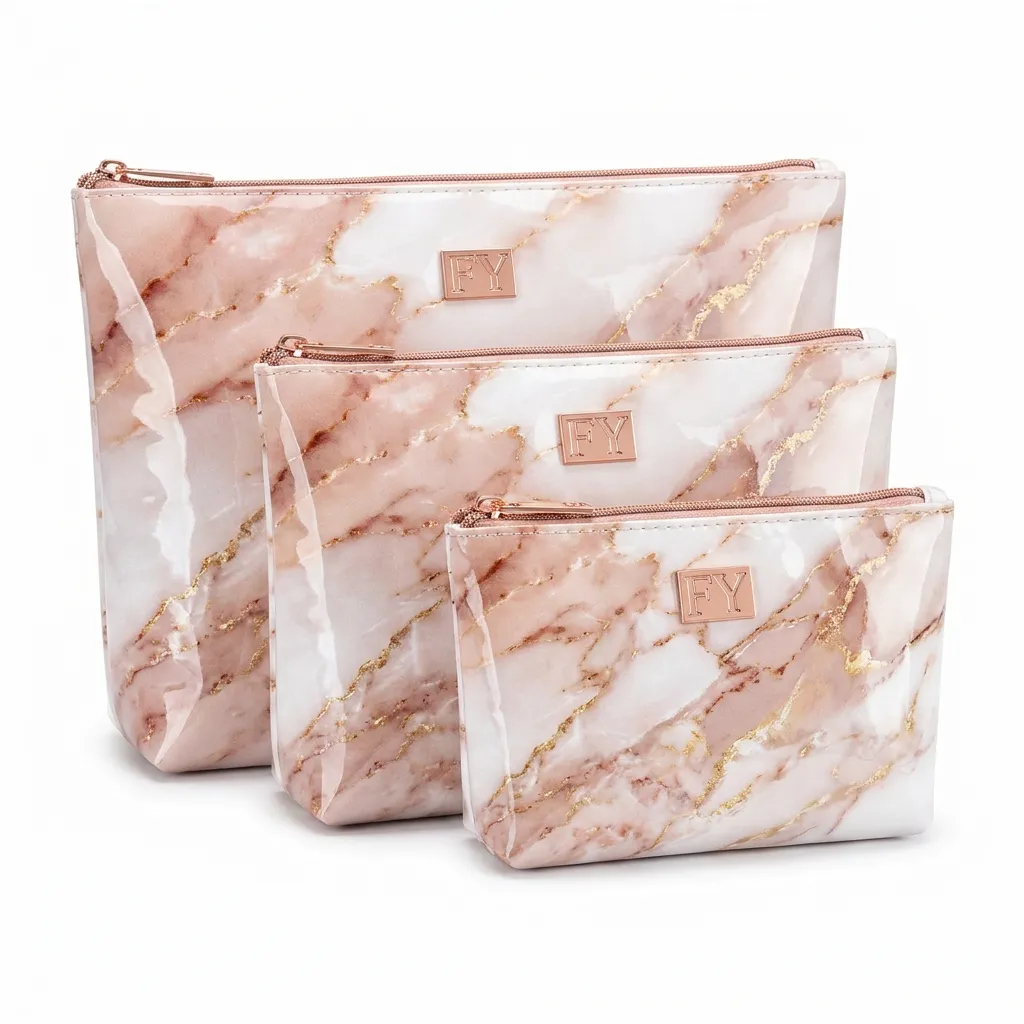
Full-color or spot-varnish UV print on PU leather cosmetic pouches. S/M/L nested sets. Gift packaging. For beauty brands, subscription boxes, and corporate gifts. UV delivers vivid graphics on matte and metallic PU surfaces.
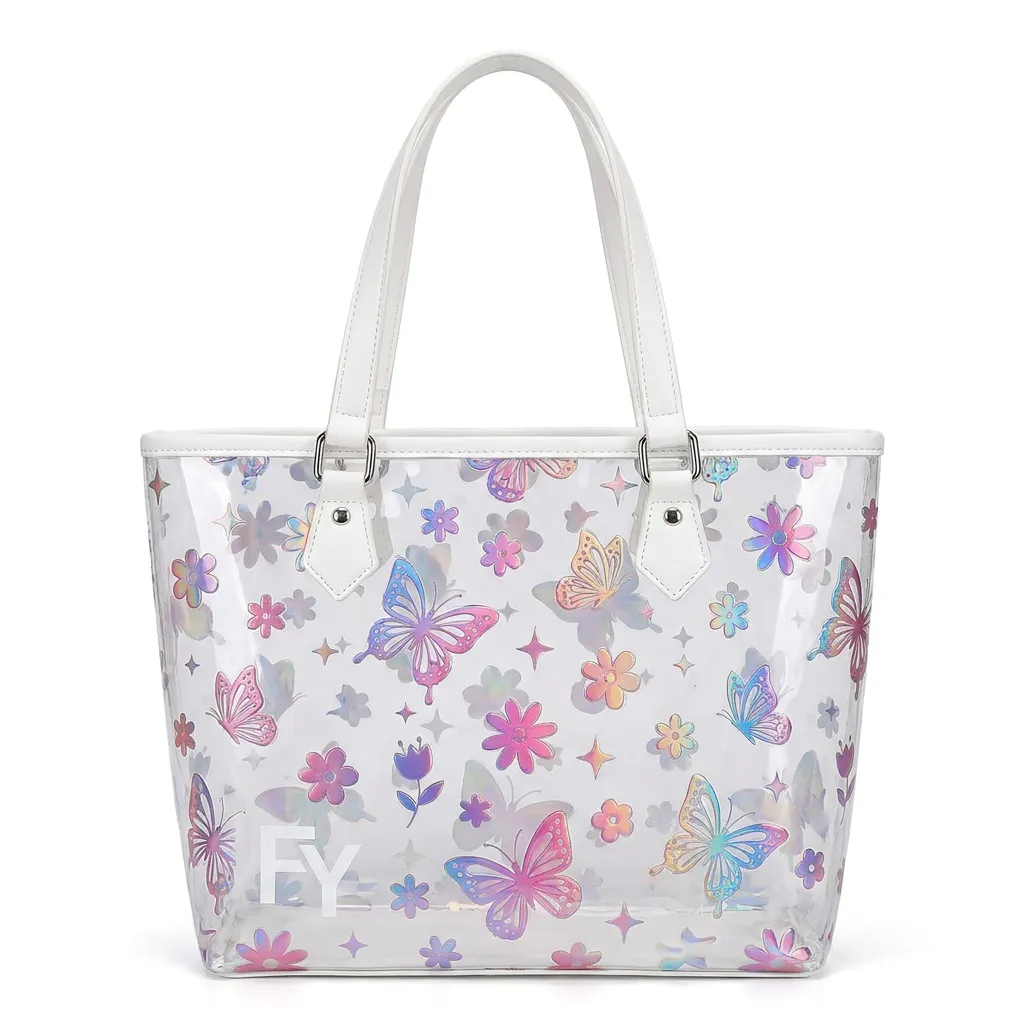
Full-color or white UV print on transparent PVC or TPU bags. Logo and graphics visible on and through the transparent material. The only method that prints directly on clear plastic with full opacity. Stadium bags, beach pouches, cosmetic cases.
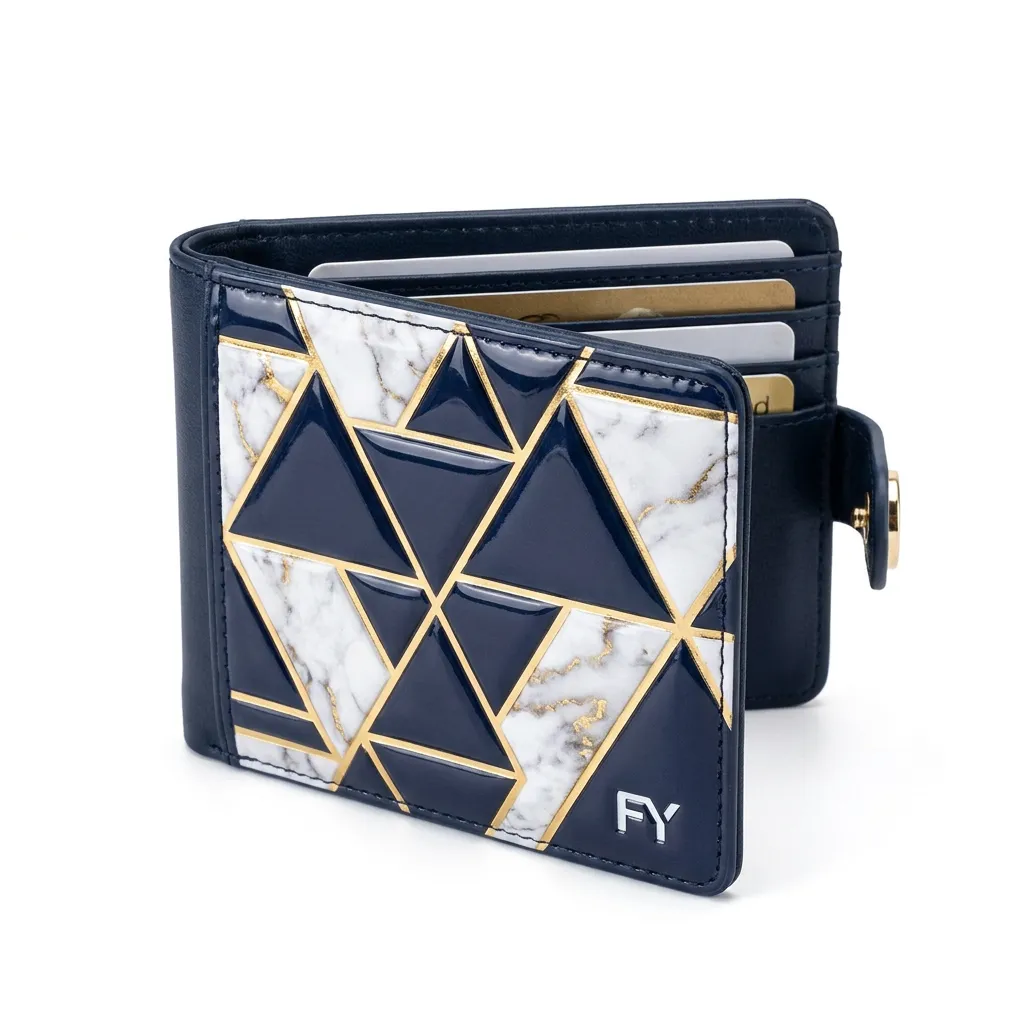
Spot varnish, 3D raised logo, or full-color UV print on PU leather wallets and card holders. Corporate gift standard. Small-format UV prints — precision alignment critical. Gift-box packaging.
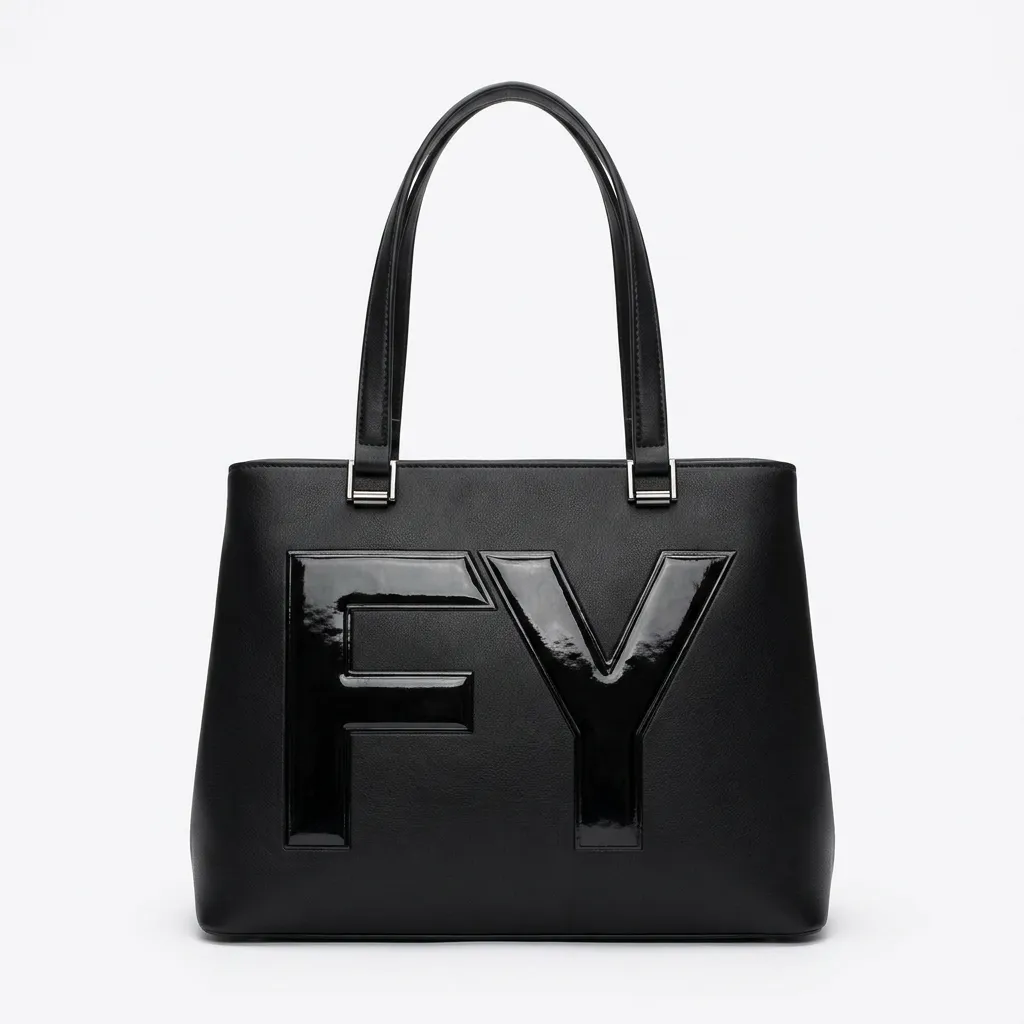
Clear raised UV varnish selectively applied to logo area on matte-finished PU leather. Creates glossy-on-matte contrast without ink color. The most refined UV effect — premium, subtle, luxury-adjacent. Any bag type with matte PU surface.
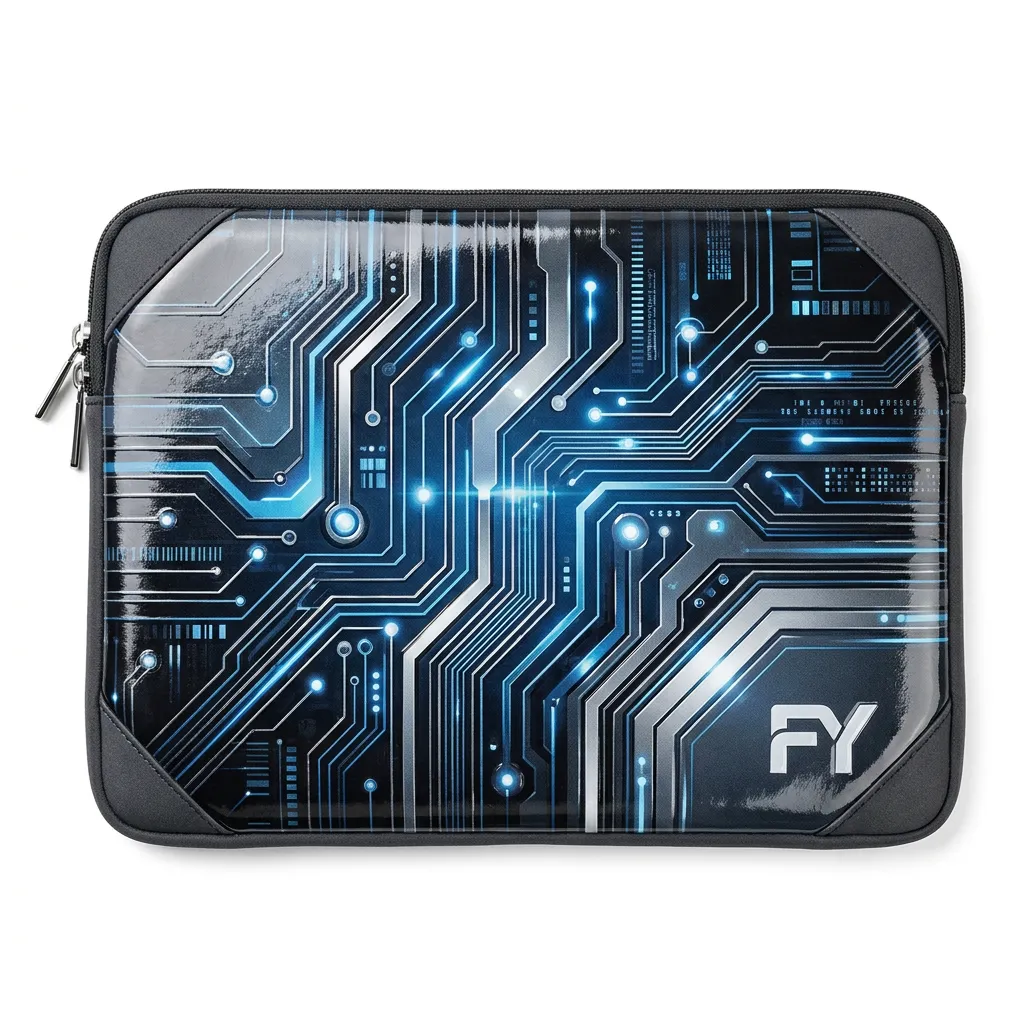
Full-color or 3D logo on PU leather or neoprene laptop sleeve. Corporate branding, tech-company swag, and premium packaging. UV bonds to both PU leather and neoprene surfaces. For 13″–15.6″ device sizes.
UV printing isn’t one effect — it’s four distinct capabilities from the same machine, combinable in a single print pass. Each capability creates a different visual and tactile result. Understanding what’s possible lets you specify the right effect for your brand positioning.
Full-Color CMYK
Photo-Quality Graphics
Standard CMYK inkjet printing cured by UV LED. Full photographic capability — unlimited colors, gradients, fine detail. 720–1440 DPI resolution. On PU leather, PVC, TPU, coated nylon, and any non-absorbent surface. The baseline UV capability. Comparable to DTG resolution but on surfaces DTG cannot reach.
White Ink
Opaque on Dark & Clear
UV white ink — fully opaque on black, dark, colored, metallic, and transparent surfaces. Used as CMYK underbase (enabling full-color on dark PU) or as standalone white (clean white logo on black leather). Also prints white on clear PVC/TPU — the ONLY method for opaque white on transparent bag material.
3D Raised
Tactile Dimensional Print
UV ink deposited in 3–8 passes builds a raised, tactile surface 0.5–2mm above the bag material. Creates embossed-feel logos, dimensional text, and textured patterns from a digital file — no embossing die, no stamping tool. The most premium UV effect. Replaces hot stamping and blind embossing at lower per-unit tooling cost.
Spot Varnish
Selective Gloss on Matte
Transparent UV ink applied selectively — glossy logo area on matte PU leather surface. No color, just light-play contrast. The most refined, subtle UV effect. Creates a luxury-look finish that signals premium without being visually loud. Often combined with 3D raise for glossy + dimensional effect. UV-exclusive capability.
UV printing is not the best method for everything — it’s the best method for specific surfaces and specific effects. On cotton and canvas, DTG is better. On woven fabrics at volume, screen printing is cheaper. But on PU leather, PVC, and coated surfaces — UV has no equal. Here’s the honest comparison.
Surface Range
UV: PU leather, genuine leather, PVC, TPU, coated nylon, coated Oxford, metal, acrylic, glass — any non-absorbent surface. DTG: cotton and canvas only. Screen print: woven fabrics (limited on PU leather). Heat transfer: any fabric but leaves film layer. UV is the only method optimized for non-absorbent fashion-bag materials.
3D / Raised
UV: yes — multi-layer ink builds 0.5–2mm raised surface. The only print method with 3D capability from a digital file. DTG: no. Screen print: puff ink creates slight raise but not precision 3D. Heat transfer: no. For dimensional text or tactile logo on bags, UV is the only option short of physical embossing.
Spot Varnish
UV: yes — selective gloss-on-matte from digital file. UV-exclusive capability. DTG: no. Screen print: possible with spot-gloss screen but less precise. Lamination: spot UV on BOPP film (different process, non-woven only). For selective gloss on PU leather bags, UV is the standard.
Hand Feel
UV (flat print): thin, smooth — sits on surface but minimal thickness. UV (3D raised): deliberately tactile — the texture IS the feature. DTG: softest (absorbed into fiber). Screen print: soft (water-based). Heat transfer: noticeable film layer. UV flat print is thinner than heat transfer on PU leather — acceptable hand feel for fashion bags.
Cost Profile
UV: moderate-to-high per unit, zero setup. Comparable to DTG per-unit cost. More expensive than screen print at volume. But UV serves surfaces where screen print doesn’t work — so the comparison is moot on PU leather. 3D raised: higher per-unit (multiple passes) but cheaper than physical embossing die + stamping. Spot varnish: low incremental cost over flat UV print.
Best For
UV: PU leather bags (handbags, clutches, wallets, crossbodies), PVC/TPU bags (clear bags), 3D raised logos on any non-absorbent surface, spot varnish on matte PU, corporate gifts on leather-look accessories. Not best for: cotton/canvas (use DTG), woven fabrics at volume (use screen print), non-woven (use lamination).
In-house UV flatbed printing with LED cure. CMYK + white + clear varnish in a single pass. 3D raised in multi-pass. We print directly on pre-cut bag panels or finished flat surfaces — no outsourced UV printing. Sample turnaround in 5–7 days.
Free Add-on: Professional Product Photography Included
Free white-background product photos for your online shop, Amazon listings, and wholesale catalogs — no additional charge on production orders.
UV printing is a photochemical process — ink is cured by UV light, not by heat, pressure, or absorption. Understanding the ink system, cure process, and surface requirements is essential for quality output.

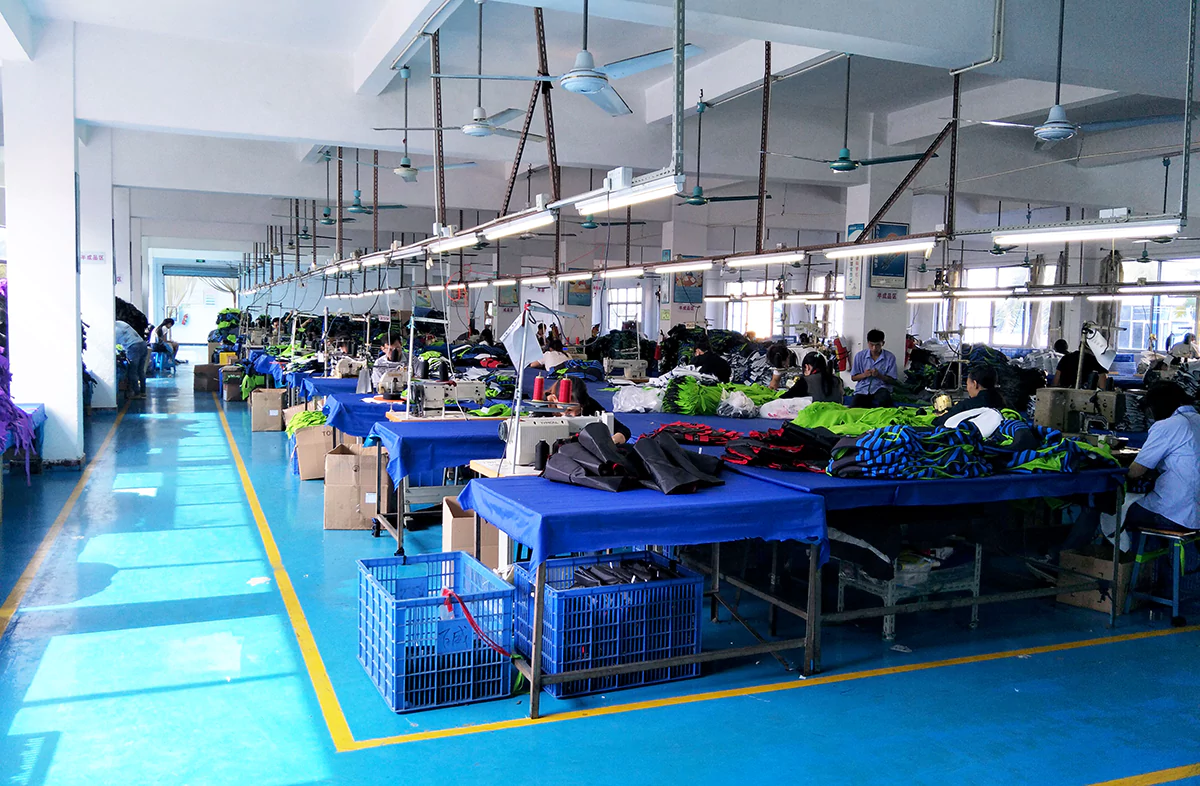
FY Bag Custom operates its own vertically integrated factory in Guangzhou, Guangdong — UV flatbed printing, panel cutting, sewing, hardware installation, and QC all under one roof. Our UV printing department serves the PU leather bag, PVC/TPU bag, and clear bag segments — the non-absorbent-surface categories that UV printing is built for.
In-house UV printing means we control adhesion quality, 3D layer height, and varnish coverage directly. UV prints are applied to pre-cut flat panels before bag assembly — the same pre-assembly workflow used by our screen-printing and heat-transfer departments.
Years in Manufacturing
Factory Floor Area
Professional Staff
Production Lines
Monthly Capacity
Pre-Shipment Inspection
UV printing on non-absorbent surfaces faces adhesion as the primary QC risk — ink sitting ON the surface (not absorbed into fiber) must bond reliably through cure chemistry alone. Our 6-stage QC includes adhesion testing on every batch. Third-party inspections (SGS, BV, TUV) welcome.
Non-absorbent surfaces must be clean, dust-free, and static-free before UV printing. PU leather panels wiped and inspected. PVC/TPU panels static-discharged. Surface preparation is the #1 variable in UV adhesion quality — contaminants cause adhesion failure.
Physical UV proof produced on actual production material — color, 3D height, and varnish sheen verified by touch and visual inspection. 3D and varnish effects cannot be judged from digital mockups — physical proof is mandatory. Approved in writing before production.
UV LED lamp energy output monitored per batch — insufficient UV energy causes under-cure (soft, scratchable ink). UV energy meter readings documented. Lamp intensity degrades over time — measured and replaced on schedule to maintain cure quality.
Cross-hatch adhesion test (ASTM D3359) performed on first 20 panels and every 100 panels throughout production run. Scored scale 0–5 (5B = perfect adhesion). Any panel below 4B = process adjustment before continuing. Adhesion is the #1 UV-specific QC checkpoint.
Every UV-printed panel inspected for: color accuracy, 3D height consistency, varnish coverage, adhesion (visual check for edge lifting), resolution sharpness, and surface quality (no dust inclusions, no cure artifacts). Rejected panels are not assembled into bags.

UV-printed panels assembled into bags with care to avoid scuffing cured print surface during sewing and handling. Finished bags inspected one by one. UV-printed surfaces protected with tissue interleaving during packing. Container loading photos and videos within 24 hours.
UV printing adds minimal time to the production schedule — UV cure is instant, no drying or curing wait. The primary timeline addition is the physical-proof stage for 3D and varnish effects. Sample in 5–7 days, bulk in 20–30 days.
Day 1–2
Send artwork + effect spec (flat/3D/varnish); FOB quote in 24 hrs.
Day 3–12
Physical UV proof on actual material + bag prototype in 5–7 days.
Day 13–15
30% T/T deposit; balance before shipment.
Day 16–42
UV print → assembly → QC. Daily WIP photos.
Day 43–48
100% print inspection + adhesion verification.
Day 46–55
Sea, air, express, or direct-to-FBA.
Sample Lead Time
5–7 Days
Mass Production
25–35 Days
Payment Terms
30% T/T · 70% Before Shipment
Shipping Terms
FOB · CIF · DDP · Amazon FBA
UV printing serves the premium end of our print capabilities — fashion brands, luxury-adjacent accessories, and corporate buyers who need effects that other methods cannot deliver.
UV 3D raised brand logo (1.5mm height) on saffiano-textured PU leather handbags — 4 bag styles × 6 colorways = 24 SKUs. Gold-tone logo on matte PU. Replaced hot-stamped embossing at 40% lower per-unit tooling cost. Retail-ready packaging. FOB to US and EU. Retail $35–65.
Glossy UV spot-varnish logo on matte black PU leather cosmetic pouch — S/M/L set. Subtle gloss-on-matte effect. Rigid gift box with magnetic closure. For holiday gift-set retail. 3,000-set order for Q4. The spot-varnish effect created a luxury unboxing perception at mid-tier price.
Full-color UV company logo on pebbled PU leather laptop sleeves (13″ and 15.6″). 2,000-piece corporate gift order. UV chosen over embossing because the logo included full-color brand mark (not possible with single-color embossing). CIF delivery in 25 days. Annual reorder.
Global Shipping Options
•Sea Freight
•Air Freight
•Express (DHL, FedEx, UPS)
•Rail Freight
•Door-to-Door
•Direct-to-Amazon FBA
Straight answers to the questions buyers ask most about UV-curable printing on bags.
DTG uses water-based pigment ink that absorbs INTO cotton and canvas fibers — softest hand feel, best for natural fibers. UV uses UV-curable ink that cures ON the surface of non-absorbent materials — PU leather, PVC, TPU, coated nylon. DTG cannot print on PU leather; UV cannot print on cotton. The two methods serve completely different material segments.
UV-cured ink is harder and more scratch-resistant than water-based or plastisol inks — pencil hardness 2H+ after full cure. It’s cured by photochemical reaction (not evaporation or heat), creating a cross-linked polymer layer. Adhesion depends on surface cleanliness and cure energy — both of which we verify per batch via cross-hatch adhesion test (ASTM D3359). Properly cured UV print on properly prepared PU leather resists normal handling, rubbing, and light scratching.
Physical embossing requires a metal die (one-time cost $100–300+) and a stamping press. UV 3D raised printing requires only a digital file — zero tooling. Embossing creates an indent (pushed into the material); UV 3D creates a raised layer (built up on the surface). Embossing is limited to single-color (blind) or foil; UV 3D can be full-color CMYK with raised clear varnish. UV 3D is more flexible, faster to proof, and cheaper per design change.
Yes — and this is a unique UV capability. UV white and CMYK print directly on transparent PVC and TPU with full opacity. No other direct-print method bonds reliably to clear plastic. For stadium bags, beach pouches, and cosmetic cases that need visible branding on a transparent surface.
UV printing has zero setup cost (digital workflow, no screens or plates), so there’s no print-method-driven minimum. The MOQ is determined by bag construction, not by UV printing. UV is economically viable from 1 unit to 10,000+ — but per-unit cost is higher than screen printing at volume. For PU leather bags, UV is often the only practical print option regardless of volume.
Yes. UV print + metal hardware embellishments (studs around UV-printed logo). UV spot varnish + embossed texture (varnish on croc-embossed PU). UV full-color + 3D raised border. The digital workflow makes UV highly combinable with physical bag-decoration techniques.
Yes. FNSKU labeling, Amazon-compliant packaging, and carton labeling handled at our Guangzhou factory. Free product photography highlighting UV effects (3D texture detail, spot-varnish sheen) included.
Yes. European Industrial Park, Shiling Town, Huadu District, Guangzhou. Monday–Saturday. Video tours available for remote buyers.
Send us your artwork, material, and effect specification (flat CMYK / 3D raised / spot varnish) — we’ll come back within 24 hours with a detailed FOB quotation. Physical UV proof on actual material in 5–7 days — the only way to judge 3D and varnish effects. No templates, no copy-paste pricing.
