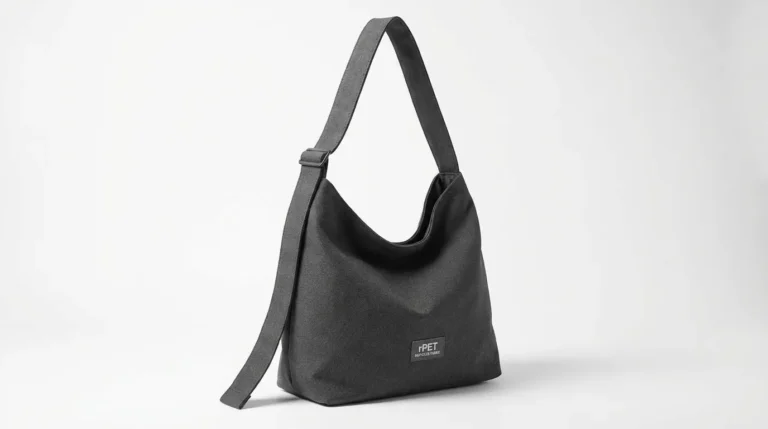
Welcome back to the Eco-Friendly & Sustainable Series from FYBagCustom’s Ultimate Guide. This series is dedicated to empowering B2B professionals with the knowledge to navigate the complex but crucial world of sustainable materials. We have explored the circular economy through rPET and returned to the soil with Organic Cotton. Now, we address one of the most significant and rapidly evolving topics in the accessories market: Vegan Leather.
The call for alternatives to animal-derived products has grown from a niche ethical concern into a dominant market force. Consumers worldwide are actively seeking “cruelty-free” options, and the term “vegan leather” has become a powerful marketing keyword. However, this single term encompasses a vast and confusing array of materials, each with its own distinct properties, performance characteristics, and environmental footprint.
For the B2B buyer, brand owner, or product developer, navigating this landscape is fraught with peril. Is the material durable? Is it truly more sustainable than real leather? What is the difference between PU and PVC, and what are these new “plant-based” leathers?
This definitive guide will provide the clarity you need. As a manufacturer deeply engaged with these materials, we will deconstruct the science behind the main categories of vegan leather, from traditional synthetics to cutting-edge bio-materials. We will offer a transparent, unflinching look at the pros and cons of each, providing a robust framework for you to make intelligent, responsible, and brand-aligned sourcing decisions. Choosing a vegan leather is not just an ethical statement; it’s a complex technical and environmental decision that will define your product’s quality and your brand’s integrity.
1. Deconstructing “Vegan Leather”: A B2B Classification
The term “vegan leather” is an umbrella for any material that mimics the aesthetic of leather without using animal hides. To make an informed choice, it’s essential to break this category down into its three primary families: traditional plastics (PVC and PU) and emerging bio-materials.
Family 1: PVC (Polyvinyl Chloride) – The Original, Problematic Leatherette
PVC was one of the first and most widely used leather substitutes, often called “pleather” or vinyl. It is created through a relatively simple process of combining polyvinyl chloride with plasticizers to make it flexible, and then applying it to a fabric backing.
The Science: PVC is a rigid plastic made flexible by adding plasticizers, most notably phthalates. This composite is then coated onto a woven or non-woven textile base (often polyester). Its surface is then heat-stamped with an artificial leather-like grain.
Performance Characteristics:
Durability: It is very durable and resistant to scuffs and stains, making it easy to clean.
Feel & Appearance: It has a distinctly plastic, non-porous feel. It does not breathe and can feel sticky in warm weather. Over time, the plasticizers can leach out, causing the material to become brittle and prone to cracking.
Structure: It is relatively stiff and holds its shape well.
The Environmental & Health Crisis of PVC: Despite its durability, PVC is widely considered to be one of the most environmentally damaging plastics in existence.
Toxic Production: Its primary building block, vinyl chloride monomer, is a known human carcinogen.
Harmful Additives: Phthalates, used to make PVC flexible, are endocrine disruptors that have been linked to numerous health problems. They can leach out from the final product over its lifetime.
Dioxin Release: When PVC is produced or incinerated (it cannot be effectively recycled), it releases dioxins, which are among the most potent and persistent toxic chemicals known.
B2B Verdict: Due to its severe environmental and health impacts, FYBagCustom strongly advises against the use of PVC for any modern, responsible bag manufacturing. While it is cheap and durable, the reputational risk and ethical concerns associated with it are immense. Its use is a marker of low-quality, outdated production methods.
Polyurethane has largely replaced PVC as the go-to synthetic leather due to its superior performance and less severe environmental profile.
The Science: PU is a more complex polymer that can be engineered with a wider range of properties. It is typically applied to a fabric backing (like polyester or cotton) in a liquid form and then treated to create a material that is softer, more flexible, and more breathable than PVC.
Performance Characteristics:
Durability: Good durability, but generally less resistant to scuffs and punctures than PVC.
Feel & Appearance: This is PU’s key advantage. It can be made to very closely mimic the feel, drape, and texture of real leather. It is much softer, more flexible, and “breathes” better than PVC. High-quality PU is often difficult for an untrained consumer to distinguish from genuine leather.
Structure: Can be engineered to be soft and slouchy or firm and structured.
Aging: PU does not crack due to plasticizer loss like PVC. However, lower-quality PU can be prone to “delamination,” where the top polyurethane layer peels away from the fabric backing over time, especially with flexing and abrasion.
The Environmental Profile: While PU is still a plastic derived from fossil fuels, it represents a significant improvement over PVC.
Cleaner Production: It does not require the same toxic plasticizers (phthalates) as PVC and its production does not create dioxins.
Solvent Use: The traditional method of producing PU involves the use of solvents like DMF, which are toxic and difficult to manage. However, newer, more sustainable methods are emerging, such as water-based PU production, which drastically reduces the use of harmful chemicals.
B2B Verdict: PU is the current industry standard for high-quality synthetic leather. It offers an excellent balance of realistic aesthetics, good performance, and reasonable cost. When sourcing, the key is to work with a manufacturer who can procure high-grade PU to avoid delamination issues.
Feature
PVC (Polyvinyl Chloride)
PU (Polyurethane)
The Clear Winner & Why
Aesthetic & Feel
Stiff, plastic-like, non-breathable.
Soft, flexible, breathable. Closely mimics real leather.
PU: Offers a vastly superior, more luxurious user experience.
Durability
Very high (stain and scuff resistant).
Good (but can be prone to peeling if low quality).
PVC (on pure durability), but at a massive cost. High-grade PU offers the best balance for fashion goods.
PU: Safer for the consumer and the factory workers.
Recommendation
AVOID.
THE PREFERRED SYNTHETIC.
The risks of PVC far outweigh its benefits. PU is the professional standard.
Table 1: At-a-Glance Comparison: PVC vs. PU
Family 3: Bio-Based Leathers – The Future of a Greener Industry
This is the most exciting and rapidly developing category of vegan leathers. These materials aim to solve the fossil-fuel problem of PU and PVC by creating polymers derived from plant or biological sources.
What are they? These are not simply woven plant fibers like cotton or hemp. They are advanced composite materials where a high percentage of the final product is made from plant-based content, often blended with some traditional PU or other binders to ensure durability.
Leading Examples in the Market:
Apple Leather (Pellemela): Made from the waste pulp (cores, skins, seeds) from the apple juice and cider industry. This pulp is dried, ground into a powder, and then blended with PU to create a durable, leather-like material.
Pineapple Leather (Piñatex®): Made from the long cellulose fibers extracted from pineapple leaves, which are a waste product of the pineapple harvest. These fibers are formed into a non-woven mesh, which is then coated with a water-based PU resin for durability.
Cactus Leather (Desserto®): Made from mature leaves of the Nopal cactus. The leaves are harvested, mashed, dried, and then blended with a PU formulation to create a remarkably soft and durable material that closely resembles high-quality animal leather. The cactus requires very little water and regenerates, making it a highly sustainable crop.
Mushroom/Mycelium Leather (Mylo™, Reishi™): This is perhaps the most advanced bio-material. It is grown from mycelium, the root-like structure of fungi. In a controlled lab environment, mycelial cells can be grown into a sheet that has a remarkably similar microstructure to animal collagen, resulting in a material that feels and performs almost identically to real leather.
Performance & Environmental Profile:
Feel & Appearance: These materials vary, but high-quality versions like Desserto® and Mylo™ are praised for being exceptionally soft, supple, and visually appealing, often surpassing PU.
Durability: This is the current area of development. While they are durable enough for many fashion applications, they may not yet match the extreme abrasion resistance of high-end animal leather or ballistic nylon.
Sustainability: This is their key advantage. They replace a significant portion of petroleum-based inputs with renewable, often waste-stream, plant materials. They have a much lower carbon footprint and are biodegradable to varying degrees.
B2B Verdict: Bio-based leathers are the cutting edge of sustainable materials. They are currently more expensive than traditional PU and may have some performance limitations. However, they offer an incredibly powerful marketing story and appeal to the most discerning, eco-conscious consumers. For a brand looking to position itself as a true innovator and leader in sustainability, exploring these materials is a strategic imperative.
3. The FYBagCustom Manufacturing Process for Vegan Leathers
Working with this diverse range of materials requires experience and adaptability. At FYBagCustom, we have developed the expertise to handle everything from standard PU to innovative bio-leathers.
Expert Sourcing and Consultation: The vegan leather landscape is complex. Our role begins with consultation. We help you choose the right material based on your brand positioning, budget, and performance requirements. We have established relationships with leading suppliers of high-grade PU, as well as innovators in the bio-based space, ensuring we can source the best material for your project.
Prototyping and Material Testing: A vegan leather’s feel and drape can only be understood by handling it. We provide rapid prototyping (3-5 days) so you can get a physical sample in your hands. For new bio-materials, we can perform internal tests for stitch strength, flexibility, and abrasion to ensure it meets your quality standards before committing to production.
Specialized Cutting and Construction: Unlike woven fabrics, vegan leathers have no grainline and are typically supplied in rolls of uniform width. We use CNC cutting machines to ensure perfect, crisp edges and maximum material efficiency. Our sewing technicians use specialized non-stick or “walking foot” presser feet on their machines to glide smoothly over the surface of the material without leaving marks.
Artisanal Finishing Techniques: High-quality vegan leather bags demand the same level of finishing as their animal-leather counterparts. We specialize in techniques like edge painting, where the raw, cut edges of the material are carefully sanded and coated with layers of flexible paint to create a smooth, durable, and professional finish. This is a labor-intensive sign of quality that sets premium bags apart.
FYBagCustom is Your Trust Custom Vegan Leather Bag Manufacturing in China. We combine deep material knowledge with meticulous craftsmanship to create products that are beautiful, durable, and responsibly made.
4. The Strategic Choice: Which Vegan Leather is Right for Your Brand?
If Your Primary Goal Is…
The Best Material Choice Is…
Why?
Lowest Possible Cost for a “Leather Look”
Low-Grade PU
It provides the aesthetic at the most accessible price point. (We still advise against PVC for reputational reasons).
Balancing Quality, Realism, and Cost
High-Grade PU
This is the industry sweet spot. It offers excellent aesthetics and good durability for a reasonable cost, making it perfect for mainstream fashion and corporate goods.
Creating a Truly Sustainable & Innovative Product
Bio-Based Leather (Cactus, Apple, etc.)
This positions your brand as a market leader. It offers a powerful marketing story that justifies a premium price and builds immense brand loyalty with eco-conscious consumers.
Maximum Durability in a Vegan Product
High-Grade PU or Consider Non-Leather Synthetics like Ballistic Nylon
While high-grade PU is durable, for extreme-use cases, a material like Ballistic Nylon might be a more functionally robust (and still vegan) choice.
Table 2: A Decision Framework for B2B Buyers
Conclusion: A Future That is Both Ethical and Beautiful
The world of vegan leather is no longer just a simple alternative; it is a universe of innovation. From the reliable performance of high-grade polyurethane to the revolutionary promise of cactus and mushroom-based materials, brands now have more tools than ever to create products that are free from animal cruelty.
However, this innovation comes with complexity. The path to a truly sustainable and high-quality vegan product is paved with nuanced decisions about polymers, plasticizers, and plant-based content. A successful brand will be one that navigates this landscape with transparency, honesty, and a deep understanding of the materials they use. Partnering with a knowledgeable manufacturer is not just an advantage; it is a necessity.
By choosing the right vegan material, you are not only meeting the ethical demands of your customers but are also making a powerful statement about your brand’s commitment to quality, innovation, and a more compassionate future.
The Eco-Friendly Series will conclude with our next guide, where we will explore the rugged and exceptionally sustainable world of “Hemp Fabric.”
Ready to explore the vast potential of vegan leather for your brand? Contact the experts at FYBagCustom. We can provide samples of high-grade PU, discuss the latest developments in bio-leathers, and guide you in manufacturing a beautiful, high-quality, and cruelty-free bag collection.