Tel/WhatsAapp:+86 13366396425
E-mail: chloe_xia@vleap.com.cn

Welcome back to the Specialty & Fashion Fabric Series, the chapter in FYBagCustom’s Ultimate Guide where we explore materials that push the boundaries of conventional bag design. Having celebrated the timeless, rugged appeal of Denim, we now leap from classic Americana to the cutting edge of material science. We enter the world of Tyvek®.
At first glance, Tyvek® is a material of contradictions. It looks and feels like paper—it can be written on, folded into sharp creases, and is incredibly lightweight. Yet, it is virtually impossible to tear by hand. It is breathable, allowing water vapor to pass through, but is also highly water-resistant, causing liquid water to bead up and roll off.
Developed by the science company DuPont®, Tyvek® is not a woven fabric nor a paper. It is a unique, non-woven material made of high-density polyethylene (HDPE) fibers. Its surprising combination of properties has made it an essential material in construction (as a house wrap), medical packaging, and protective apparel. In recent years, its minimalist, crinkled, paper-like aesthetic has been discovered by designers, making it a trendy and innovative choice for fashion-forward bags and accessories.
This definitive guide will deconstruct the science behind Tyvek®’s unique character. We will explore its different types (“hard” vs. “soft” structure), detail its surprising durability, and explain the specialized manufacturing techniques required to work with this space-age material. For the B2B buyer looking to create a product that is ultra-lightweight, durable, and visually striking, understanding Tyvek® is key to unlocking a new realm of design possibilities.
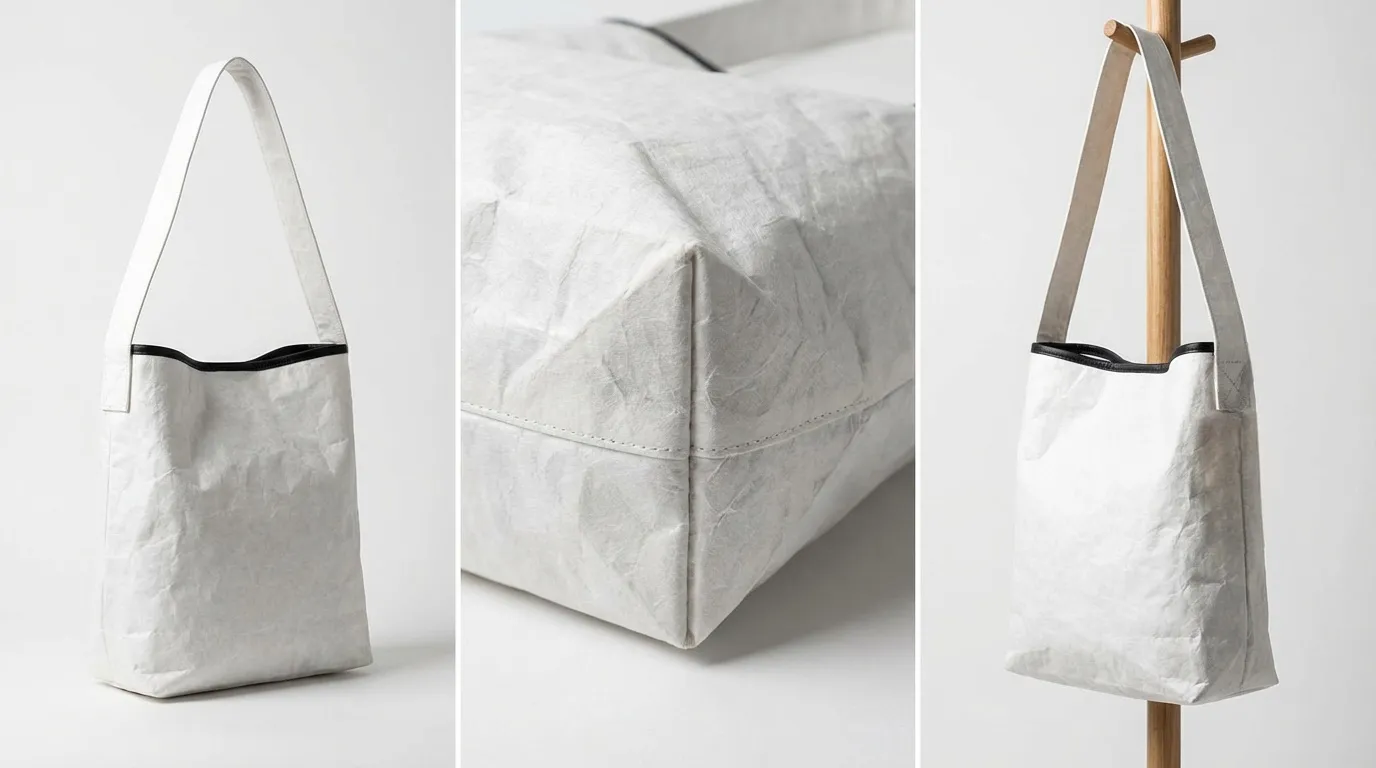
To understand Tyvek®, you must erase the concepts of “yarn” and “weave” from your mind. Its strength comes from a completely different and proprietary process.
Tyvek® is made from ultra-fine, continuous strands of high-density polyethylene, a common and highly recyclable plastic (Plastic #2).
This unique structure is the source of all of Tyvek®’s signature properties. The tangled, multidirectional fibers create a tortuous path that makes it incredibly difficult for tears to propagate. The fused nature of the fibers creates a barrier that is resistant to water and particulates, while the microscopic gaps between the fiber strands still allow for breathability.
Tyvek® for bags and accessories comes in two primary forms, and choosing between them is a crucial design decision.
| Feature | Hard Structure Tyvek® | Soft Structure Tyvek® | The Strategic Choice |
|---|---|---|---|
| Aesthetic | Crisp, bright, paper-like, minimalist, architectural. | Soft, textile-like, supple, slightly wrinkled. | Choose Hard Structure for a bold, statement-making, paper-like product. Choose Soft Structure for a more conventional, fabric-like feel with Tyvek®’s performance benefits. |
| Feel & Sound | Stiff, smooth, makes a “crinkling” sound. | Soft, flexible, quiet. | The user experience is completely different. The choice depends entirely on the desired sensory feedback for your product. |
| Creasing & Aging | Develops a unique patina of wrinkles and creases with use. | Largely maintains its soft, wrinkled texture. | If the “wabi-sabi” aesthetic of a product that shows its history is part of your brand story, Hard Structure is the superior choice. |
| Flexibility & Drape | Low flexibility, holds sharp folds. | High flexibility, drapes well. | For unstructured bags or items that need to be packed down small, Soft Structure is required. |
B2B Sourcing Guide: Hard vs. Soft Structure Tyvek®
Brands choose Tyvek® when they want to leverage its unique combination of properties to create a product that stands out from the crowd.
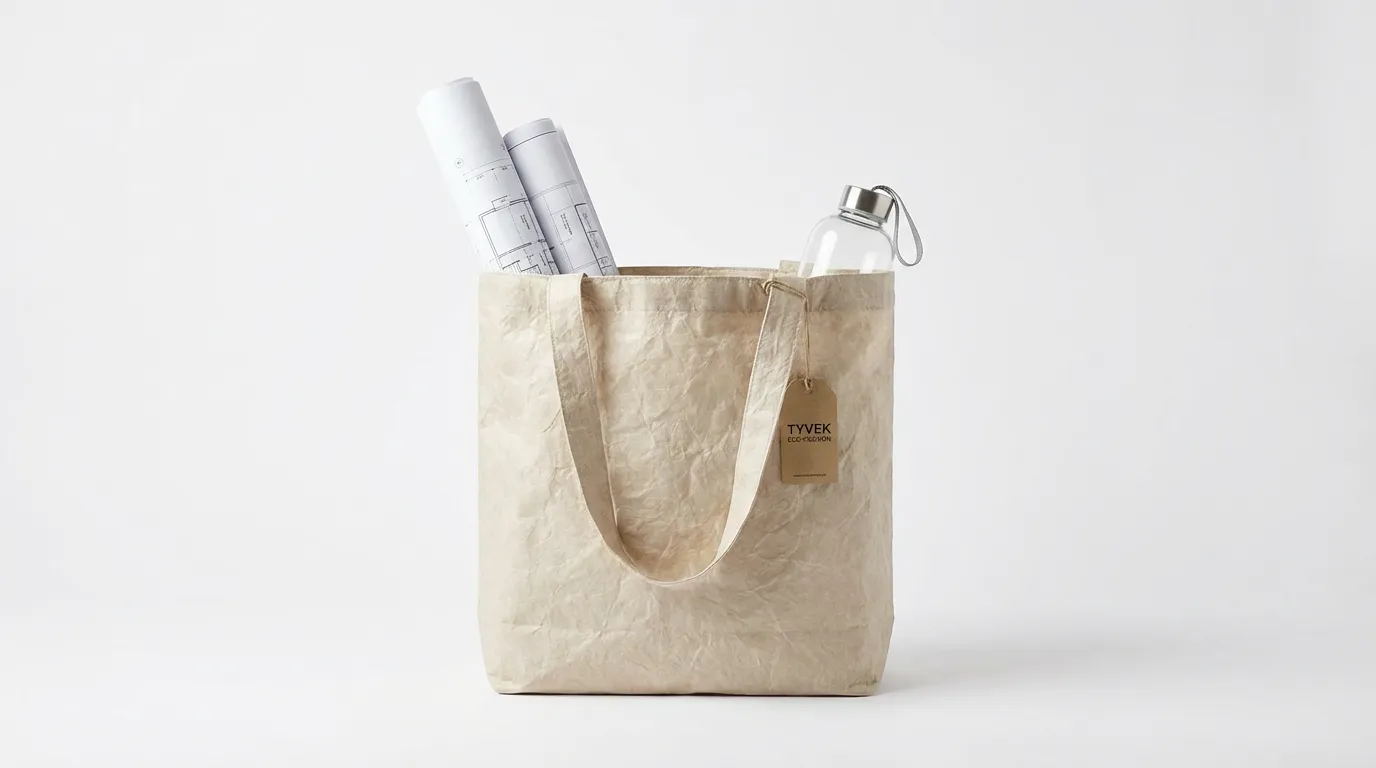
This is one of Tyvek®’s most significant advantages. It has an extremely high strength-to-weight ratio. A Tyvek® tote bag can be as strong as a canvas one while weighing a fraction as much. This makes it ideal for travel accessories, packable bags, and products where minimizing weight is a primary design goal.
Despite its paper-like appearance, Tyvek® is exceptionally resistant to tearing and puncturing. The non-directional fibers distribute stress across the entire sheet, making it very difficult to start a tear. It’s also resistant to abrasion, chemicals, and rot. A Tyvek® bag is built to last.
The fused fiber structure creates a barrier that is highly resistant to liquid water. Rain, spills, and splashes will bead up and roll off the surface. At the same time, the material is breathable, meaning it allows water vapor (like humidity or perspiration) to escape, which can help prevent mildew if the inside of the bag gets damp.
The smooth, bright white surface of hard-structure Tyvek® is a printer’s dream. It allows for incredibly sharp, vibrant, and high-fidelity graphics.
Working with Tyvek® is a specialized skill. It does not behave like a traditional textile, and FYBagCustom factory has developed specific protocols to handle its unique properties.
FYBagCustom is Your Trust Custom Tyvek® Bag Manufacturing in China. Our team has the specialized knowledge and meticulous approach required to transform this high-tech material into a beautiful and durable finished product.
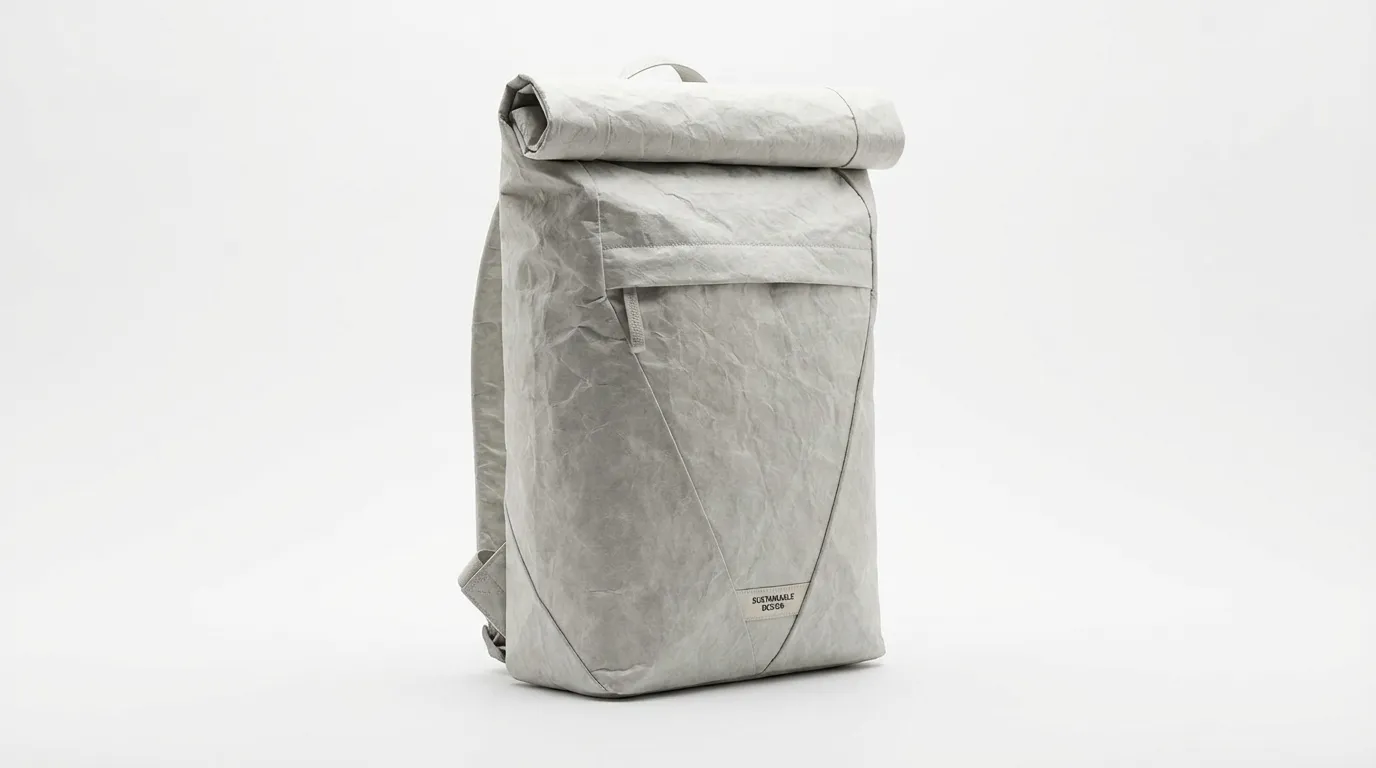
Tyvek® is the perfect choice for brands that want to communicate a message of modernity, minimalism, and intelligent design.
Tyvek® is a material that challenges expectations. It invites curiosity and conversation. It is a choice for brands that are forward-thinking, unafraid to play with texture and form, and dedicated to intelligent, functional design. While its paper-like appearance may seem delicate, its hidden strength and resilience deliver a product that is built for the rigors of modern life.
Successfully manufacturing with Tyvek® requires more than just sewing skills; it requires a material science approach. It demands a partnership with a factory that understands the nuances of its structure and has perfected the techniques to handle it with the precision it deserves. By mastering this unique material, your brand can offer products that are not only visually striking and conversation-starting, but also remarkably practical and durable.
Our journey through the Specialty & Fashion Fabric Series continues as we examine a material at the opposite end of the cost spectrum, but one that is a giant in the world of promotions: “Non-Woven PP Bags.”
Intrigued by the potential of Tyvek®? Contact the experts at FYBagCustom to explore the possibilities. We can provide samples of both hard and soft structure Tyvek®, discuss its incredible potential for printing, and help you engineer a product that is truly innovative.