Tel/WhatsAapp:+86 13366396425
E-mail: chloe_xia@vleap.com.cn

In the world of business, presentation is paramount. For professionals who travel—from executives and sales leaders to consultants and legal experts—arriving with a crisp, wrinkle-free suit is non-negotiable. This fundamental need is the driving force behind a crucial travel accessory: the suit garment bag. While end-users see a tool for convenience, for B2B buyers, brand owners, and sourcing managers, the garment bag represents a significant market opportunity.
This is not just another piece of luggage; it’s a statement of professionalism and a reflection of a brand’s commitment to quality. For e-commerce sellers, retail chains, and corporate gift suppliers, offering a well-designed garment bag can capture a valuable segment of the market that prioritizes function and form.
This guide moves beyond simple user tips. It provides an encyclopedic view of the suit garment bag from a B2B perspective. We will deconstruct its anatomy, compare different types and materials, and outline best practices for use. Most importantly, we will explore the critical considerations for sourcing, designing, and manufacturing custom garment bags, enabling you to make informed decisions for your brand or retail channel and partner effectively with a manufacturer.
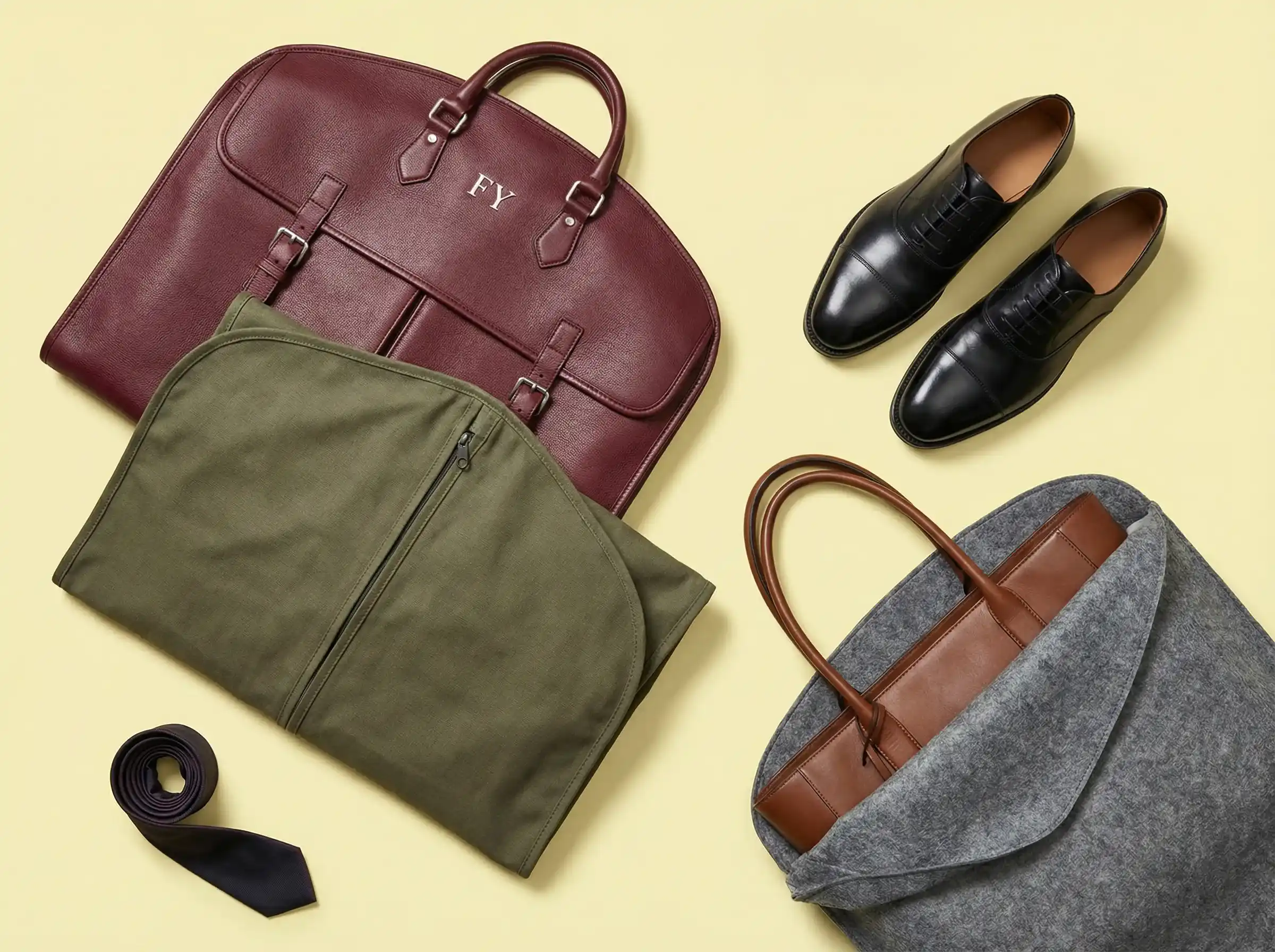
Before sourcing or designing a garment bag, it’s essential to understand its core components. The quality of each element contributes to the bag’s overall performance, durability, and perceived value. A manufacturer’s expertise is often revealed in how well these components are integrated.
Table 1: Key Components of a Garment Bag and Their Function
| Component | Primary Function | B2B Quality Indicator |
|---|---|---|
| Exterior Shell | Protection, durability, aesthetics | High-density fabrics (e.g., 1680D Ballistic Nylon), reinforced stitching, water-repellent coating. |
| Interior Lining | Prevents friction and snags | Smooth, tear-resistant material; consistent stitching; no loose threads. |
| Hanger System | Secures the suit hanger and allows hanging | Sturdy metal clamps, smooth swivel hook, ability to hold multiple hangers securely. |
| Zippers | Opening, closing, and securing the bag | Reputable brands (e.g., YKK), smooth operation, durable metal pulls, and weather-resistant seals. |
| Straps & Handles | Portability and carrying comfort | Reinforced attachment points, comfortable padding, high-quality, load-bearing hardware. |
| Pockets | Organization and accessory storage | Purpose-built compartments (e.g., waterproof toiletry pocket, ventilated shoe bay), reinforced seams. |
Not all garment bags are created equal. The type of bag dictates its functionality, capacity, and ideal use case. For a brand or retailer, offering a variety of types can address different customer needs and price points.
A bi-fold is the classic design, folding a suit in half. It is the most common style and serves as a baseline for functionality.
As the name suggests, this bag folds into thirds, creating a more compact, briefcase-like shape. It is a favorite among frequent flyers.
This category combines a garment bag with a wheeled suitcase or a large duffle. The suit compartment is often integrated into the bag’s structure, wrapping around a central packing area for other clothes and items.
This is the simplest form—a basic, non-folding zippered cover that protects a suit on a hanger.
Table 2: Garment Bag Type Comparison for B2B Buyers
| Bag Type | Primary Use Case | Typical Carry-On? | Capacity (Suits) | Wrinkle Protection | Target Market |
|---|---|---|---|---|---|
| Bi-Fold | 1-3 day business trips | Often Yes | 1-2 | Good | General business traveler |
| Tri-Fold | Air travel, overnight trips | Yes | 1 | Moderate to Good | Frequent flyers, minimalists |
| Rolling Hybrid | 3-7+ day trips, events | No | 2-4+ | Excellent | Executives, event attendees |
| Garment Sleeve | Protection inside luggage | N/A | 1 | Low | Promotional, suit retail |
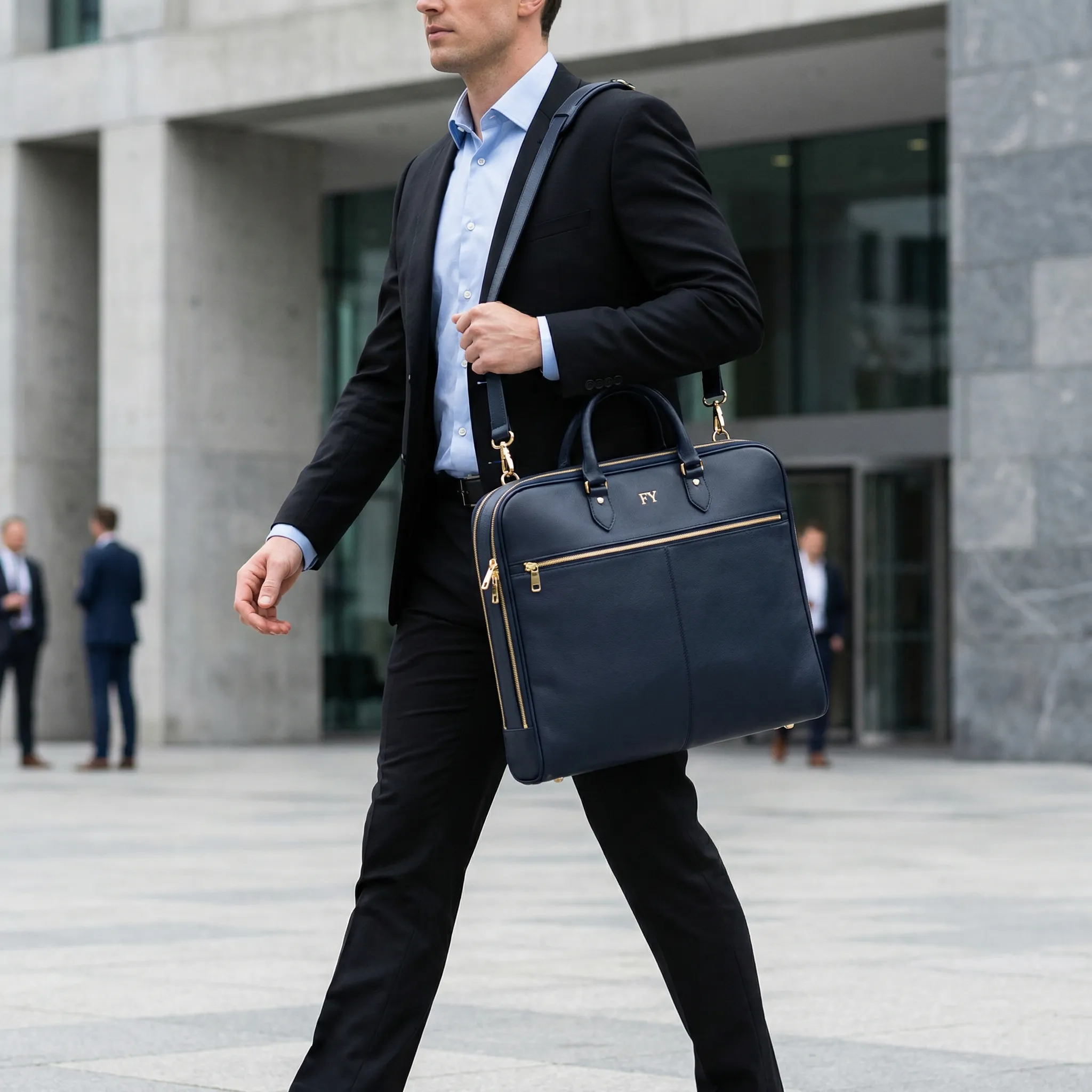
The choice of material is one of the most critical decisions in the design and sourcing process. It directly impacts the bag’s durability, weight, price point, and brand perception. As a manufacturer, fybagcustom offers deep expertise in sourcing and working with a wide array of fabrics to match your product goals.
Table 3: B2B Material Properties Comparison for Garment Bags
| Material | Durability | Weight | Water Resistance | Relative Cost | Best For |
|---|---|---|---|---|---|
| Ballistic Nylon | Very High | Medium | High | High | Premium retail, corporate executive gifts |
| Polyester (600D+) | High | Low | Medium | Low-Medium | Mid-market retail, large-scale promotional |
| Canvas | High | High | Low (unless treated) | Medium | Heritage brands, boutique retail |
| Full-Grain Leather | Very High | Very High | Medium | Very High | Luxury market, high-end executive lines |
| PU / Vegan Leather | Medium | Medium | High | Medium | Fashion-forward brands, vegan-focused lines |
| Tyvek® | High | Very Low | Very High | Medium-High | Tech-focused brands, modern travel gear |
| Non-Woven | Low | Very Low | Low | Very Low | Disposable/promotional, suit shop covers |
The user experience is paramount. A well-designed bag is only effective if the customer knows how to use it properly. Including a simple guide or “how-to” hangtag with your product can significantly enhance customer satisfaction.
Step 1: Prepare Your Suit
Ensure the suit is clean, pressed, and completely dry. Use a high-quality, wide-shouldered wooden or molded plastic hanger to support the jacket’s shape. Button the top button of the jacket.
Step 2: Place the Suit in the Bag
Lay the opened garment bag on a flat surface. Place the suit-on-hanger onto the internal hanger system. Smooth out the jacket to ensure it lies flat without any bunching. For the trousers, there are two methods:
Step 3: Pack Shirts and Other Garments
Lay one or two pressed shirts directly on top of the suit jacket. To minimize friction—the primary cause of wrinkling—place a sheet of tissue paper or a thin plastic dry-cleaner bag between each layer.
Step 4: Utilize Compartments for Accessories
This is where a well-designed bag shines.
Step 5: Fold and Secure the Bag
Following the bag’s intended design (bi-fold or tri-fold), fold the bag smoothly and evenly. Do not force it shut if it is overstuffed, as this will compress the contents and cause wrinkles. Secure all external zippers and buckles snugly, but not so tightly that they strain the fabric.
A garment bag requires slightly different handling than a standard suitcase.
This is where your brand vision becomes a physical product. Partnering with the right OEM/ODM manufacturer is the single most important factor for success.
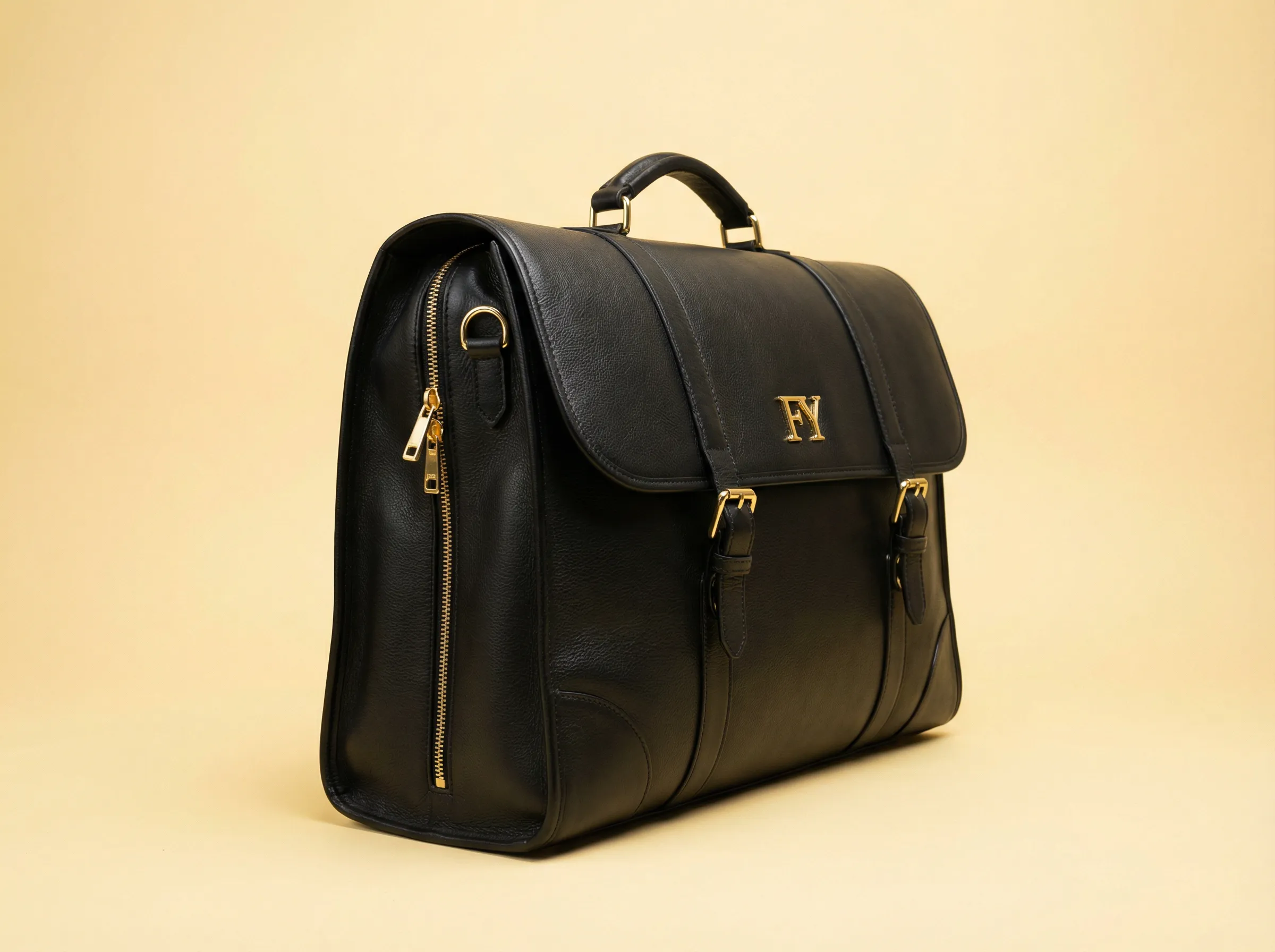
An experienced manufacturer like fybagcustom can offer a comprehensive suite of customization options.
Table 4: OEM/ODM Customization Framework for Garment Bags
| Customization Area | Available Options | B2B Application / Benefit |
|---|---|---|
| Material & Color | Nylon, Polyester, Canvas, Leather, Tyvek®, etc. in any Pantone color. | Match brand colors, target specific price points, create a unique aesthetic. |
| Logo Application | Silk-screen printing, heat transfer, full-color digital printing, embroidery. | High-visibility branding, premium embroidered look, or cost-effective printing. |
| Hardware & Zippers | Custom logo zipper pulls, choice of metal (brass, gunmetal) or plastic, buckle types. | Reinforce brand identity down to the smallest detail, improve durability. |
| Structural Design | Add/remove pockets, adjust dimensions, modify hanger system, add laptop sleeve. | Create a unique product tailored to a specific user need (e.g., tech traveler, legal professional). |
| Packaging & Labeling | Custom-printed hangtags, branded polybags, sewn-in labels, UPC/barcode application. | Ensure product is retail-ready, communicate brand story and features. |
Table 5: Common B2B Challenges & Fybagcustom’s Manufacturing Solutions
| Common B2B Challenge | How Fybagcustom Provides a Solution |
|---|---|
| High Minimum Orders & Inventory Risk | We offer flexible, low MOQs to support emerging brands and fast-fashion cycles. |
| Slow Design & Sampling Process | Our independent design team provides 3–5 day rapid prototyping to get your product to market faster. |
| Inconsistent Quality & Hidden Defects | We have a dedicated, in-house QC team that performs full-process monitoring and final inspections. |
| Complex Customization & Communication | Our expert team guides you through material, hardware, and logo choices to realize your vision efficiently. |
| Logistics & Delivery Uncertainty | Our experienced international team manages the entire process from production to export delivery, ensuring a smooth one-stop service. |
The suit garment bag is more than just a travel accessory; it is a product category rich with opportunity for discerning brands, retailers, and corporate buyers. Success in this market hinges on a deep understanding of the end-user’s needs and a strategic approach to design and manufacturing.
By focusing on the right type, selecting materials that align with your brand’s promise, and understanding the nuances of construction, you can develop a product that commands customer loyalty. The final, critical piece of the puzzle is your manufacturing partner. Choosing a supplier with proven expertise, a commitment to quality, and a flexible, client-centric approach is the key to turning a great idea into a successful product line.