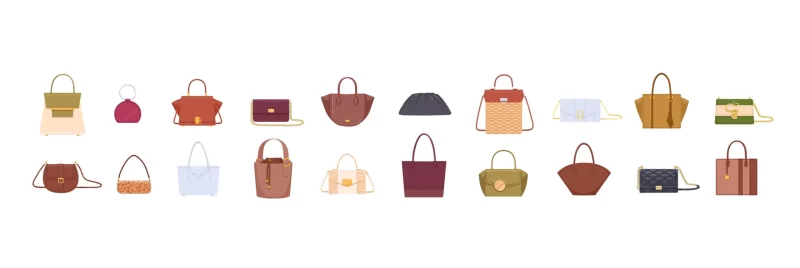
In handbag manufacturing, style deconstruction is the structured process of translating a recognizable silhouette (e.g., “tote” or “bucket”) into pattern topology, component list (BOM), construction sequence, and critical reinforcement strategy. The output of deconstruction is typically a pattern piece map, hardware map, and an operation breakdown that can be quoted in a tech pack and priced consistently across factories.
The five styles covered here represent recurring pattern families rather than single fixed designs. Each style is defined by a small set of geometry rules (panel shapes, base type, top opening behavior) that drive sewing methods, reinforcement choices, and cost structure.
Deconstruction Framework Used in Handbag Factories
A handbag style can be deconstructed into six manufacturing decisions that remain stable across materials (leather, PU, canvas, nylon):
Silhouette and volume control
The 3D shape is governed by base geometry (flat, oval, circular), sidewall topology (gusseted vs. tubular), and stiffness package (interlining/foam/board).
Panel topology
Common families include: two-panel + gusset, tube + base, multi-panel barrel, and folded body + boxed corners.
Opening system
The opening defines the top edge build: open-top, zipper-top, drawstring, magnetic closure, flap, or frame.
Carry system and load path
Handles/straps define stress concentration points, reinforcement patches, and stitch patterns.
Internal architecture
Lining method (drop-in vs. turned bag), pocketing, and seam covering (binding vs. faced edges) control both labor and defect risk.
Edge and seam finishing
Leather edge paint vs. turned edges vs. binding; piping/welting; seam allowances and skiving strategy.
A practical factory deliverable from this framework is an “exploded view”: every part labeled with material, thickness, reinforcement, and attachment method.
Component Taxonomy for Pattern and BOM Breakdown
In factory terminology, most handbags can be reduced to the following reusable parts:
Body panels: front/back, side panels, center panel (if multi-panel)
Gusset: one-piece U-gusset, two side gussets, or continuous tube
Base: circular/oval/rectangular base panel; may include baseboard and feet
Top edge build: facing, collar band, zipper panel, drawstring channel, or turned top
This taxonomy supports consistent costing because the same parts correspond to repeatable operations (skive, glue, stitch, turn, bind, edge-paint, set hardware).
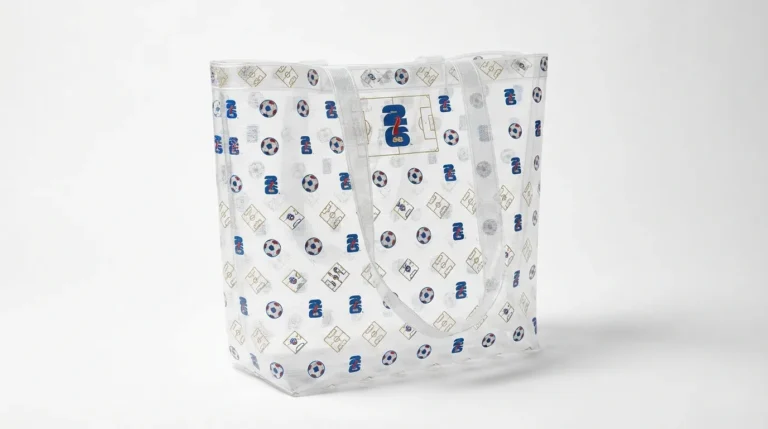
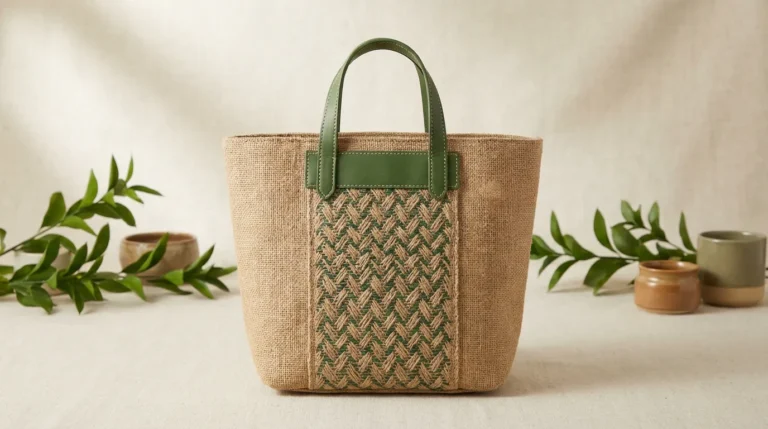
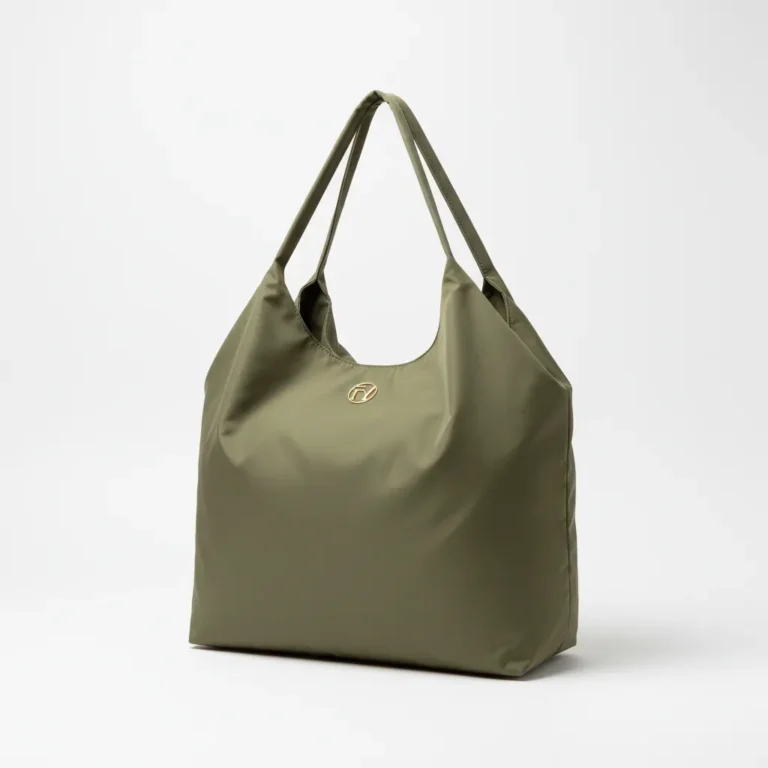
Style Deconstruction: Tote Bag
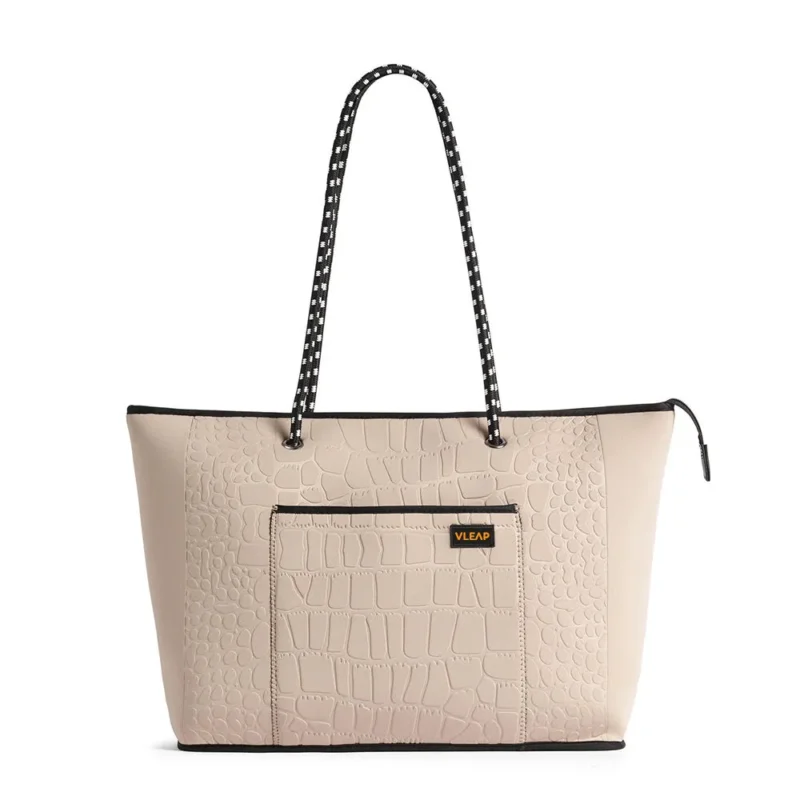
A tote bag is commonly defined as a large bag with parallel handles, often with an open top.
1) Silhouette rules
Primary geometry: rectangular prism or trapezoid prism.
Volume control: boxed corners, side gussets, or a center gusset panel.
Typical stiffness: medium to high (especially for “work tote” formats) to keep the mouth open and the bag upright.
2) Pattern topology options
Option A: Two-panel + gusset
Parts: front, back, gusset (U-shaped), base reinforcement (optional).
Notes: efficient sewing; clean perimeter seam.
Option B: One-piece folded body + boxed corners
Parts: long body wrap + base fold, side seams, corner boxing.
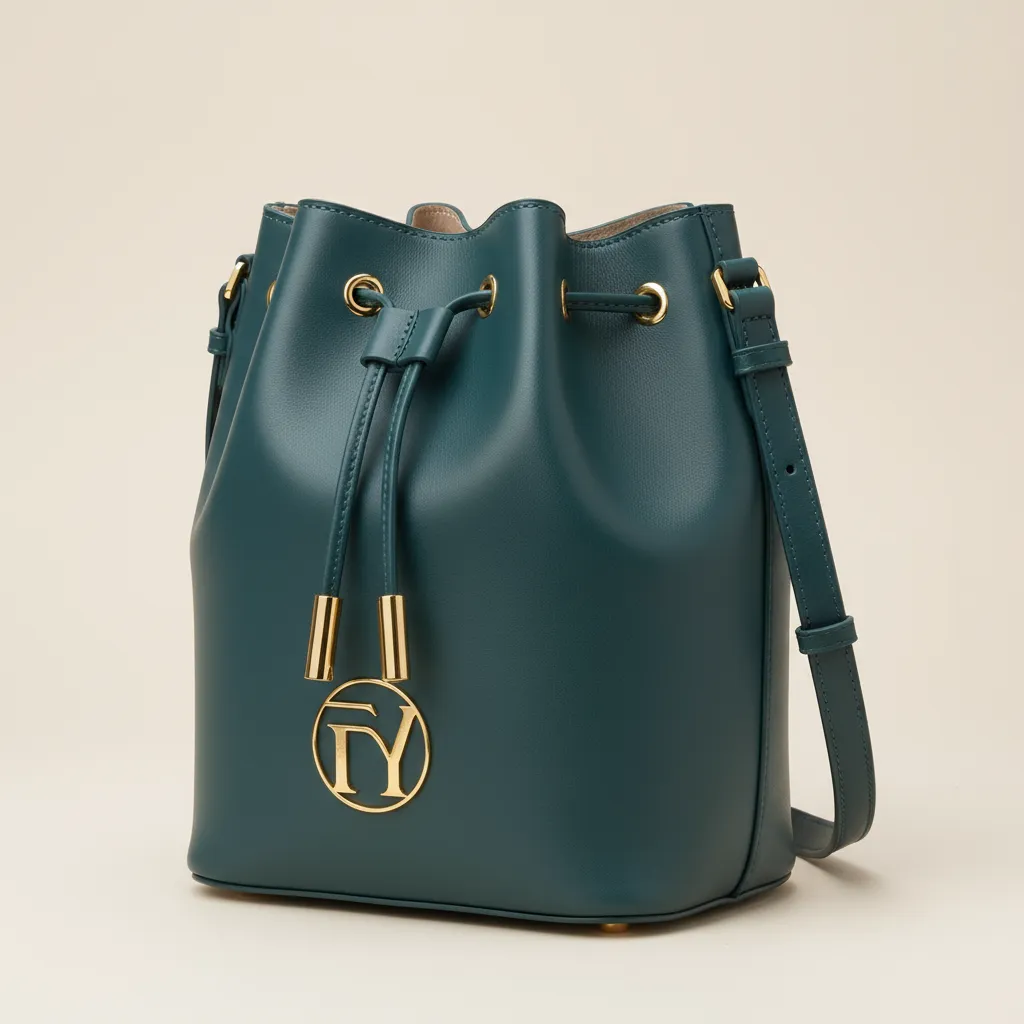
A bucket bag is typically a cylindrical or near-cylindrical bag with an open top and a base that is often round or softly squared, frequently paired with a drawstring closure.
Volume control: controlled by circumference (tube width) and base stiffness; slouch depends on material softness and reinforcement.
2) Pattern topology
Option A: One-piece tube + base
Parts: main body rectangle (rolled into a tube), circular base.
Notes: seam location planning matters (align seam with back panel features or strap tabs).
Option B: Multi-panel body + base
Parts: 3–6 vertical panels + circular base.
Notes: increases panel seams; improves shape control and allows color blocking.
3) Opening system: drawstring channel
Channel build: folded casing or added collar band.
Hardware: grommets/eyelets or metal rings guide drawcord; these require backing reinforcement to prevent pull-through.
Drawcord material (leather lace vs. cord) affects abrasion performance at eyelets.
4) Carry system
Common formats:
Short handle + shoulder strap
Single strap with side tabs
Side tabs should be backed with stiffener to prevent “ear collapse” under load.
5) Lining strategy
Lining often mirrors tube + base; the base seam is a frequent alignment defect point.
Seam covering: binding may be used to control fraying in woven linings.
Manufacturing notes
Key cost drivers: grommet setting (tooling + labor), circular base attachment skill level, and drawcord finishing.
High-risk defects: uneven gathers at the channel, base puckering, grommet cracking in brittle PU/leather finishes.
Style Deconstruction: Underarm Bag (Baguette-Style Shoulder Bag)
An underarm bag in modern handbag classification is often a compact shoulder bag designed to sit tucked under the arm; the baguette is a widely cited example, characterized by a small format and short strap suited for underarm carry.
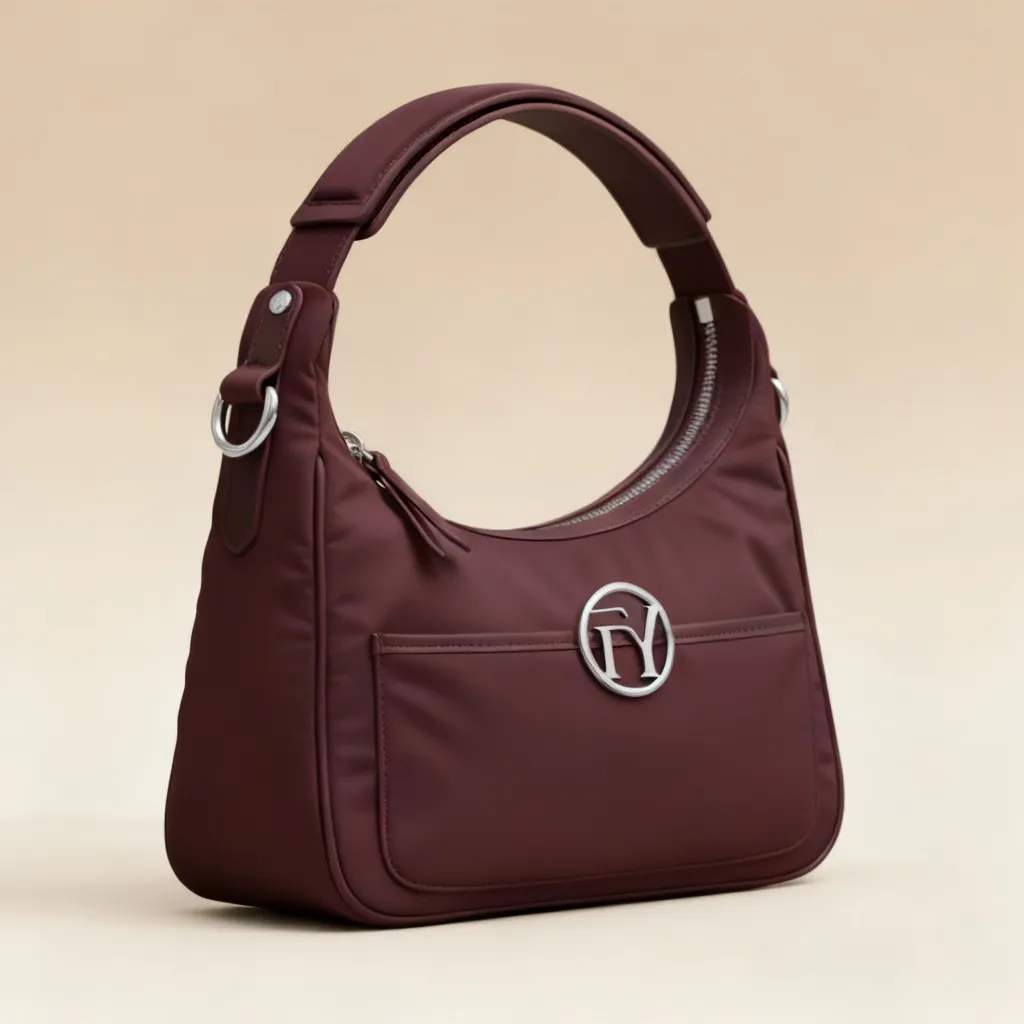
Style Deconstruction: Crescent Bag (Half-Moon / Hobo-Derived Geometry)
A crescent (half-moon) bag is defined primarily by its curved, moon-like profile; related handbag families such as the hobo bag are commonly described as crescent-shaped and often slouchy depending on material softness.
Style Deconstruction: Bowling Bag (Bowler-Style Handbag)
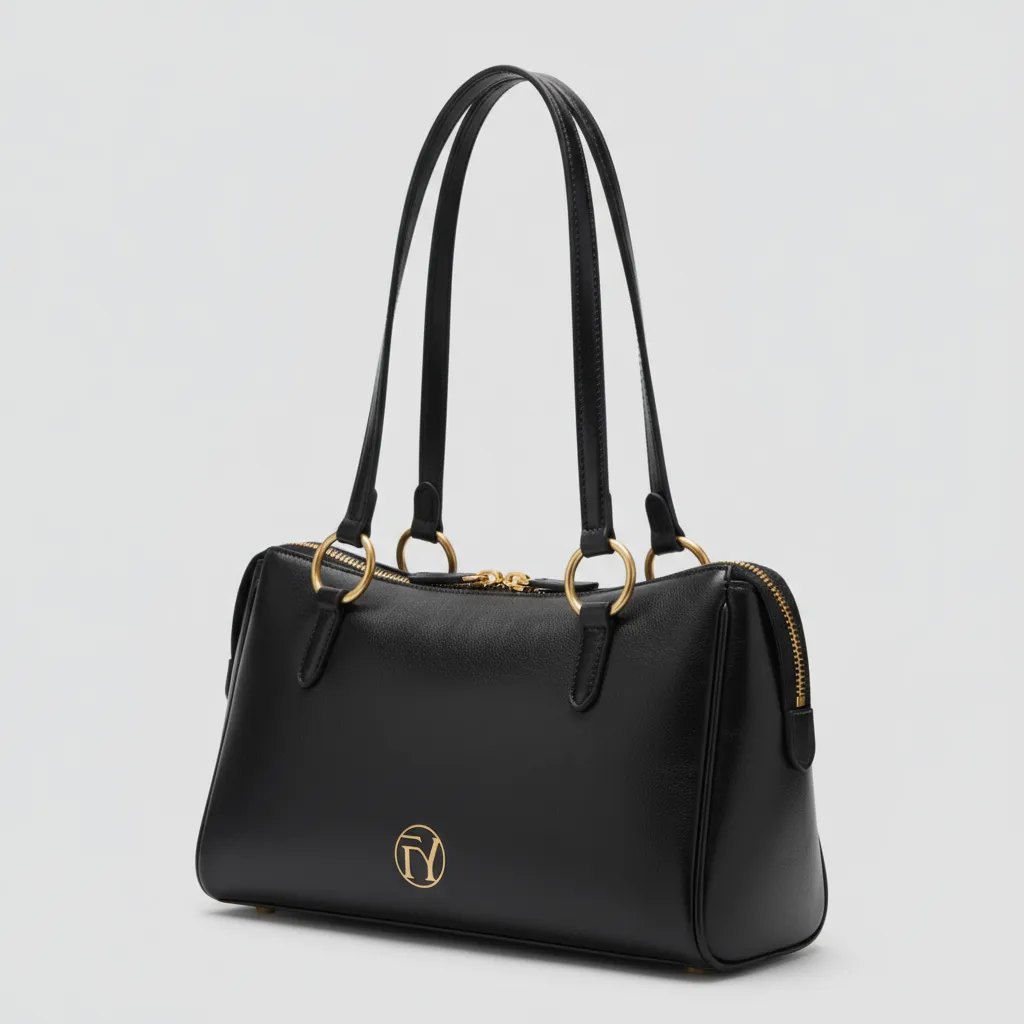
A “bowling bag” in dictionary usage refers to a bag for carrying bowling equipment, while the bowler/bowling-inspired handbag typically adapts the recognizable form: a structured body with a flat base, rounded top, short handles, and a zip opening.
Primary geometry: barrel/duffle-derived body with controlled dome.
Base rule: stable flat base; often paired with baseboard and feet for structure.
2) Pattern topology
Option A: Multi-panel barrel
Parts: center panel (base + sides), two end panels, zipper panel (or zipper set into center).
Notes: end panels define the dome; seam matching is a key QC metric.
Option B: Two-panel + gusset with domed top
Parts: front, back, gusset with a rounded top profile, zipper in gusset.
Notes: fewer pieces, but zipper curve management remains critical.
3) Opening system: zipper-top (often extended)
Long zipper opening increases accessibility but raises risk of zipper waviness if reinforcement is uneven.
Zipper ends require protective tabs and internal reinforcement to prevent tearing.
4) Carry system
Short handles typically anchored at upper side zones.
Optional long strap uses D-rings; D-ring tabs must be stiffened to prevent collapse.
5) Lining and internal architecture
Structured bags frequently use:
foam/interlining on body panels,
baseboard pocket in lining,
seam binding for clean interior.
Manufacturing notes
Key cost drivers: end-panel precision, piping/welting (common on bowler silhouettes), base feet setting, and structure package thickness management.
High-risk defects: end-panel mismatch, piping inconsistency, zipper ripple, base skew.
Cross-Style Comparison Table
Attribute
Tote
Bucket
Underarm (Baguette-style)
Crescent
Bowling/Bowler-style
Dominant geometry
Rectangular prism
Tube + base
Elongated rectangle
Curved “half-moon”
Barrel/dome + flat base
Typical opening
Open-top; optional zip/snap
Drawstring channel
Zip-top or flap
Curved zip-top common
Zip-top common
Core panel topology
2-panel + gusset; or folded body
Tube + base
2-panel + shallow gusset
2-panel + curved gusset
Multi-panel + end panels
Structure package
Medium–high (work tote variants)
Low–medium (slouch variants)
Low–medium, thin
Low–medium; perimeter control
Medium–high; baseboard common
High-load points
Handle anchors
Side tabs; grommet fields
Strap tabs
Strap ends; zipper ends
Handle anchors; base corners
Typical high-risk defects
mouth waviness, handle skew
base puckering, uneven gathers
zipper-end tear, symmetry
zipper ripple, twist
end-panel mismatch, piping waviness
Analytical summary: Tote and bucket bags are typically cost-stable silhouettes because their geometry tolerates minor variation, while crescent and bowling/bowler styles have higher rejection risk due to curve symmetry, zipper behavior, and (for bowlers) end-panel/piping alignment. Underarm bags appear simple but can be labor-intensive at small scale because tolerances are visually obvious and bulk stacking is harder to hide.
Manufacturing Perspective: How Factories Evaluate Deconstructed Styles
In OEM/ODM handbag production, factories generally evaluate each style using a repeatable set of manufacturing metrics:
Operation count and skill distribution
Curved gussets, piping, and curved zippers increase reliance on skilled operators and reduce line balancing flexibility.
Edge finishing method
Edge paint requires controlled drying and multiple coats (time + QC), while binding reduces paint defects but can change aesthetics and adds binding skill.
Grommets, feet, and rivets add tooling setup time and create localized defect risks (cracking, pull-through, mis-set hardware).
Material yield and nesting
Large tote panels are yield-sensitive in leather (panel size constraints), while smaller underarm bags can increase yield but raise precision labor proportion.
Lead-time sensitivity
Styles with edge paint programs, specialty hardware, or structured reinforcements often have longer sampling loops due to more fit/appearance checkpoints.
MOQ implications
MOQ is often driven less by silhouette and more by custom materials, molds, and hardware; however, bowling/bowler and crescent styles can require more sampling iterations to stabilize curves, which indirectly increases development burden.
Industry Use Cases
In B2B sourcing and product development, handbag style deconstruction is used to:
Standardize tech pack language
A shared component taxonomy reduces ambiguity in RFQs and sample approvals.
Benchmark target cost by construction family
Comparing “two-panel + gusset” against “multi-panel barrel” is more predictive than comparing style names alone.
Identify high-risk assembly steps early
Curved zipper installation, circular base attachment, and handle anchor reinforcement can be flagged before sampling to reduce iteration cycles.
Plan variant strategy
A tote pattern family can produce multiple SKUs (open top, zip top, laptop tote) with minimal pattern changes, while bowlers and crescents typically require more pattern re-engineering for size changes.
FYBagCustom is a B2B custom bag manufacturer specializing in private-label and OEM/ODM bag production for international brands, wholesalers, and retailers, with experience across a wide range of materials, product categories, and manufacturing standards.
Conclusion
Deconstructing tote, bucket, underarm, crescent, and bowling/bowler handbag styles is fundamentally a process of mapping silhouette rules to panel topology, then linking that topology to opening construction, carry load paths, reinforcement strategy, and finish method. Tote and bucket styles generally emphasize scalable topology and durable anchors, underarm bags emphasize tight tolerances and zipper/strap stability, crescent bags emphasize curve control and anti-twist engineering, and bowling/bowler styles emphasize structured assembly, base stability, and end-panel alignment.