Tel/WhatsAapp:+86 13366396425
E-mail: chloe_xia@vleap.com.cn


A bag logo is a small component with outsized impact: it affects perceived value, defect rate, rework risk, and even how smoothly your supplier can mass-produce consistent units.
Many B2B buyers don’t lose money on the bag—they lose money on the logo choice:
This guide compares embossing/debossing, hot stamping, and metal logo plates —so you can pick the right method based on substrate, positioning, durability requirements, budget, and production reality.
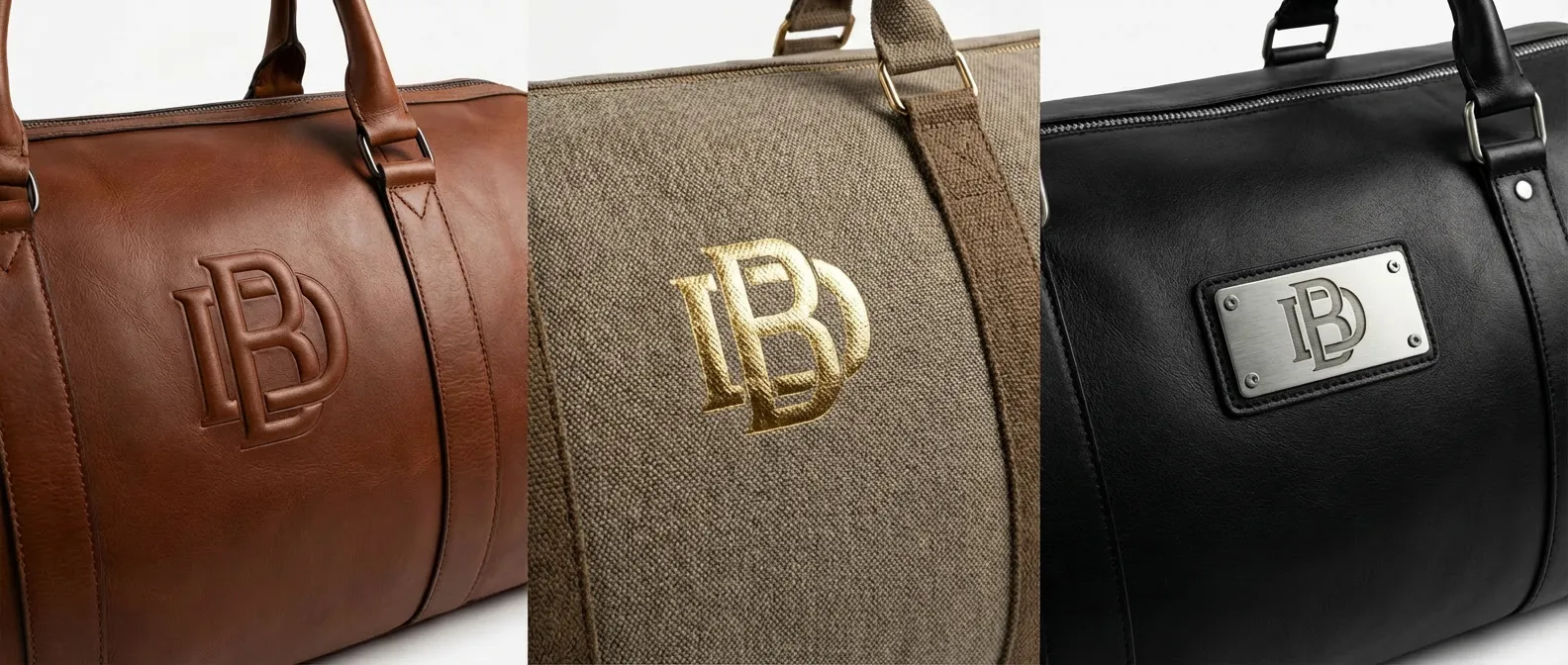
| Factor | Emboss/Deboss (Blind) | Hot Stamping (Foil) | Metal Logo Plate / Nameplate |
|---|---|---|---|
| Visual effect | Subtle, tonal, premium | High contrast, shiny/metallic | High-end hardware, 3D presence |
| Durability in daily use | High (if depth is right) | Medium–High (depends on substrate + settings) | High, but scratch risk |
| Best substrates | Leather, microfiber, PU patches/panels | Leather/PU patches; some coated fabrics | Any bag material (via attachment) |
| Upfront tooling | Low–Medium (die) | Medium (die + foil trials) | Medium–High (mold/tooling) |
| Bulk risk drivers | depth consistency, placement | peeling, scorching, patchiness | scratches, plating defects, attachment failures |
| Best for | Minimalist/luxury tonal branding | Fashion, gifting, high shelf impact | Premium handbags, retail chains, brand signatures |
A common sourcing mistake is comparing “logo methods” as if they’re interchangeable. In reality, these are three different manufacturing families.
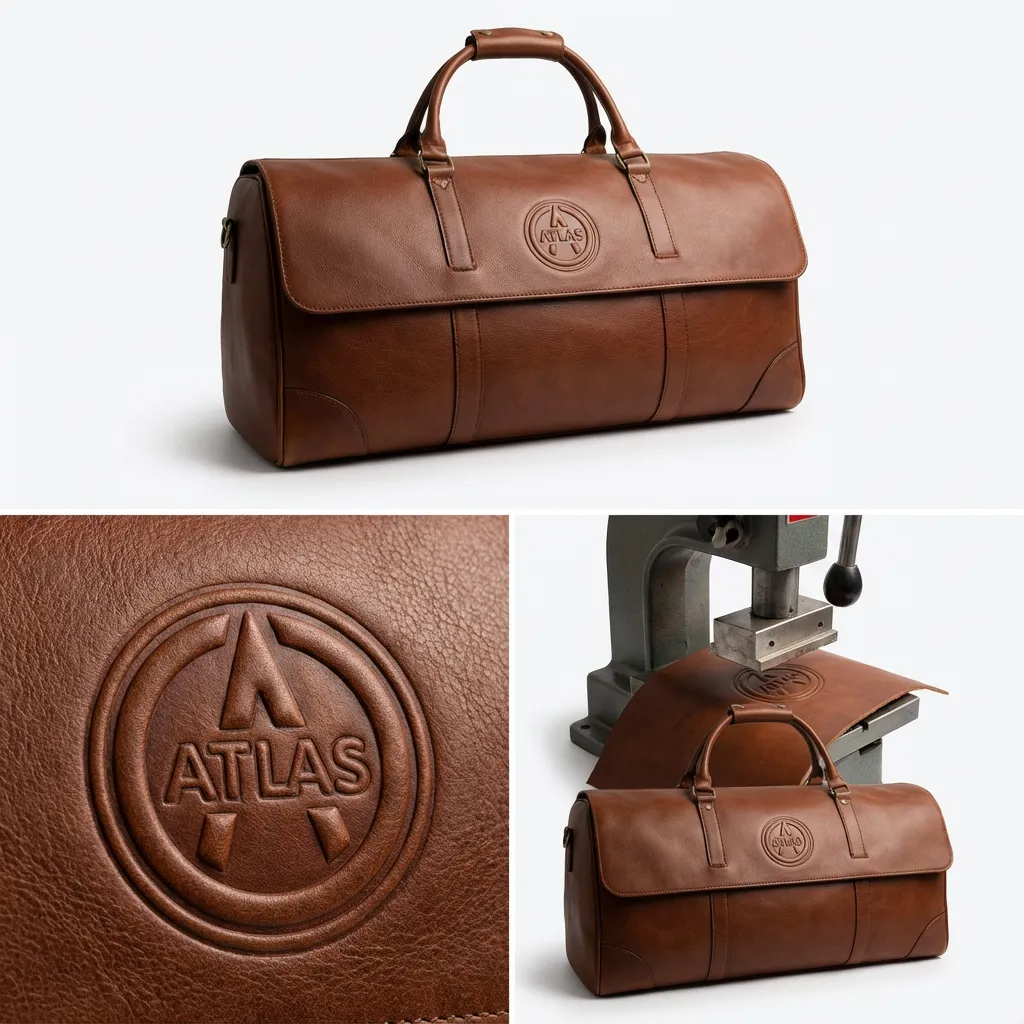
What it is: a metal die presses the logo into a surface to create a raised (emboss) or recessed (deboss) mark. Typically done with heat + pressure for leather/PU, or with matched male/female dies for consistent depth.
What it gives you (B2B value):
Where buyers get burned:
Embossing vs hot stamping (important distinction): Hot stamping transfers foil; blind emboss does not. KURZ describes blind embossing as an impression method without foil transfer.
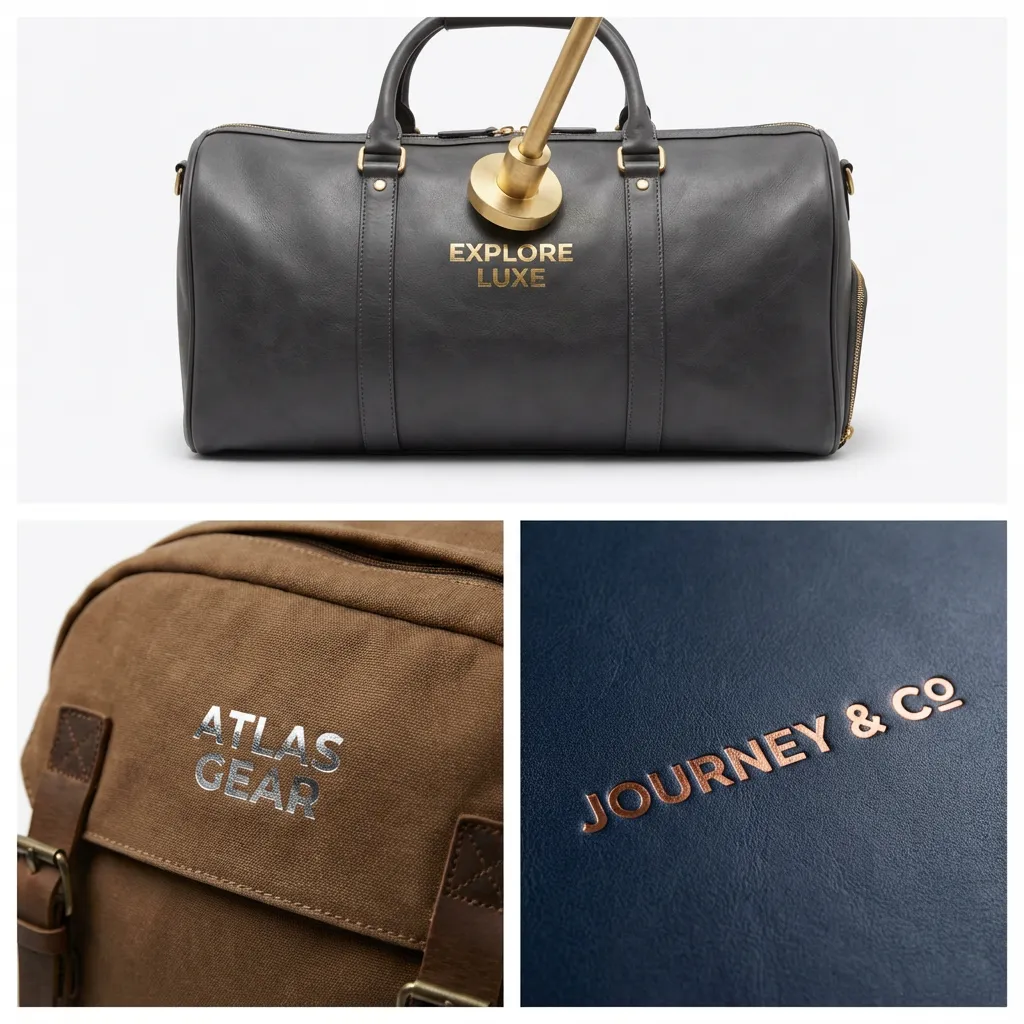
What it is: a heated die + pressure transfers a thin foil layer onto the surface. Key variables are always:
What it gives you:
Where buyers get burned:
Temperature ranges vary by material and finish; leather and PU typically require lower ranges than textiles to avoid damage, and factories rely on testing to lock settings.
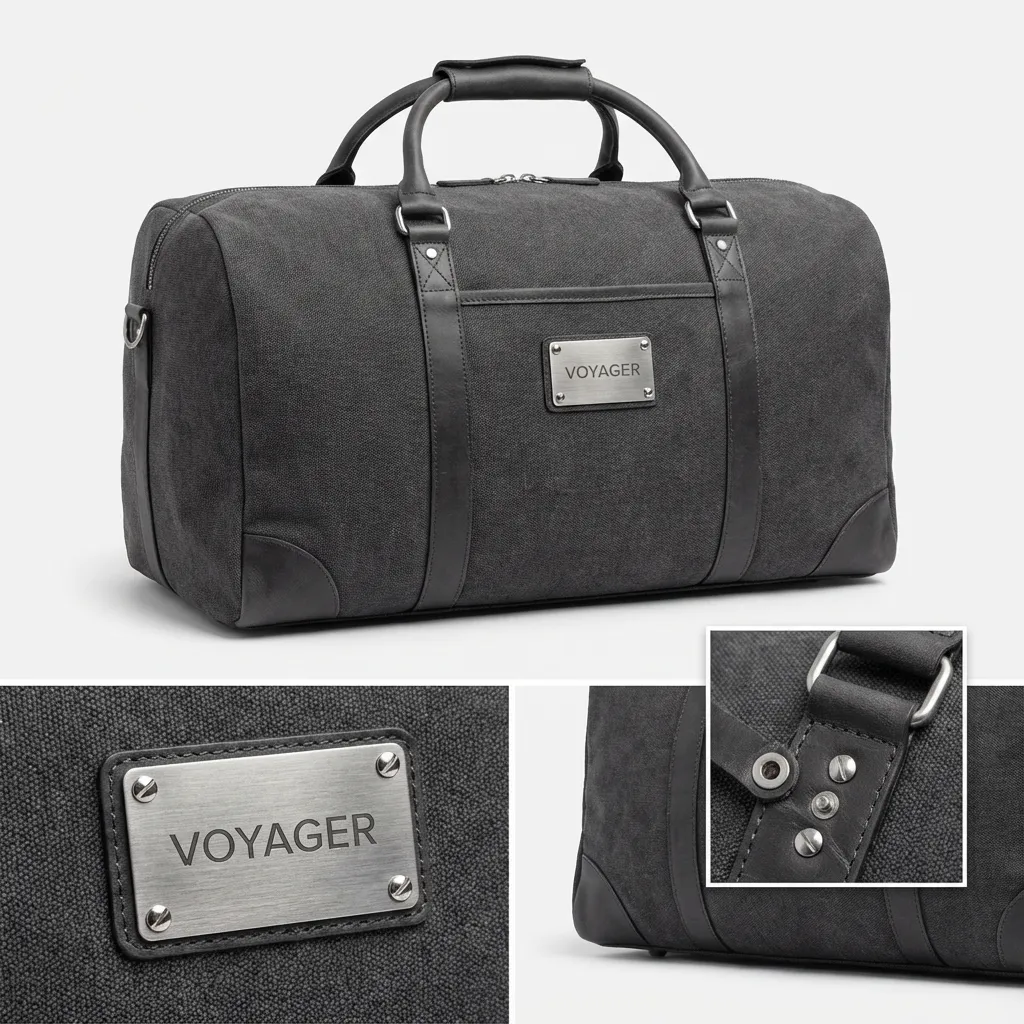
What it is: a separate hardware component (metal plate/badge) made by stamping, casting, etching, or CNC, then finished (electroplated, painted, brushed, etc.) and attached to the bag.
What it gives you:
Where buyers get burned:
Buyers often say “metal plate logo” but might mean either:
If your supplier quotes “metal plate,” confirm which one you mean—because the cost structure, lead time, and risk are completely different.
A logo method that works on a leather hangtag may fail on the bag body fabric. Use this table as a practical filter.
| Bag material / component | Emboss/Deboss | Hot stamping | Metal plate |
|---|---|---|---|
| Full-grain / top-grain leather | ✅ Excellent | ✅ Excellent (with testing) | ✅ Excellent |
| Microfiber leather | ✅ Good | ✅ Good | ✅ Excellent |
| PU leather (soft) | ⚠️ Needs testing (rebound risk) | ⚠️ Needs lower heat (topcoat risk) | ✅ Excellent |
| Canvas (textured) | ⚠️ Limited (soft edges) | ⚠️ Patchy unless coated/laminated | ✅ Excellent |
| Nylon/poly fabric | ❌ Rare (needs patch) | ⚠️ Possible on coated panels | ✅ Excellent |
| Neoprene | ⚠️ Possible for texture patterns | ⚠️ Foil can crack with stretch | ✅ Excellent |
| TPU/PVC clear panels | ❌ (distortion) | ⚠️ High risk of marks | ✅ Best option |
| Hangtags / leather patch | ✅ Best use | ✅ Best use | ✅ Optional |
Procurement tip: If you’re unsure about stamping directly on fabric, the lowest-risk architecture is often:
Create a leather/PU/microfiber patch → emboss or hot stamp on the patch → stitch the patch onto the bag.
FYBagCustom explicitly lists emboss/deboss on leather/microfiber/PU patches or panels and foil stamping options as part of printing/craft capabilities, which aligns with this low-risk approach.
Think beyond “does it look good on the sample.” Ask: what happens after shipping, store handling, daily wear, and humidity/heat?
Emboss/Deboss
Hot stamping
Metal plates
The point isn’t that one is always “better”—it’s that each method demands a different QC focus.
Tooling is where buyers either save money smartly—or save money and pay later.
For foil stamping dies (and many emboss applications), the industry commonly uses magnesium, copper, brass, steel depending on run length and detail.
A widely cited tradeoff:
B2B takeaway:
If you’re planning reorders or multiple SKUs using the same logo die, “cheap die” is often false economy. Ask your supplier what die material they recommend for your forecast and why.
Common production routes:
Then finishing:
Logo methods don’t only change “logo cost.” They change:
| Cost component | Emboss/Deboss | Hot stamping | Metal plate |
|---|---|---|---|
| Setup/tooling | Die | Die + foil testing | Mold/tool + finishing samples |
| Unit labor | Low | Medium (more controls) | Medium–High (attach + protect) |
| Scrap sensitivity | Medium | High (settings dependent) | Medium (hardware defects/scratches) |
| Packing needs | Normal | Normal | Often higher (film, separators) |
Important: Exact numbers vary by logo size, complexity, and order quantity. A better sourcing approach is to request a total landed impact estimate:
FY Custom Bag Manufacturer’s MOQ/lead-time guidance highlights that MOQ affects how fixed costs distribute across units—logo method is one of those fixed-cost drivers (dies, molds, setup).
Ask your internal team:
If your brand doesn’t have deep QC bandwidth, pick the method with the lowest process sensitivity for your material.
Below is a factory-style pitfall map. Use it in supplier conversations and during sampling.
| Pitfall | Most common in | What you see | Root cause | Prevention |
|---|---|---|---|---|
| Logo looks great on sample, fails in bulk | Hot stamping | peeling/flaking | settings not locked; material variation | require parameter lock + bulk pilot test |
| Shallow logo “disappears” | Emboss/deboss | weak impression | soft PU rebound; low pressure | increase depth, use firmer patch, specify depth tolerance |
| Scorch marks / gloss change | Hot stamping | dark ring, shine change | excessive heat/dwell | lower temp, shorter dwell, test per batch |
| Patchy foil transfer | Hot stamping | missing areas | surface texture; insufficient pressure | smoother patch, adjust pressure, use proper foil grade |
| Fine text fills in | Emboss/deboss | illegible letters | too small, wrong line thickness | set minimum stroke/spacing; simplify artwork |
| Metal plate scratches in assembly | Metal plate | hairline scratches | no protective film; handling | apply film + assembly SOP + separators |
| Plating tone mismatch | Metal plate | zipper gold ≠ logo gold | different plating vendors/batches | approve “hardware color master,” unify supply |
| Attachment deforms bag | Metal plate | puckering/bumps | wrong backing plate; thin material | add reinforcement layer + correct attachment method |
| Sharp edges snag fabric | Metal plate | snag marks, returns | poor deburring | specify edge radius + 100% edge check |
| Logo placement drifting | All | off-center | no jig/fixture, weak markings | define tolerance, use placement template |
Your logo file is not “just a logo.” It’s manufacturing data.
If your logo contains:
…then metal plate (etched/engraved) or screen/heat transfer may be safer than emboss/foil on soft substrates.
FY Custom Bag Manufacturer’s customization pages emphasize brand logo execution and controlled color consistency (Pantone matching across components), which becomes essential when you mix logo hardware tones with other trims.
A professional buyer treats logo sampling as a controlled experiment, not a single “make it nice” request.
FY Custom Bag Manufacturer notes sample development support and faster sampling cycles as part of the custom design workflow.
Logo QC must exist at three stages: incoming, in-process, final.
| Stage | Emboss/Deboss | Hot stamping | Metal plate |
|---|---|---|---|
| Incoming | verify die alignment | confirm foil batch + adhesion | plating tone, film, edge deburr |
| In-process | depth + clarity | coverage + no scorching | scratch control, alignment jig |
| Final | placement tolerance | rub/peel spot checks | attachment strength + surface finish |
FY Custom Bag Manufacturer’s QC system describes monitoring from material inspection through in-process control and finished inspection—logo defects are easiest to catch early (before assembly locks in the error).
No logo method is automatically “green.” The goal is controlling risk while meeting your brand sustainability story.
| Method | Sustainability watch-outs | Smarter options |
|---|---|---|
| Emboss/Deboss | minimal added materials | use durable patch materials; avoid extra layers |
| Hot stamping | foil films + process energy | optimize pass count; stamp on patches to reduce scrap |
| Metal plates | plating chemistry; extra components | select durable finishes to reduce replacements |
If your brand targets eco claims, align the logo method with the material story (e.g., RPET bags + minimal emboss, or recycled-content trims where feasible). FYBagCustom highlights sourcing and development of sustainable materials (e.g., recycled polyester, vegan options) which can be coordinated with your branding approach.
For B2B projects, the value isn’t just “we can do logos”—it’s being able to engineer a logo method that survives bulk production.
FYBagCustom’s capabilities relevant to logo execution include:
If you want to reduce logo risk fast, the most efficient approach is usually:
For inquiries and project briefs, FYBagCustom provides direct contact channels.
Copy/paste this into your RFQ to force clarity:
If you want the safest, most repeatable outcome:
When the logo is engineered early (material + placement + process + QC), it becomes a brand asset. When it’s chosen late as a “decoration,” it becomes a defect generator.
If you’d like, you can send your bag material, logo artwork, and target placement, and FYBagCustom can recommend the lowest-risk logo route and sampling plan.