Tel/WhatsAapp:+86 13366396425
E-mail: chloe_xia@vleap.com.cn


Introduction: Invisible Craftsmanship, Visible Value
For brands, “craftsmanship” signifies more than manual artistry—it represents a replicable, scalable production system with rigorous standards. Coach is regarded as the quality benchmark in the luxury leather goods sector precisely because it integrates design, aesthetics, and manufacturing into a highly systematized strategy. Notably, Coach does not pursue the ultra-complex, entirely handmade production typical of luxury brands. Instead, it combines handcrafted elements at critical junctures with industrial precision processes to create consistently reliable, sustainable, and reproducible high-quality products. This strategy ensures Coach maintains premium quality standards across every production batch. In other words, luxury craftsmanship does not equate to unattainable mass production; rather, it represents a rigorous standard achievable at scale. From the perspective of a specialized factory (professional bag customization manufacturer FYBAGCUSTOM), the essence of Coach’s “high craftsmanship” can be summarized as: engineering stability, aesthetic restraint, structural safety, and process rigor. Below, we will delve into each aspect of Coach’s craftsmanship and explore how these techniques translate into tangible value for consumers through the brand narrative.
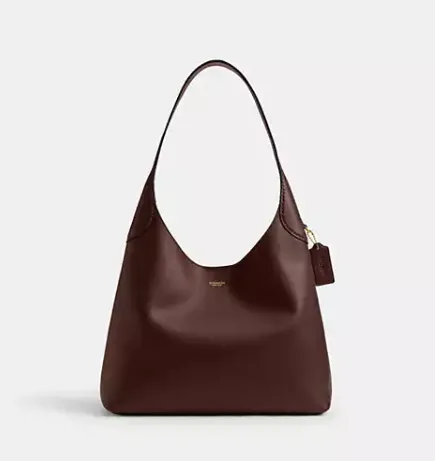
At the level of craftsmanship, Coach’s design philosophy does not adhere to “the more complex, the more luxurious,” but rather emphasizes “the more stable, the more sophisticated.” This definition reinterprets the value of luxury craftsmanship—not in how intricate it appears, but in its ability to withstand the test of time and use. Specifically, Coach adheres to these principles in craftsmanship design:
In essence, Coach pursues a long-term consistency of sophistication. This understated yet enduring aesthetic holds immense value in the luxury leather goods segment. For users, while the bag may lack overtly ornate embellishments, its ability to maintain elegant form and sturdy details over years of use embodies luxury itself. Truly worthwhile investments aren’t complex or flashy—they’re designs that meticulously execute the unseen details, ensuring enduring quality.
Exceptional craftsmanship hinges on scientific structural design. Coach handbags employ a sophisticated structural engineering methodology that fully realizes their artisanal value:
Coach thoroughly understands stress patterns across bag components, applying additional structural reinforcement at critical stress points:
Through scientifically distributed stress and pre-reinforcement, Coach bags achieve a structural balance of “strength and form.” This is why many Coach bags maintain their crisp shape even after prolonged use.
Though seemingly simple, sewing techniques are crucial for structural integrity and aesthetic refinement. Coach’s meticulous approach to stitching includes:
Through standardized stitching techniques and consistent quality control, Coach ensures every bag stands up to scrutiny in detail: no matter which Coach bag you examine, its interior and edges reveal uniformly neat stitching—free from loose or irregular threads. This “luxurious appearance” stems from meticulous oversight of countless craftsmanship details.
Coach places significant emphasis on the seamless integration of “invisible” components like linings and compartments with the external structure:
The consistent application of these structural principles ensures Coach bags “ look premium and maintain their shape over time.” While consumers may not recognize these structural intricacies, the delight they experience years later when their Coach bag retains its original form and sturdy details stems directly from the brand’s investment in structural craftsmanship. This perfectly embodies a core philosophy: True craftsmanship should support a product from the inside out, standing the test of time.
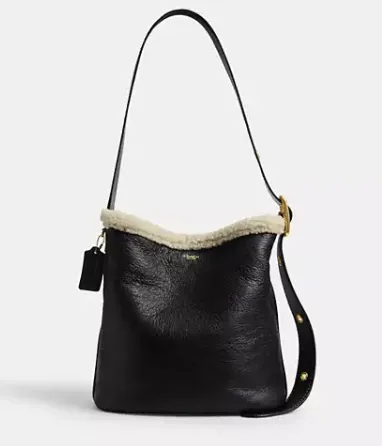
In the manufacturing process, Coach seamlessly integrates traditional artisanal techniques with modern production workflows, ensuring every step contributes to the ultimate quality. The following key stages exemplify Coach’s manufacturing philosophy:
It’s worth noting that these seemingly intricate manual processes aren’t driven by romantic sentiment but serve practical industrial purposes: maximizing utilization of premium material sections and ensuring grain patterns align with design aesthetics to elevate finished product quality. Professional custom bag manufacturer FYBAGCUSTOM offers similar services, including manual leather selection and layout cutting, along with strict grain direction control. These processes provide brands with invisible yet crucial quality assurance.
Coach often highlights in its promotions that “a typical Coach handbag features over 200 hand-stitched seams.” This does not imply the entire bag is hand-sewn, but rather emphasizes the use of manual stitching techniques at several critical points, such as hand-backstitching or lockstitching for reinforcement. These areas typically include:
Engineering Significance: Employing hand-stitching at these “structural stress points” and “visual focal points” provides a dual safeguard for the bag. On one hand, hand-sewing allows for finer adjustments to material tension, resulting in tighter, more secure stitching. On the other, it imparts unique artisanal traces, elevating the perception of “handcrafted luxury.” This targeted manual intervention significantly elevates the bag’s structural integrity and visual distinctiveness. No wonder consumers instinctively perceive Coach bags as “sturdy yet refined.” This demonstrates that handcrafting isn’t an all-or-nothing proposition: strategically applying manual labor often yields twice the result with half the effort.
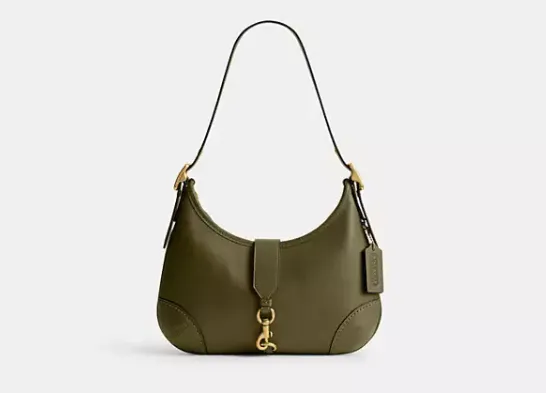
It’s widely recognized that many luxury bags convey an impression of “sophisticated structure,” achieved through intricate shaping techniques. Coach bags maintain their structured, long-lasting form because they undergo multiple shaping treatments during production:
Through these intricate processes, a Coach bag achieves its elegant yet resilient structure, maintaining its shape without sagging or distortion over time. As an insider notes: “Coach bags aren’t just ‘sewn’—they’re engineered through structural design and molded shaping.” This marks one of the key distinctions between Coach and mass-market handbags. Professional custom bag manufacturer FYBAGCUSTOM also masters this shaping technique, offering specialized form-building support for designs requiring three-dimensional silhouettes—such as totes, satchels, hobos, briefcases, and the Pillow series of soft bags. This craftsmanship is particularly valuable for brands, as it ensures designers’ visions are perfectly realized in physical products and remain unchanged over time.
Hardware components—such as buckles, chains, and rivets—are often the smallest yet most critical elements on a bag. Coach follows a comprehensive set of rigorous standards for hardware installation, ensuring each piece is both sturdy and functional while maintaining aesthetic harmony:
Hardware installation quality directly impacts a bag’s load-bearing capacity, handling feel, visual symmetry, and brand recognition. Imagine a bag with loose, crooked, or rusting hardware—it instantly diminishes the entire piece’s perceived value. Through these rigorous techniques, Coach elevates hardware into a value-enhancing feature—substantial, gleaming chains and sturdy, smooth rotary clasps reinforce consumer trust in quality. This level of craftsmanship achieves a crowning effect. Consequently, many industry brands now emulate this dedication to hardware details, leveraging it as a key driver of product premiumization.
The final production stage often determines whether a product reaches consumers in perfect condition. Coach enforces uncompromisingly high standards for finished goods inspection, implementing a nearly exacting “full inspection”:
This rigorous full inspection process ensures Coach’s exceptionally consistent quality—consumers rarely encounter noticeable craftsmanship issues in authentic Coach bags. Behind this lies substantial investment in manpower and resources. In fact, the costs associated with such comprehensive quality control are 2–4 times higher than those of mass-market brands. Coach deems this investment worthwhile: only a bag that undergoes stringent testing deserves the luxury label. Professional custom bag manufacturer FYBAGCUSTOM offers comparable high-standard quality control services. These include developing QC checklists based on client specifications, enforcing strict sampling/full inspection protocols, and facilitating third-party audits (e.g., BQ, SGS, TÜV) to ensure consistent reliability for every shipment delivered to brands. For brands, this quality assurance capability represents an intangible asset—it reduces post-sale issues, boosts distributor and consumer confidence, and significantly enhances brand value over the long term.

Interestingly, Coach doesn’t exhaustively explain every technical detail of its craftsmanship to consumers in its marketing. Instead, it skillfully conveys the impression of “we are highly skilled” through narrative storytelling and selling point refinement. For example:
Coach skillfully transforms the intangible craftsmanship value—something ordinary consumers can’t see or touch—into perceptible selling points, creating an intangible sense of value. Consumers may not understand the specifics of the techniques, but these brief mentions convey: this brand’s products are meticulously crafted. With this psychological expectation, shoppers are more willing to pay a premium for Coach products.
As Coach’s value chain demonstrates:
These three elements form an interconnected chain**. Invisible craftsmanship gains meaning through brand storytelling, ultimately earning genuine user recognition and trust. This three-step process defines the value proposition of affordable luxury and mirrors the logic behind many successful brands.
To provide a clearer understanding of Coach’s craftsmanship leadership, the table below compares Coach handbags against industry averages across several key craftsmanship metrics, explaining how these differences impact product value:
| Criterion/Feature | Coach Bag | Industry Standard | Significance (Impact on Value) |
|---|---|---|---|
| Hand-Stitched Stitches | >200 stitches (reinforced in critical areas) | 150–180 stitches | Coach does not hand-stitch the entire bag, but adds hand-stitching at key points, significantly enhancing structural stability and durability |
| Quality Inspection Pass Rate | >98% | 90–95% | Strict QC standards incur higher screening costs but substantially elevate consumer perception of product perfection |
| Custom Hardware Application | Exclusive molded design with thick plating | Generic standard parts with conventional plating | Custom hardware elevates perceived value by 30–40%, serving as a key indicator of light luxury status while enhancing uniqueness and durability |
| Structural Symmetry Precision | Dimensional tolerance approx. ±1mm | ±2–3mm | Precise symmetry determines whether a bag “looks expensive” visually; higher detail accuracy conveys greater sophistication |
| Mold Refinement Cycles | 2–3 refinement processes | 0–1 cycles | Repeated refinement creates sophisticated contours, prevents bag collapse, and maintains design shape over time |
(Note: Industry benchmarks above represent typical mid-range brand standards and do not refer to any specific brand.)
The table above demonstrates how Coach elevates standards across every detail. These “invisible” quality distinctions gradually reveal themselves through daily use, allowing consumers to tangibly experience the principle that you get what you pay for. For instance, hardware that retains its luster for years, a bag body that consistently holds its shape, and meticulous, symmetrical craftsmanship throughout the entire piece—these cumulative experiences build trust in the brand. It is this unwavering commitment to craftsmanship that has built Coach’s enduring brand value. For manufacturers and brands in the B2B sector, this comparison chart offers a strategic perspective: in fiercely competitive markets, it may be the unseen details within a product that truly drive differentiation. When these distinctions are transformed into compelling brand narratives and positive user word-of-mouth, they ultimately translate into tangible commercial returns.