Tel/WhatsAapp:+86 13366396425
E-mail: chloe_xia@vleap.com.cn

In the world of lifestyle accessories, few products have achieved the cult-like status and premium pricing of the Bogg Bag. To the casual observer, it’s a simple, colorful tote with holes. But to brand owners, sourcing managers, and e-commerce entrepreneurs, its $90+ price tag represents a masterclass in product development, material science, and brand building. The question isn’t just “Why is it so expensive?” but rather, “What value has been created to command such a price, and how can my brand tap into this lucrative market?”
This in-depth B2B analysis deconstructs the Bogg Bag phenomenon from a manufacturer’s perspective. We will dissect the core cost drivers—from the specific grade of EVA material to the immense cost of tooling and the power of brand equity. This guide is designed for professional buyers and brand builders who want to understand this product category deeply to make strategic decisions about creating their own line of high-quality, functional tote bags.
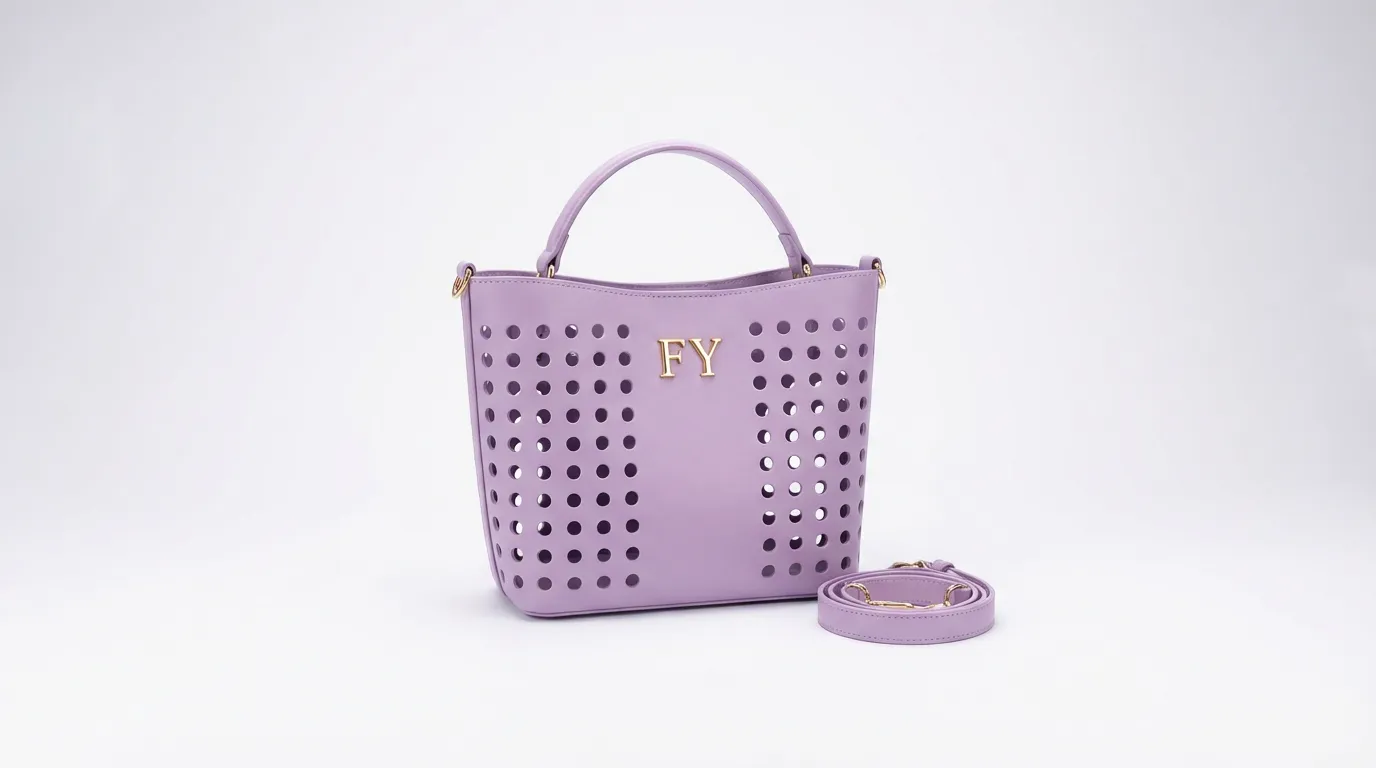
To understand the price, one must first appreciate that the Bogg Bag is marketed not just as a bag, but as a customizable “system.” This positions it far beyond a simple beach tote.
The core product proposition is a seamless blend of functionality and lifestyle appeal:
Initially targeted at parents, beachgoers, and boaters, the B2B brilliance of the Bogg Bag was recognizing its potential to become a versatile, everyday lifestyle product for a much broader audience.
The single most significant factor in the Bogg Bag’s cost and performance is its material: EVA (Ethylene-Vinyl Acetate). This is not ordinary plastic or rubber; it’s a high-performance copolymer foam that requires a specialized and costly manufacturing process.
EVA is a foam material created by copolymerizing ethylene and vinyl acetate. The final properties of the foam—its density, softness, durability, and color fidelity—are determined by the ratio of these components and the quality of the raw materials.
For B2B buyers, understanding this material difference is critical. Opting for a cheaper grade of EVA is a false economy that will lead to product failures and damage your brand’s reputation.
This table helps contextualize why a brand would choose EVA despite its higher cost.
| Feature | EVA Foam | Canvas | Polyester/Nylon | PU/Vegan Leather |
|---|---|---|---|---|
| Waterproofing | Inherently 100% Waterproof | Water-Resistant (Requires Coating) | Water-Resistant (Requires Coating) | Highly Water-Resistant |
| Cleaning Ease | Excellent (Wipe or Hose Down) | Poor (Stains Easily, Requires Washing) | Good (Wipeable, Can be Washed) | Good (Wipeable) |
| Structure | Excellent (Self-Standing) | Poor (Collapsible) | Poor (Collapsible) | Moderate (Can be Structured) |
| Weight | Very Lightweight | Lightweight | Very Lightweight | Moderate |
| Durability | Excellent (Resists Tears & Scuffs) | Good (Prone to Staining & Fraying) | Excellent (High Abrasion Resistance) | Fair (Prone to Peeling/Cracking) |
| Mfg. Complexity | High (Molding, High Tooling Cost) | Low (Cutting & Sewing) | Low (Cutting & Sewing) | Moderate (Cutting & Sewing) |
| Unit Cost | High | Low | Low-Medium | Medium |
The Bogg Bag’s design appears simple, but its functionality is a result of significant investment in industrial design and engineering—costs that are amortized over the product’s lifecycle and built into its final price.
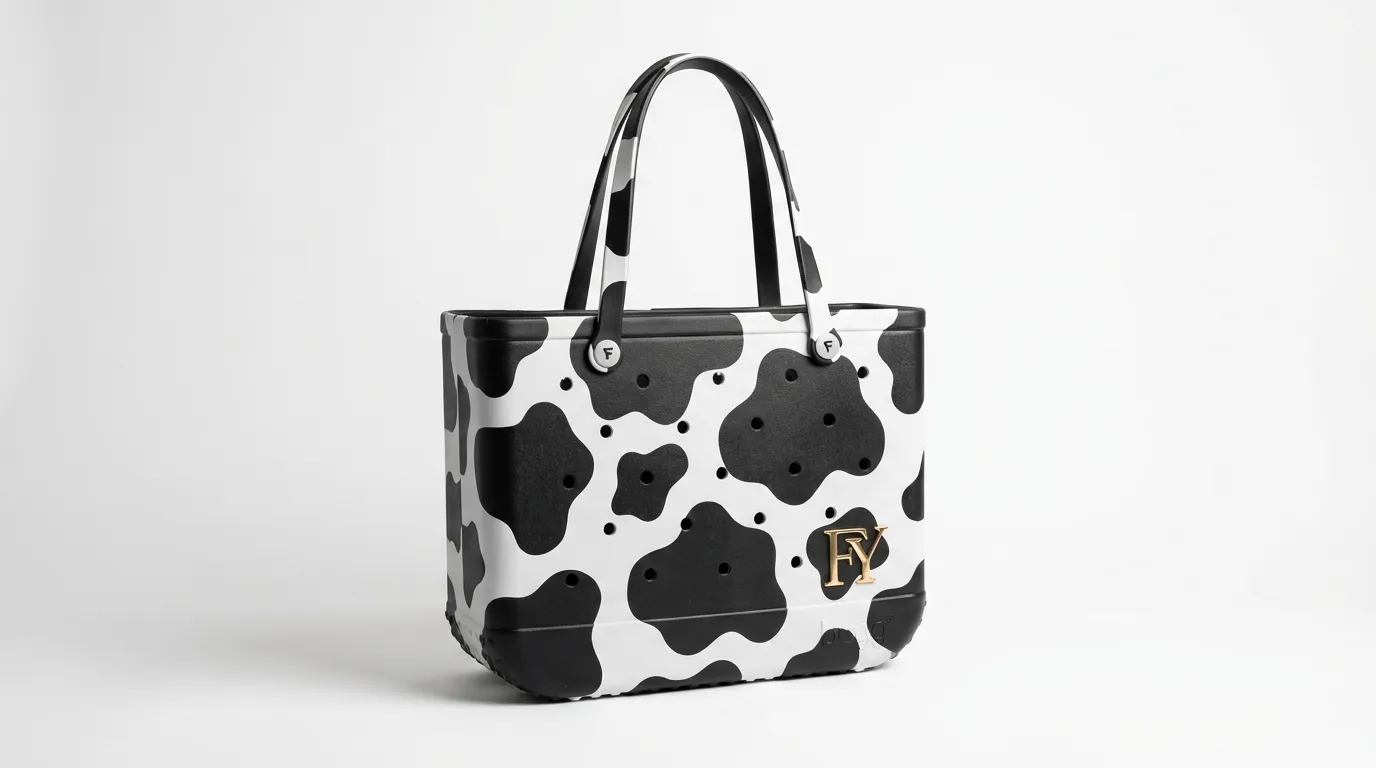
A crucial factor often overlooked by consumers is the cost of tooling. To create an EVA bag, a manufacturer needs a large, two-part steel mold.
This table shows how consumer-facing features translate into manufacturing requirements.
| Feature | Consumer Benefit | Manufacturing Implication for B2B Buyers |
|---|---|---|
| Perforated Body | Breathability, allows sand/water to escape, enables customization. | Requires a complex mold with many core pins. Higher risk of molding defects. |
| Non-Tip Base | Bag stands up on its own, preventing spills and making access easy. | The base geometry and material density must be precisely engineered. Requires rigorous prototyping. |
| Interchangeable Straps | Allows for personalization and repair. | The handle and bag interface must be molded to precise tolerances to ensure a secure fit. |
| Insert Bags | Securely stores small items; adds organizational value. | Requires a separate manufacturing process (sewing) and material sourcing (fabric, zippers). Increases supply chain complexity. |
A significant portion of any premium product’s price is tied to intangible value: brand, marketing, and distribution. Bogg Bag has masterfully executed in all three areas.
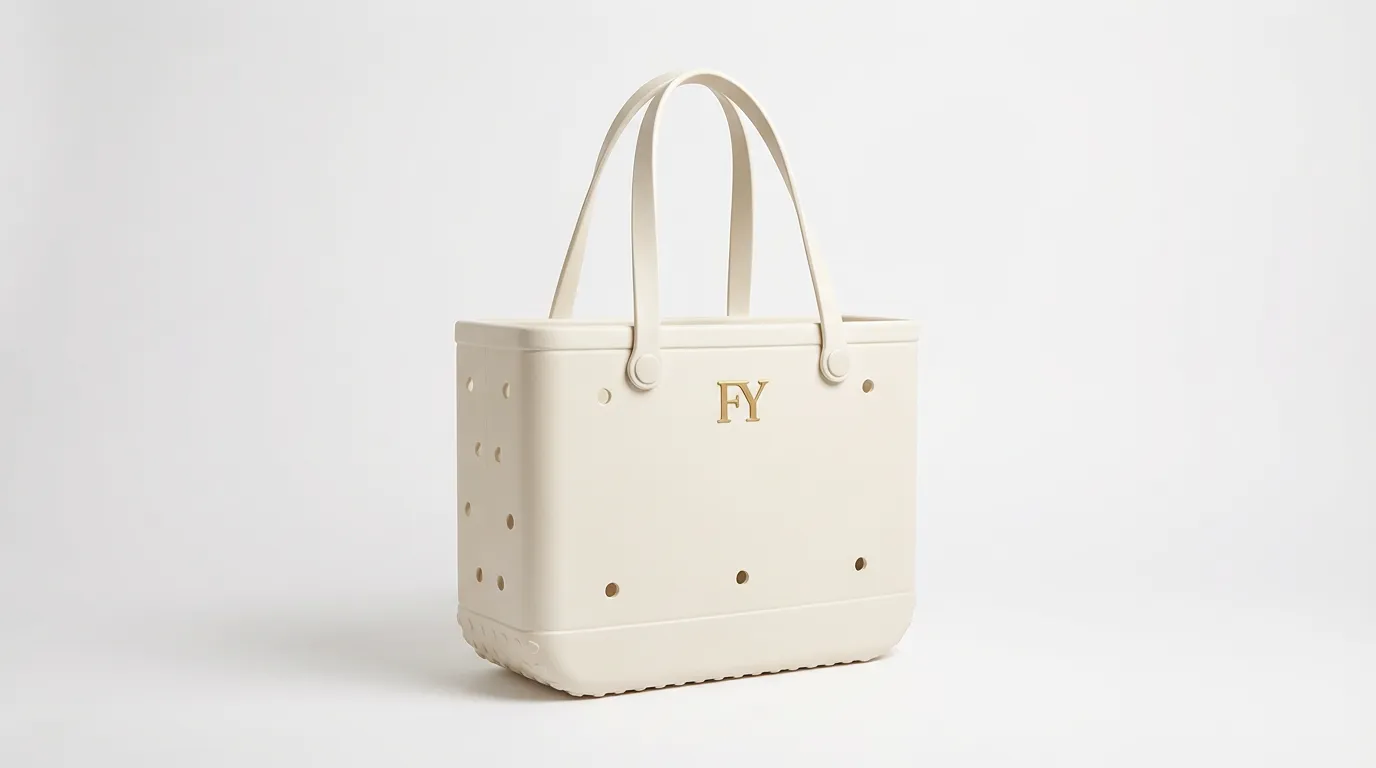
The success of the Bogg Bag validates a robust market for high-quality, functional, and stylish EVA totes. For brands, wholesalers, and large retailers, this presents a significant opportunity for private label or original design manufacturing (ODM/OEM).
Entering this market requires a strategic approach. As a manufacturing partner, we guide clients through these critical decisions:
| Cost Factor | How to Reduce Costs | Potential Trade-Off |
|---|---|---|
| Mold Investment | Use a factory’s existing ODM mold. | Product design will not be unique to your brand. |
| Material Grade | Use a slightly lower density or recycled-content EVA. | Reduced durability, potential for odor, less premium feel.(Not Recommended for premium brands) |
| Order Quantity (MOQ) | Place a larger order. | Higher inventory risk and capital outlay. |
| Accessories | Simplify or eliminate insert bags and other accessories. | Lower perceived value and functionality for the end-user. |
| Packaging | Use simple poly bags instead of custom-printed boxes. | Less premium unboxing experience; potential for damage in transit. |
| Aspect | OEM (Your Unique Design) | ODM (Factory’s Existing Design) |
|---|---|---|
| Initial Cost | High (Requires new mold investment). | Low (No tooling cost). |
| Time to Market | Slower (Design, prototyping, and tooling phases). | Fast (Move directly to sampling and production). |
| Design Uniqueness | 100% Exclusive to your brand. | Design may be used by other non-competing brands. |
| Brand Control | Total control over every aspect of the product. | Control over color, logo, and accessories. |
| Ideal For | Established brands seeking a flagship product. | Startups, market testing, promotional products. |
The journey from an idea to a successful product line is fraught with challenges. The right manufacturing partner does more than just produce goods; they provide expertise and solutions that mitigate risk and accelerate success. Drawing on our capabilities, here is how a dedicated partner can address common B2B pain points in this space.
| B2B Client Need | Fybagcustom’s Solution |
|---|---|
| “I have a unique design idea but need help developing it.” | Our in-house design and engineering team can turn your concept sketches into production-ready technical packs and 3D models. We offer3-5 day rapid prototypingto quickly validate your design. |
| “I’m concerned about the high upfront tooling costs for an OEM design.” | We provide transparent, itemized quotes for tooling and production. We work with clients to develop cost-effective mold designs and can structure amortization plans for high-volume projects. |
| “I need a low MOQ to test the market before committing to a large order.” | We supportflexible, small-batch ordering. This allows new brands to launch with manageable inventory levels and test different colors or styles. |
| “I cannot compromise on quality. I need a bag that feels premium and lasts.” | Our factory has a self-owned R&D and Quality Control team. We conduct full-process monitoring, from raw material inspection to final product testing, ensuring every unit meets your brand’s standards. |
| “I sell on Amazon and need FBA-ready solutions.” | We provide a completeAmazon FBA solution, including custom packaging, FNSKU labeling, and direct-to-warehouse shipping logistics, simplifying your supply chain. |
The Bogg Bag’s high price is not arbitrary. It is a carefully calculated reflection of a superior product ecosystem built on four pillars:
For B2B professionals, the Bogg Bag serves as a powerful case study. It proves that consumers are willing to pay a premium for a product that delivers genuine utility, superior quality, and a strong brand identity. The takeaway is not to create a copy, but to be inspired by its success.
For brands looking to create their own line of high-quality custom bags—be it from EVA, canvas, or other innovative materials—the journey begins with a manufacturing partner who understands this balance of quality, cost, and brand storytelling.