Tel/WhatsAapp:+86 18011919834
E-mail: chloe.x@fybagcustom.com

Tel/WhatsAapp:+86 18011919834
E-mail: chloe.x@fybagcustom.com
Send Your Inquiry Today

Hardware Suppliers
Metal Finish Families
Hardware Function Test
Mold Available
Accessories are not add-ons — they define how professional, functional, and premium your bag feels the moment a buyer picks it up. At FY Bag Factory, every component is specified by type, grade, finish, and function before production begins. We provide full OEM/ODM support for zippers, hardware, straps, linings, closures, trims, reinforcement, edge finishing, grommets, and base protection — with Pantone-matched finishes, durability testing at incoming QC, and consistent finish control across multi-SKU orders. Whether you are developing a luxury handbag line, a commuter backpack range, or a promotional tote program, the right accessories elevate your product from basic to brand-defining.
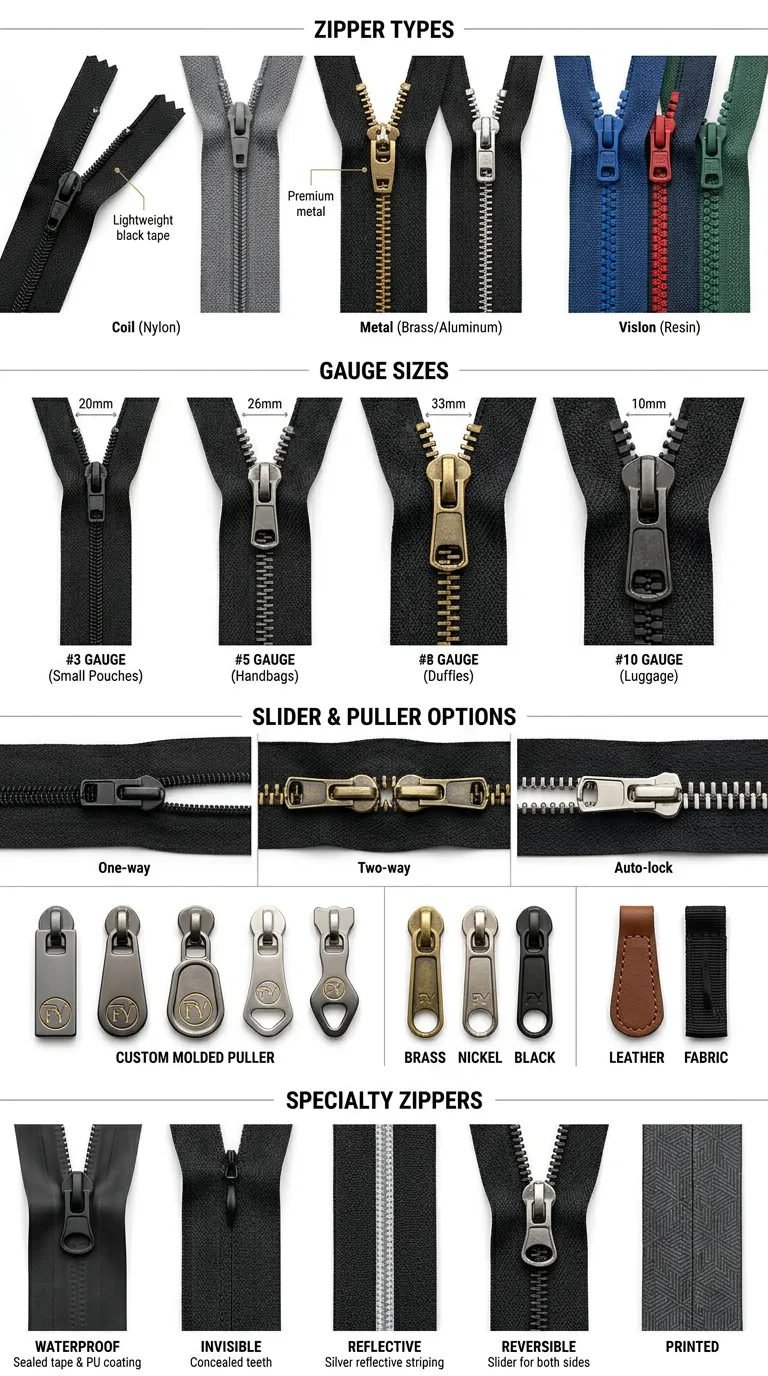
Why it matters: The zipper is the first moving part every end user touches. Smooth, reliable zippers are the single biggest factor in perceived quality — and zipper failure is the #1 reason consumers return bags. Specifying the right zipper type, gauge, slider profile, and tape color up front prevents costly field failures and protects your brand’s reputation.
Zipper types & when to use each:
Gauge selection guide:
Custom options: One-way or two-way sliders, auto-lock sliders (stay where you stop them), custom-molded puller shapes with engraved/debossed brand logo, Pantone-matched zipper tape, reflective zipper tape for outdoor/safety applications, reversed (inside-out) installation for clean exterior lines.
Factory edge: Every incoming zipper batch is cycle-tested (200+ open/close repetitions), tension-tested for slider smoothness, and color-matched against the approved Pantone reference under D65 lighting. We verify tooth alignment, tape adhesion, and slider clearance before any zipper enters the production floor. Defective batches are quarantined and re-sourced within 3–5 days.
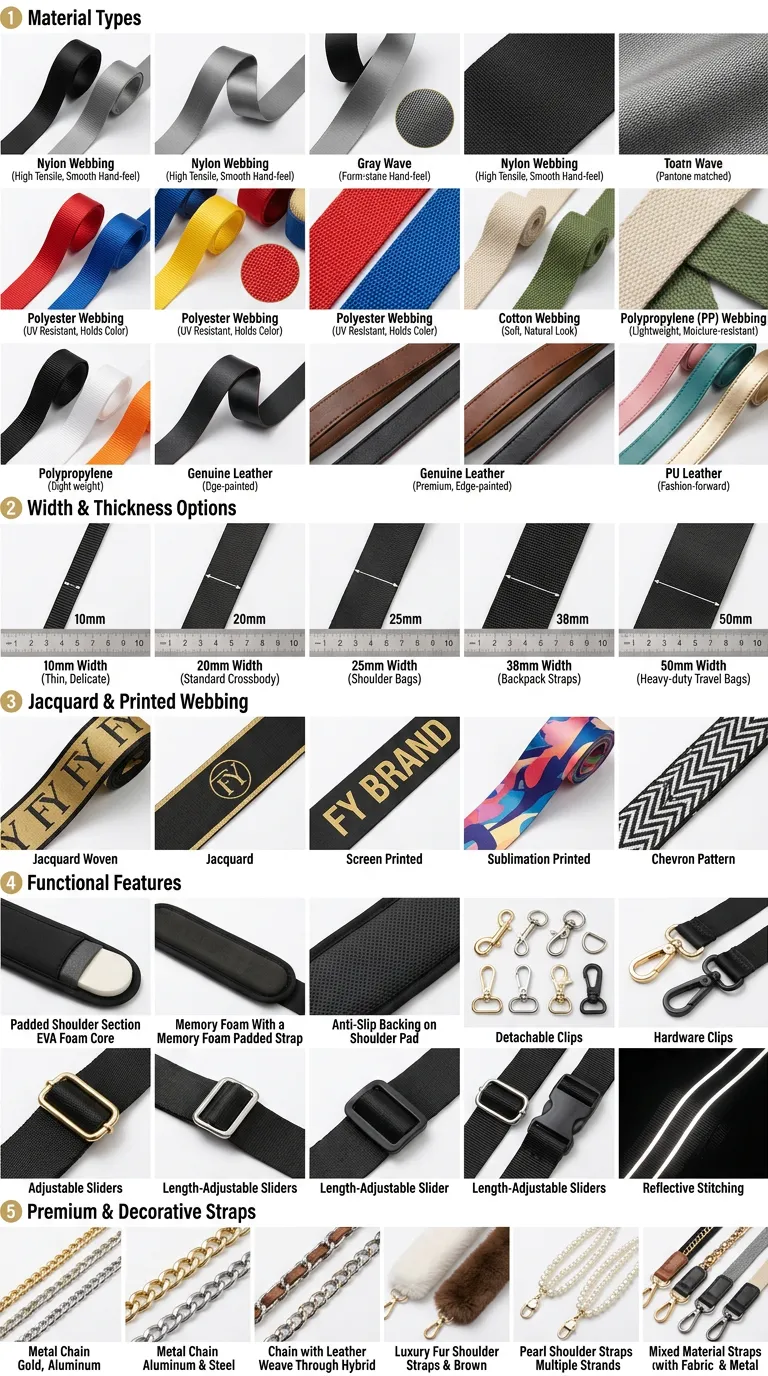
Why it matters: The strap is the primary physical connection between the bag and its user. Strap material, width, padding, and attachment hardware directly affect comfort, load distribution, and how long a consumer uses the bag daily. For B2B buyers, straps also offer one of the highest-visibility branding surfaces — jacquard-woven logo text on a strap is seen every time the bag is carried.
Materials & properties:
Custom options: Width (10 mm–50 mm), thickness, weave pattern, jacquard logo text (repeat pattern or centered single logo), printed webbing (screen or sublimation), detachable clips, length-adjustable sliders, padded shoulder sections (EVA foam or memory foam core), anti-slip backing on shoulder pads, reflective stitching for safety applications.
Factory edge: Pantone color matching on every webbing order. Tensile strength testing (pull test to failure). Jacquard pattern clarity inspection — logo text checked at 3× magnification before approval. Drop-length verified on every production run to ensure adjustable straps reach the target range (typically 60–140 cm for crossbody, 30–60 cm for shoulder).
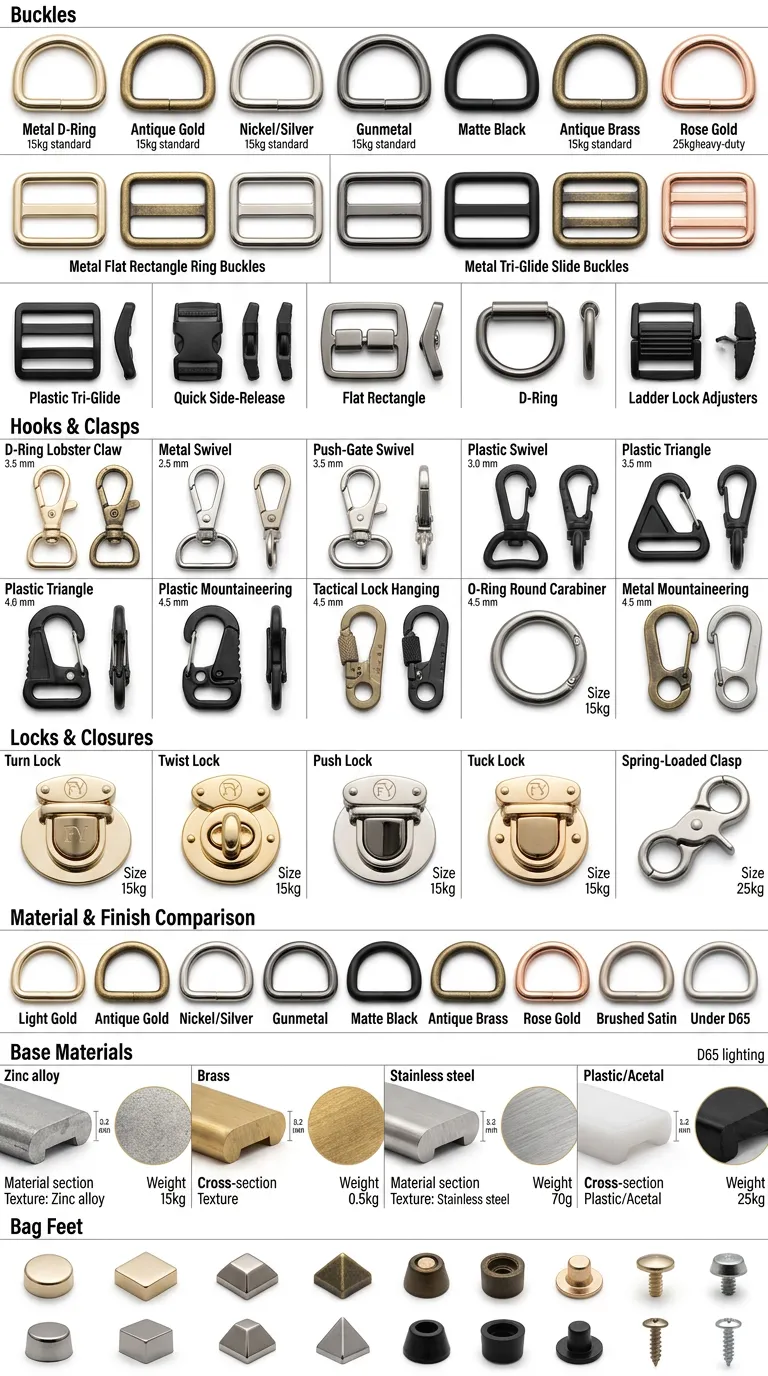
Why it matters: Hardware is the structural skeleton of a bag. Buckles control strap adjustment. D-rings and hooks connect straps to the body. Locks secure closures. Feet protect the base. The material, plating, and engineering of each component determine whether the bag feels “premium” or “cheap” — and whether it survives six months of daily use. For brand owners, consistent metal finish across all SKUs in a collection is a non-negotiable quality signal.
Materials & plating:
Finish families: Light gold, antique gold, nickel/silver, gunmetal, matte black, antique brass, rose gold, brushed satin. All finishes within a single order are sourced from the same plating batch or matched by color-code specification to prevent visible tone mismatches.
Custom options: Engraved or embossed brand logo on D-rings, buckles, and rivets. Custom mold for unique buckle shapes (one-time mold fee; mold is your property). Consistent finish tone locked across zippers, buckles, rivets, snaps, studs, and feet for the entire collection.
Factory edge: Salt-spray testing (ASTM B117 standard, 48-hour minimum for standard plating, 96-hour for marine/outdoor grade). Plating adhesion testing (cross-hatch tape pull). Torque and pull-load checks on every buckle and D-ring (minimum 15 kg pull load for standard hardware; 25 kg+ for backpack/duffle-grade). Every incoming hardware batch is photographed side-by-side under standard D65 lighting as a “finish lineup” for client approval — mismatches are re-sourced before assembly begins.
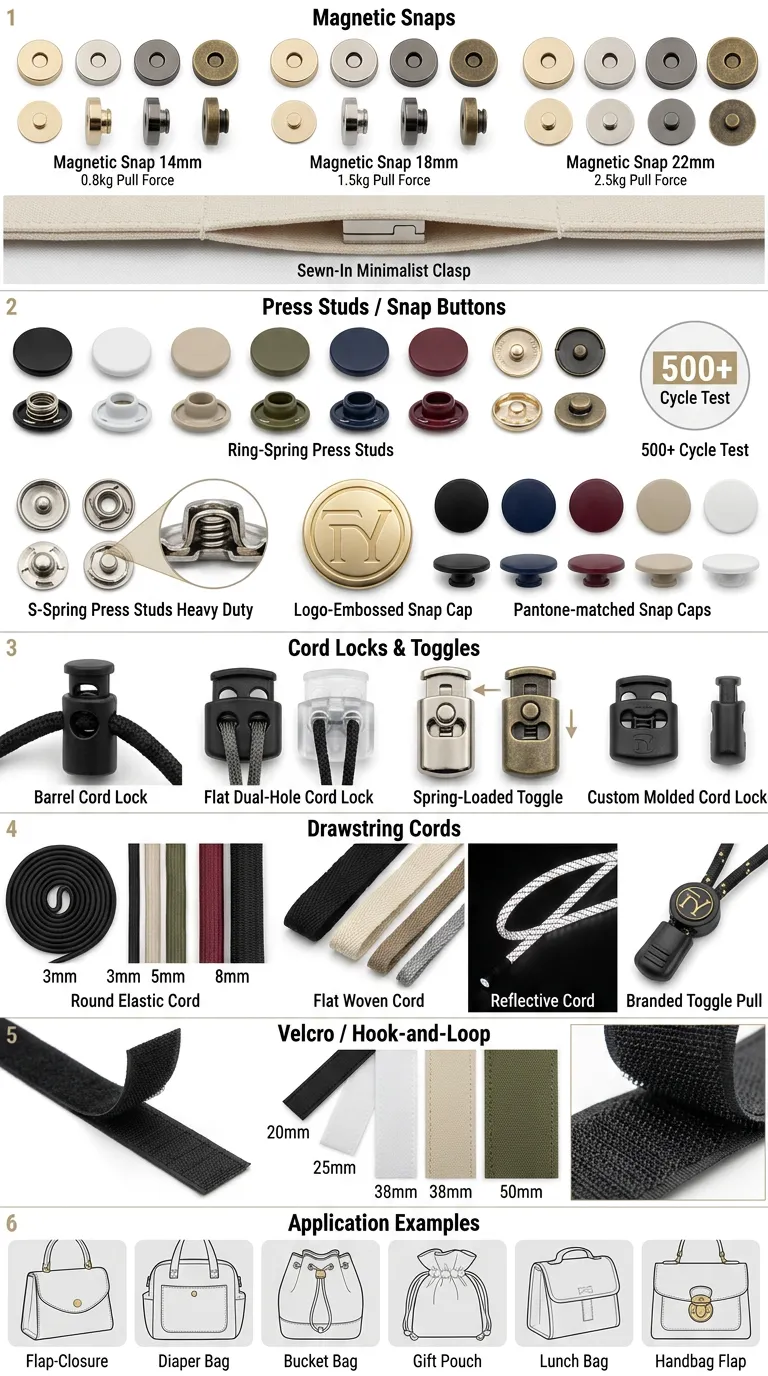
Why it matters: The closure is the first interaction every end user has with the bag — before they even open it. A well-chosen closure feels effortless. A poorly matched one frustrates the user within the first week. For B2B buyers, the closure type also affects perceived price-point positioning: magnetic snaps suggest elegance, cord locks suggest sport, and press studs suggest utility.
Closure types & when to use each:
Custom options: Logo-embossed snap caps, Pantone-matched snap cap colors, custom cord-lock shapes (molded with brand mark), branded toggle pulls, hidden magnetic clasps (sewn inside panels for a minimalist “flap tuck” look), combination closures (e.g., magnetic snap under a decorative turn lock for double security).
Factory edge: Closure pull-strength testing on every batch — measured in kg of pull force to open. We balance usability (easy enough to open one-handed) against security (secure enough that the bag doesn’t pop open in a crowd or when tipped). Magnetic snap demagnetization testing (exposure to standard household electronics). Snap button cycle testing (500+ open/close cycles). All closure hardware matched to the bag’s finish family before installation.
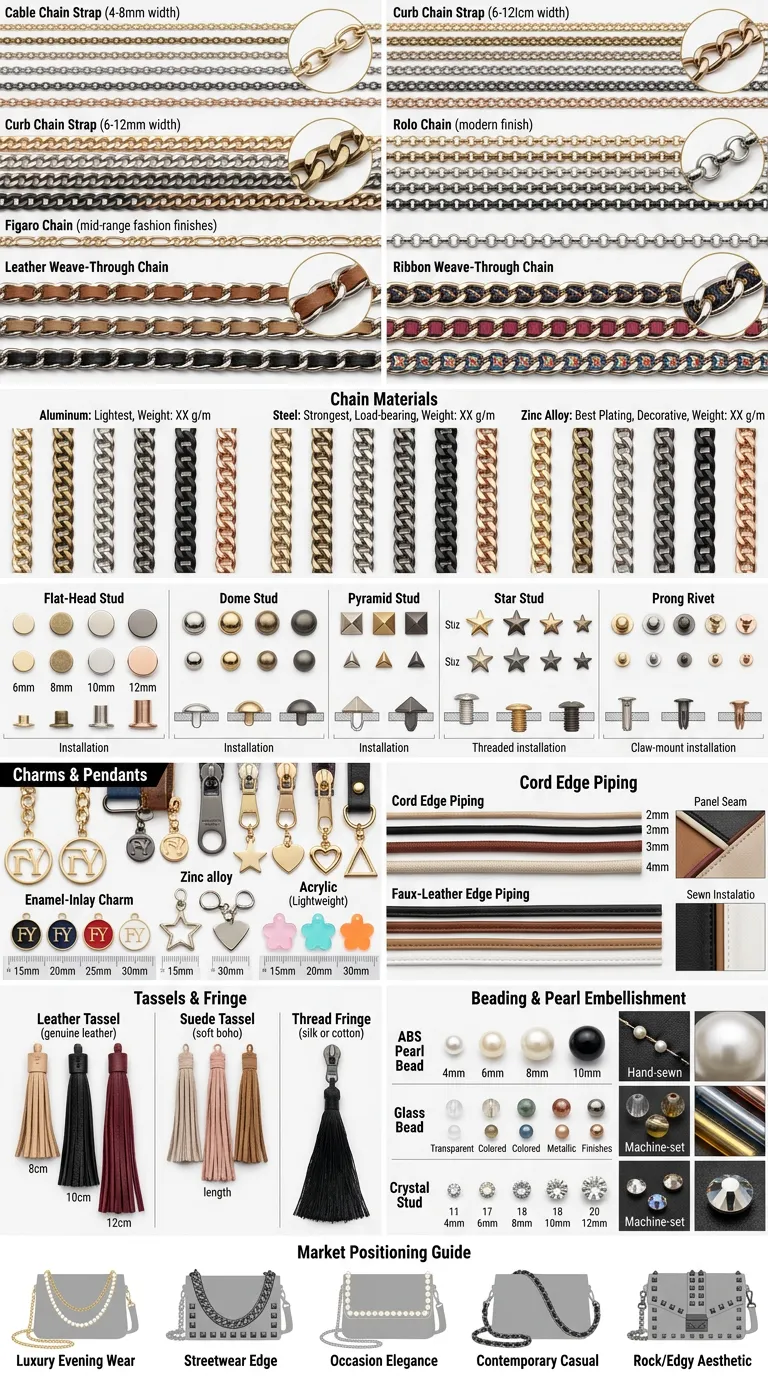
Why it matters: Chains and trims are the visual signature pieces that define a bag’s market positioning at a glance. A polished gold cable chain signals luxury evening wear. Chunky gunmetal links signal streetwear edge. Pearl-embellished trims signal occasion elegance. For brand owners building a collection identity, chains and trims are the most efficient way to create a recognizable design language across multiple SKUs without changing the bag silhouette.
Chain types & specifications:
Chain materials: Aluminum (lightest — prevents shoulder fatigue on longer straps), steel (strongest — for functional load-bearing straps), zinc alloy (best plating adhesion — for decorative accent chains). Finish options match the hardware finish families: light gold, antique gold, nickel/silver, gunmetal, matte black, rose gold.
Decorative trims:
Custom options: Custom chain-link size and shape, branded charm mold (one-time fee; mold is your property), Pantone-matched enamel inlay on metal charms, weave-through material selection (leather, ribbon, printed webbing), combination chain-and-fabric straps with detachable clips.
Factory edge: Chain weight testing — every chain strap is weighed and measured to verify consistent link count and total length within ±2 mm. Plating matched to other hardware in the same order (D-rings, buckles, zippers) by finishing side-by-side under D65 lighting. Pull-strength testing on chain-to-connector joints (lobster clasp, D-ring attachment). Decorative trim adhesion/prong testing to verify no loosening after handling.
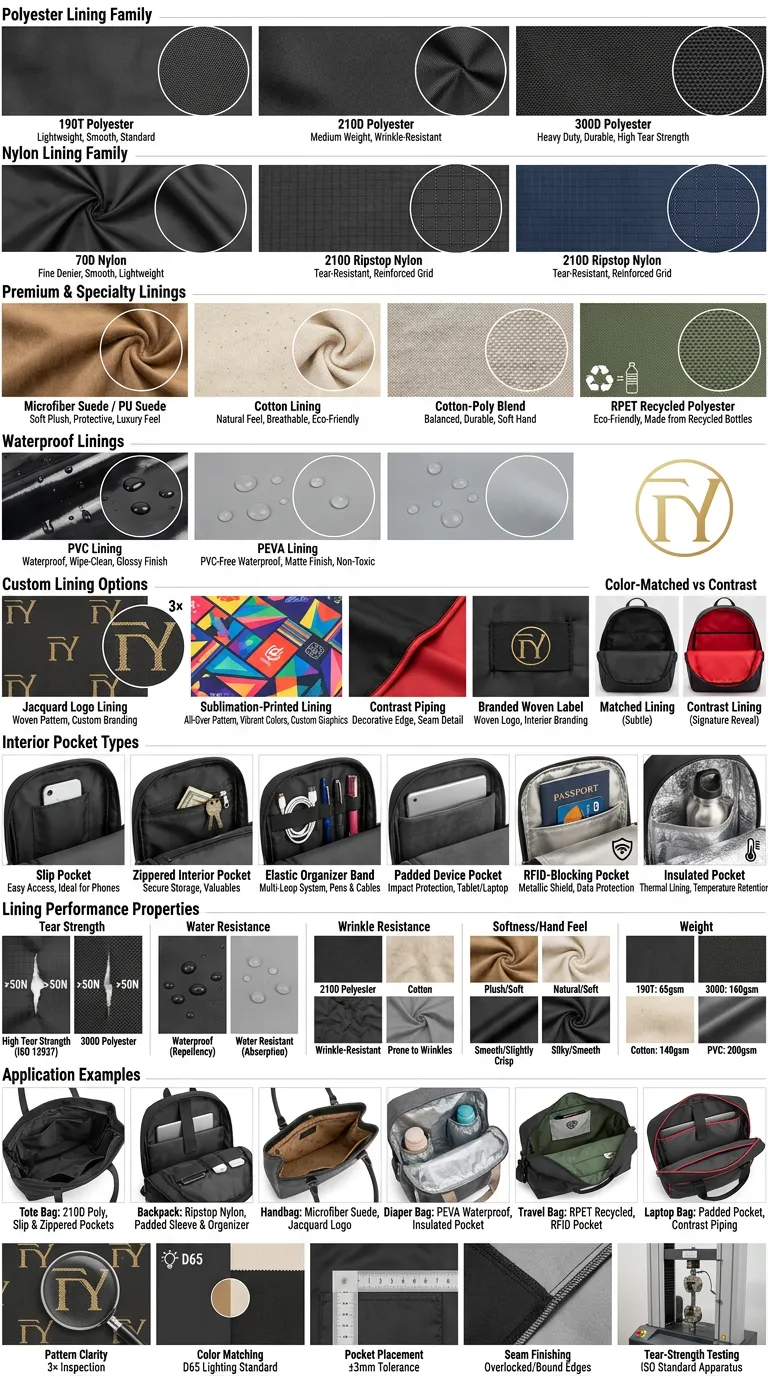
Why it matters: Lining is the first thing a buyer sees when they open the bag — and the surface they touch most often during daily use. A well-chosen lining protects contents, adds structure, and reinforces brand identity (especially with jacquard logo weave or branded print). Interior pockets determine the bag’s functional organization and strongly influence whether end consumers choose to carry the bag daily or leave it in the closet.
Lining materials:
Interior pocket types:
Custom options: Jacquard logo weave (repeat-pattern brand name/monogram woven into the lining fabric), sublimation-printed all-over pattern, contrast piping at lining/shell seam, branded woven label sewn inside, color-matched lining to shell exterior or deliberate contrast color (e.g., black exterior + red lining for a signature interior reveal).
Factory edge: Logo jacquard weaving produced in-house or at dedicated weaving partners with pattern clarity inspection at 3× magnification. Tear-strength testing on lining fabrics (ISO 13937). Color matching under D65 lighting between lining and shell. Pocket placement verified against tech-pack dimensions (±3 mm tolerance). All interior seams overlocked or bound to prevent fraying.
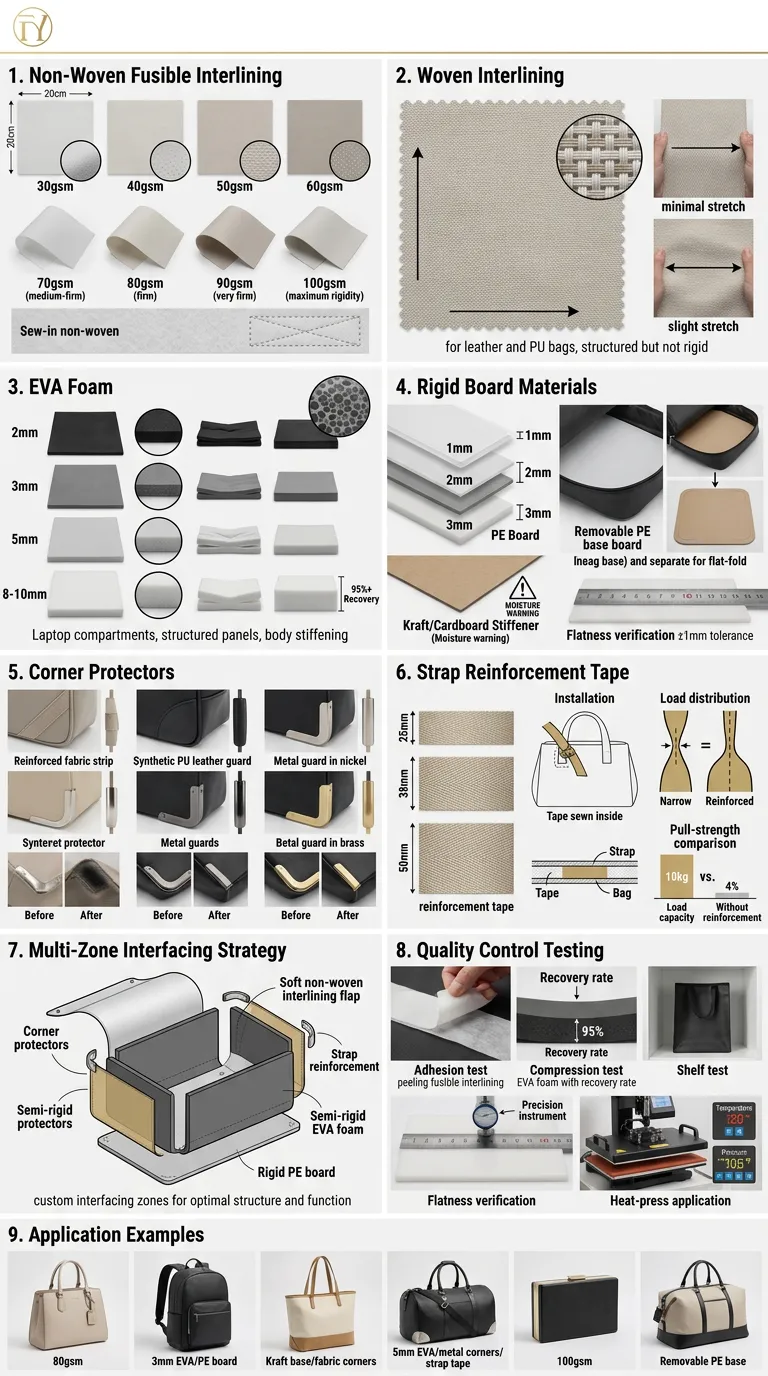
Why it matters: Interfacing is the hidden structural layer that determines whether a bag holds its shape or collapses under its own weight. End consumers never see it, but they immediately feel the difference between a bag with proper interfacing and one without. For brand owners, the right reinforcement strategy means your bag photographs well (maintains silhouette on shelf and in product shots), survives shipping without deformation, and looks the same on day 300 as it did on day 1.
Interfacing types & applications:
Custom options: Multiple interfacing zones within one bag (e.g., rigid base + semi-rigid sides + soft flap). Removable base boards for fold-flat packaging. Custom EVA thickness to hit a specific firmness target. Fusible vs sew-in based on shell fabric compatibility (fusible can damage heat-sensitive fabrics like neoprene or PVC).
Factory edge: Interfacing adhesion testing (peel-strength test for fusible interlining — must hold after heat-press without bubbling or delamination). Board flatness and cut-dimension verification (±1 mm tolerance). Compression testing on EVA foam panels to verify recovery rate (must spring back to 95%+ original thickness after 24-hour compression). Every structured bag is “shelf tested” — placed upright empty on a flat surface to verify it holds its intended silhouette without support.
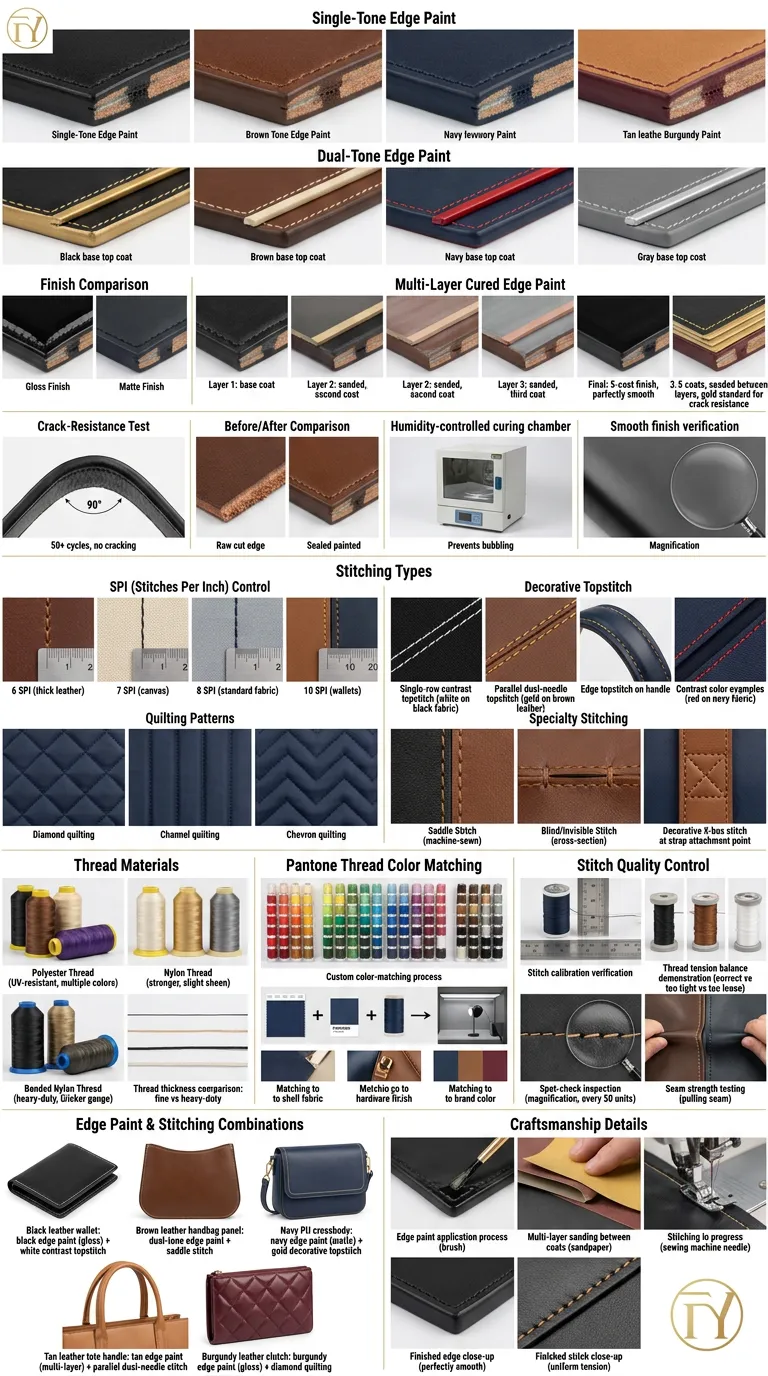
Why it matters: Edge finishing is where craftsmanship becomes visible. On leather and PU bags, raw cut edges look unfinished and peel over time. Properly applied edge paint seals, colors, and protects those edges — and it’s one of the first details a knowledgeable buyer checks when evaluating factory quality. Similarly, stitching is both structural (holding the bag together) and decorative (adding visual rhythm and brand character). Inconsistent stitch density, loose threads, or mismatched thread color undermine perceived value regardless of how good the rest of the bag is.
Edge paint options:
Stitching options:
Custom options: Pantone-matched thread color (from a library of 400+ thread colors, with custom-dyeing available for exact matches). Dual-needle stitching for parallel decorative rows. Thread material selection: polyester (standard, UV-resistant), nylon (stronger, slight sheen), bonded nylon (heavy-duty for leather goods). Edge paint color Pantone-matched to shell, hardware, or brand color.
Factory edge: Multi-coat edge paint applied and cured under controlled humidity (prevents bubbling). Crack-resistance tested by flexing finished edges 90° for 50+ cycles — no cracking or peeling allowed on approved production. Stitch calibration verified at the start of every production run and spot-checked every 50 units. Thread tension balanced to prevent puckering (too tight) or loops (too loose). Pantone thread matching verified under D65 lighting against approved color standard.
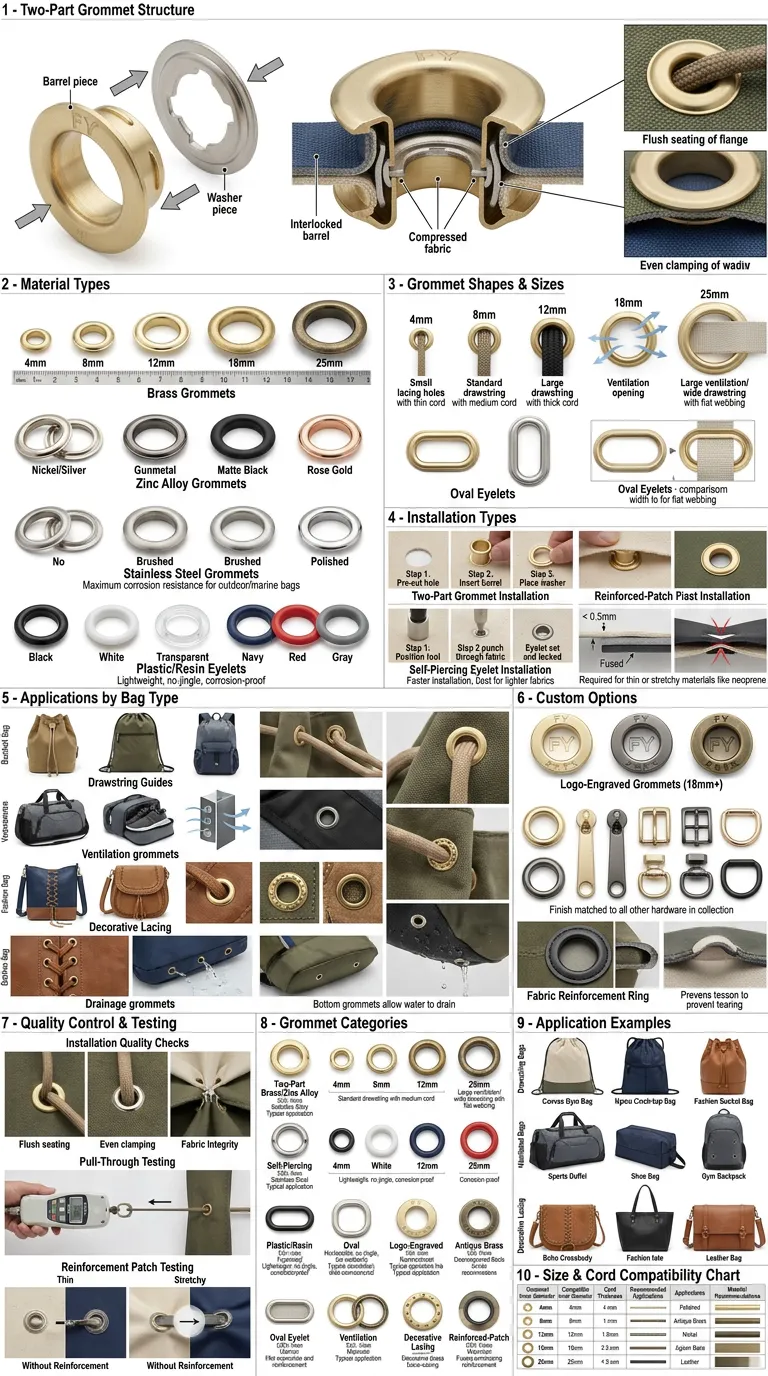
Why it matters: Grommets and eyelets are the reinforced metal or plastic rings set into fabric openings. They serve three functions: guiding drawstrings and lacing, providing ventilation, and adding decorative detail. Without a grommet, a cord or lace pulled through fabric will quickly fray and tear the hole open. With the right grommet, the opening stays clean, round, and functional through years of daily use.
Types & specifications:
Applications by bag type:
Custom options: Finish matched to all other hardware in the collection (gold, gunmetal, nickel, matte black, antique brass). Logo engraving on grommet face (for larger diameters). Fabric reinforcement ring sewn around the grommet on the inside to prevent tearing on thin or stretchy materials.
Factory edge: Every grommet installation is checked for flush seating (no gap between grommet flange and fabric), even clamping (no warped or tilted grommets), and fabric integrity (no tearing at the punch point). On fabrics thinner than 0.5 mm or stretchy fabrics like neoprene, a reinforcing patch is fused to the back before grommet installation. Pull-through testing verifies the grommet holds under load without tearing free.
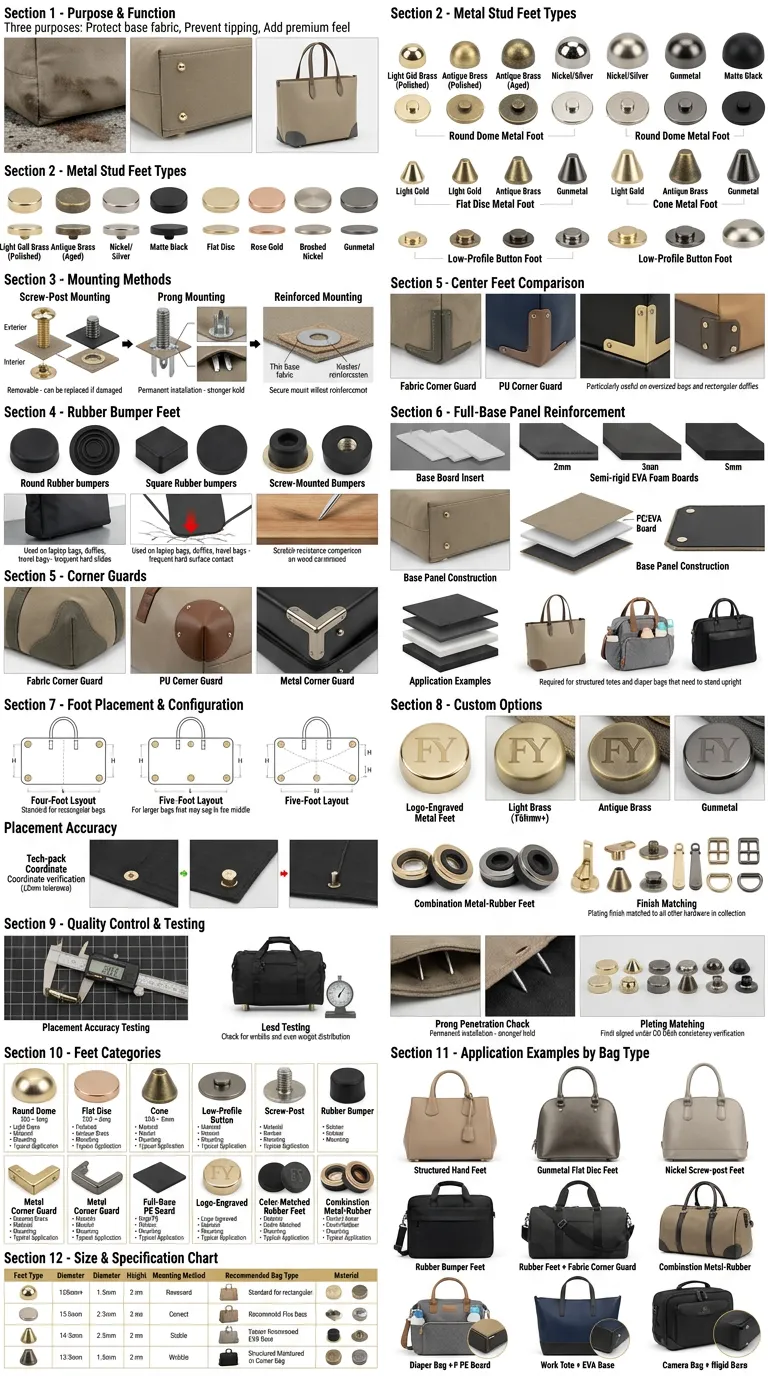
Why it matters: Bag feet are the small studs, discs, or bumpers on the bottom of a bag that elevate it off the ground. They serve three purposes: protecting the base fabric from dirt, moisture, and abrasion; preventing the bag from tipping over (particularly on structured totes and handbags); and adding a premium, finished feel to the product. For brand owners, feet are also a subtle proof-of-quality signal — most consumers expect them on bags priced above the entry tier.
Types & materials:
Placement & sizing: Four feet (one at each corner) for rectangular bags. Five feet (four corners + center) for larger bags that may sag in the middle. Foot diameter typically 10–18 mm; height 3–8 mm. Placement verified against tech-pack coordinates — off-center feet cause the bag to sit unevenly.
Custom options: Logo-engraved metal feet (for larger diameters, typically 15 mm+). Color-matched rubber feet (Pantone-matched to the bag shell). Combination metal-and-rubber feet (metal outer ring with rubber center for grip + aesthetics). Screw-post feet for easy replacement if damaged.
Factory edge: Foot placement accuracy verified against the tech-pack layout (±2 mm tolerance). Every foot is load-tested — a fully loaded bag is placed on all four/five feet and checked for wobble, tilt, and even weight distribution. Prong penetration is checked on the interior to ensure prongs are fully folded and don’t scratch contents. Metal feet are plating-matched against the hardware finish lineup before installation. On thinner base fabrics, a reinforcing washer or patch is applied on the inside before setting each foot.
We don’t manufacture hardware — we source, test, and install it. Our competitive advantage is the supplier network, the testing protocols, and the finish-matching discipline that ensures every component on your bag works together.
50+
Verified Hardware Suppliers
3–5
Days for Sample Hardware Set
15–25
Days Custom Mold Production
100%
Incoming Hardware Function Test
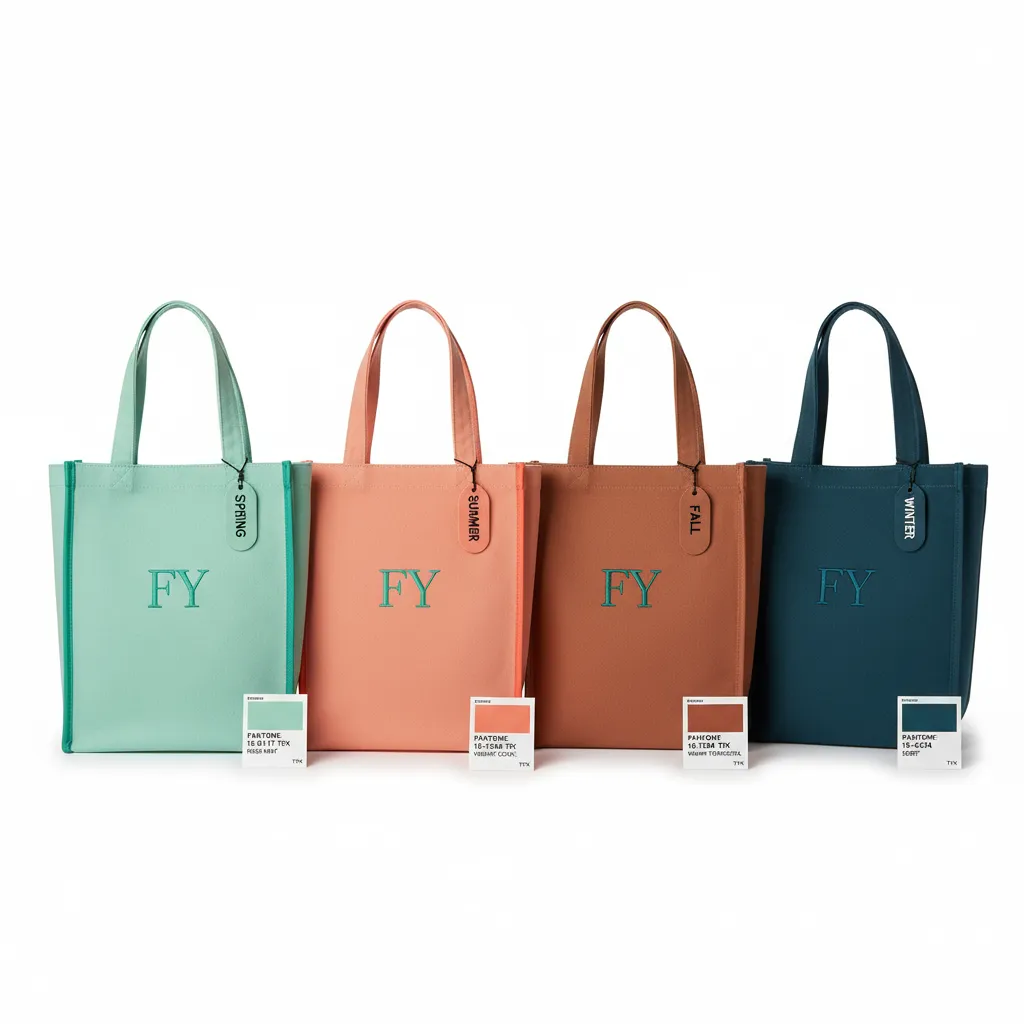
We Pantone-match zipper tape, webbing, stitching, edge paint, and linings to guarantee brand cohesion across multi-SKU collections, retail shelves, and online photos.
Different bag applications demand different hardware trade-offs. A gym bag needs corrosion-resistant hardware that survives sweat and locker rooms. A gala clutch needs decorative hardware that catches light. The right hardware choice elevates the bag’s function AND perception.
| Application | Recommended Zipper | Key Hardware | Finish | Critical Requirement |
|---|---|---|---|---|
| Commuting | #5 nylon coil, auto-lock | Laptop-sleeve zipper, trolley strap buckle | Gunmetal / matte black | Silent operation (no jingling on transit) |
| Fitness | #5–#8 molded plastic | Ventilation grommets, shoe-zone zipper | Matte black / gunmetal | Corrosion-resistant (sweat, moisture, locker rooms) |
| Travel | #8 metal teeth, dual-slider | TSA lock loop, trolley sleeve, lockable slider | Brushed nickel / gunmetal | Durability under airline handling stress |
| Mom & Baby | #5 nylon coil, smooth | Stroller strap clips, magnetic-snap flap | Brushed nickel / gold | One-hand operation (other hand holds baby) |
| Shopping | #3–#5 (if zipped) | Reinforced handle rivets, snap closure | Any (often no metal) | Handle-to-body attachment strength (15–25 kg load) |
| Promotional | #3 generic (cost-driven) | Minimal — snap or drawstring | Match brand color | Lowest possible cost; function over aesthetics |
| Occasion | #3 metal (decorative) | Chain strap, turn lock, decorative clasp | Gold / rose gold | Visual elegance; silent operation at formal events |
| Eco-Friendly | Minimal or #3 | Fabric closures, drawstring, minimal metal | Minimal metal | Reduce hardware to align with sustainability story |
Hardware failures are the #1 cause of bag warranty claims and negative reviews. A broken zipper, a snapped buckle, or a detached D-ring ruins the bag permanently — and your brand reputation. We test every hardware type for function, durability, and finish consistency before it enters production.

Main-compartment zippers cycled 500–1,000+ times on the testing rig. Slider action checked for: smooth run (no catching), auto-lock engagement (holds position under weight), pull durability (pull survives repeated tugging), teeth alignment (no separation under lateral stress).

Strap attachment points (D-rings, swivel hooks, buckles) tested at 2–3× the bag’s rated carry weight. Handles pull-tested for 10+ kg sustained load. Chain straps checked for link integrity at each connection point. Carabiners and lobster clasps tested for gate spring return.

Magnetic snap pull-force measured: strong enough to stay closed during carry and movement, but openable with one hand without excessive force. Magnet orientation verified (attract, not repel — yes, this happens). Sew-in washer alignment confirmed on both magnet halves.

ALL metal components on the bag laid out side-by-side under standard lighting: zippers, buckles, D-rings, base studs, logo plate. Finish must match across every component. Bags where the zipper is one shade of “gold” and the D-ring is another are flagged, and the non-matching component is re-sourced BEFORE assembly begins.
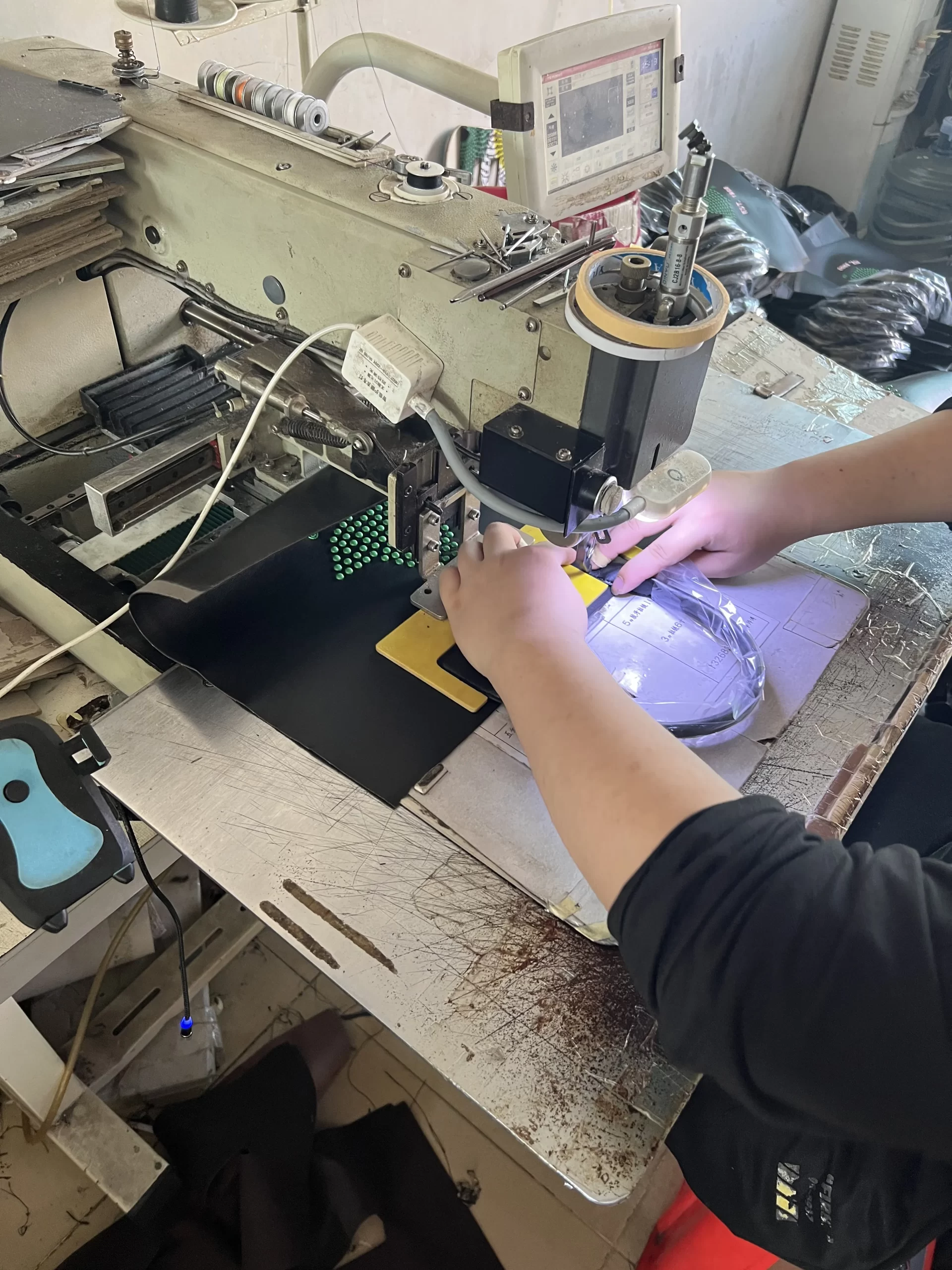
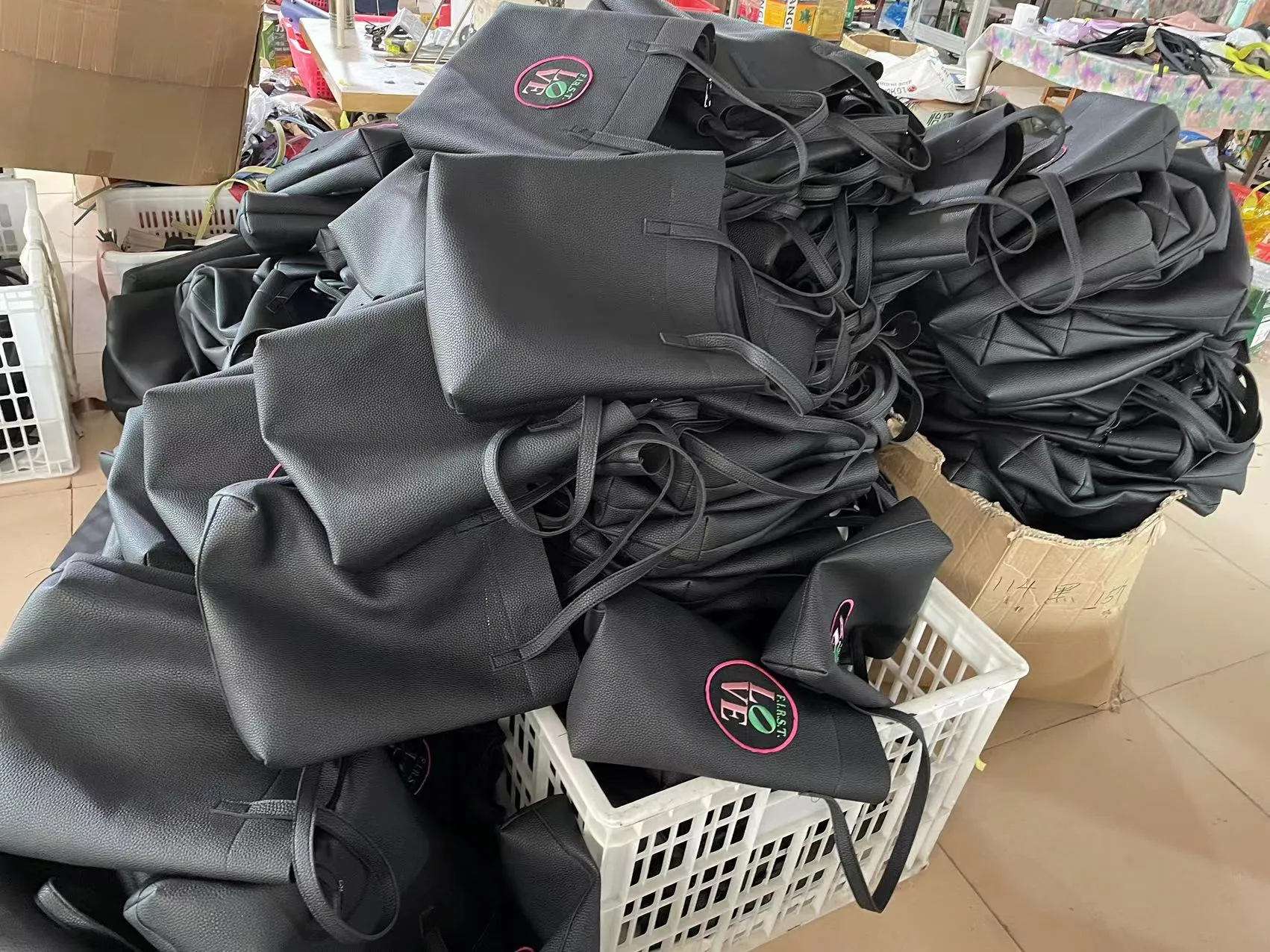
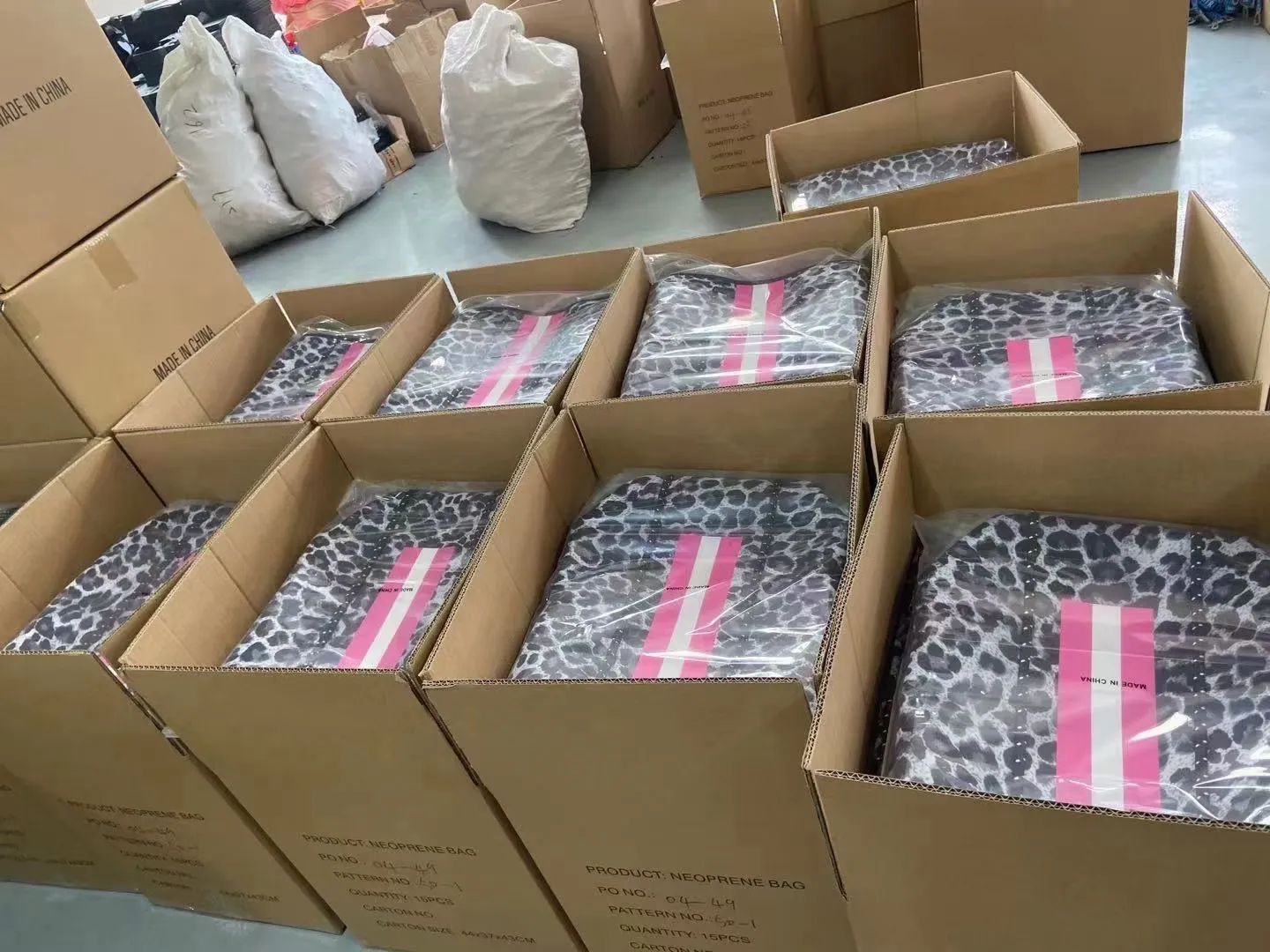
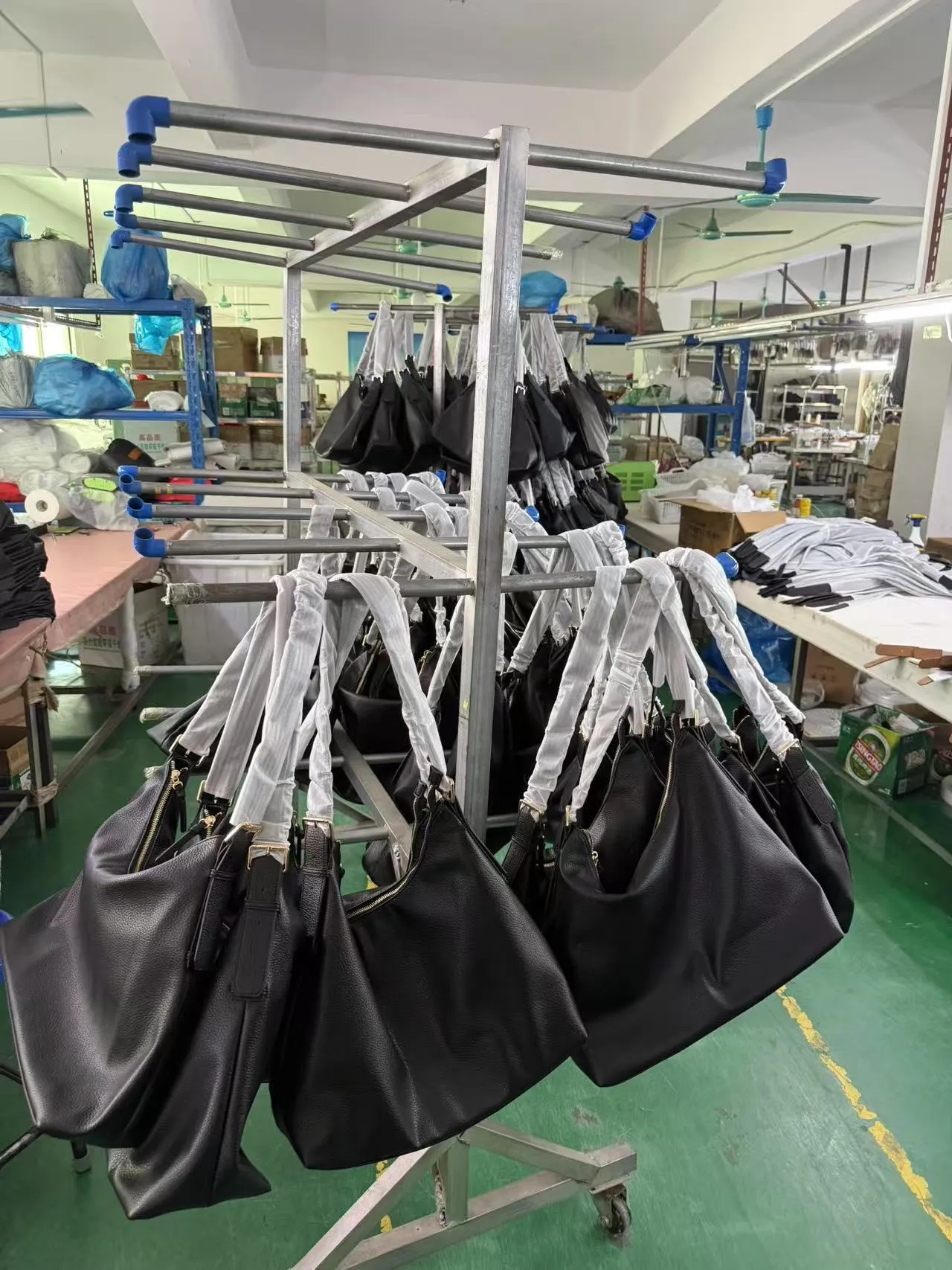

We work with SBS (the most common in the bag industry), YKK-alternative brands, and generic suppliers. Specific brand requests are accommodated based on availability and MOQ. If you need a specific brand, tell us and we’ll confirm availability and pricing. We do not use counterfeit branded zippers.
#3 for small pouches and interior pockets. #5 for most main compartments — the industry standard. #8 for heavy-duty duffles and travel bags. #10 for maximum-duty applications. We recommend based on bag type, expected load, and opening width. Over-specifying (using #8 on a cosmetic pouch) adds cost without benefit. Under-specifying (using #3 on a gym duffle) causes jamming failures.
Yes. Custom molds for zipper pulls, buckles, rivets, and logo plates. Lead time: 15–25 days for mold production. The mold is your property — we store it at our factory for future orders. Minimum per custom piece: typically 500–1,000 pcs depending on complexity. Mold fee is one-time; subsequent orders pay only the per-unit hardware cost.
We source all metal hardware (zippers, buckles, D-rings, snaps, studs) from the same finish family — ideally from the same supplier. Before production, we photograph all components side-by-side under standard lighting as a “finish lineup” for your approval. If a mismatch is visible, the non-matching component is re-sourced BEFORE assembly begins.
Yes. Ship your hardware to our Guangzhou factory. We test incoming hardware for function (zipper smoothness, buckle operation, magnetic strength, load testing) and finish consistency. Your hardware is stored separately and tracked through production. If defects are found, we notify you with photos before use.
Depends on the handbag‘s formality. Magnetic snap: the most common — silent, one-hand, elegant. Turn lock: more visible, more secure, fashion-statement piece. Zipper: most secure for travel. Flap-and-tuck: boho/casual. Drawstring: bucket bags. We recommend based on your bag’s style positioning, security needs, and target customer’s daily-use patterns.
Nickel-free options are available for all skin-contact hardware (buckles, strap adjusters, snap closures). Required by EU REACH regulation for prolonged skin contact. We specify nickel-free at the sourcing stage when required. Standard hardware contains nickel plating; nickel-free adds a small per-unit cost but avoids regulatory issues in EU markets.
If a hardware batch fails incoming QC (zipper test, load test, finish test), the entire batch is quarantined and not used. We source replacement hardware from the same or alternative supplier (3–5 day turnaround for standard components). We photograph the failure and send you the QC report. Repeat-failure suppliers are removed from our approved network.
If only the metal FINISH changes (e.g., gold → gunmetal) and the hardware TYPE stays the same (same zipper gauge, same buckle model), we can switch without a full re-sample — we verify the new finish against the existing prototype and send photos for approval. If the hardware TYPE changes (different zipper gauge, different closure mechanism), a revised prototype is recommended.
You do. Custom molds (for zipper pulls, buckles, logo plates, rubber patches) are your property. We store them at our factory for production convenience. If you move production to another factory, we ship the molds to you on request. Mold fees are one-time — subsequent orders using the same mold pay only the per-unit hardware cost.
Tell us the bag type, preferred zipper gauge, metal finish family, closure type, and any custom hardware needs (branded pulls, custom buckles, specific logo plates). We’ll source sample hardware, verify finish matching across all components, and include hardware specs in your prototype.

