We use cookies to ensure that we give you the best experience on our website.
Send Your Inquiry Today
You Trust Custom Bag Special Craftsmanship Manufacturer in China – Structural, Functional & Material Engineering for B2B Brands
Engineering Finishes with Purpose
For brand, “special craftsmanship” is not a marketing buzzword. It is the point where structure, function and materials meet:How does a bag really stay waterproof in heavy rain? How does it block RFID scanning or dissipate static? How does it keep food cold, or support an eco story without sacrificing durability? The Custom Bag Special Craftsmanship program at FYBagCustom is built to answer these questions in an engineering-driven way. We are a custom bag manufacturer in China that turns functional requirements into layered structures + technical fabrics + controlled processes for:Waterproof & TPU-laminated shells/Antistatic and shielded constructions/Eco-treated & recycled bag fabrics/RFID blocking layers and pockets. These special craftsmanship options can be integrated into handbags, tote bags, backpacks, diaper bags, lunch bags, travel bags, tool bags, tech cases and storage bags for global B2B OEM/ODM projects.
Why Our Special Craftsmanship Capabilities Matter for B2B Projects
From “Feature Idea” to Engineered Structure
Many clients come to us with statements like “we need waterproof”, “we want insulated”, or “we need RFID blocking”.
Our job is to turn this requirement language into:
A realistic performance target (e.g. rain-resistant commute vs. full waterproof compartment)
A clear structural concept (layers, paths, barriers)
A specific material and process combo we can manufacture repeatedly
So “custom bag special craftsmanship” becomes a defined system, not a vague label.
Material Engineering + Process Know-How
We work with:
Coatings and TPU laminations
ESD and antistatic bag fabrics
Metallic or conductive shield layers
Eco-treated and recycled bag fabrics (rPET, recycled nylon)
Foams, films and linings for insulated layer bags
The value is not just knowing each material in isolation, but knowing how to combine them inside one bag without making it too heavy, too stiff or too fragile.
Industrial Performance You Can Test and Repeat
Each type of special craftsmanship is tied to concrete tests and QC checks:
Hydrostatic or rain tests for waterproof coated / laminated shells
ESD / antistatic performance checks for sensitive environments
Simple read-out tests for RFID blocking pockets
Thermal retention tests for insulated structures
This lets you:
Communicate performance to your buyers and channels
Repeat orders with stable quality, not just luck on the first run
Guidance for Clients with Little Technical Experience
You don’t need to be an engineer to use these capabilities.
We regularly help new B2B clients:
Understand what waterproof coating, TPU lamination, antistatic, RFID blocking, insulation actually mean in practice
Choose the correct level of performance for their market and price point
Balance cost, weight, durability and sustainability in one solution
How Special Craftsmanship Fits into Bag Engineering
Special craftsmanship is not just “adding one more layer”. It’s about controlling flows and fields:
Water & moisture – Where can water enter? How do we block or redirect it?
Heat & cold – Where does heat escape? How do we slow conduction, convection and radiation?
Static & fields – Where does charge or RF energy build up? How do we dissipate or shield it?
Water protection is an ecosystem: shell fabric, membrane, seams, zippers, and geometry must cooperate. The goal isn’t “beading on day one,” but reliable waterproofing under real use. Water resistance is not one single level. We work across a spectrum:
Water-repellent commuter tote for light rain
Rain-ready backpack for daily city use
Waterproof compartment or bag for outdoor and more demanding environments
Typical applications:
Commuter backpacks and work bags
Travel duffles and wet/dry bags
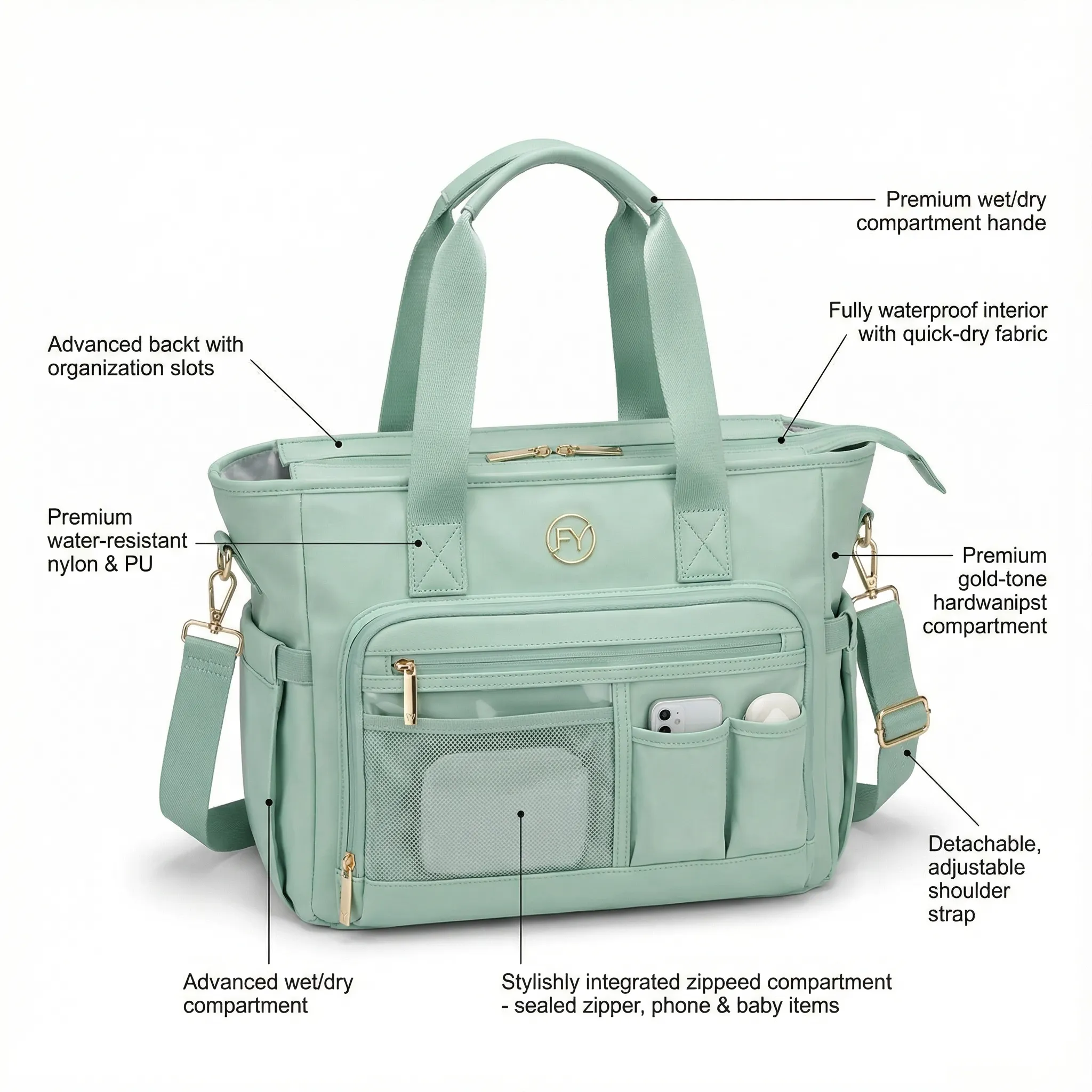
Diaper bags with wet compartments
Outdoor and sports bags
Material Systems & Structural Principles
We combine:
Coated fabrics – PU, PVC or TPU coating on polyester/nylon bases
Laminated membranes – waterproof/breathable or waterproof-only films bonded to fabrics
DWR (durable water repellent) finishes – surface treatments that help droplets roll off
Structural key points:
Shell – defines basic barrier level (coating/lamination type and thickness)
Seams – standard stitching vs. bound seams vs. taped/welded seams
Closures – classic zippers with flaps, waterproof zippers, roll-top closures
We design the water path so that, for the defined use case, water cannot easily reach critical zones.
Sustainability is a materials lifecycle decision, not a label. We design for lower chemical impact, recycled inputs, and long wear—because lasting products are the most ecological ones. For eco-treated and recycled bag fabrics, we look at:
Recycled base fabrics – rPET (recycled polyester), recycled nylon, some recycled PU systems, recycled cotton blends, bio-based or water-borne coatings.
Create a shielded pocket where cards/passports are surrounded by blocking material on all relevant sides
Design pocket openings and shapes so that when closed, the shielding is effectively continuous around the contents
Integrate RFID blocking layers into pockets without making them stiff or uncomfortable to use
Processing Techniques & Quality Standards
Ensure shielding layers are not excessively perforated by stitching lines in critical directions
Keep edges and folds of shielding material stable over time (no cracking or delamination)
Use simple RFID read-out tests (before and after production) to verify that pockets significantly reduce scanning distance or success rate
Combine RFID layers with standard linings and pocket structures for a familiar user experience
Frequency validation (13.56 MHz) on finished goods, not just flat swatches.
Craft Selection Matrix — Match Finish to Intent
Craft
Primary Benefit
Typical Materials
Visual Character
Best-Fit Categories
Waterproof + TPU Laminate
Weatherproofing
Nylon/Poly + TPU
Clean, technical
Backpacks, duffles, travel totes
Antistatic & Shielded
ESD & EMI control
Conductive/metalized textiles
Technical-industrial
Tool bags, electronics field kits
Eco-Treated & Recycled
Lower impact + longevity
RPET, recycled cotton, water-borne PU
Quiet, refined
Tote, crossbody, daily carry
RFID Blocking
Data security
Shield films/knits
Invisible
Wallets, organizers, travel
Insulation Layer
Hot/Cold retention
EPE/EVA + PEVA/TPU
Functional-clean
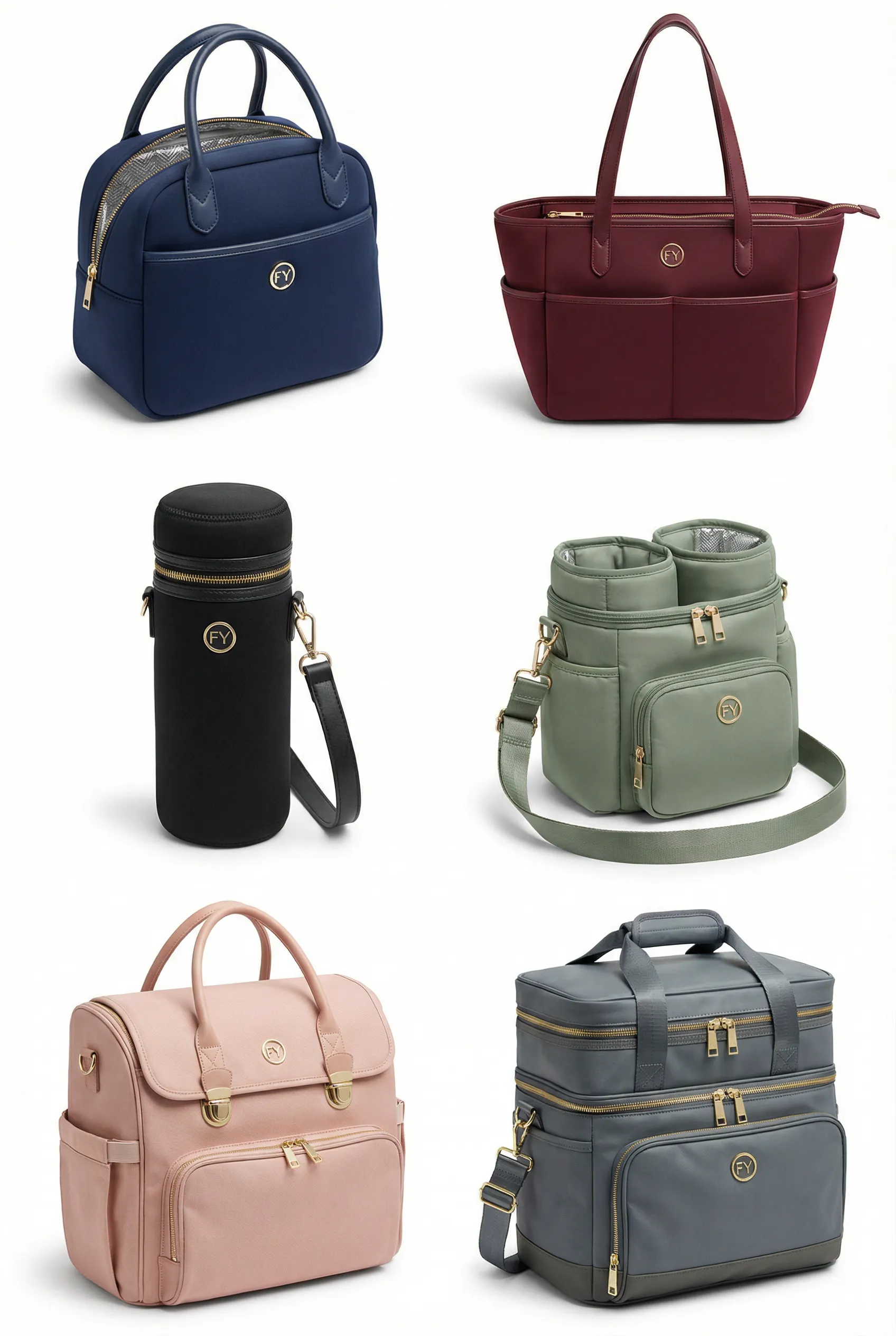
Lunch, diaper, cooler totes
Start Your Custom Bag Special Craftsmanship Project with FYBagCustom
Whether you’re building weather-sealed commuters, ESD-safe tool lines, eco-forward totes, RFID-secure travel, or thermal lunch systems, FYBagCustom will engineer the finish as part of the design, not an afterthought.
Tell us the scenario, the metric, and the feel you want. We’ll design the system around it.
RFID blocking layers – shielded pockets and compartments for cards and passports
Insulation layers – engineered thermal structures for food, drinks and temperature-sensitive items
We can use these alone or in combination, depending on your needs.
How do these special craftsmanship options affect cost and MOQ?
Every extra layer, material or process adds complexity:
Coatings, laminations, shielding fabrics, recycled fibres and insulation cores all increase material cost vs. basic fabrics
Additional steps like seam sealing, foam bonding or shielding placement add labour and process time
Some systems (especially laminations and technical fabrics) may require higher MOQs from mills or finishers
During development we’ll give you a transparent cost and MOQ impact for each option, so you can choose which features to use on hero SKUs and which to keep simpler.
I only know I need “waterproof” or “insulated”. How do we turn that into a spec?
We’ll guide you through a few practical questions:
For waterproof:
Light rain vs. heavy rain vs. submersion?
Whole bag or only one compartment?
Typical use time and environment?
For insulation:
Cold or hot, or both?
How many hours do you expect performance for?
Typical load volume and conditions?
Based on your answers and target price point, we propose a reasonable spec and show you what it means structurally and commercially.
Can we combine multiple special craftsmanship features in one bag?
Yes. Common combinations include:
Waterproof + insulation (cooler bags, family outdoor bags)
RFID blocking pocket inside an otherwise multi-function travel or work bag
Antistatic materials + waterproof shell for industrial or tech environments
We’ll check that these combinations are compatible and balanced so you don’t end up with something too heavy, too stiff or over-engineered for your market.
What kinds of tests can you perform or support?
Depending on the project, we can:
Run in-house functional tests (water penetration, basic thermal retention, load and seam strength)
Help design testing setups or protocols for your specific requirements
Cooperate with third-party labs if you need formal reports for certain channels
Testing level is tailored to your category, region and risk level. We always aim for: enough testing to be confident, not so much that it kills your timeline or budget.
How do you document these special craftsmanship structures for future orders?
For every special-craftsmanship project we:
Draw a layer diagram with materials identified
Record process parameters (coating thickness, lamination type, seam sealing method, etc.)
Note testing methods and acceptable ranges
Include all of this in your tech pack and internal process sheets
This documentation makes future reorders and style extensions more predictable and easier to explain to your own buyers.
Start Your Project Today!
Tell us your use scenarios, performance expectations and target price range.
Our engineering and production teams will design a custom bag special craftsmanship architecture, build samples, test performance and take it all the way into OEM/ODM mass production for your brand.
Whether you’re planning:
Waterproof and TPU-laminated commuter bags,
Insulated and eco-treated lunch and family bags,
Antistatic or shielded tool and tech bags,
RFID blocking wallets, crossbody bags and travel organizers